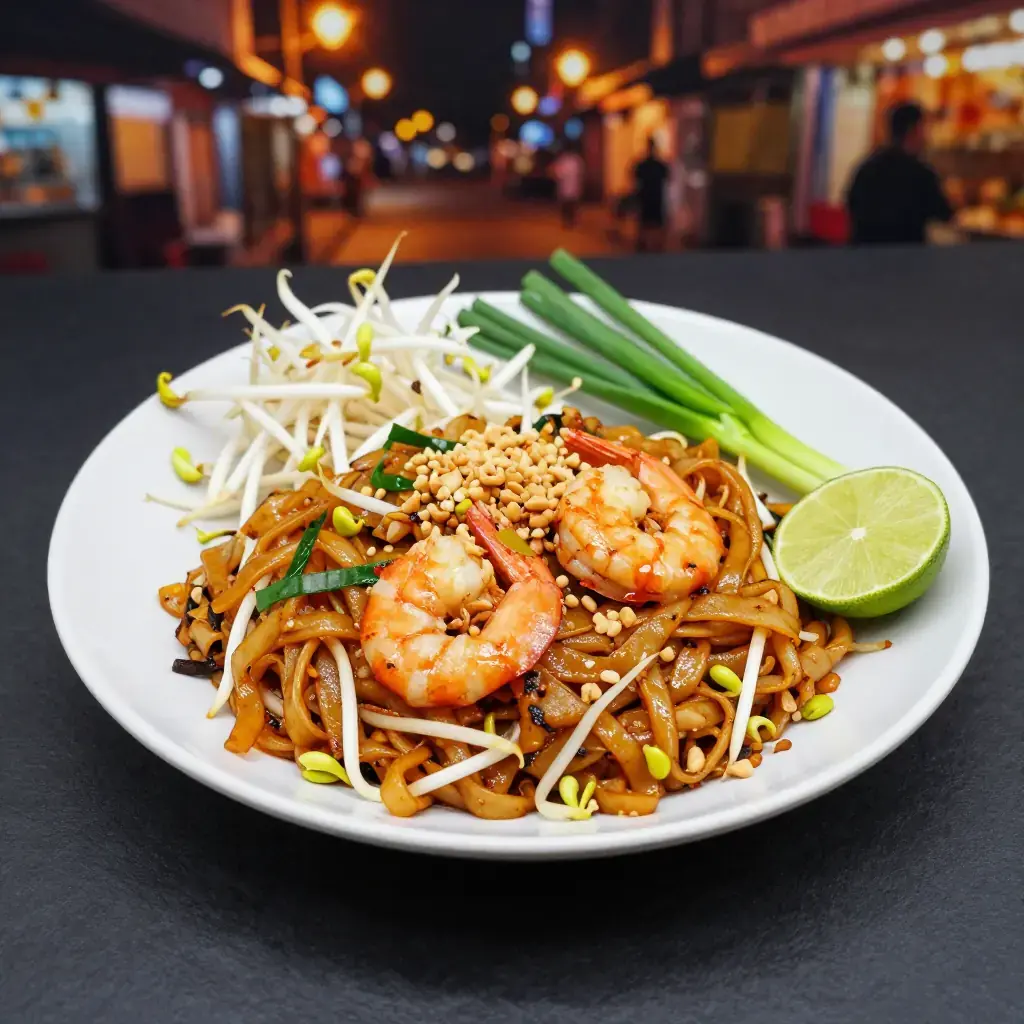
Pad Thai
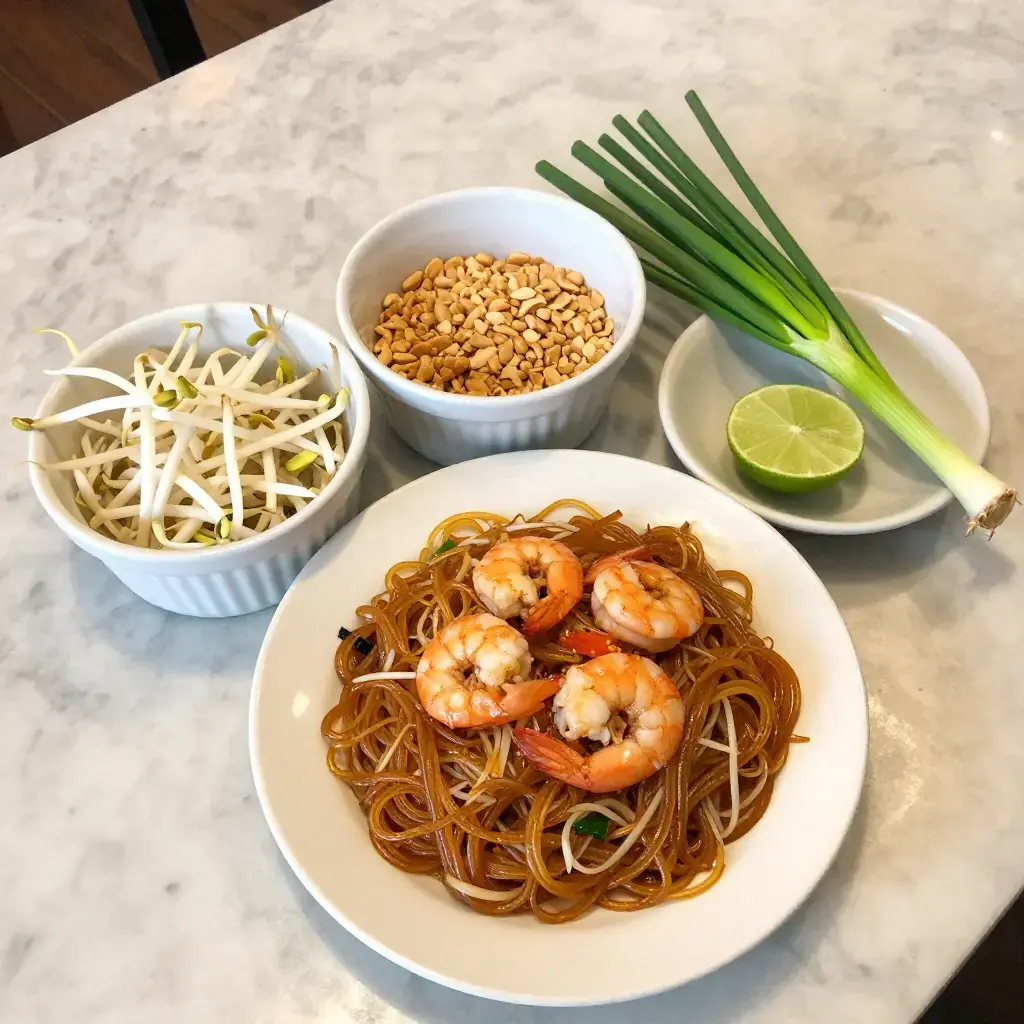
Pad Thai became Thailand's national dish through a deliberate government campaign in the 1930s promoting noodle consumption and national identity, but it swiftly transcended its origins to become one of the world's great street foods. Sold from smoking woks along Bangkok's Yaowarat Road, the dish balances tamarind's sour sweetness, fish sauce's umami depth, and the crunch of bean sprouts and peanuts.
Serves: 2
Ingredients
- 200g (7 oz) dried sen lek rice noodles (3mm width)
- 150g (5½ oz) raw prawns, peeled, or firm tofu cubed
- 2 eggs
- 80g (3 oz) bean sprouts
- 3 spring onions, cut into 3 cm (1 in) lengths
- 3 tbsp (45ml) neutral oil
- 2 tbsp (30ml) tamarind paste (from a block, dissolved in water)
- 1½ tbsp (22ml) fish sauce
- 1 tbsp (15g) sugar
- 30g (1 oz) dried shrimp (optional)
- 2 tbsp (30ml) chopped preserved radish (chai poh), rinsed
- 3 tbsp (30g) roasted peanuts, roughly crushed
- Lime wedges, dried chilli flakes, extra fish sauce, and sugar to serve
Instructions
- Soak rice noodles in room-temperature water for 30 minutes until pliable but still firm. Drain well.
- Mix tamarind paste, fish sauce, and sugar in a small bowl to make the sauce.
- Heat a wok over the highest heat possible until smoking. Add oil. Stir-fry prawns or tofu 1–2 minutes until just cooked. Push to the side.
- Crack eggs into the wok, scramble briefly, then mix with the protein.
- Add drained noodles and pour sauce over. Toss vigorously for 1–2 minutes until noodles absorb the sauce and begin to char at the edges.
- Add dried shrimp, preserved radish, and spring onions. Toss 30 seconds.
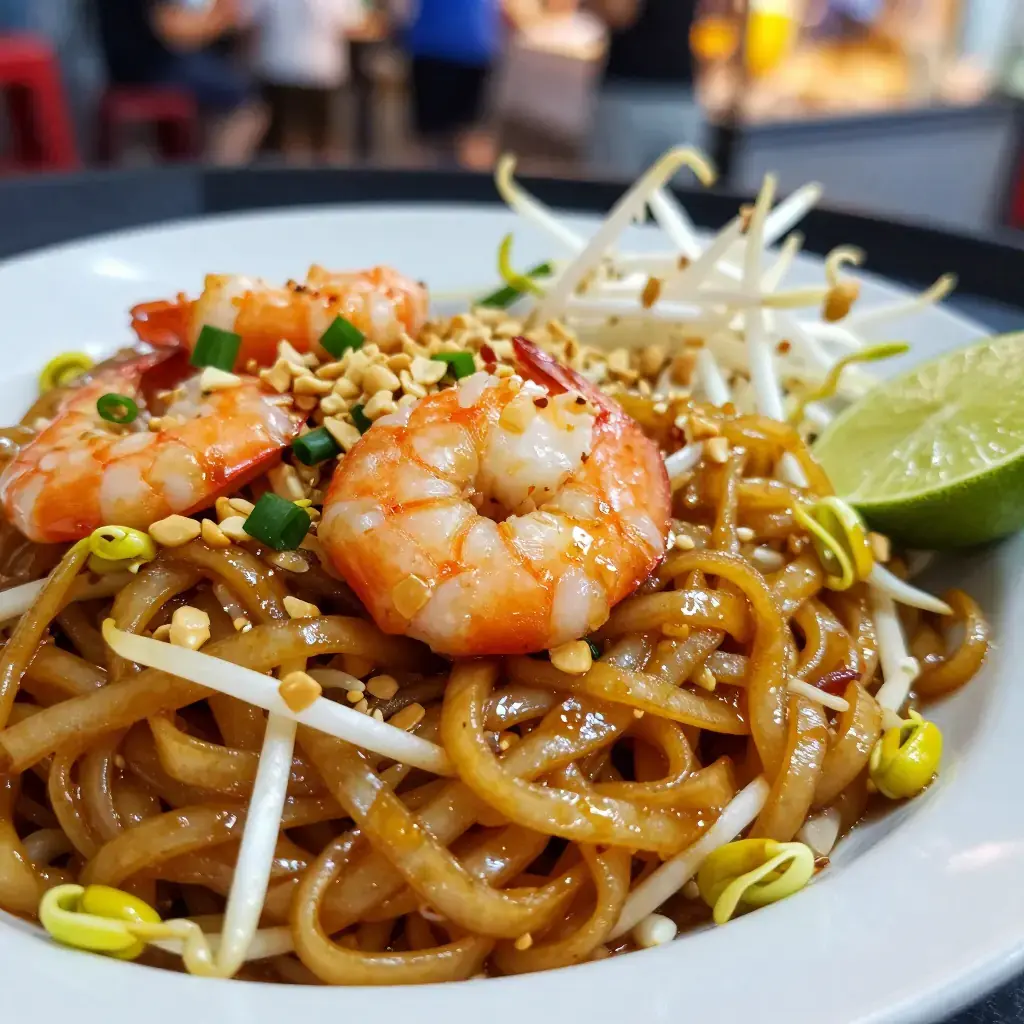
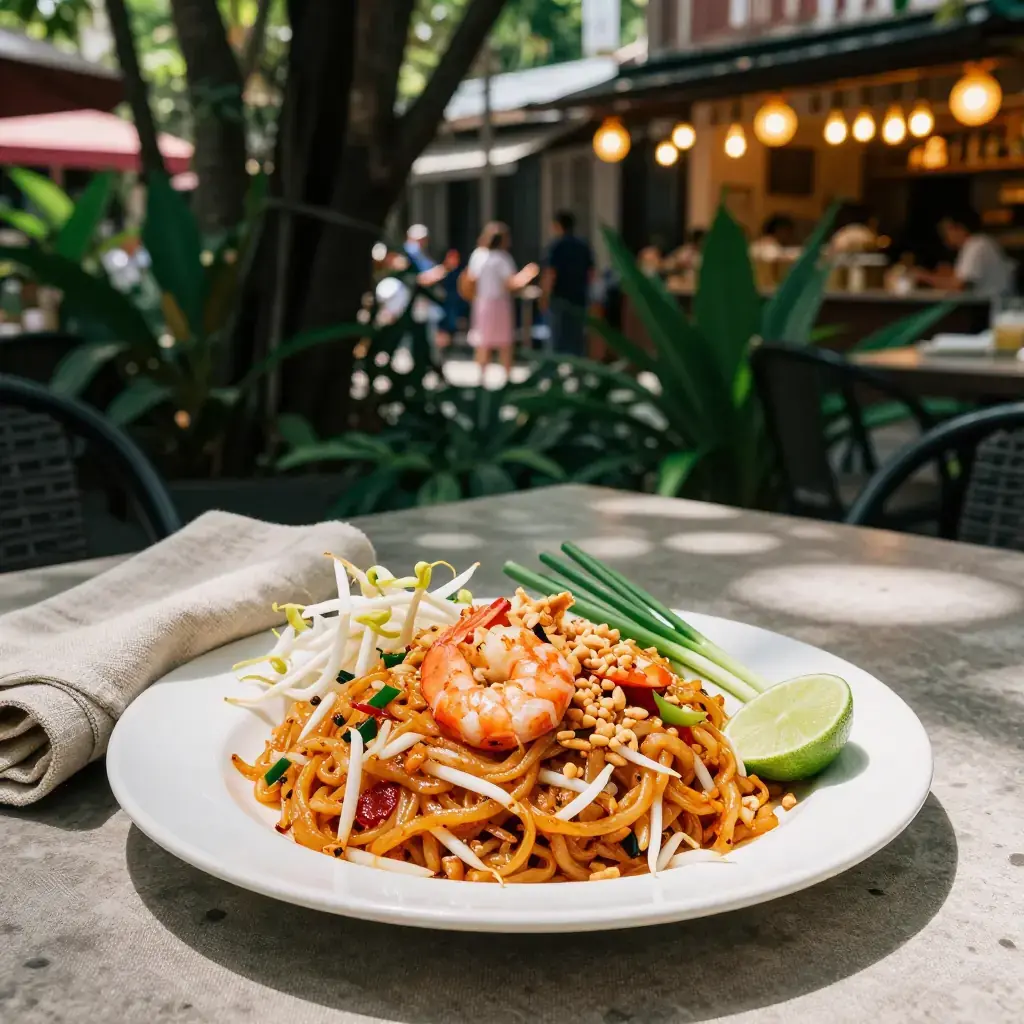
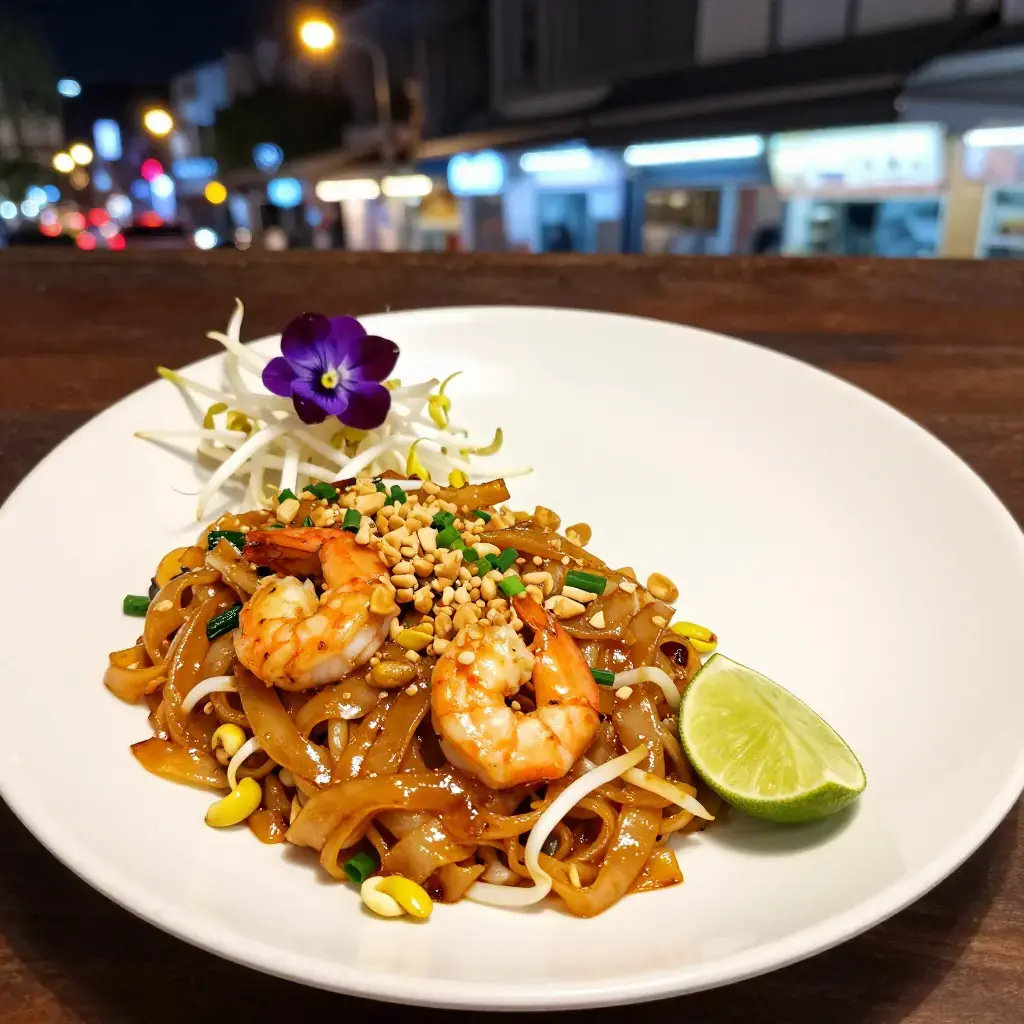
- Plate immediately. Top with bean sprouts, crushed peanuts, and lime wedges. Serve with the four Thai table condiments: chilli, fish sauce, sugar, vinegar.
Cook's Notes: High heat is the soul of pad thai — a home burner will do, but cook only one or two portions at a time or the wok floods and steams instead of fries.
All Revisions
generated
# Pad Thai Pad Thai became Thailand's national dish through a deliberate government campaign in the 1930s promoting noodle consumption and national identity, but it swiftly transcended its origins to become one of the world's great street foods. Sold from smoking woks along Bangkok's Yaowarat Road, the dish balances tamarind's sour sweetness, fish sauce's umami depth, and the crunch of bean sprouts and peanuts. Serves: 2 ## Ingredients - 200g (7 oz) dried sen lek rice noodles (3mm width) - 150g (5½ oz) raw prawns, peeled, or firm tofu cubed - 2 eggs - 80g (3 oz) bean sprouts - 3 spring onions, cut into 3 cm (1 in) lengths - 3 tbsp (45ml) neutral oil - 2 tbsp (30ml) tamarind paste (from a block, dissolved in water) - 1½ tbsp (22ml) fish sauce - 1 tbsp (15g) sugar - 30g (1 oz) dried shrimp (optional) - 2 tbsp (30ml) chopped preserved radish (chai poh), rinsed - 3 tbsp (30g) roasted peanuts, roughly crushed - Lime wedges, dried chilli flakes, extra fish sauce, and sugar to serve ## Instructions 1. Soak rice noodles in room-temperature water for 30 minutes until pliable but still firm. Drain well. 2. Mix tamarind paste, fish sauce, and sugar in a small bowl to make the sauce. 3. Heat a wok over the highest heat possible until smoking. Add oil. Stir-fry prawns or tofu 1–2 minutes until just cooked. Push to the side. 4. Crack eggs into the wok, scramble briefly, then mix with the protein. 5. Add drained noodles and pour sauce over. Toss vigorously for 1–2 minutes until noodles absorb the sauce and begin to char at the edges. 6. Add dried shrimp, preserved radish, and spring onions. Toss 30 seconds. 7. Plate immediately. Top with bean sprouts, crushed peanuts, and lime wedges. Serve with the four Thai table condiments: chilli, fish sauce, sugar, vinegar. **Cook's Notes:** High heat is the soul of pad thai — a home burner will do, but cook only one or two portions at a time or the wok floods and steams instead of fries.Images
Tags
- authentic
- from-input
- late-night
- noodles
- quick-and-easy
- seafood
- stir-fried
- thai