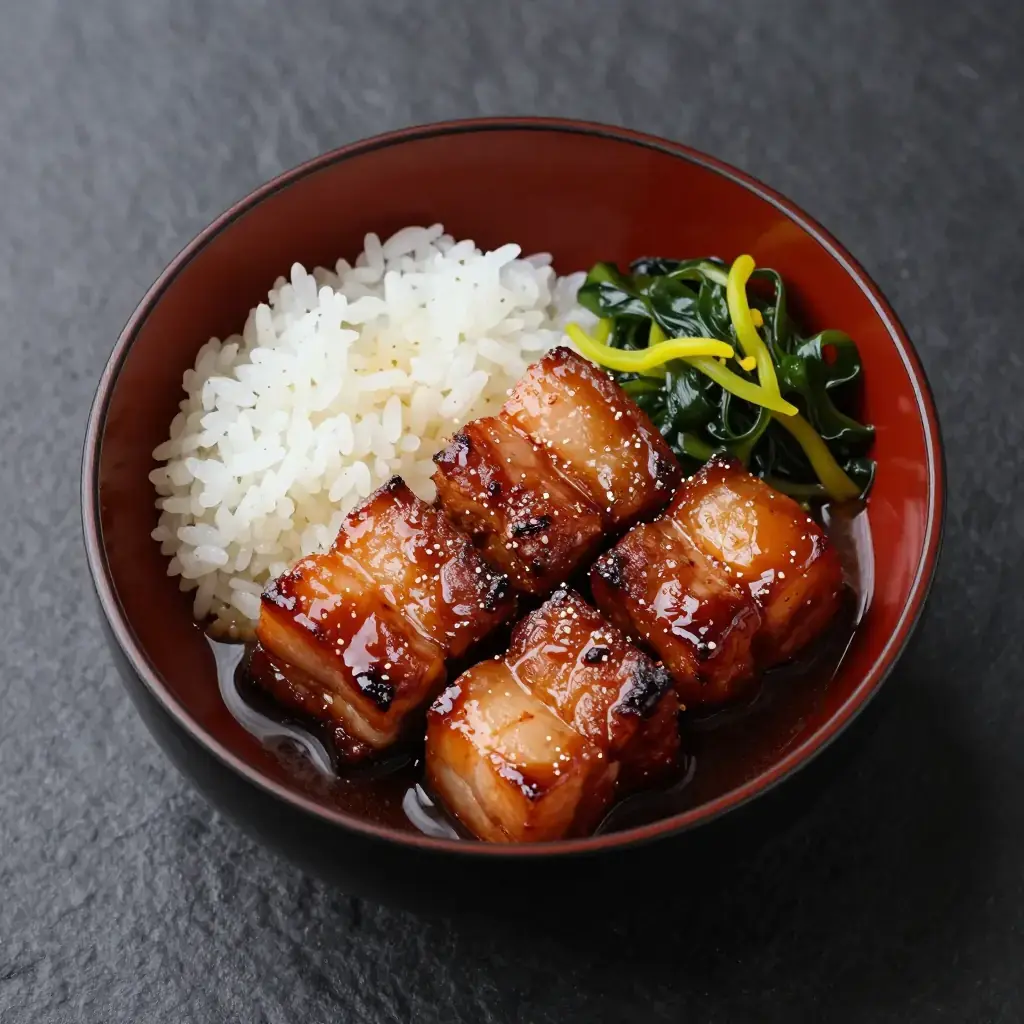
Buta no Kakuni
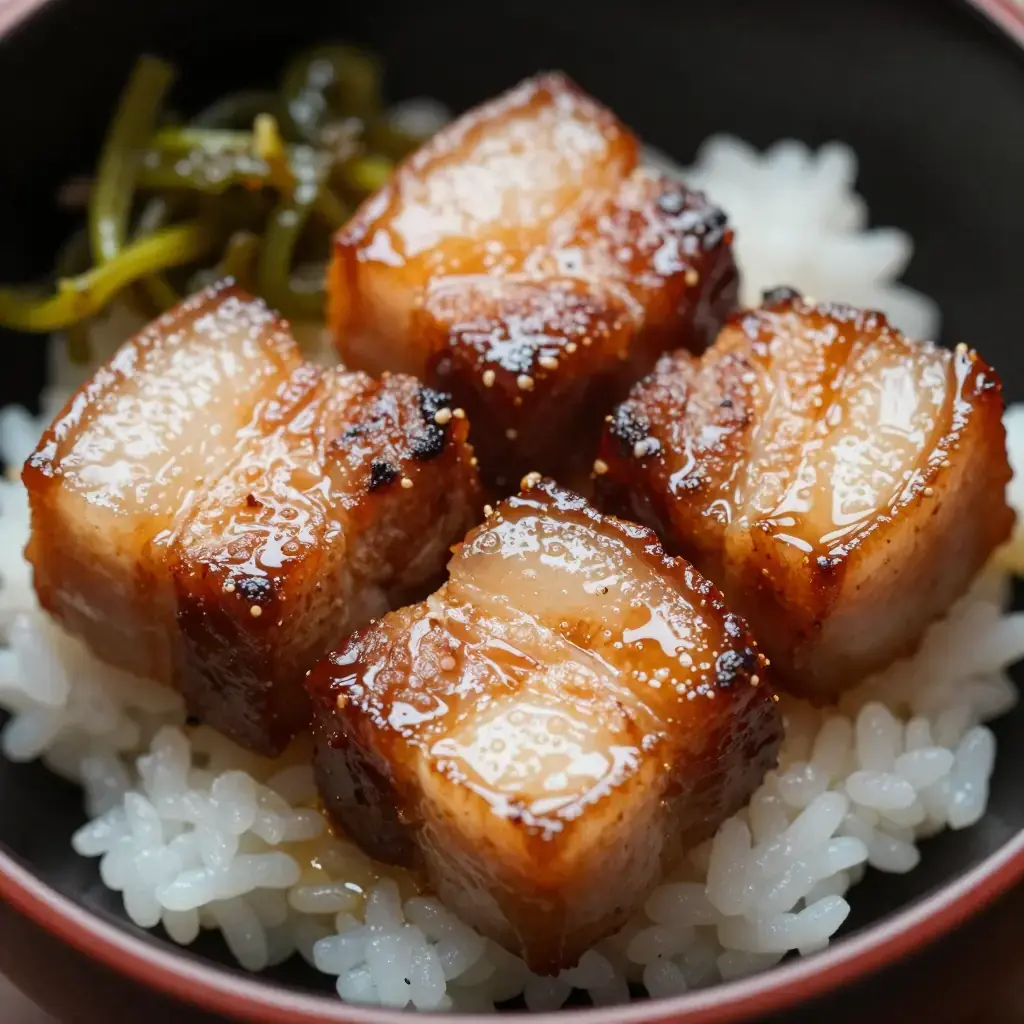
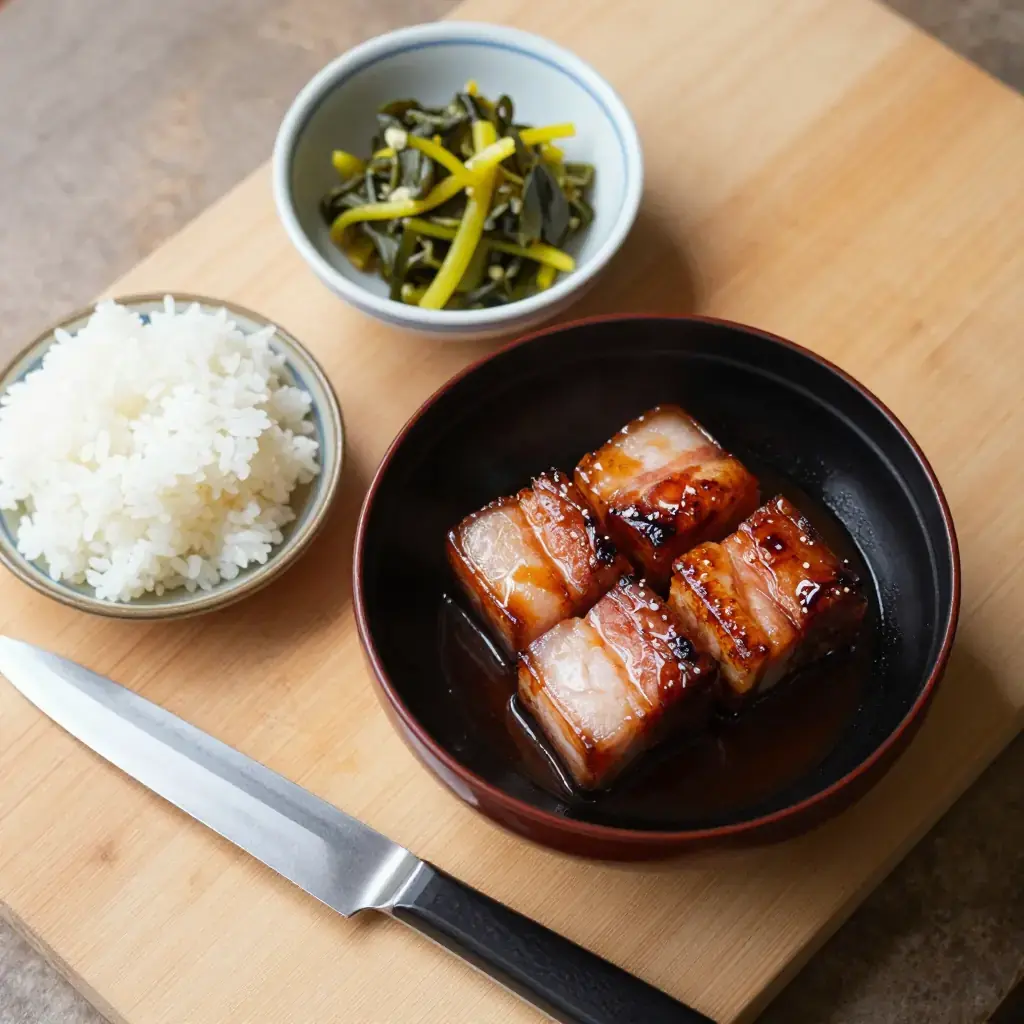
Kakuni — "square simmered" — is Japan's answer to the slow-braised pork belly: thick cubes of pork cooked until the fat trembles and the meat collapses at a chopstick's nudge. Originating in Nagasaki with influences from Chinese red-braised pork, kakuni is a weekend project that rewards patience with extraordinarily tender, lacquer-glazed results. It is even better the next day after the fat solidifies and can be skimmed.
Serves: 4
Ingredients
- 800g (1¾ lb) pork belly, skin on, cut into 5 cm (2 in) cubes
- 500ml (2 cups) dashi or water (for blanching)
- 200ml (¾ cup) sake
- 200ml (¾ cup) mirin
- 80ml (⅓ cup) soy sauce
- 2 tbsp (30g) sugar
- 400ml (1⅔ cups) dashi or water (for braising)
- 2 spring onions (for blanching)
- 1 knob of ginger (25g / 1 oz), sliced
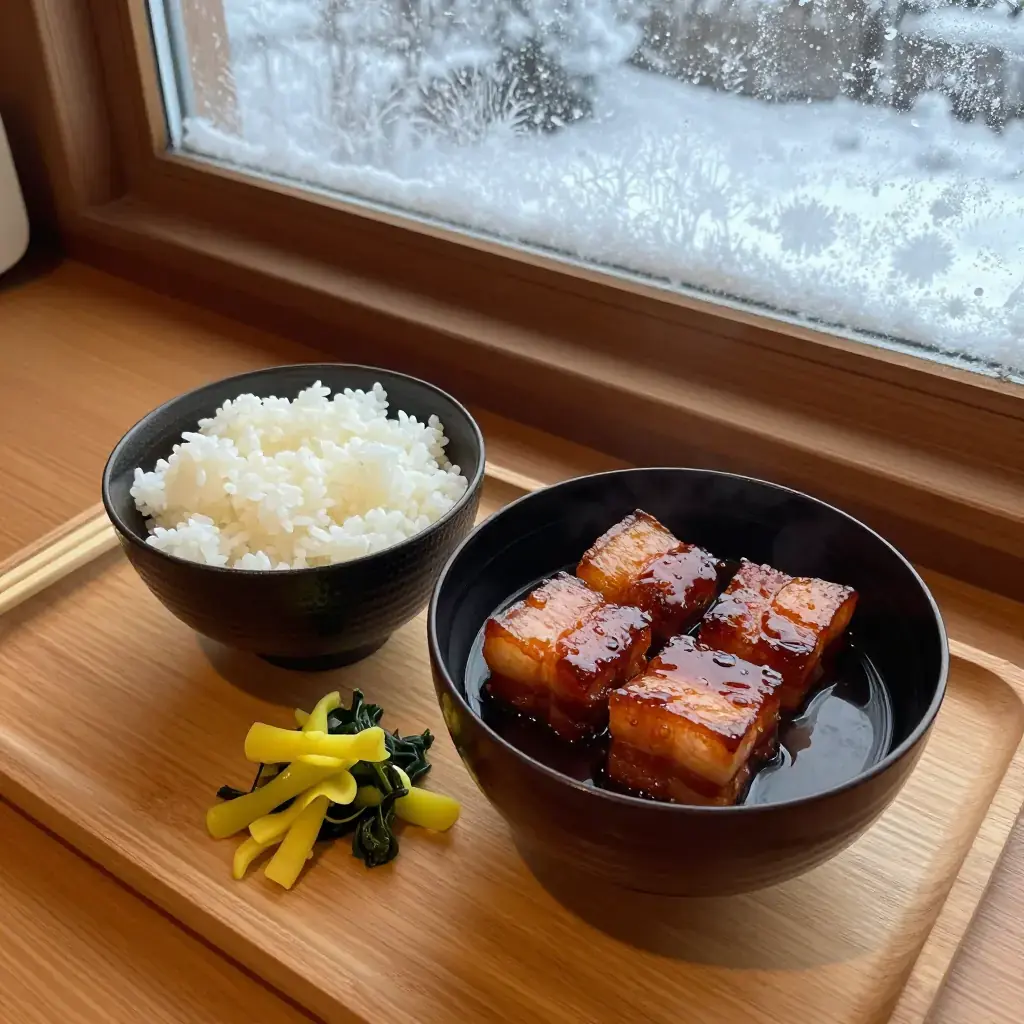
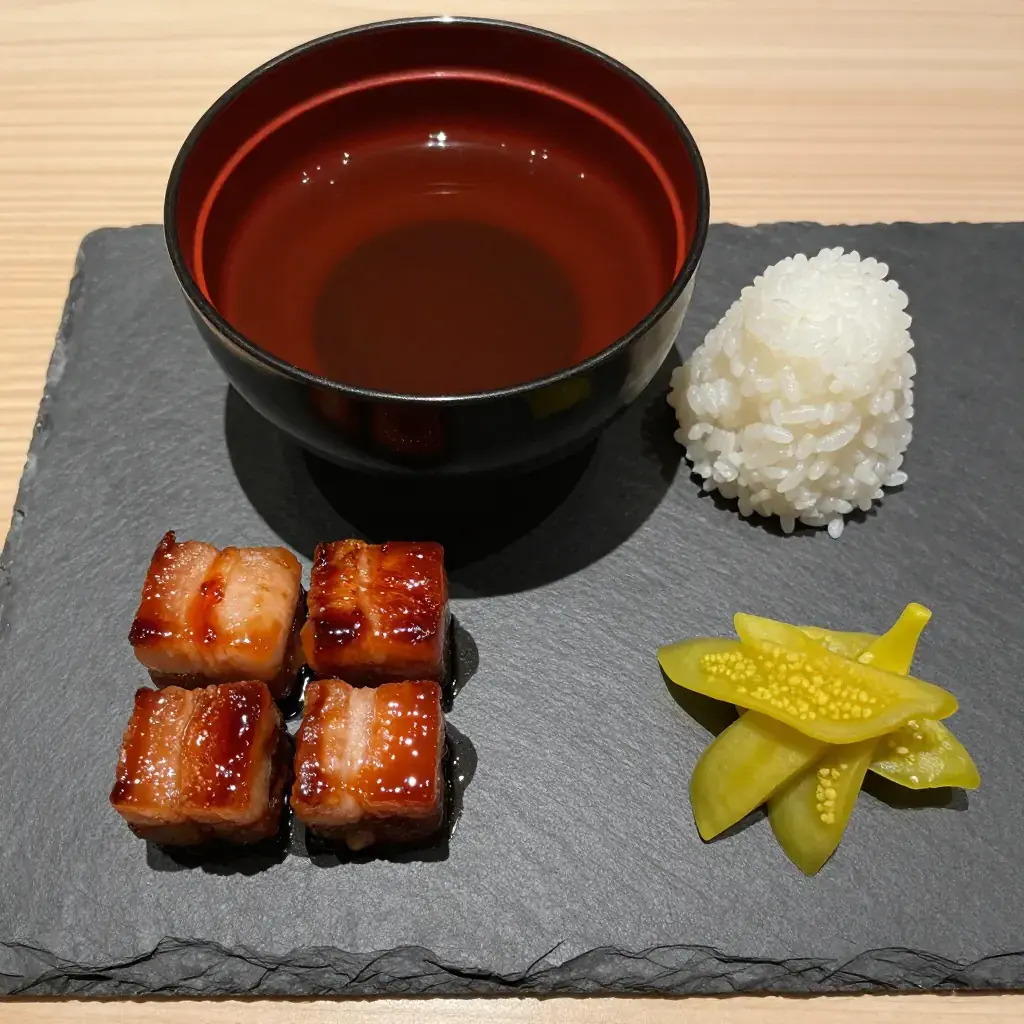
- Steamed rice and mustard greens to serve
Instructions
- Place pork cubes in a pot with enough water to cover. Add the spring onions and half the ginger. Bring to a boil, skim vigorously, then simmer 10 minutes. Drain and rinse pork under cold water.
- Return pork to the pot (skin side down). Add sake, mirin, soy sauce, sugar, remaining ginger, and 400ml dashi. Bring to a boil, scrape off any foam.
- Cover with a drop lid (otoshibuta — a piece of foil pressed to the surface works well). Reduce heat to a gentle simmer and cook 2–2½ hours, turning pork halfway, until a chopstick pierces the fat with no resistance.
- Remove pork. Boil the braising liquid over high heat for 8–10 minutes to reduce and glaze. Return pork and turn gently to coat.
- Rest at least 30 minutes before serving over rice. Refrigerate overnight for best flavour — skim solidified fat before reheating.
Cook's Notes: A pressure cooker reduces the braise to 35 minutes at high pressure. Serve with Japanese mustard (karashi) to cut through the richness.
All Revisions
generated
# Buta no Kakuni Kakuni — "square simmered" — is Japan's answer to the slow-braised pork belly: thick cubes of pork cooked until the fat trembles and the meat collapses at a chopstick's nudge. Originating in Nagasaki with influences from Chinese red-braised pork, kakuni is a weekend project that rewards patience with extraordinarily tender, lacquer-glazed results. It is even better the next day after the fat solidifies and can be skimmed. Serves: 4 ## Ingredients - 800g (1¾ lb) pork belly, skin on, cut into 5 cm (2 in) cubes - 500ml (2 cups) dashi or water (for blanching) - 200ml (¾ cup) sake - 200ml (¾ cup) mirin - 80ml (⅓ cup) soy sauce - 2 tbsp (30g) sugar - 400ml (1⅔ cups) dashi or water (for braising) - 2 spring onions (for blanching) - 1 knob of ginger (25g / 1 oz), sliced - Steamed rice and mustard greens to serve ## Instructions 1. Place pork cubes in a pot with enough water to cover. Add the spring onions and half the ginger. Bring to a boil, skim vigorously, then simmer 10 minutes. Drain and rinse pork under cold water. 2. Return pork to the pot (skin side down). Add sake, mirin, soy sauce, sugar, remaining ginger, and 400ml dashi. Bring to a boil, scrape off any foam. 3. Cover with a drop lid (otoshibuta — a piece of foil pressed to the surface works well). Reduce heat to a gentle simmer and cook 2–2½ hours, turning pork halfway, until a chopstick pierces the fat with no resistance. 4. Remove pork. Boil the braising liquid over high heat for 8–10 minutes to reduce and glaze. Return pork and turn gently to coat. 5. Rest at least 30 minutes before serving over rice. Refrigerate overnight for best flavour — skim solidified fat before reheating. **Cook's Notes:** A pressure cooker reduces the braise to 35 minutes at high pressure. Serve with Japanese mustard (karashi) to cut through the richness.Images
Tags
- braised
- comfort-food
- dinner
- from-input
- indulgent
- japanese
- weekend-project
- winter