Nurungji
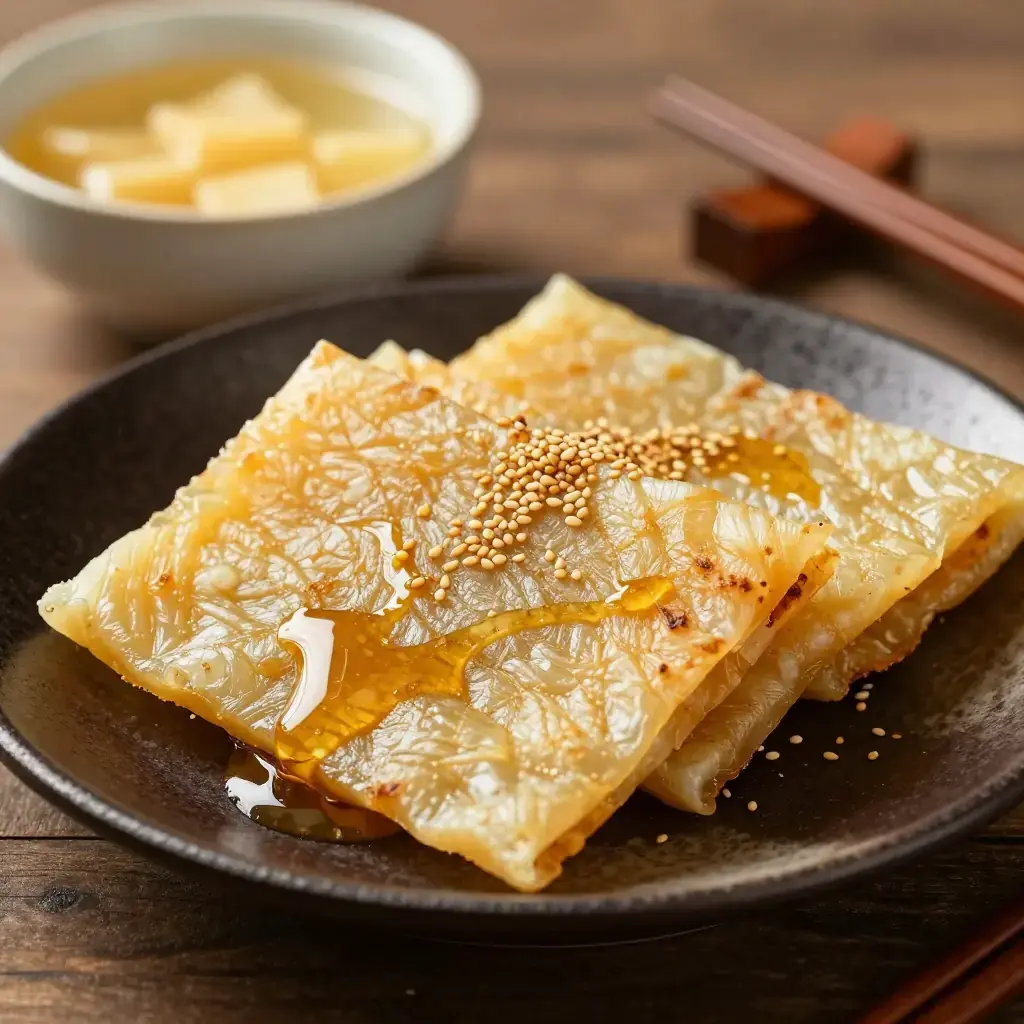
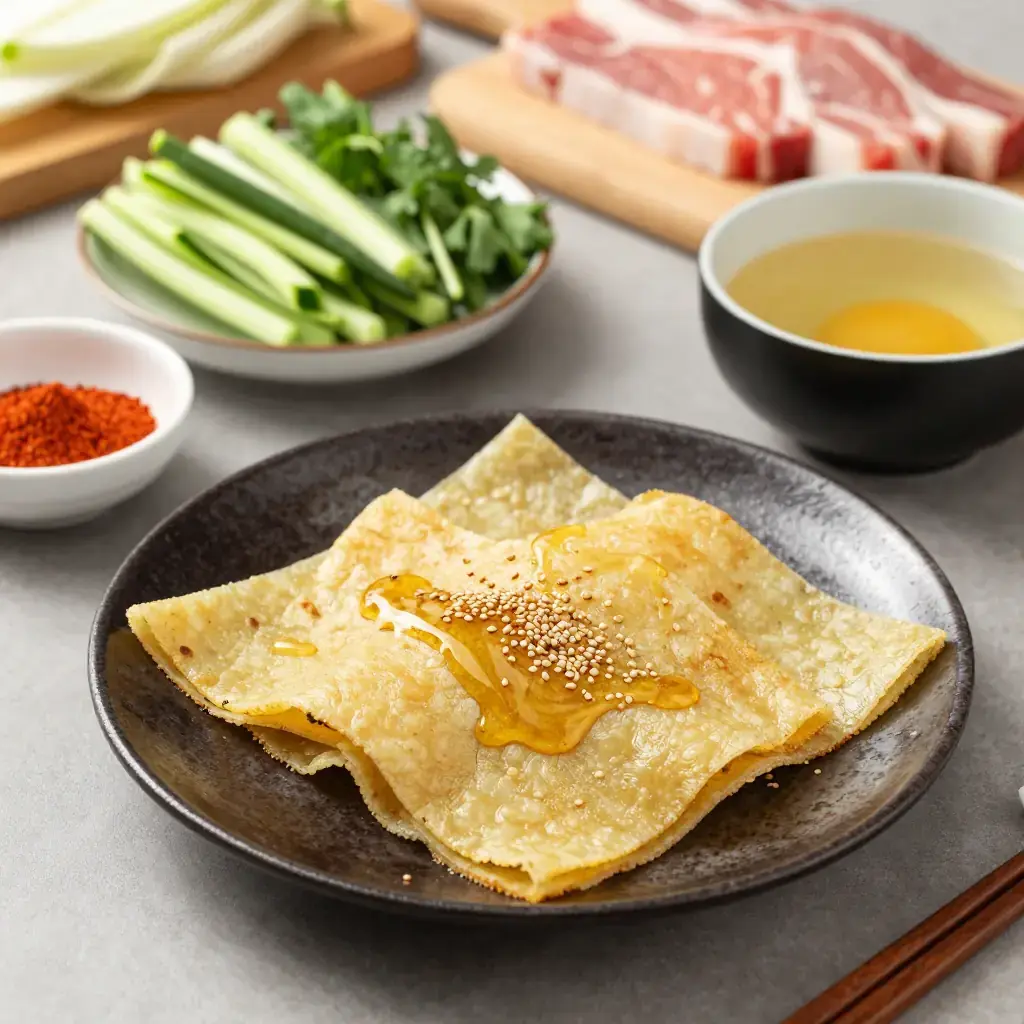
Nurungji is the treasured crispy rice crust that forms at the bottom of the Korean stone pot (dolsot) or cast-iron pan — the Korean equivalent of the Persian tahdig or Spanish socarrat. Once deliberately scraped as a cook's snack and given to children as a treat, it is now sold packaged in Korean supermarkets and served as a dessert soup. This version makes it intentionally, then serves it simply with honey and toasted sesame.
Serves: 4
Ingredients
- 400g (2 cups) short-grain white rice (Korean or Japanese)
- 500ml (2 cups) water
- 1 tbsp sesame oil
- ½ tsp salt
- 1.2 litres (5 cups) hot water (for nurungji soup version)
To Serve
- 3 tbsp honey or rice syrup
- 1 tbsp toasted sesame seeds
- A pinch of flaky sea salt
- Optional: thinly sliced spring onion
Instructions
- Cook the rice with 500ml water in a heavy-bottomed pan or dolsot until all water is absorbed and the rice is cooked through, about 15 minutes.
- Drizzle sesame oil over the cooked rice and add salt. Spread evenly across the bottom of the pan.
- Increase heat to medium and press the rice firmly against the base with a spatula. Do not stir.
- Cook undisturbed for 8–10 minutes until you hear a steady crackling sound. Reduce heat to low and continue for 5 more minutes.
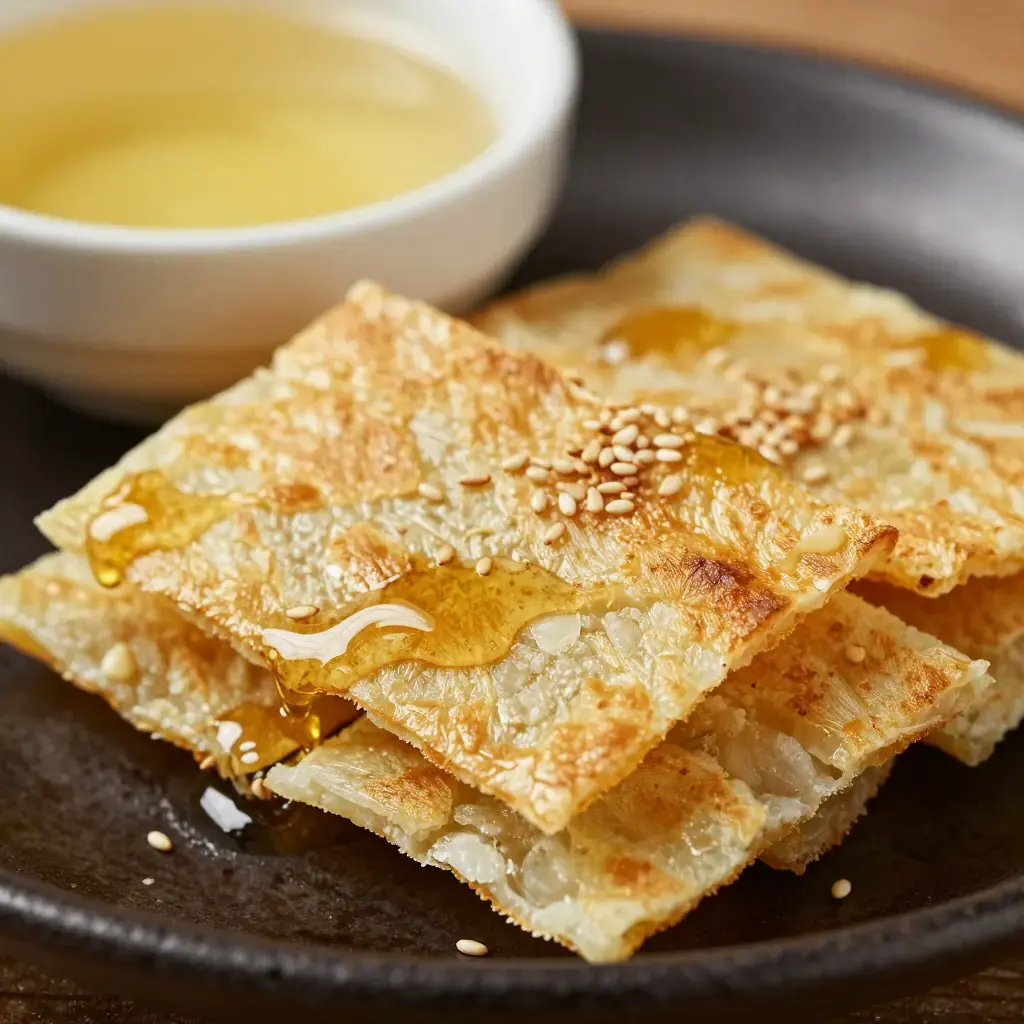
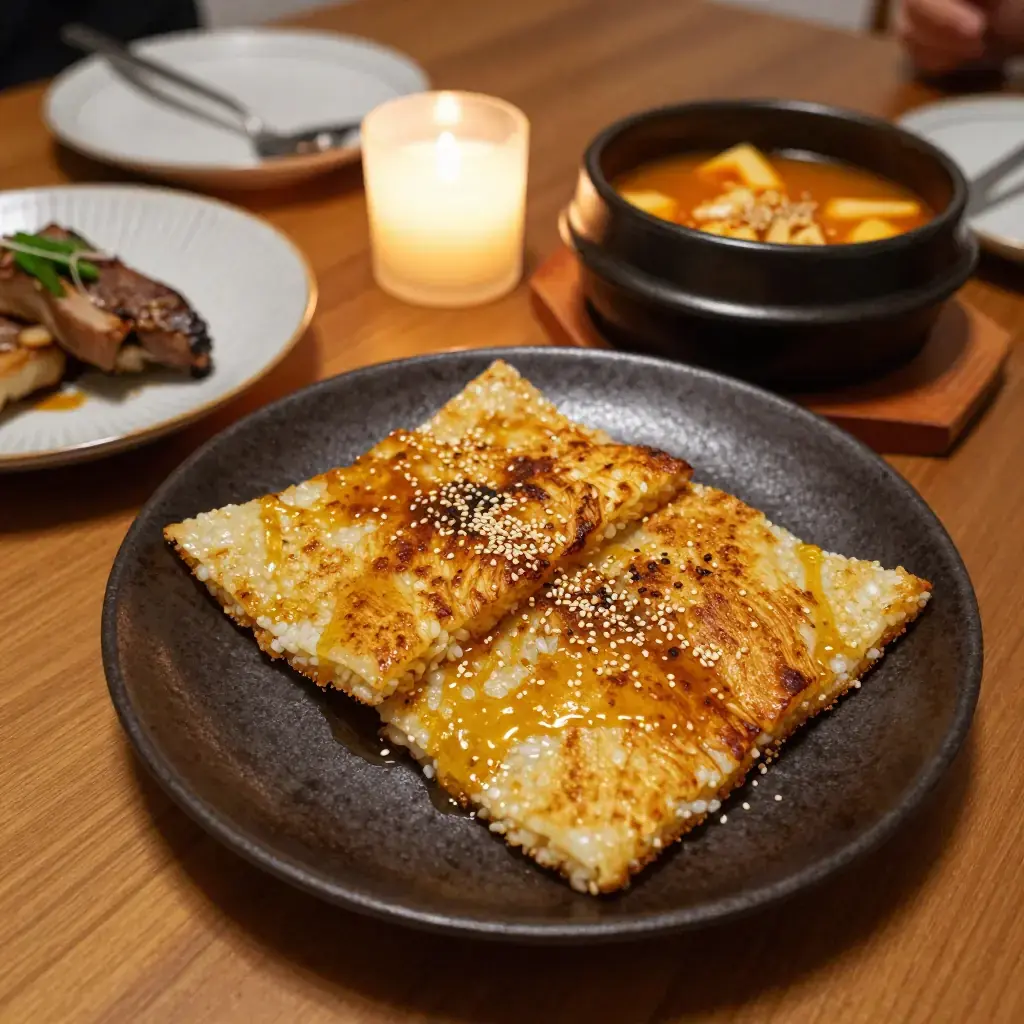
- Slide the rice out: the bottom layer will be golden, crispy, and fragrant. Break into large pieces.
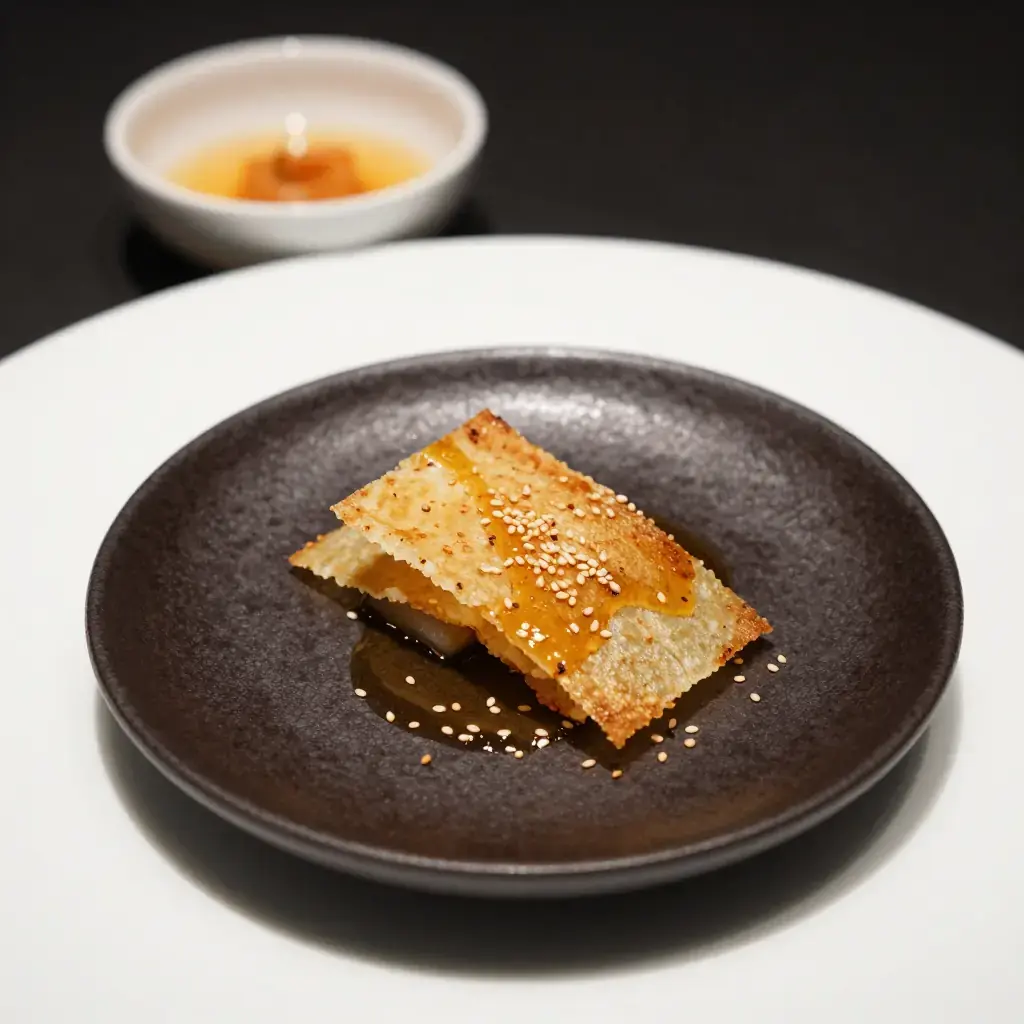
- Snack version: Drizzle with honey, scatter sesame seeds and sea salt over the crispy pieces and eat immediately.
- Soup version (nurungji tang): Return the crust pieces to the pan, add 1.2 litres of hot water, and simmer 10–15 minutes until the crust softens into a light porridge. Season and serve as a digestive.
Cook's Notes: A cast-iron pan or stone dolsot gives the best crust — thin pans heat unevenly. The crackling sound is your guide: when it becomes loud and steady, the crust is forming. Patience here is rewarded.
All Revisions
generated
# Nurungji Nurungji is the treasured crispy rice crust that forms at the bottom of the Korean stone pot (dolsot) or cast-iron pan — the Korean equivalent of the Persian tahdig or Spanish socarrat. Once deliberately scraped as a cook's snack and given to children as a treat, it is now sold packaged in Korean supermarkets and served as a dessert soup. This version makes it intentionally, then serves it simply with honey and toasted sesame. Serves: 4 ## Ingredients - 400g (2 cups) short-grain white rice (Korean or Japanese) - 500ml (2 cups) water - 1 tbsp sesame oil - ½ tsp salt - 1.2 litres (5 cups) hot water (for nurungji soup version) ### To Serve - 3 tbsp honey or rice syrup - 1 tbsp toasted sesame seeds - A pinch of flaky sea salt - Optional: thinly sliced spring onion ## Instructions 1. Cook the rice with 500ml water in a heavy-bottomed pan or dolsot until all water is absorbed and the rice is cooked through, about 15 minutes. 2. Drizzle sesame oil over the cooked rice and add salt. Spread evenly across the bottom of the pan. 3. Increase heat to medium and press the rice firmly against the base with a spatula. Do not stir. 4. Cook undisturbed for 8–10 minutes until you hear a steady crackling sound. Reduce heat to low and continue for 5 more minutes. 5. Slide the rice out: the bottom layer will be golden, crispy, and fragrant. Break into large pieces. 6. **Snack version:** Drizzle with honey, scatter sesame seeds and sea salt over the crispy pieces and eat immediately. 7. **Soup version (nurungji tang):** Return the crust pieces to the pan, add 1.2 litres of hot water, and simmer 10–15 minutes until the crust softens into a light porridge. Season and serve as a digestive. **Cook's Notes:** A cast-iron pan or stone dolsot gives the best crust — thin pans heat unevenly. The crackling sound is your guide: when it becomes loud and steady, the crust is forming. Patience here is rewarded.Images
Tags
- comfort-food
- dairy-free
- from-input
- gluten-free
- korean
- rice
- snack
- vegetarian