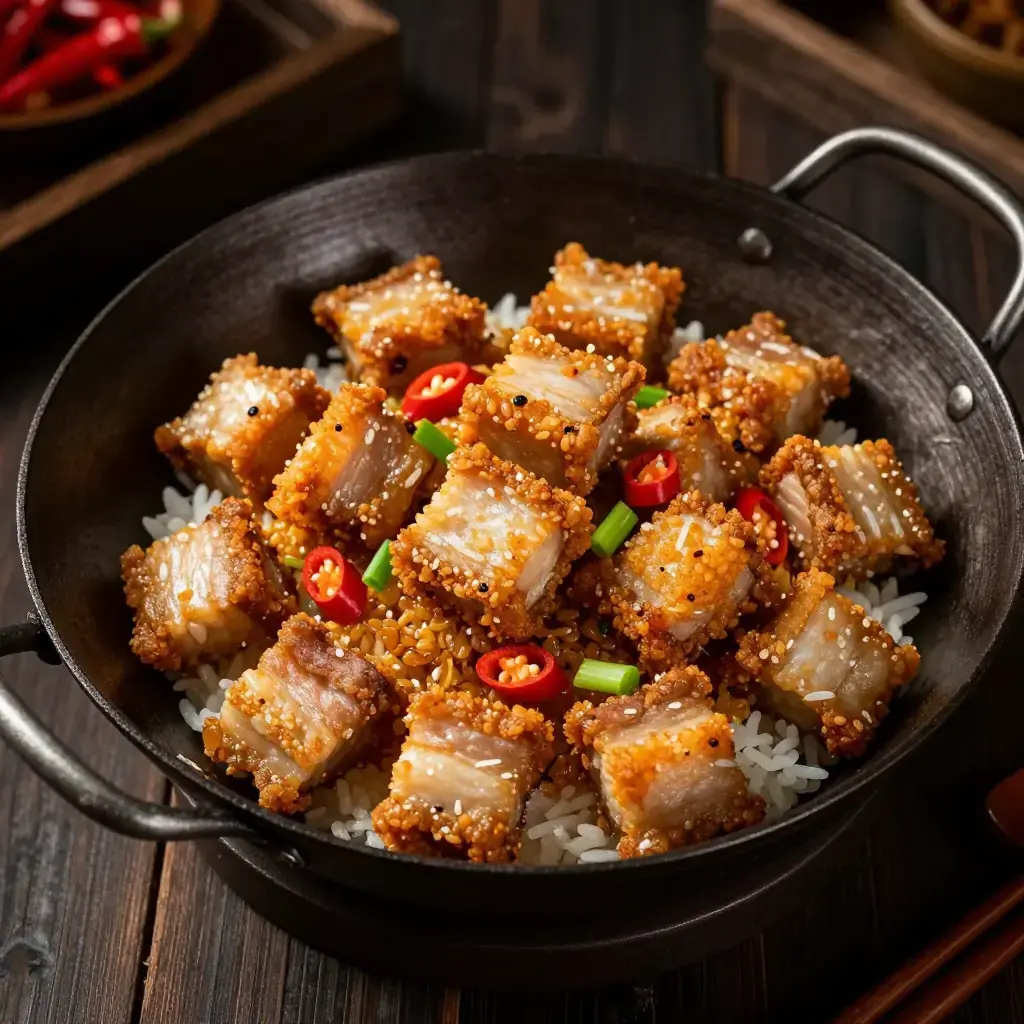
Xiang Xi Suan Rou
Xiang Xi Suan Rou is the emblematic preserved pork of western Hunan province, born of necessity in the mountainous Tujia and Miao communities where refrigeration did not exist. Pork is dry-cured in salt and then fermented for several days with raw rice and rice wine, developing a pleasant sourness and complex funk. It is then pan-fried until crisp — an extraordinary contrast of crunch, tang, and the deep savour of cured pork.
Serves: 4
Ingredients
Fermentation (begin 3–5 days ahead):
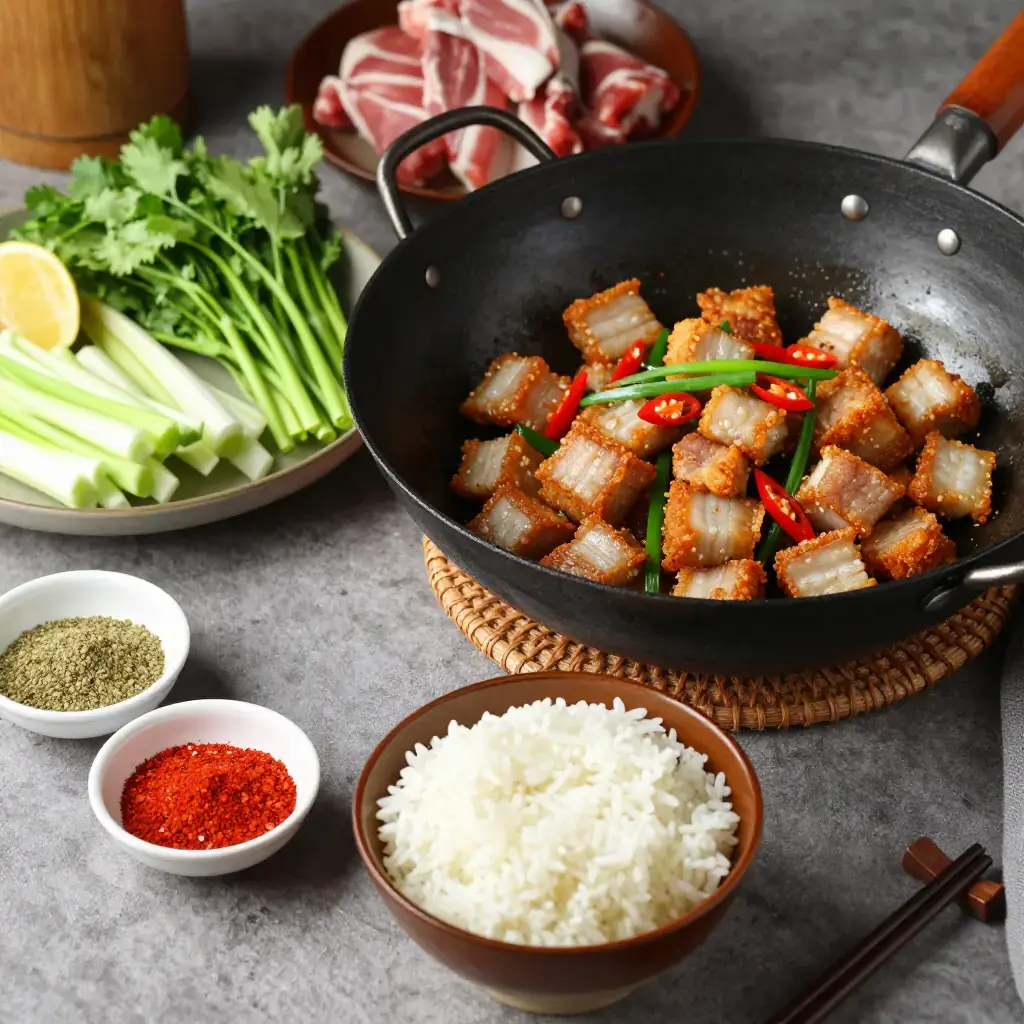
- 600 g (1.3 lb) pork shoulder or pork belly, skin on, cut into 4 cm (1.5 in) cubes
- 25 g (1 oz) coarse sea salt
- 40 g (1.5 oz) raw glutinous rice (nuo mi)
- 2 tbsp (30 ml) Shaoxing rice wine
- 1 tsp (4 g) ground white pepper
To cook:
- 2 tbsp (30 ml) lard or neutral oil
- 4 fresh red chillies, sliced
- 2 garlic cloves, sliced
- 1 thumb ginger, sliced
- 1 tsp (5 ml) light soy sauce
- Fresh scallions, to serve
Instructions
- Three to five days before: rub pork cubes thoroughly with salt. Toast glutinous rice in a dry skillet until lightly golden and fragrant, about 3 minutes. Let cool, then grind coarsely in a blender or mortar — it should look like coarse crumbs, not flour.
- Combine pork, ground rice, Shaoxing wine, and white pepper in a non-reactive container (glass jar or ceramic crock). Pack tightly, press out air pockets, and cover with a lid. Ferment at room temperature (18–22°C / 64–72°F) for 3–5 days. The pork will develop a sour aroma and the rice will become sticky and slightly gelatinous around it.
- To cook: remove pork from fermentation vessel, leaving excess rice coating behind. Pat lightly with paper towels.
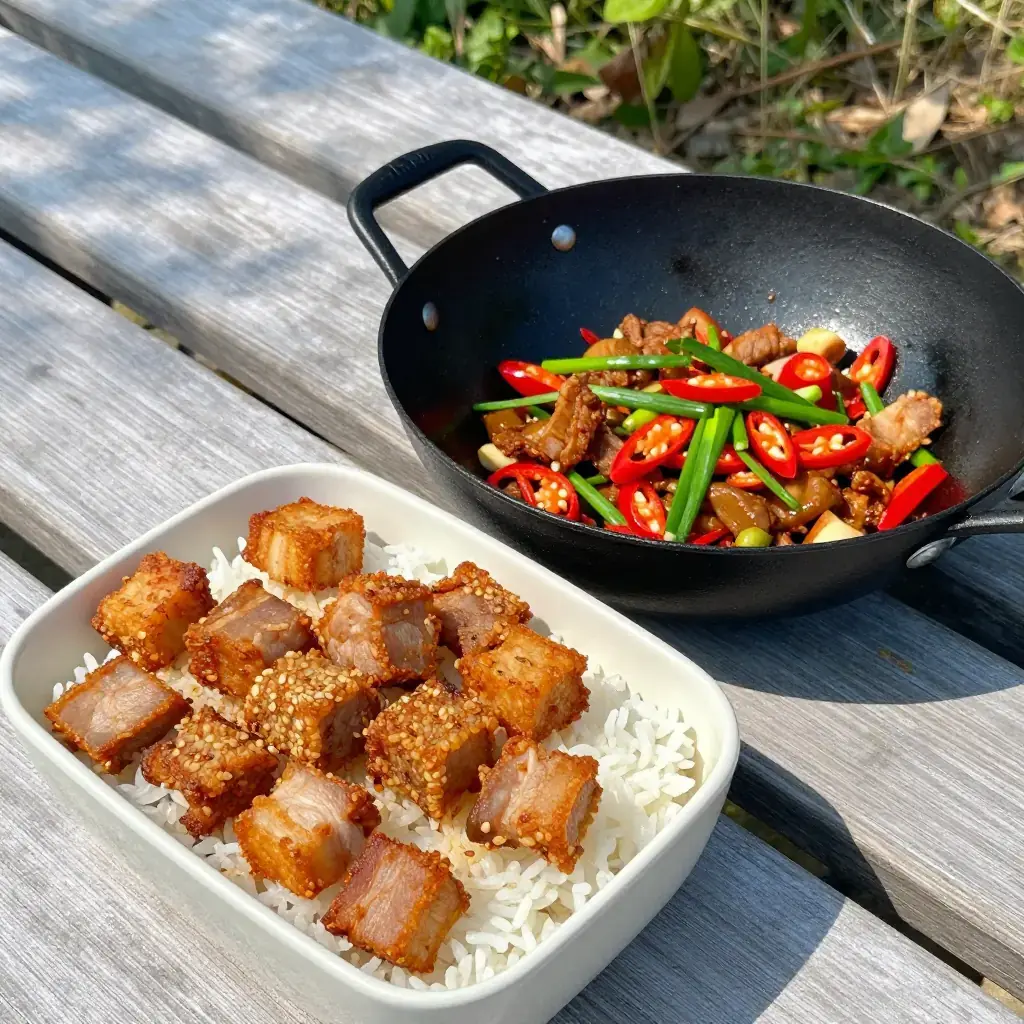
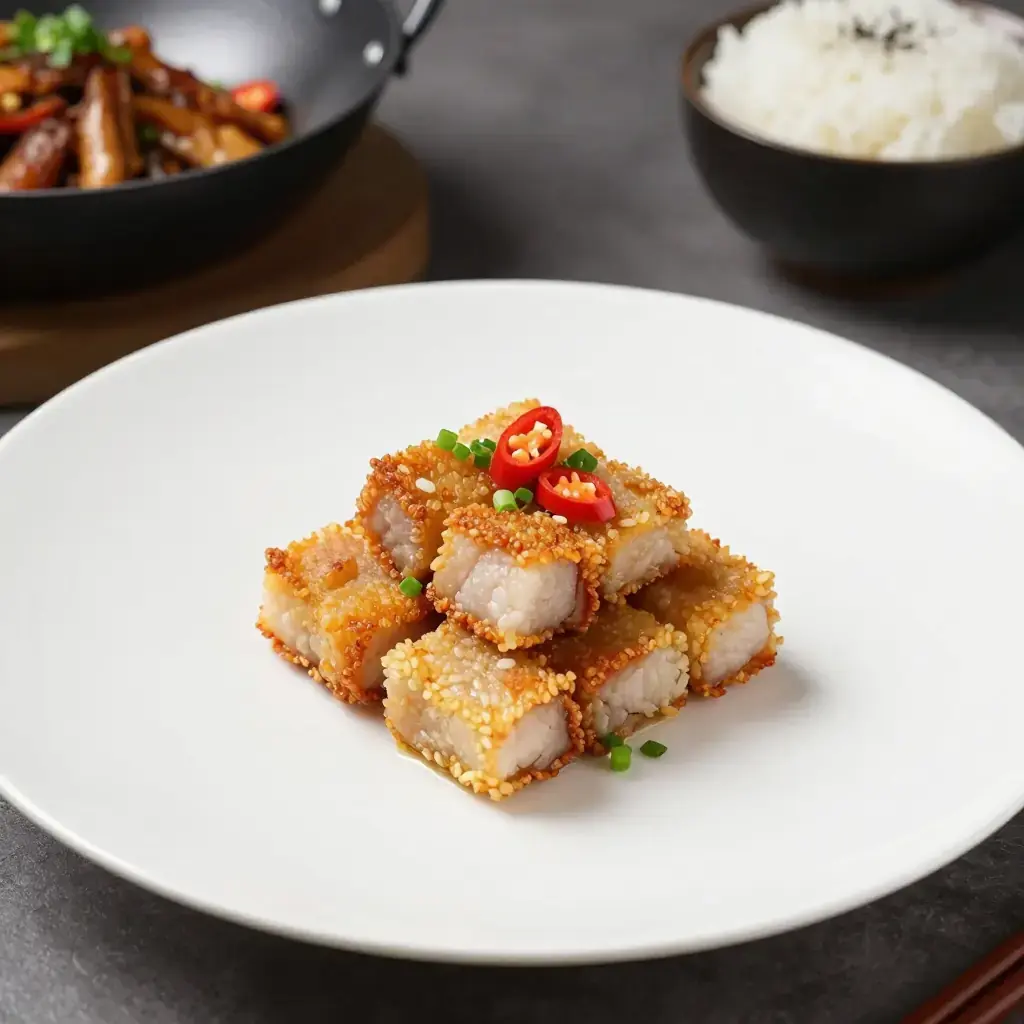
- Heat lard in a wok or heavy skillet over medium heat. Add pork and fry, turning occasionally, 8–10 minutes until the surface is golden and crisp and the fat is rendered.
- Add chillies, garlic, and ginger. Stir-fry 2 minutes. Add soy sauce and toss.
- Serve immediately over steamed rice, garnished with scallions.
Cook's Notes: The fermentation temperature matters — too warm (above 25°C / 77°F) and the pork can develop off flavours. Too cold and fermentation is very slow. 3 days produces a mild sourness; 5 days a pronounced tang. This preparation is distinct from cured la rou (smoked pork) — the raw-rice fermentation is what defines it.
All Revisions
generated
# Xiang Xi Suan Rou Xiang Xi Suan Rou is the emblematic preserved pork of western Hunan province, born of necessity in the mountainous Tujia and Miao communities where refrigeration did not exist. Pork is dry-cured in salt and then fermented for several days with raw rice and rice wine, developing a pleasant sourness and complex funk. It is then pan-fried until crisp — an extraordinary contrast of crunch, tang, and the deep savour of cured pork. Serves: 4 ## Ingredients **Fermentation (begin 3–5 days ahead):** - 600 g (1.3 lb) pork shoulder or pork belly, skin on, cut into 4 cm (1.5 in) cubes - 25 g (1 oz) coarse sea salt - 40 g (1.5 oz) raw glutinous rice (nuo mi) - 2 tbsp (30 ml) Shaoxing rice wine - 1 tsp (4 g) ground white pepper **To cook:** - 2 tbsp (30 ml) lard or neutral oil - 4 fresh red chillies, sliced - 2 garlic cloves, sliced - 1 thumb ginger, sliced - 1 tsp (5 ml) light soy sauce - Fresh scallions, to serve ## Instructions 1. Three to five days before: rub pork cubes thoroughly with salt. Toast glutinous rice in a dry skillet until lightly golden and fragrant, about 3 minutes. Let cool, then grind coarsely in a blender or mortar — it should look like coarse crumbs, not flour. 2. Combine pork, ground rice, Shaoxing wine, and white pepper in a non-reactive container (glass jar or ceramic crock). Pack tightly, press out air pockets, and cover with a lid. Ferment at room temperature (18–22°C / 64–72°F) for 3–5 days. The pork will develop a sour aroma and the rice will become sticky and slightly gelatinous around it. 3. To cook: remove pork from fermentation vessel, leaving excess rice coating behind. Pat lightly with paper towels. 4. Heat lard in a wok or heavy skillet over medium heat. Add pork and fry, turning occasionally, 8–10 minutes until the surface is golden and crisp and the fat is rendered. 5. Add chillies, garlic, and ginger. Stir-fry 2 minutes. Add soy sauce and toss. 6. Serve immediately over steamed rice, garnished with scallions. **Cook's Notes:** The fermentation temperature matters — too warm (above 25°C / 77°F) and the pork can develop off flavours. Too cold and fermentation is very slow. 3 days produces a mild sourness; 5 days a pronounced tang. This preparation is distinct from cured la rou (smoked pork) — the raw-rice fermentation is what defines it.Images

Tags
- authentic
- fermented
- from-input
- heirloom
- hunan
- multi-day
- rice
- stir-fried