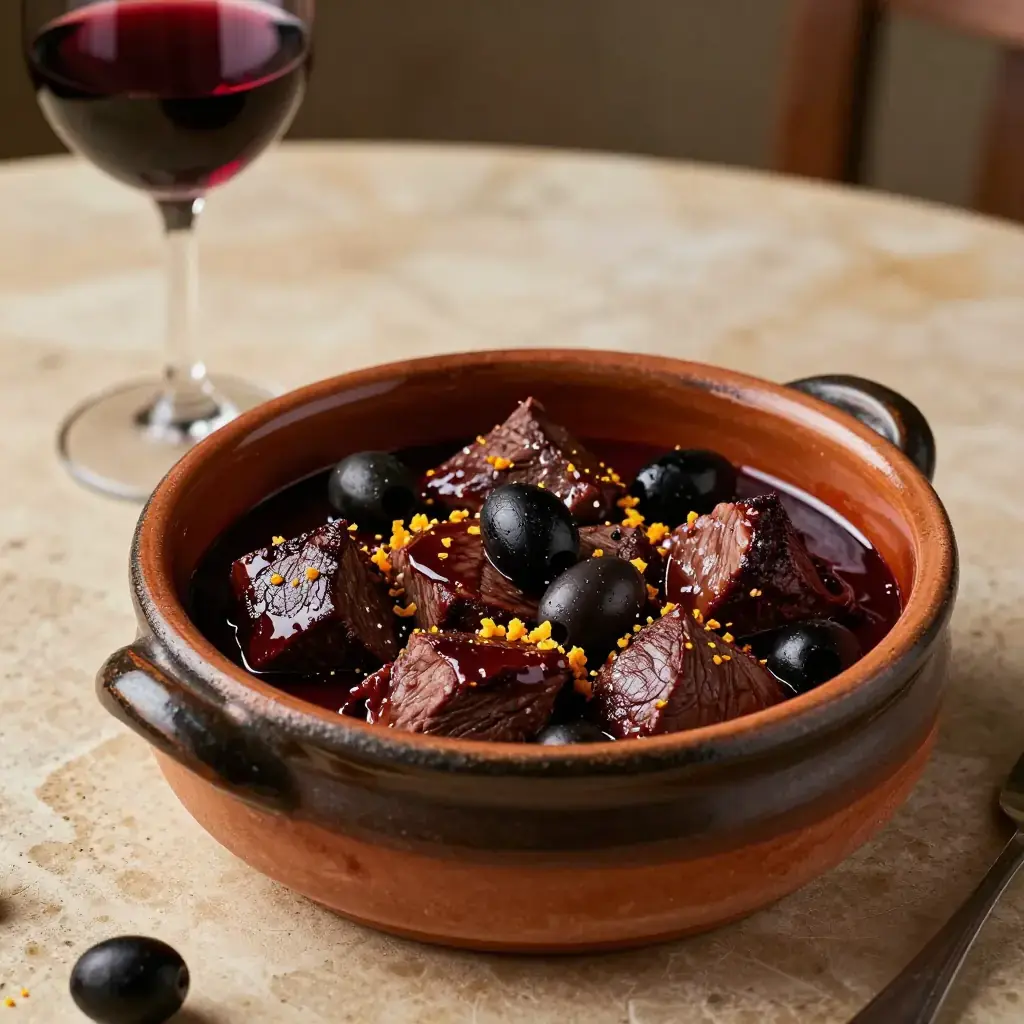
Daube Provençale
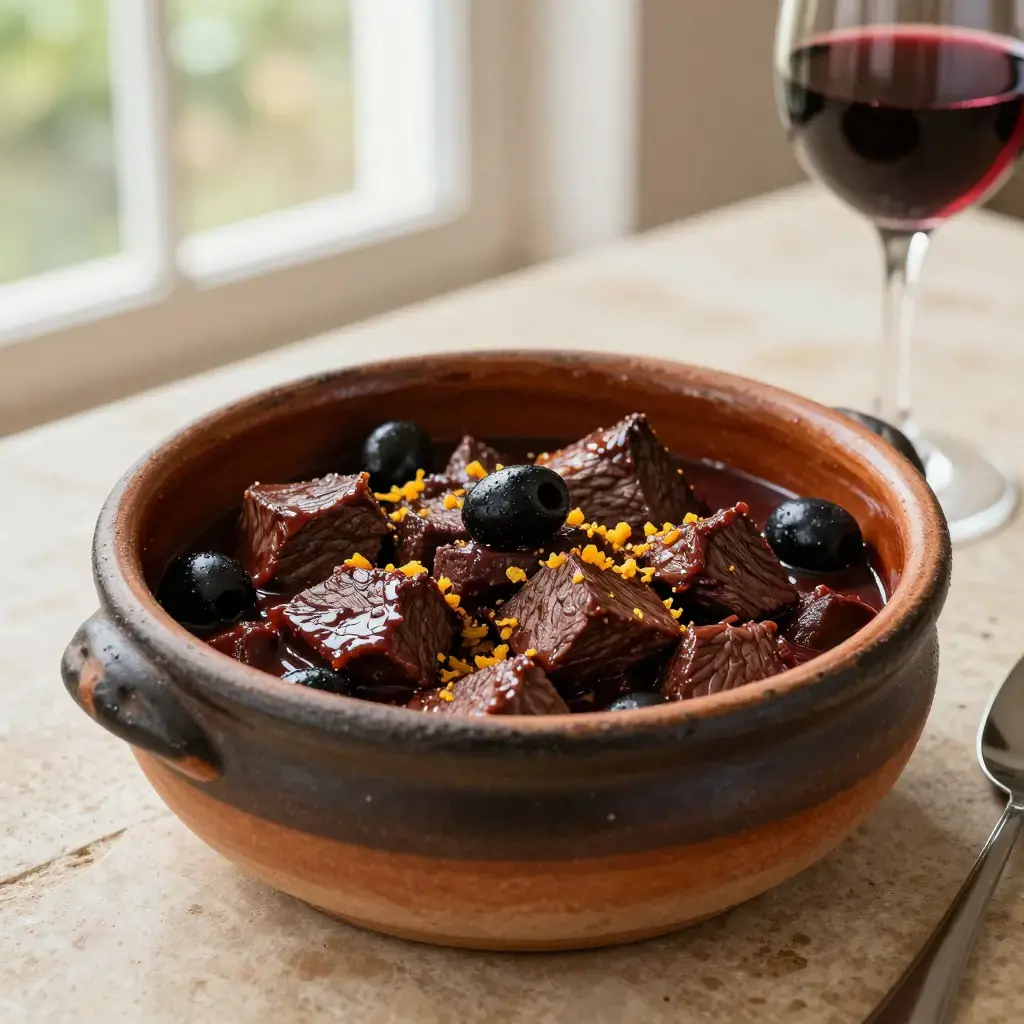
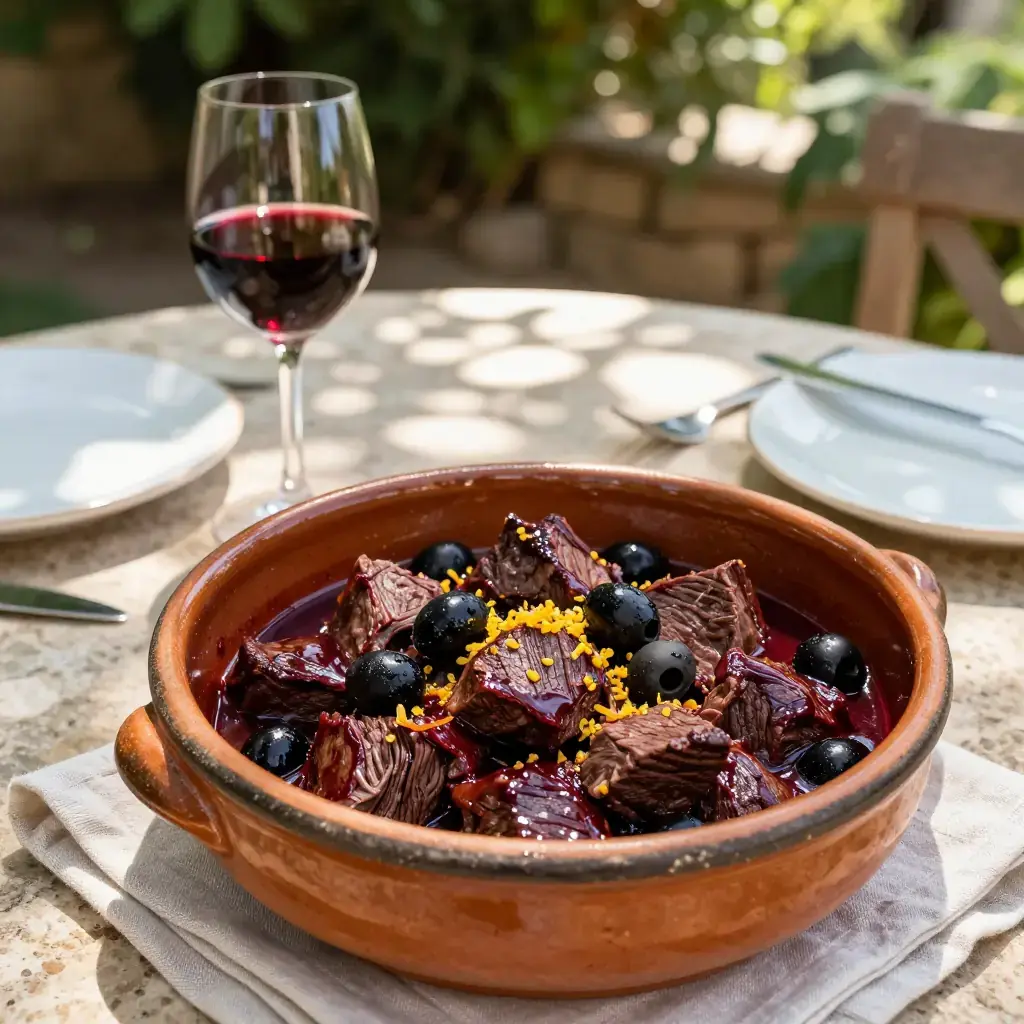
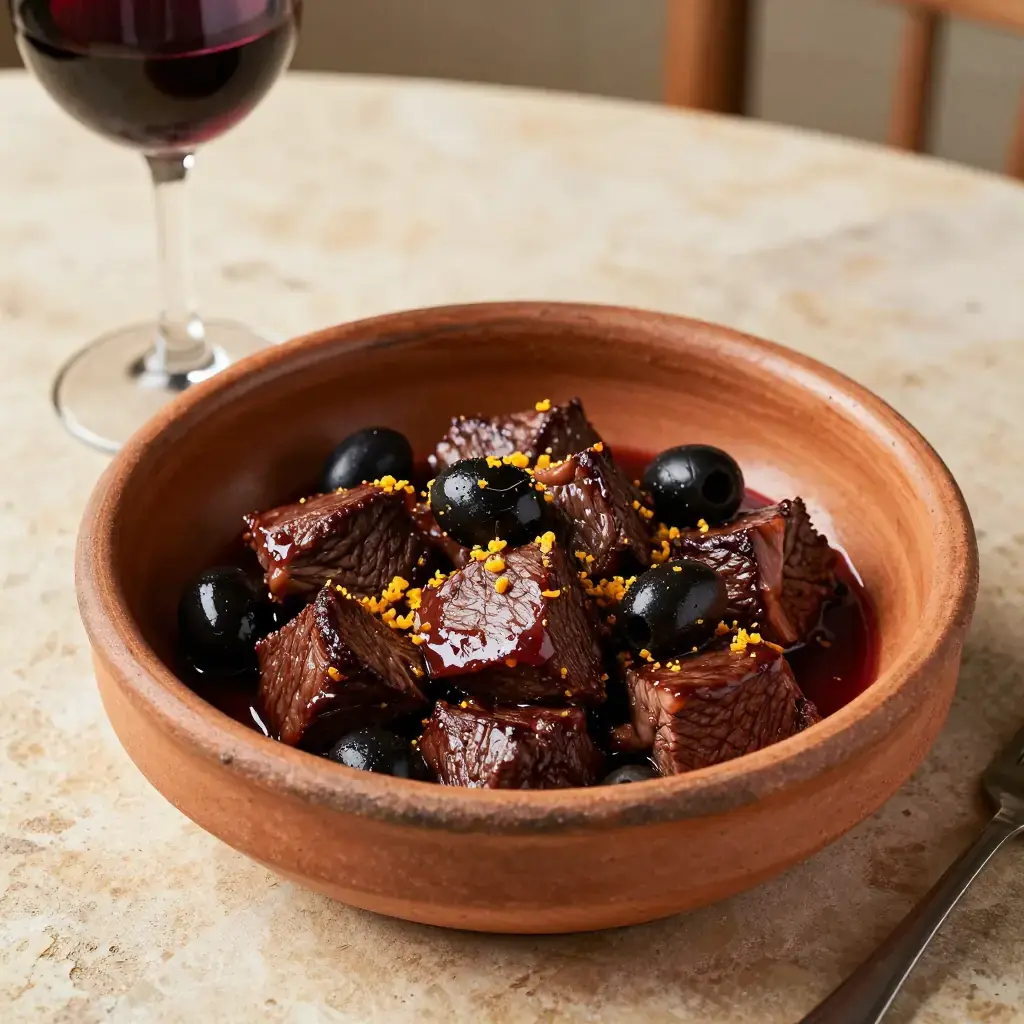
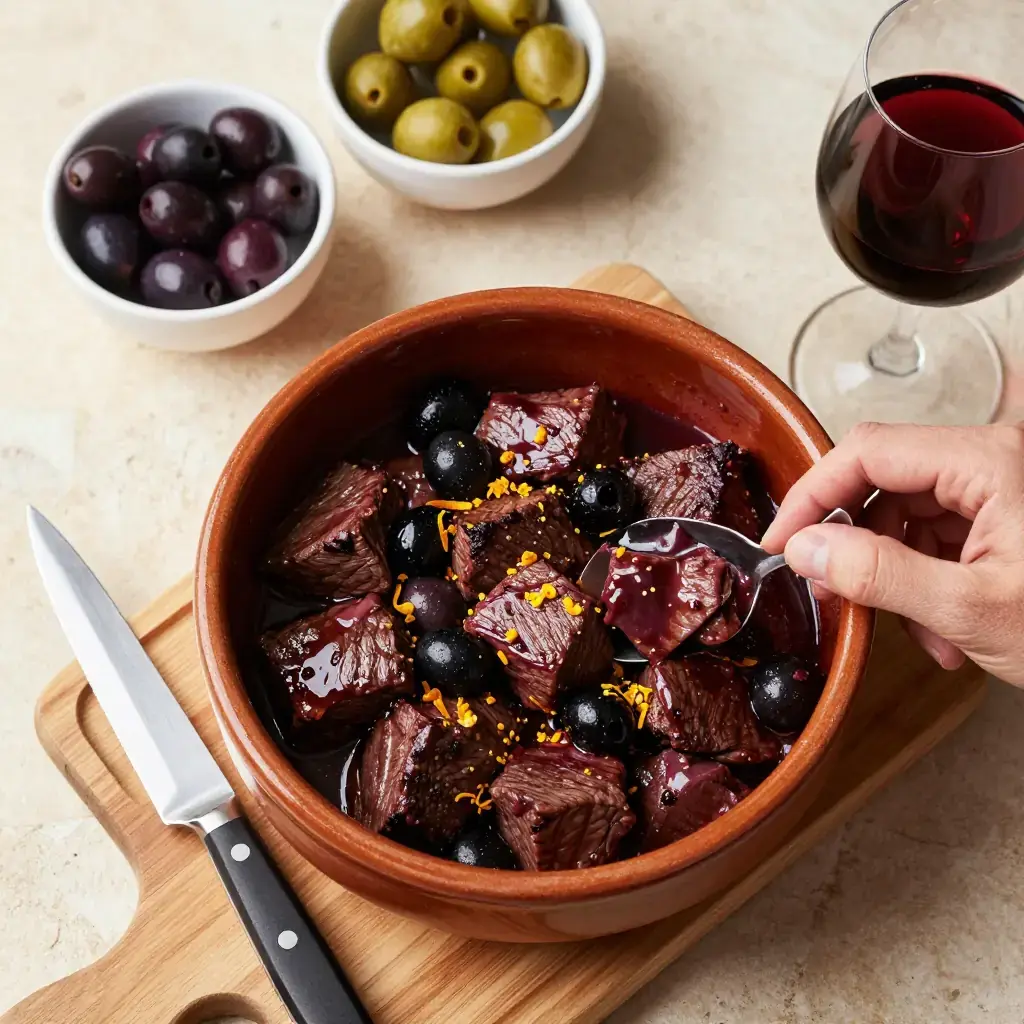
Daube is the defining slow-braise of Provence, where beef is marinated in local wine, threaded with salt pork, and cooked for hours with olives, orange peel, and herbes de Provence until the collagen melts into a sauce of extraordinary depth. Families pass their daubière — the traditional earthenware pot — from generation to generation, each vessel seasoned with decades of braises.
Serves: 6
Ingredients
- 1.5 kg (3.3 lb) beef chuck or beef cheeks, cut into 5 cm (2 in) chunks
- 750 ml (1 bottle) dry red wine (Côtes du Rhône or Grenache-based)
- 150 g (5 oz) lardons or thick-cut pancetta
- 2 medium carrots, cut into rounds
- 1 large onion, sliced
- 4 garlic cloves, crushed
- 1 strip (7 cm / 3 in) dried orange peel
- 100 g (3.5 oz) Niçoise or Kalamata olives, pitted
- 400 g (14 oz) canned whole tomatoes, crushed by hand
- 2 tbsp (30 ml) olive oil
- 1 bouquet garni (bay, thyme, rosemary, parsley stems)
- 1 tsp (5 ml) herbes de Provence
- Salt and black pepper
Instructions
- The day before: combine beef, wine, garlic, carrots, onion, orange peel, and bouquet garni in a large bowl. Cover and marinate in the refrigerator 12–24 hours.
- Drain the beef and vegetables, reserving the marinade. Pat beef dry with paper towels.
- In a large Dutch oven over medium-high heat, render the lardons in olive oil until golden, 5–6 minutes. Remove and set aside.
- Working in batches, sear the beef until deeply browned on all sides, 3–4 minutes per side. Remove and set aside.
- Sauté the drained marinated vegetables in the same pot until softened, 6–8 minutes.
- Return the beef and lardons to the pot. Add the reserved marinade, crushed tomatoes, and herbes de Provence. Bring to a simmer.
- Cover tightly and cook over the lowest possible heat (or in a 150°C / 300°F oven) for 3–3.5 hours, until beef is completely tender and the sauce has thickened.
- Add olives in the final 20 minutes of cooking. Discard bouquet garni and orange peel. Adjust seasoning.
- Rest 15 minutes before serving over buttered egg noodles or creamy polenta.
Cook's Notes: The daube is even better reheated the next day. If the sauce is thin after braising, remove the beef and reduce the liquid over medium heat for 10 minutes before reuniting. Beef cheeks produce a richer, more gelatinous result than chuck.
All Revisions
generated
# Daube Provençale Daube is the defining slow-braise of Provence, where beef is marinated in local wine, threaded with salt pork, and cooked for hours with olives, orange peel, and herbes de Provence until the collagen melts into a sauce of extraordinary depth. Families pass their daubière — the traditional earthenware pot — from generation to generation, each vessel seasoned with decades of braises. Serves: 6 ## Ingredients - 1.5 kg (3.3 lb) beef chuck or beef cheeks, cut into 5 cm (2 in) chunks - 750 ml (1 bottle) dry red wine (Côtes du Rhône or Grenache-based) - 150 g (5 oz) lardons or thick-cut pancetta - 2 medium carrots, cut into rounds - 1 large onion, sliced - 4 garlic cloves, crushed - 1 strip (7 cm / 3 in) dried orange peel - 100 g (3.5 oz) Niçoise or Kalamata olives, pitted - 400 g (14 oz) canned whole tomatoes, crushed by hand - 2 tbsp (30 ml) olive oil - 1 bouquet garni (bay, thyme, rosemary, parsley stems) - 1 tsp (5 ml) herbes de Provence - Salt and black pepper ## Instructions 1. The day before: combine beef, wine, garlic, carrots, onion, orange peel, and bouquet garni in a large bowl. Cover and marinate in the refrigerator 12–24 hours. 2. Drain the beef and vegetables, reserving the marinade. Pat beef dry with paper towels. 3. In a large Dutch oven over medium-high heat, render the lardons in olive oil until golden, 5–6 minutes. Remove and set aside. 4. Working in batches, sear the beef until deeply browned on all sides, 3–4 minutes per side. Remove and set aside. 5. Sauté the drained marinated vegetables in the same pot until softened, 6–8 minutes. 6. Return the beef and lardons to the pot. Add the reserved marinade, crushed tomatoes, and herbes de Provence. Bring to a simmer. 7. Cover tightly and cook over the lowest possible heat (or in a 150°C / 300°F oven) for 3–3.5 hours, until beef is completely tender and the sauce has thickened. 8. Add olives in the final 20 minutes of cooking. Discard bouquet garni and orange peel. Adjust seasoning. 9. Rest 15 minutes before serving over buttered egg noodles or creamy polenta. **Cook's Notes:** The daube is even better reheated the next day. If the sauce is thin after braising, remove the beef and reduce the liquid over medium heat for 10 minutes before reuniting. Beef cheeks produce a richer, more gelatinous result than chuck.Images
Tags
- braised
- comfort-food
- dinner-party
- french
- from-input
- multi-day
- one-pot
- winter