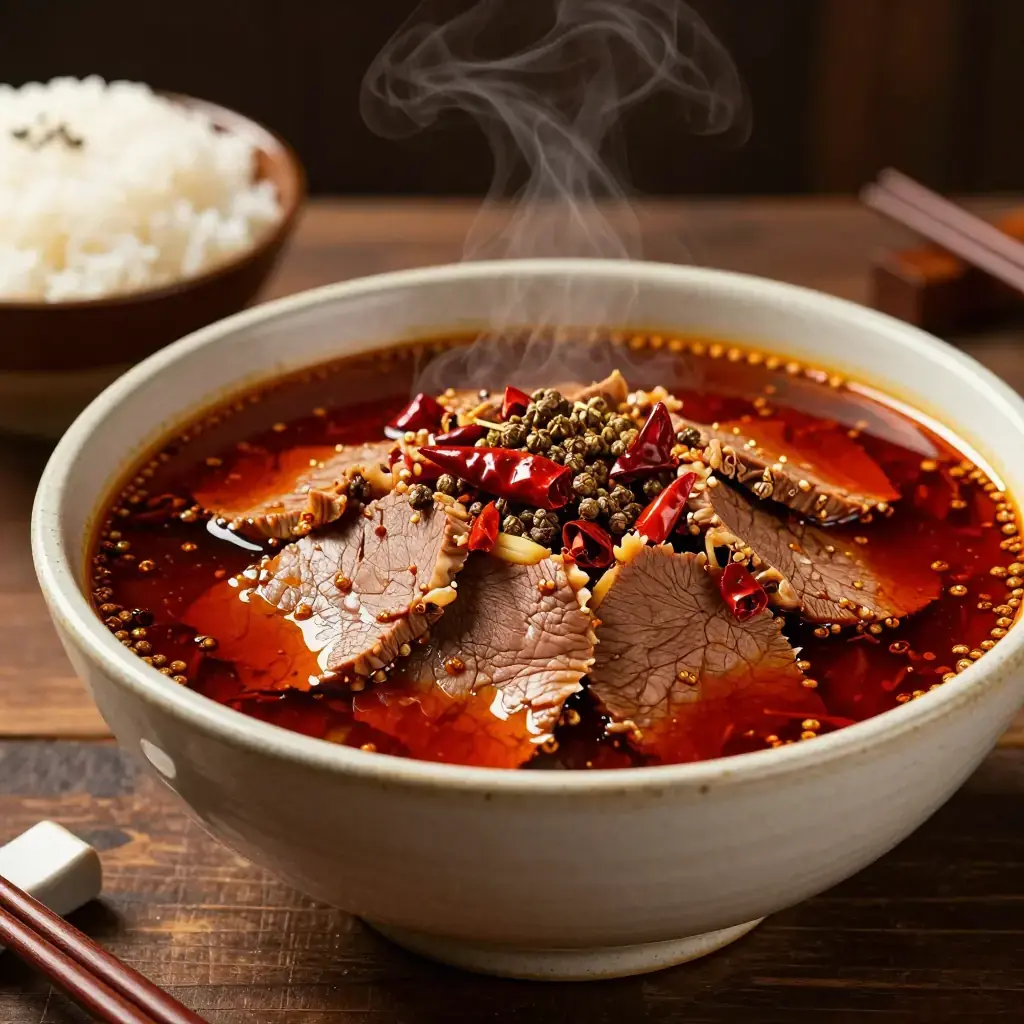
Shui Zhu Niu Rou (水煮牛肉 — Sichuan Boiled Beef in Chilli Oil)
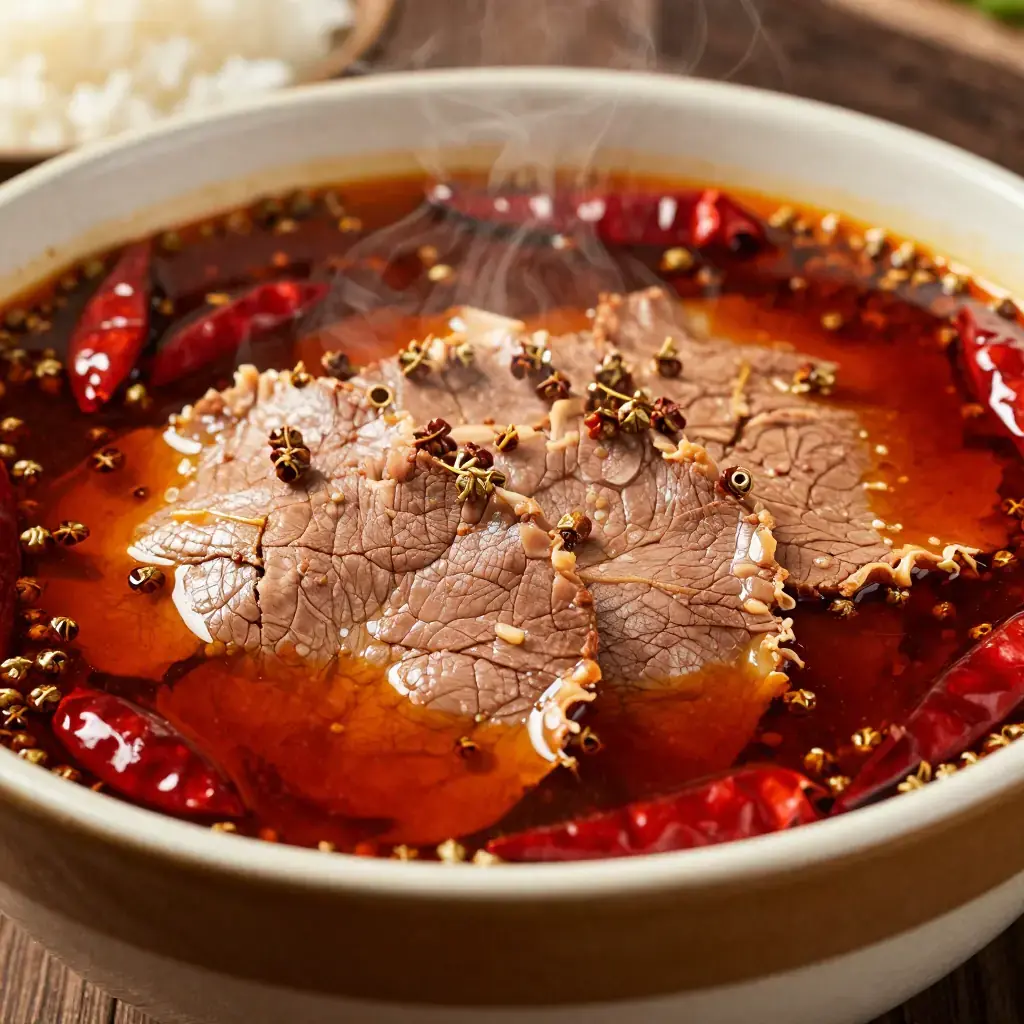
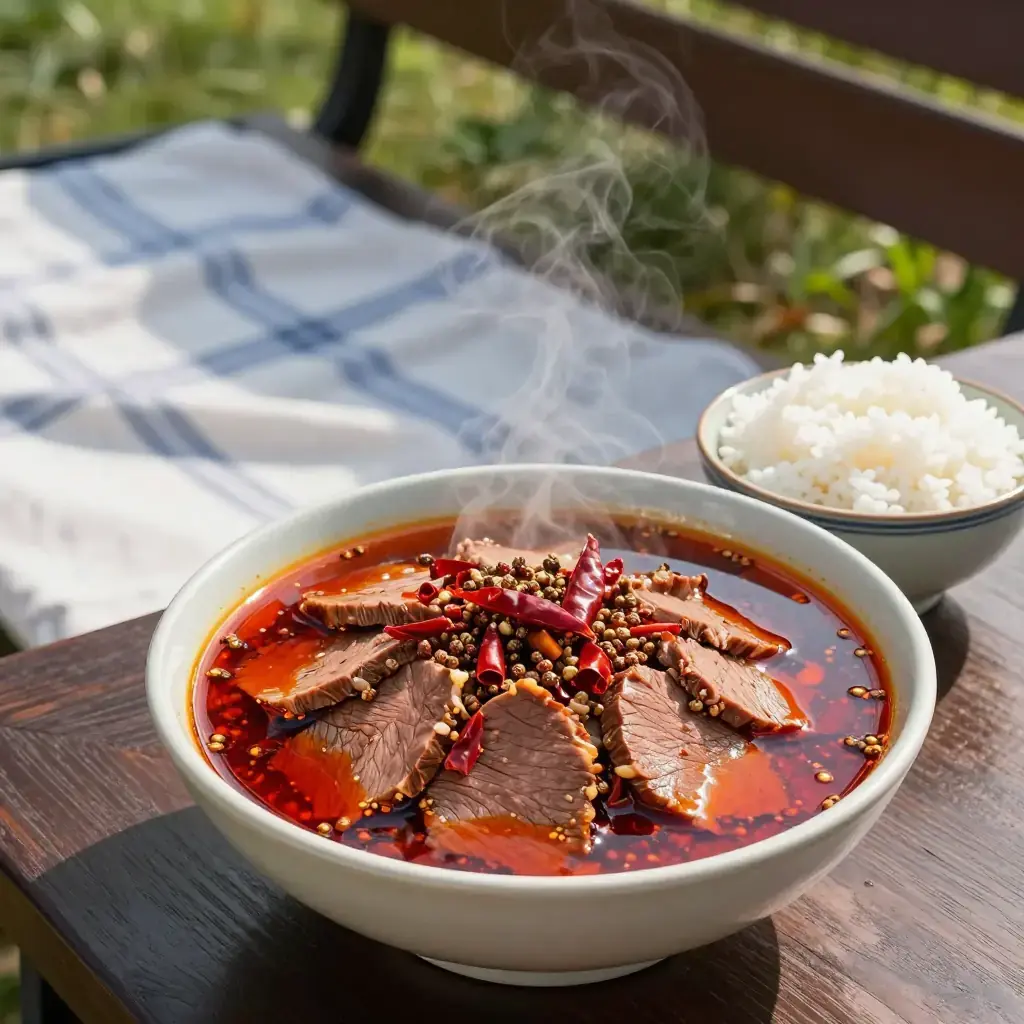
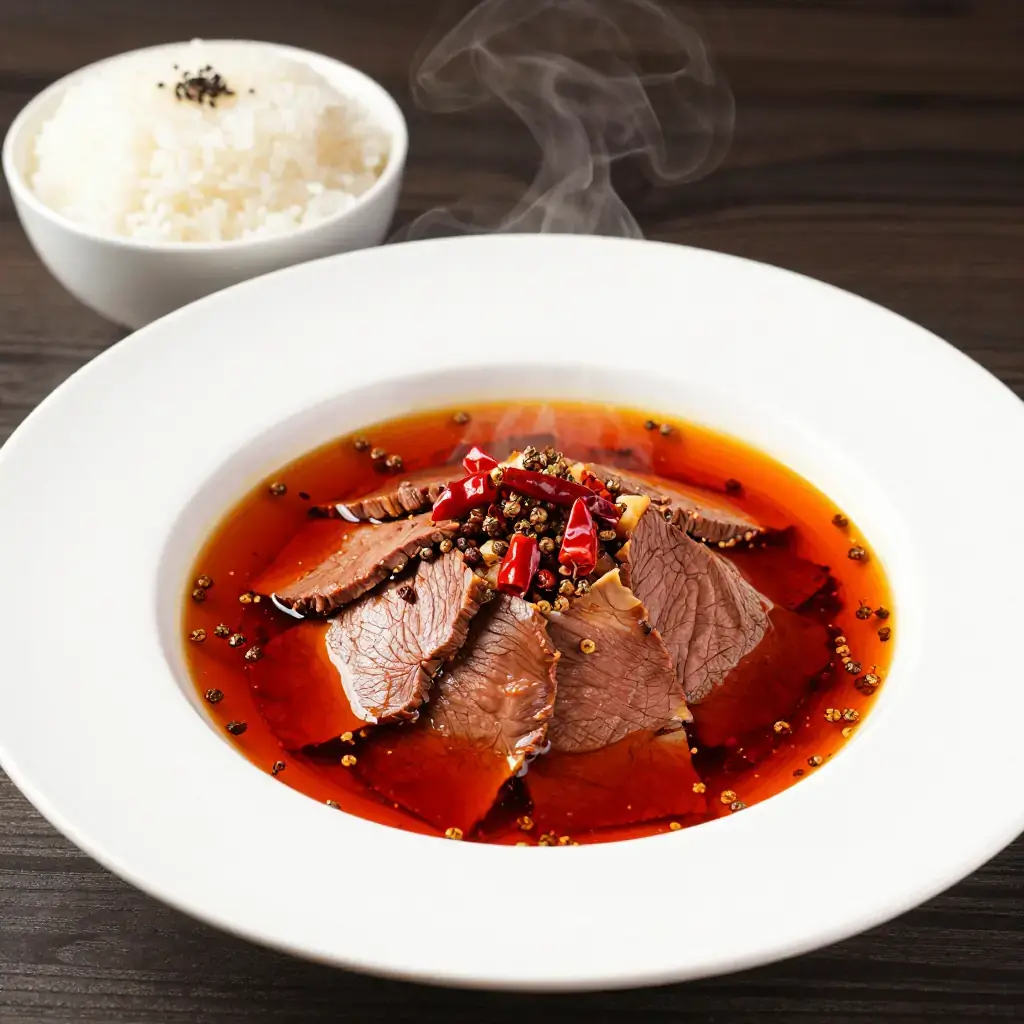
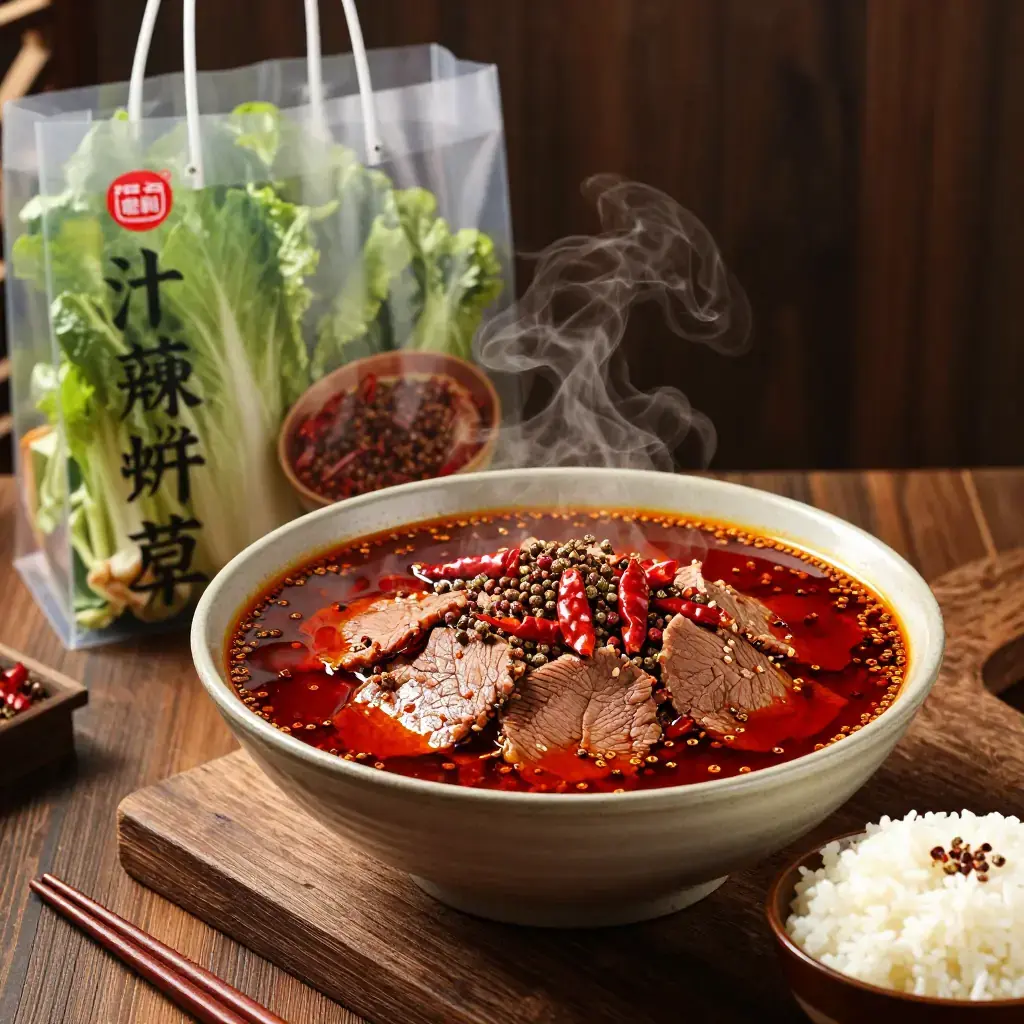
Despite its modest name — "water-boiled beef" — shui zhu niu rou is a dramatic, incendiary dish from Zigong in Sichuan province, where salt-well workers historically demanded bold, fortifying flavours. Tender sliced beef sits on a bed of blanched vegetables and is then drowned in a blazing pool of chilli oil and Sichuan peppercorns; the finishing touch is a cascade of smoking-hot oil poured tableside to release the aromatics in a cloud of fragrance.
Serves: 4
Ingredients
- 400g (14 oz) beef sirloin or flank, thinly sliced against the grain
- 1 tsp (5g) bicarbonate of soda (baking soda)
- 1 tbsp (15ml) light soy sauce
- 1 tbsp (15g) cornstarch (cornflour)
- 1 egg white
- 200g (7 oz) bean sprouts
- 100g (3.5 oz) celery, cut into 5cm (2 in) pieces
- 100g (3.5 oz) Chinese cabbage, roughly torn
- 6 tbsp (90ml) doubanjiang (Pixian chilli bean paste)
- 4 dried red chillies, snipped
- 1 tbsp (15g) Sichuan peppercorns, toasted
- 4 cloves garlic, minced
- 2 slices ginger
- 600ml (2½ cups) unsalted chicken stock
- 5 tbsp (75ml) neutral oil, for finishing
- 2 tbsp (30ml) chilli oil
- 3 spring onions, sliced
Instructions
- Combine beef with bicarbonate of soda, light soy sauce, cornstarch, and egg white. Mix well and marinate 20 minutes — this velveting step tenderises the slices.
- Blanch bean sprouts, celery, and cabbage in boiling water for 1 minute; drain and arrange in a deep serving bowl.
- Heat 2 tbsp oil in a wok over high heat. Fry doubanjiang for 2 minutes until the oil turns red and fragrant. Add garlic and ginger, stir-fry 30 seconds.
- Pour in chicken stock and bring to the boil. Simmer 3 minutes. Slide the beef slices in one by one and poach 1–2 minutes until just cooked through. Pour everything over the vegetables in the bowl.
- Scatter sliced spring onion, dried chillies, and toasted Sichuan peppercorns over the surface. Drizzle over the chilli oil.
- Heat the remaining 3 tbsp neutral oil in a small pan until smoking (about 220°C/425°F). Pour over the chillies and peppercorns tableside — the sizzle releases the numbing fragrance. Serve immediately with steamed rice.
Cook's Notes: Pixian doubanjiang from Chengdu is the soul of this dish — look for it at Chinese grocery stores. Do not overcook the beef; it continues to cook in the hot oil after plating. Adjust chilli quantity to taste, but the ma la (numbing-hot) balance is essential.
All Revisions
generated
# Shui Zhu Niu Rou (水煮牛肉 — Sichuan Boiled Beef in Chilli Oil) Despite its modest name — "water-boiled beef" — shui zhu niu rou is a dramatic, incendiary dish from Zigong in Sichuan province, where salt-well workers historically demanded bold, fortifying flavours. Tender sliced beef sits on a bed of blanched vegetables and is then drowned in a blazing pool of chilli oil and Sichuan peppercorns; the finishing touch is a cascade of smoking-hot oil poured tableside to release the aromatics in a cloud of fragrance. Serves: 4 ## Ingredients - 400g (14 oz) beef sirloin or flank, thinly sliced against the grain - 1 tsp (5g) bicarbonate of soda (baking soda) - 1 tbsp (15ml) light soy sauce - 1 tbsp (15g) cornstarch (cornflour) - 1 egg white - 200g (7 oz) bean sprouts - 100g (3.5 oz) celery, cut into 5cm (2 in) pieces - 100g (3.5 oz) Chinese cabbage, roughly torn - 6 tbsp (90ml) doubanjiang (Pixian chilli bean paste) - 4 dried red chillies, snipped - 1 tbsp (15g) Sichuan peppercorns, toasted - 4 cloves garlic, minced - 2 slices ginger - 600ml (2½ cups) unsalted chicken stock - 5 tbsp (75ml) neutral oil, for finishing - 2 tbsp (30ml) chilli oil - 3 spring onions, sliced ## Instructions 1. Combine beef with bicarbonate of soda, light soy sauce, cornstarch, and egg white. Mix well and marinate 20 minutes — this velveting step tenderises the slices. 2. Blanch bean sprouts, celery, and cabbage in boiling water for 1 minute; drain and arrange in a deep serving bowl. 3. Heat 2 tbsp oil in a wok over high heat. Fry doubanjiang for 2 minutes until the oil turns red and fragrant. Add garlic and ginger, stir-fry 30 seconds. 4. Pour in chicken stock and bring to the boil. Simmer 3 minutes. Slide the beef slices in one by one and poach 1–2 minutes until just cooked through. Pour everything over the vegetables in the bowl. 5. Scatter sliced spring onion, dried chillies, and toasted Sichuan peppercorns over the surface. Drizzle over the chilli oil. 6. Heat the remaining 3 tbsp neutral oil in a small pan until smoking (about 220°C/425°F). Pour over the chillies and peppercorns tableside — the sizzle releases the numbing fragrance. Serve immediately with steamed rice. **Cook's Notes:** Pixian doubanjiang from Chengdu is the soul of this dish — look for it at Chinese grocery stores. Do not overcook the beef; it continues to cook in the hot oil after plating. Adjust chilli quantity to taste, but the ma la (numbing-hot) balance is essential.Images
Tags
- authentic
- dairy-free
- dinner
- from-input
- gluten-free
- sichuan