
Kkakdugi
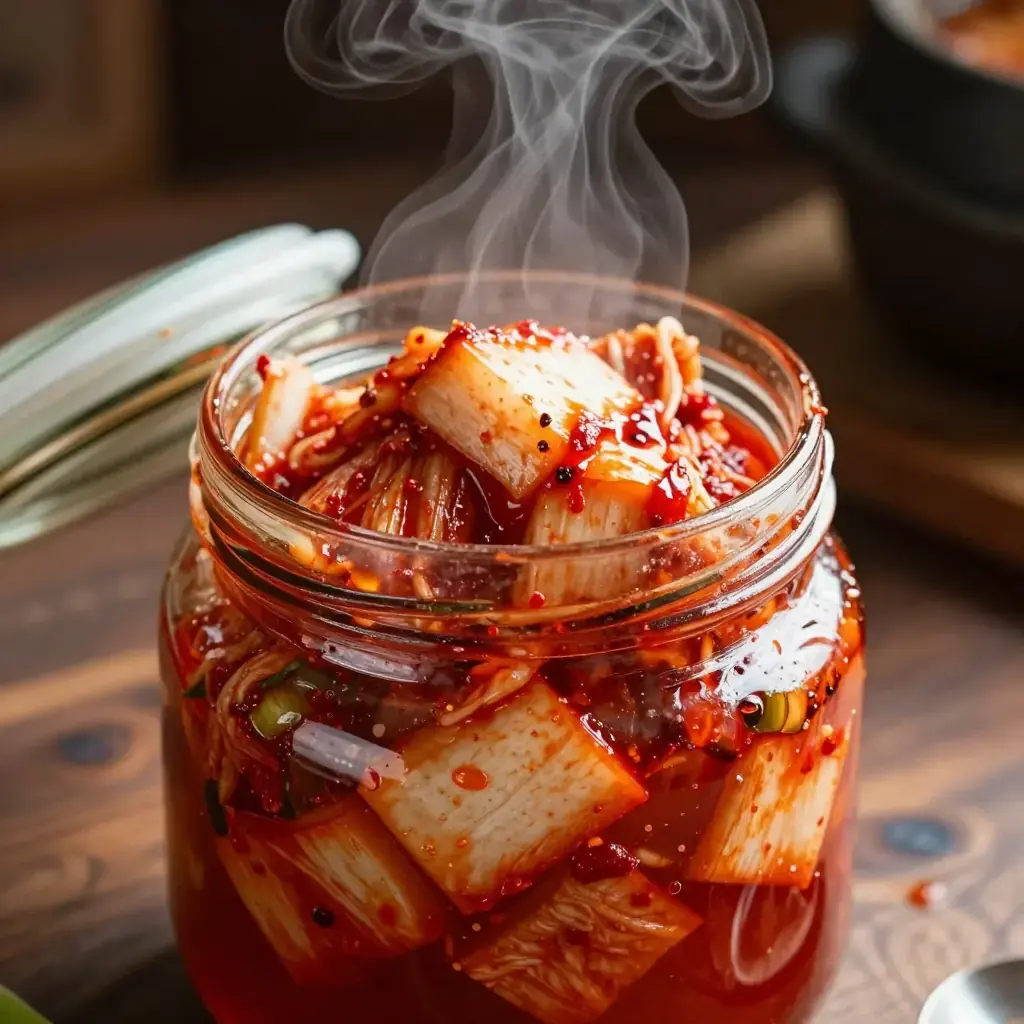
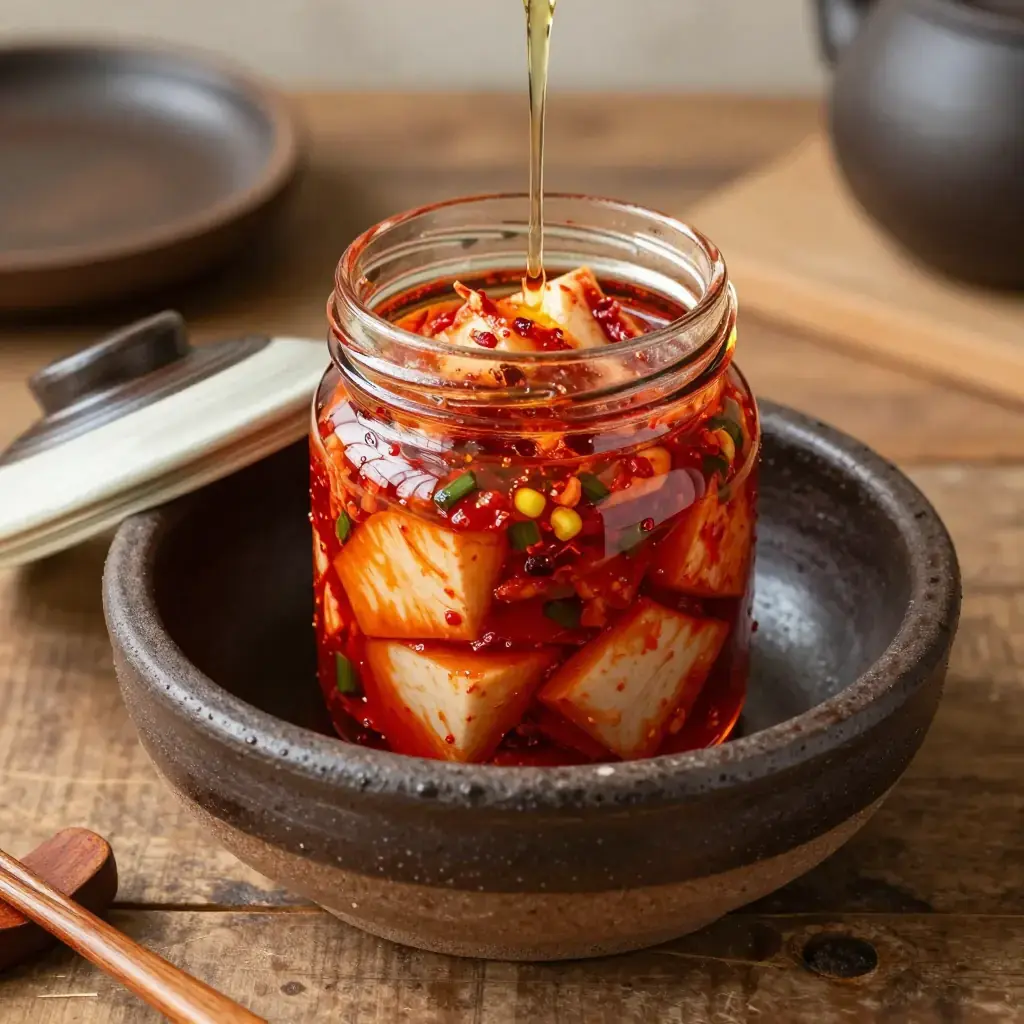
Kkakdugi is a punchy, crunchy kimchi made from Korean radish (mu) cut into bold cubes, fermented with gochugaru, fish sauce, and salted shrimp until tangy and juicy. It is a staple banchan (side dish) that improves dramatically over three to five days of fermentation at room temperature before being moved to the fridge.
Serves: 10 (as a side dish)
Ingredients
- 1.2 kg (2 lb 10 oz) Korean radish (mu) or daikon, peeled
- 1 tbsp (18g) coarse sea salt, for salting
- 1 tsp (4g) sugar
- 4 tbsp (32g) gochugaru (Korean red chilli flakes)
- 2 tbsp (30ml) fish sauce
- 1 tbsp (15g) saeujeot (salted fermented shrimp), roughly chopped
- 4 cloves garlic, finely grated
- 1 tsp (5g) fresh ginger, finely grated
- 3 spring onions, cut into 2 cm (¾ inch) pieces
- 1 tsp (4g) sugar (for fermenting)
Instructions
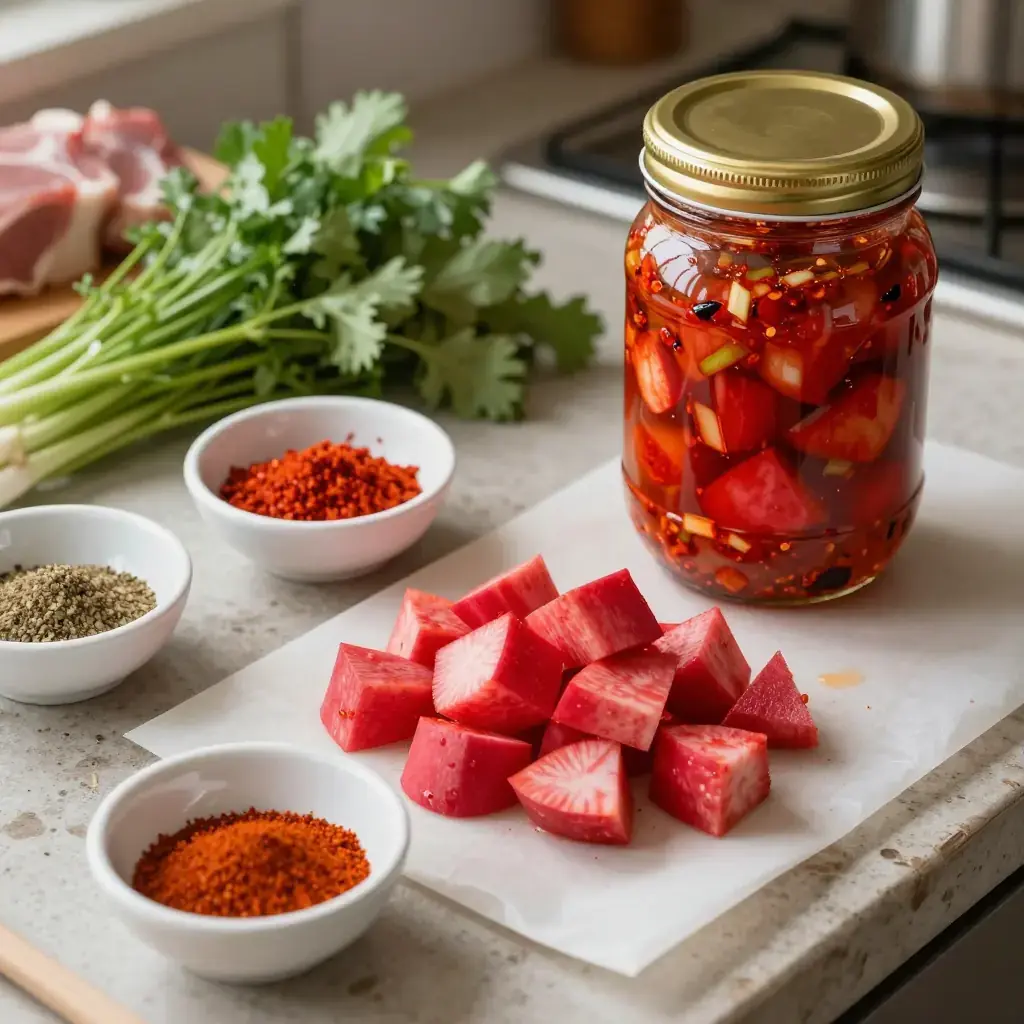
- Cut the radish into 2 cm (¾ inch) cubes. Toss with coarse sea salt and 1 tsp sugar in a large bowl. Let sit for 30 minutes, tossing once. The radish will release liquid and soften slightly. Drain well but do not rinse.
- In a large bowl, combine gochugaru, fish sauce, saeujeot, garlic, ginger, and remaining sugar. Mix into a paste.
- Add the drained radish and spring onions to the paste. Wearing gloves, toss firmly until every cube is evenly coated red.
- Pack tightly into a clean 1-litre (1 qt) glass jar, pressing down so the liquid rises to cover the solids. Leave 3 cm (1 inch) headspace.
- Leave the jar at room temperature (18–22°C / 64–72°F) for 1–2 days, pressing the radish down twice daily. Taste: when pleasantly tangy, refrigerate. It peaks at 5–7 days cold.
Cook's Notes: Kkakdugi is the traditional accompaniment to seolleongtang (ox bone soup) and kongnamul gukbap. The radish continues to ferment slowly in the fridge for up to 3 weeks, developing deeper flavour. For a vegetarian version, substitute the fish sauce and saeujeot with equal parts soy sauce and a pinch of extra salt.
All Revisions
generated
# Kkakdugi Kkakdugi is a punchy, crunchy kimchi made from Korean radish (mu) cut into bold cubes, fermented with gochugaru, fish sauce, and salted shrimp until tangy and juicy. It is a staple banchan (side dish) that improves dramatically over three to five days of fermentation at room temperature before being moved to the fridge. Serves: 10 (as a side dish) ## Ingredients - 1.2 kg (2 lb 10 oz) Korean radish (mu) or daikon, peeled - 1 tbsp (18g) coarse sea salt, for salting - 1 tsp (4g) sugar - 4 tbsp (32g) gochugaru (Korean red chilli flakes) - 2 tbsp (30ml) fish sauce - 1 tbsp (15g) saeujeot (salted fermented shrimp), roughly chopped - 4 cloves garlic, finely grated - 1 tsp (5g) fresh ginger, finely grated - 3 spring onions, cut into 2 cm (¾ inch) pieces - 1 tsp (4g) sugar (for fermenting) ## Instructions 1. Cut the radish into 2 cm (¾ inch) cubes. Toss with coarse sea salt and 1 tsp sugar in a large bowl. Let sit for 30 minutes, tossing once. The radish will release liquid and soften slightly. Drain well but do not rinse. 2. In a large bowl, combine gochugaru, fish sauce, saeujeot, garlic, ginger, and remaining sugar. Mix into a paste. 3. Add the drained radish and spring onions to the paste. Wearing gloves, toss firmly until every cube is evenly coated red. 4. Pack tightly into a clean 1-litre (1 qt) glass jar, pressing down so the liquid rises to cover the solids. Leave 3 cm (1 inch) headspace. 5. Leave the jar at room temperature (18–22°C / 64–72°F) for 1–2 days, pressing the radish down twice daily. Taste: when pleasantly tangy, refrigerate. It peaks at 5–7 days cold. **Cook's Notes:** Kkakdugi is the traditional accompaniment to seolleongtang (ox bone soup) and kongnamul gukbap. The radish continues to ferment slowly in the fridge for up to 3 weeks, developing deeper flavour. For a vegetarian version, substitute the fish sauce and saeujeot with equal parts soy sauce and a pinch of extra salt.Images

Tags
- dairy-free
- fermented
- from-input
- gluten-free
- korean
- multi-day
- snack