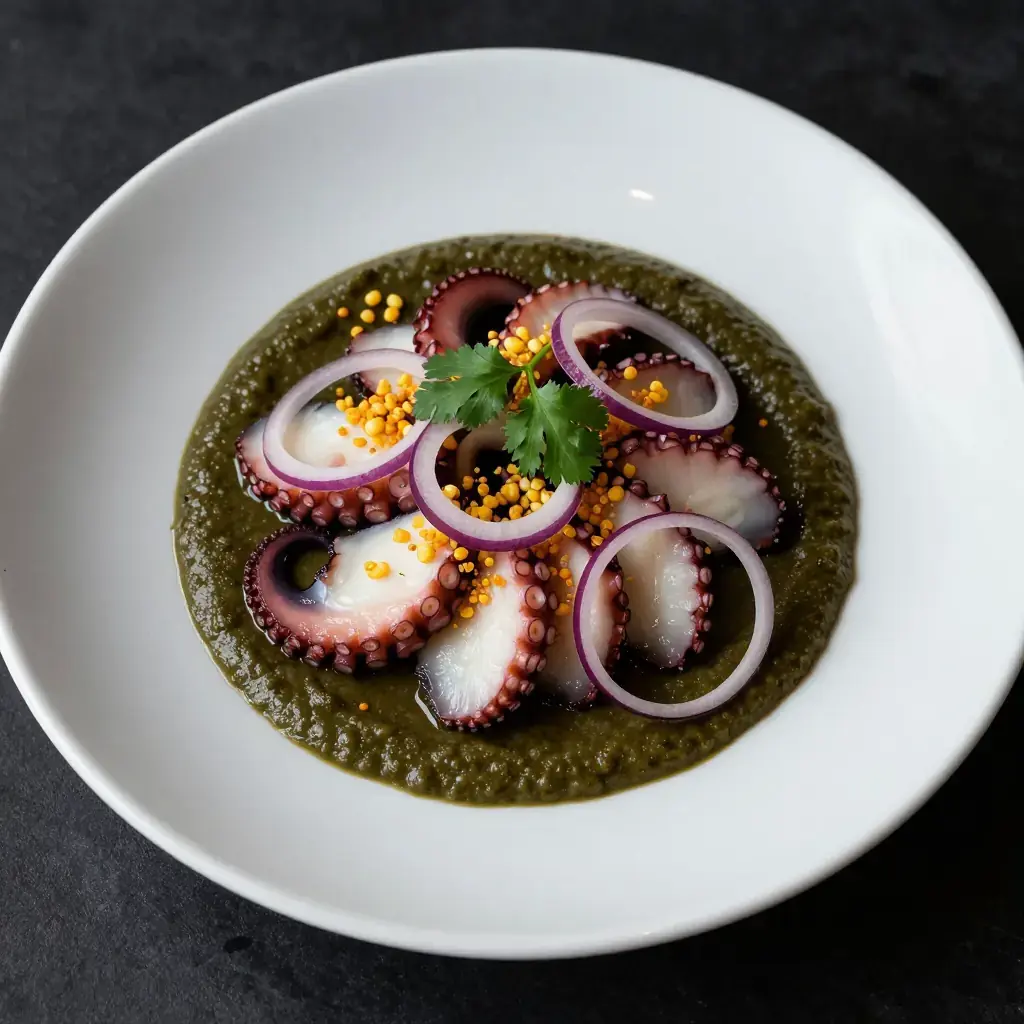
Pulpo al Olivo
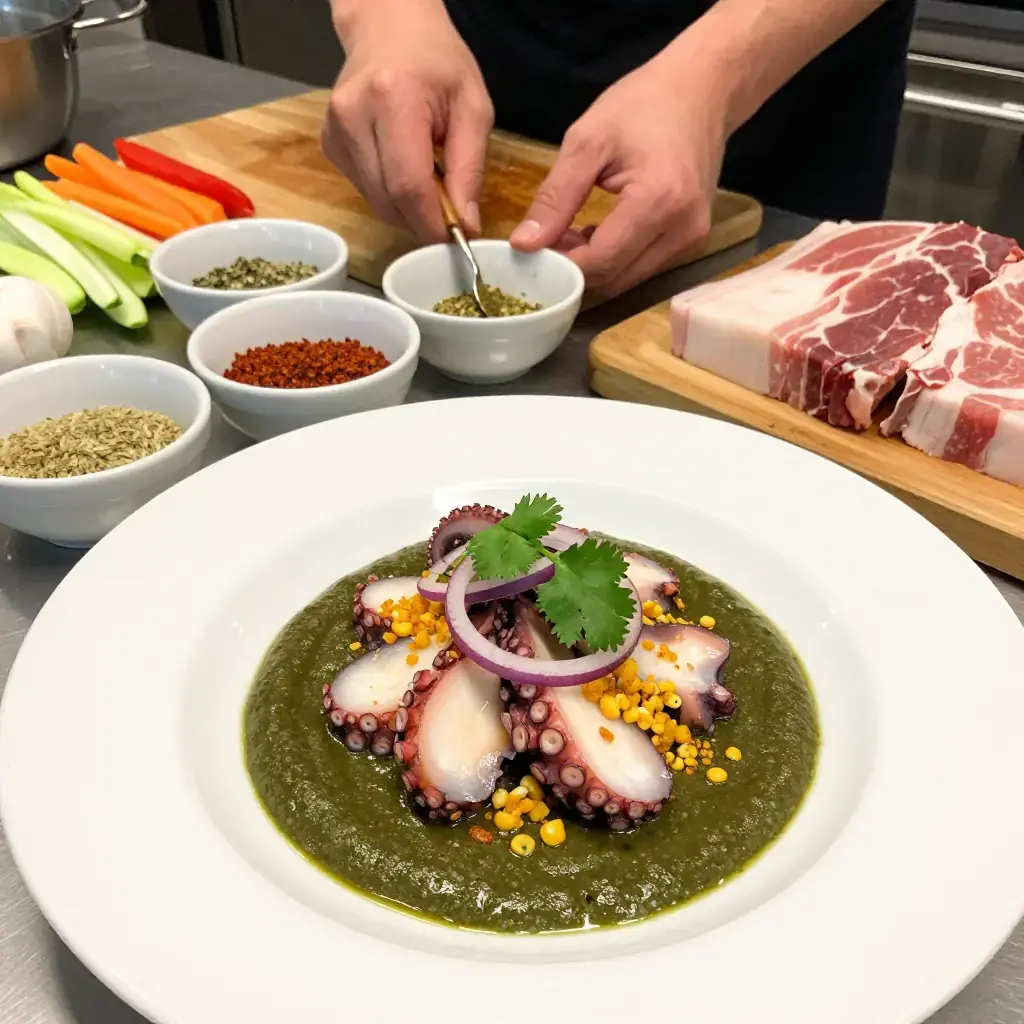
Pulpo al Olivo is one of the signature creations of Nikkei cuisine — the thrilling fusion of Japanese and Peruvian traditions that emerged in Lima in the twentieth century. Perfectly tender octopus tentacles are served cold over a velvety black olive mayonnaise (crema de aceitunas), a combination that sounds unexpected and tastes inevitable. It appears on every serious Lima restaurant menu and at dinner parties where the host wants to astonish.
Serves: 4
Ingredients
Octopus
- 1 whole octopus, about 1.2 kg (2 lb 10 oz), cleaned
- 1 onion, halved
- 1 bay leaf
- 1 tsp (4g) black peppercorns
- 1 cork (traditional Peruvian tenderising trick — optional but beloved)
Crema de Aceitunas
- 150g (5 oz) pitted black botija olives (or good Kalamata olives)
- 2 egg yolks
- 1 tsp (5ml) Dijon mustard
- 200ml (¾ cup) neutral vegetable oil
- 1 tbsp (15ml) fresh lime juice
- Salt to taste
To Serve
- Thinly sliced red onion
- Fresh coriander (cilantro) leaves
- Lime wedges
- Crushed toasted corn (cancha)
Instructions
- Bring a large pot of water to a boil with the onion, bay leaf, peppercorns, and cork if using. Lower the octopus in by its head, dip the tentacles three times to curl them, then fully submerge. Cook at a gentle simmer for 40–50 minutes until a skewer passes through the thickest part of a tentacle without resistance.
- Remove and cool completely. Refrigerate until cold, at least 1 hour.
- Make the crema: blend the olives to a smooth paste. In a separate bowl, whisk egg yolks with mustard. Drizzle in the oil very slowly, whisking constantly to form a thick mayonnaise. Fold in the olive paste and lime juice. Season with salt.
- Slice the octopus tentacles on the diagonal into 5mm (¼ in) pieces.
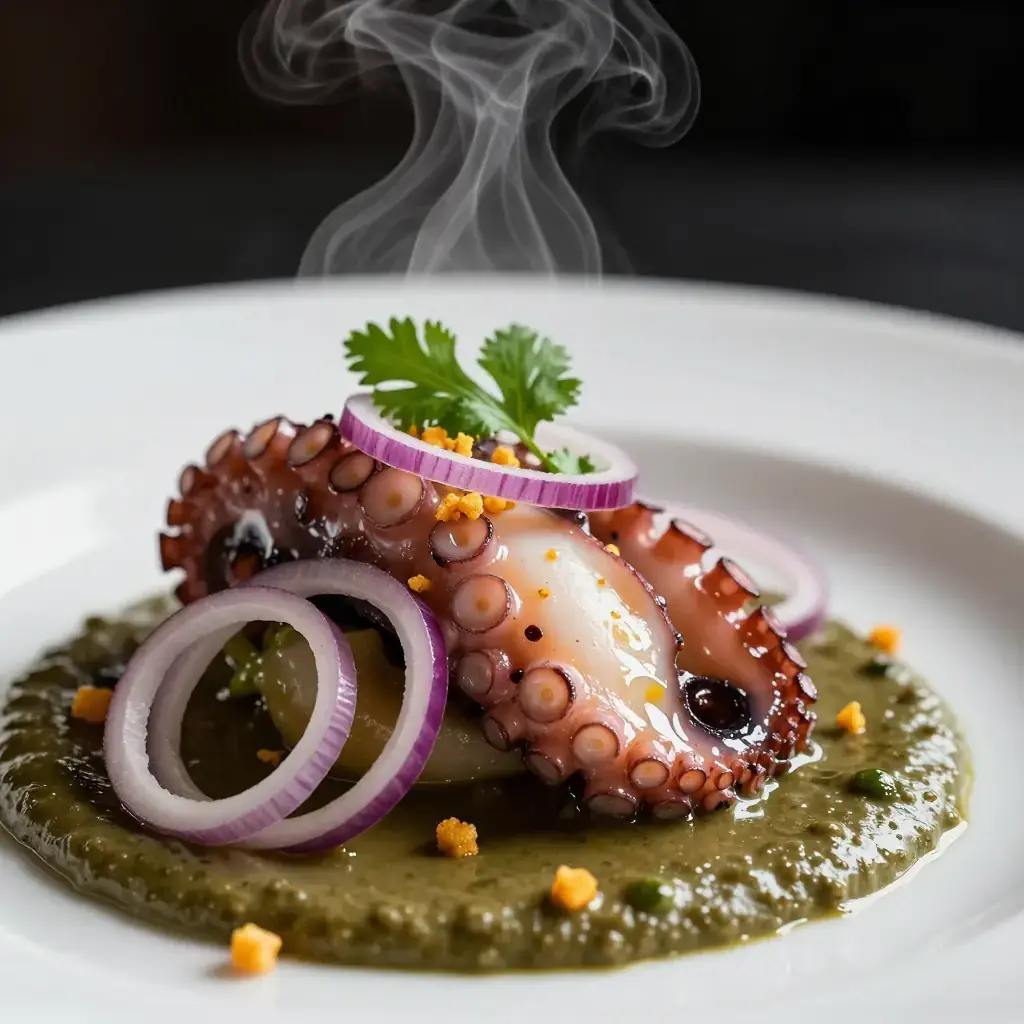
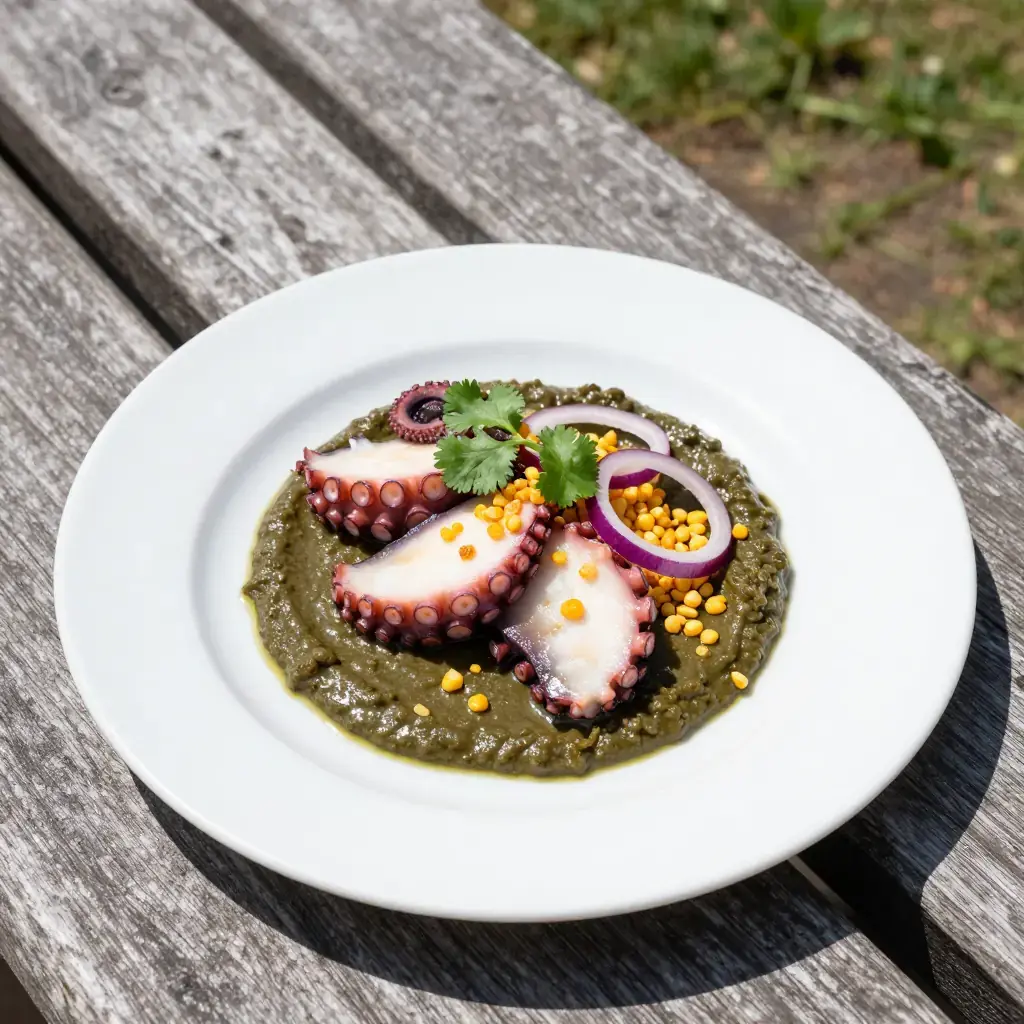
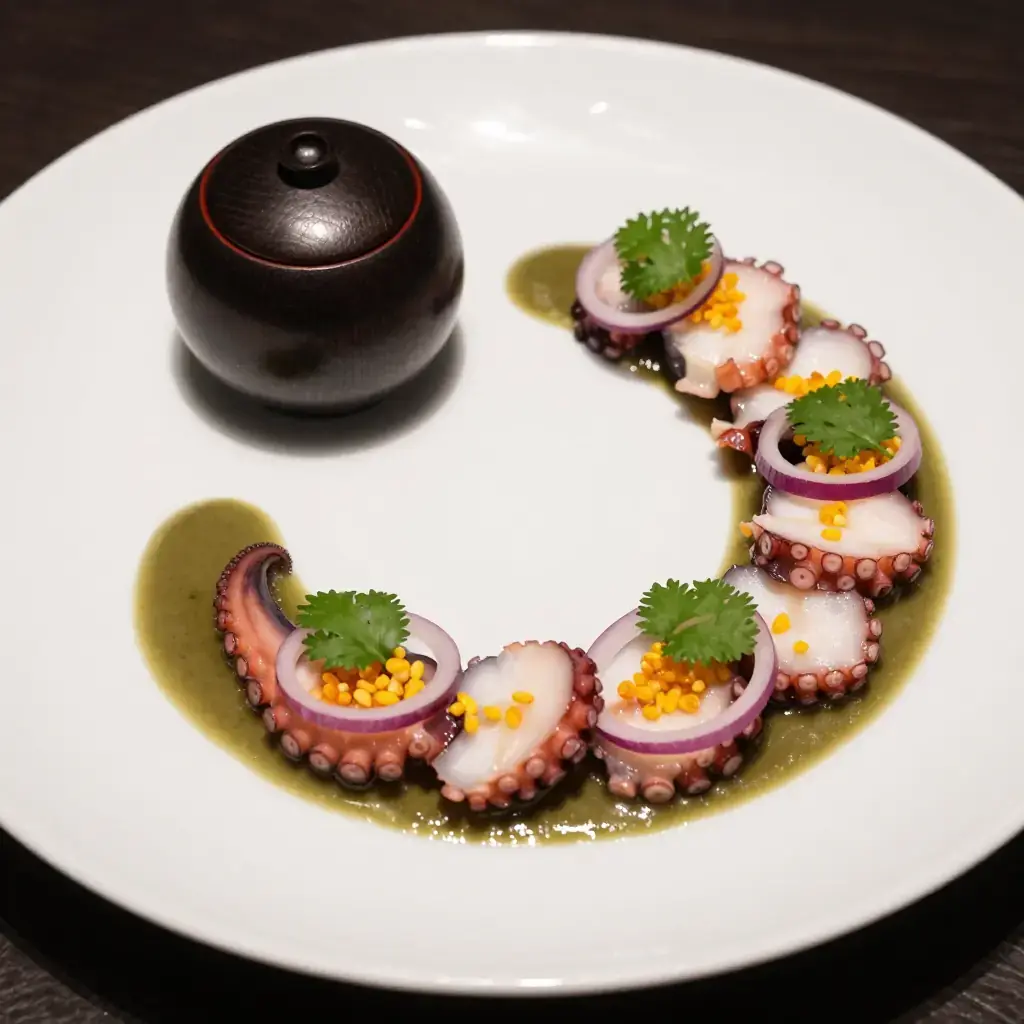
- Spread crema de aceitunas on a chilled plate. Fan the octopus slices over the sauce. Scatter red onion, coriander, and cancha. Finish with lime.
Cook's Notes: The octopus must be completely cold before slicing — warm tentacles tear rather than cut cleanly. Botija olives from Peru have a creamier, less acidic character than Kalamata; seek them out in Latin American grocers.
All Revisions
generated
# Pulpo al Olivo Pulpo al Olivo is one of the signature creations of Nikkei cuisine — the thrilling fusion of Japanese and Peruvian traditions that emerged in Lima in the twentieth century. Perfectly tender octopus tentacles are served cold over a velvety black olive mayonnaise (crema de aceitunas), a combination that sounds unexpected and tastes inevitable. It appears on every serious Lima restaurant menu and at dinner parties where the host wants to astonish. Serves: 4 ## Ingredients **Octopus** - 1 whole octopus, about 1.2 kg (2 lb 10 oz), cleaned - 1 onion, halved - 1 bay leaf - 1 tsp (4g) black peppercorns - 1 cork (traditional Peruvian tenderising trick — optional but beloved) **Crema de Aceitunas** - 150g (5 oz) pitted black botija olives (or good Kalamata olives) - 2 egg yolks - 1 tsp (5ml) Dijon mustard - 200ml (¾ cup) neutral vegetable oil - 1 tbsp (15ml) fresh lime juice - Salt to taste **To Serve** - Thinly sliced red onion - Fresh coriander (cilantro) leaves - Lime wedges - Crushed toasted corn (cancha) ## Instructions 1. Bring a large pot of water to a boil with the onion, bay leaf, peppercorns, and cork if using. Lower the octopus in by its head, dip the tentacles three times to curl them, then fully submerge. Cook at a gentle simmer for 40–50 minutes until a skewer passes through the thickest part of a tentacle without resistance. 2. Remove and cool completely. Refrigerate until cold, at least 1 hour. 3. Make the crema: blend the olives to a smooth paste. In a separate bowl, whisk egg yolks with mustard. Drizzle in the oil very slowly, whisking constantly to form a thick mayonnaise. Fold in the olive paste and lime juice. Season with salt. 4. Slice the octopus tentacles on the diagonal into 5mm (¼ in) pieces. 5. Spread crema de aceitunas on a chilled plate. Fan the octopus slices over the sauce. Scatter red onion, coriander, and cancha. Finish with lime. **Cook's Notes:** The octopus must be completely cold before slicing — warm tentacles tear rather than cut cleanly. Botija olives from Peru have a creamier, less acidic character than Kalamata; seek them out in Latin American grocers.Images
Tags
- cold-dish
- dinner-party
- from-input
- gluten-free
- modern-fusion
- peruvian
- seafood