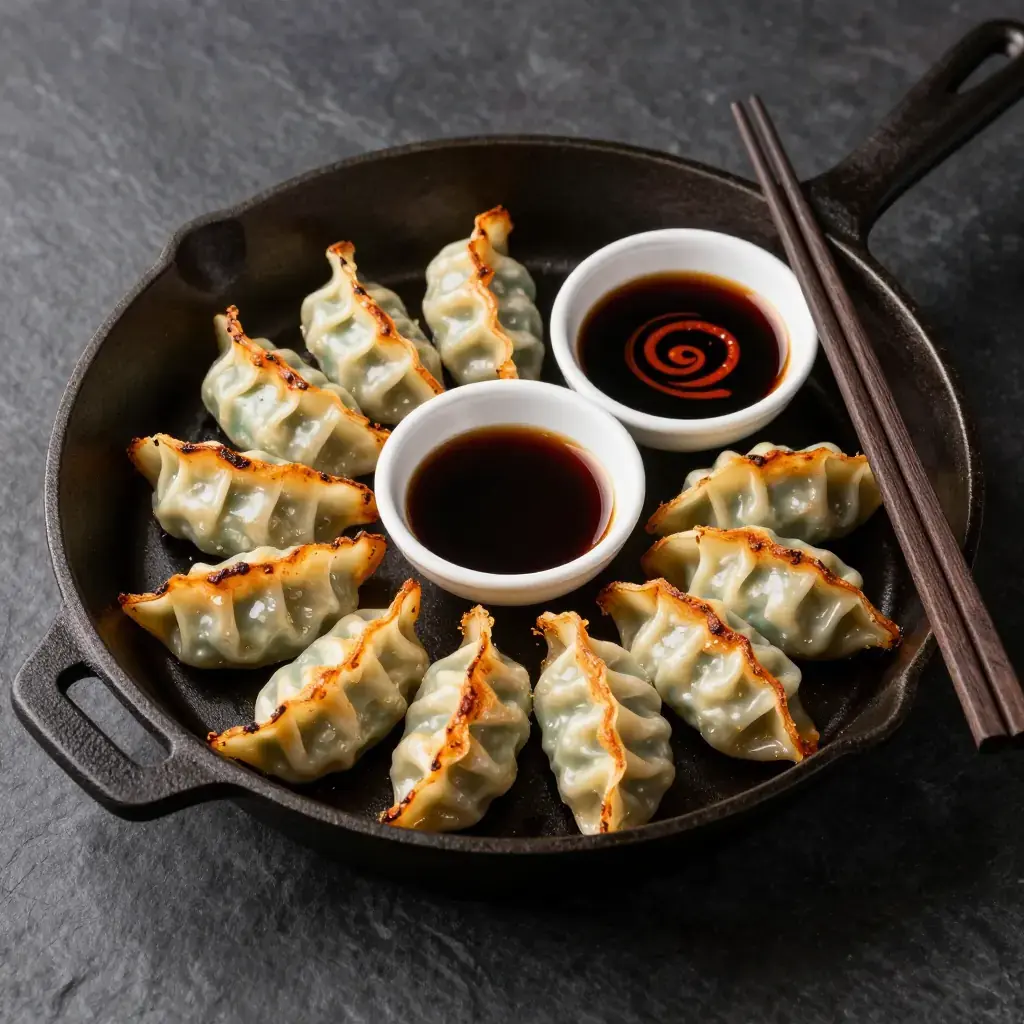
Gyoza (焼き餃子)
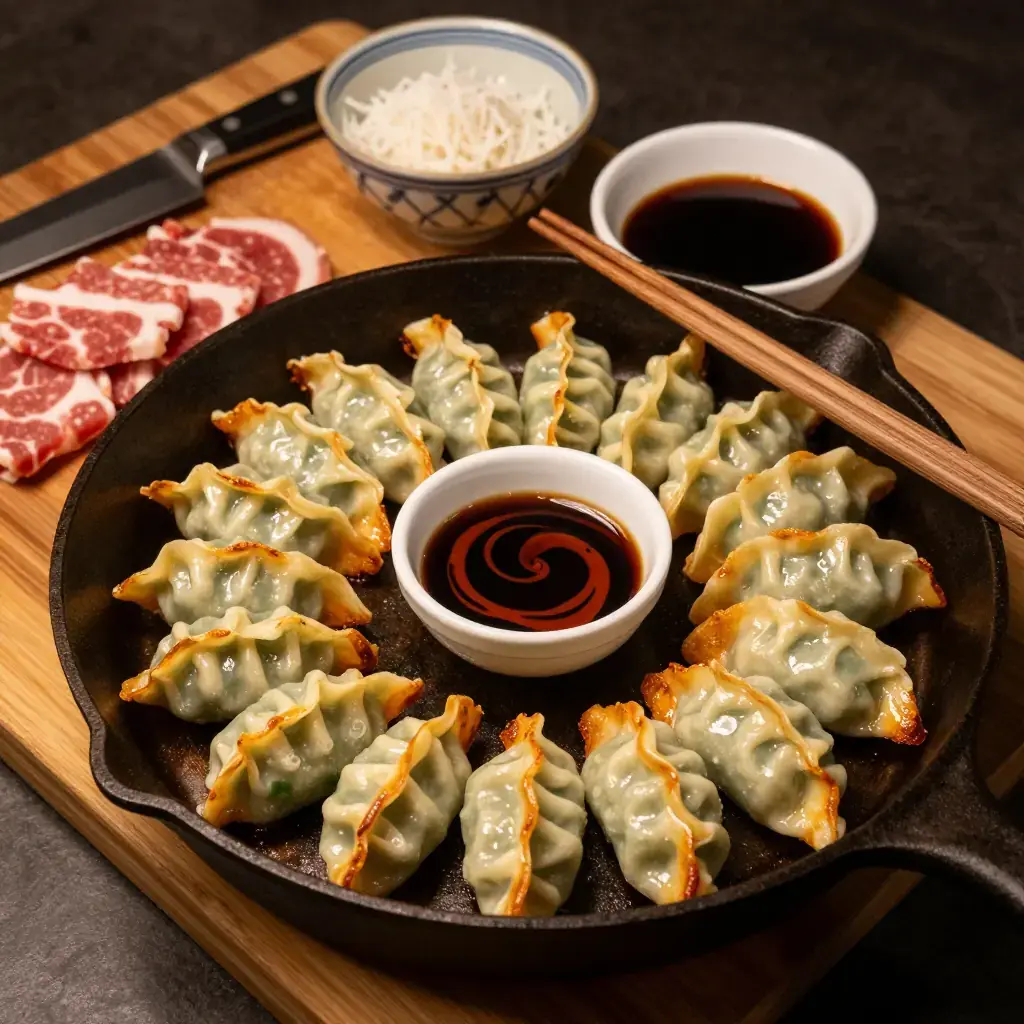
Gyoza arrived in Japan from China via returning soldiers after World War II and swiftly became one of the nation's most beloved street foods and izakaya staples. The Japanese version is thinner-skinned, more garlicky, and distinctively crisp on the bottom from a two-stage fry-steam-fry technique that produces the iconic lacquered crust.
Serves: 4 (makes about 30 dumplings)
Ingredients
- 300g (10 oz) ground pork
- 150g (5 oz) napa cabbage, very finely shredded
- 1 tsp fine salt (for cabbage)
- 3 spring onions, finely minced
- 3 cloves garlic, grated
- 1 tsp fresh ginger, grated
- 2 tbsp (30ml) soy sauce
- 1 tbsp (15ml) sesame oil
- 1 tsp sugar
- 30 gyoza wrappers (round, 9cm / 3.5 in)
- 2 tbsp (30ml) neutral oil, divided
- 80ml (⅓ cup) water
Dipping sauce:
- 2 tbsp (30ml) soy sauce
- 1 tbsp (15ml) rice vinegar
- Chilli oil to taste
Instructions
- Salt the shredded cabbage and let it sit 10 minutes. Squeeze out all moisture with your hands — this step is essential for a non-watery filling.
- Combine pork, cabbage, spring onions, garlic, ginger, soy sauce, sesame oil, and sugar. Mix vigorously in one direction for 2 minutes until the filling is sticky and cohesive.
- Place 1 tsp filling in the centre of a wrapper. Dampen the edge with water, fold in half, and pleat one side into 6–8 small folds, pressing firmly to seal. Rest pleated-side up.
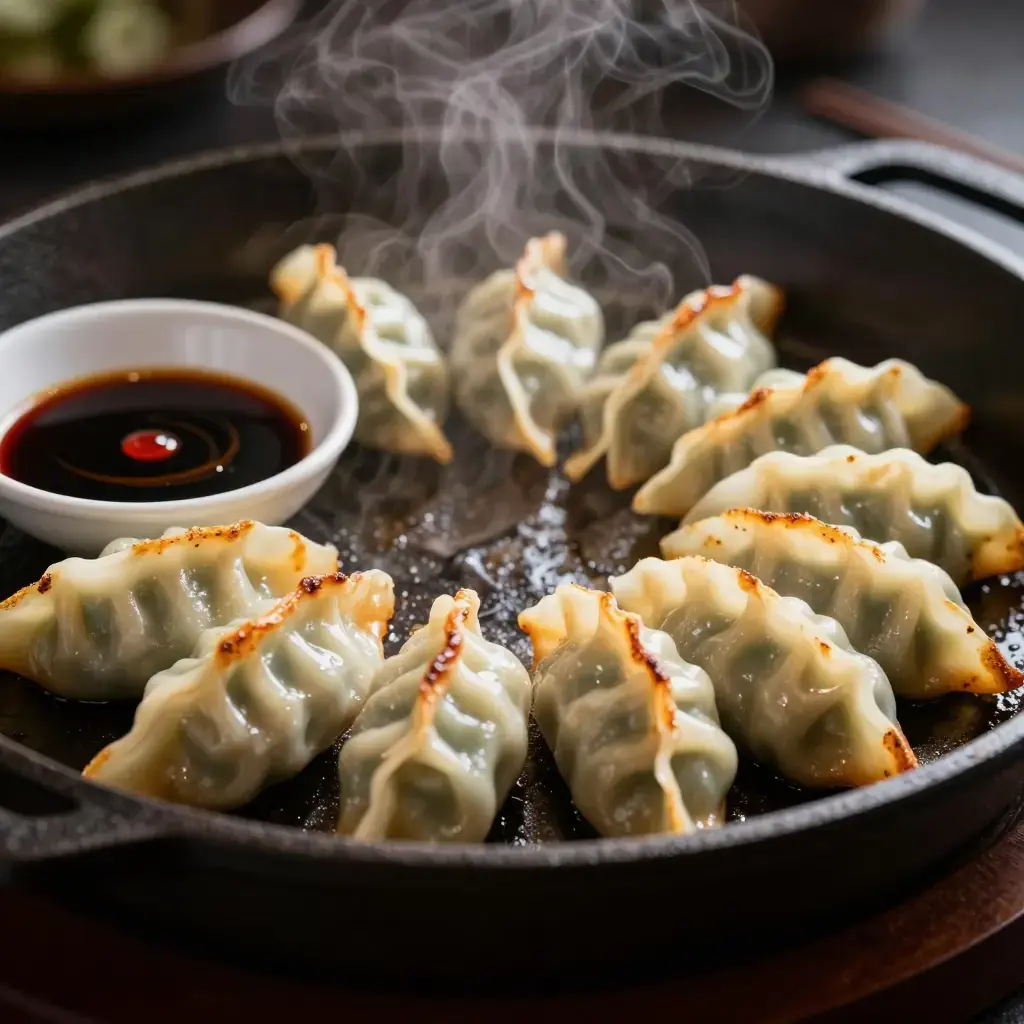
- Heat 1 tbsp oil in a non-stick or cast-iron pan over medium-high heat. Arrange gyoza flat-side down in a single layer and fry 2–3 minutes until golden.
- Pour in 80ml water, immediately cover with a lid, and steam 5–6 minutes until water evaporates.
- Remove lid, add remaining oil around the edge, and fry uncovered a further 1–2 minutes until the bottoms are deeply lacquered and crisp.
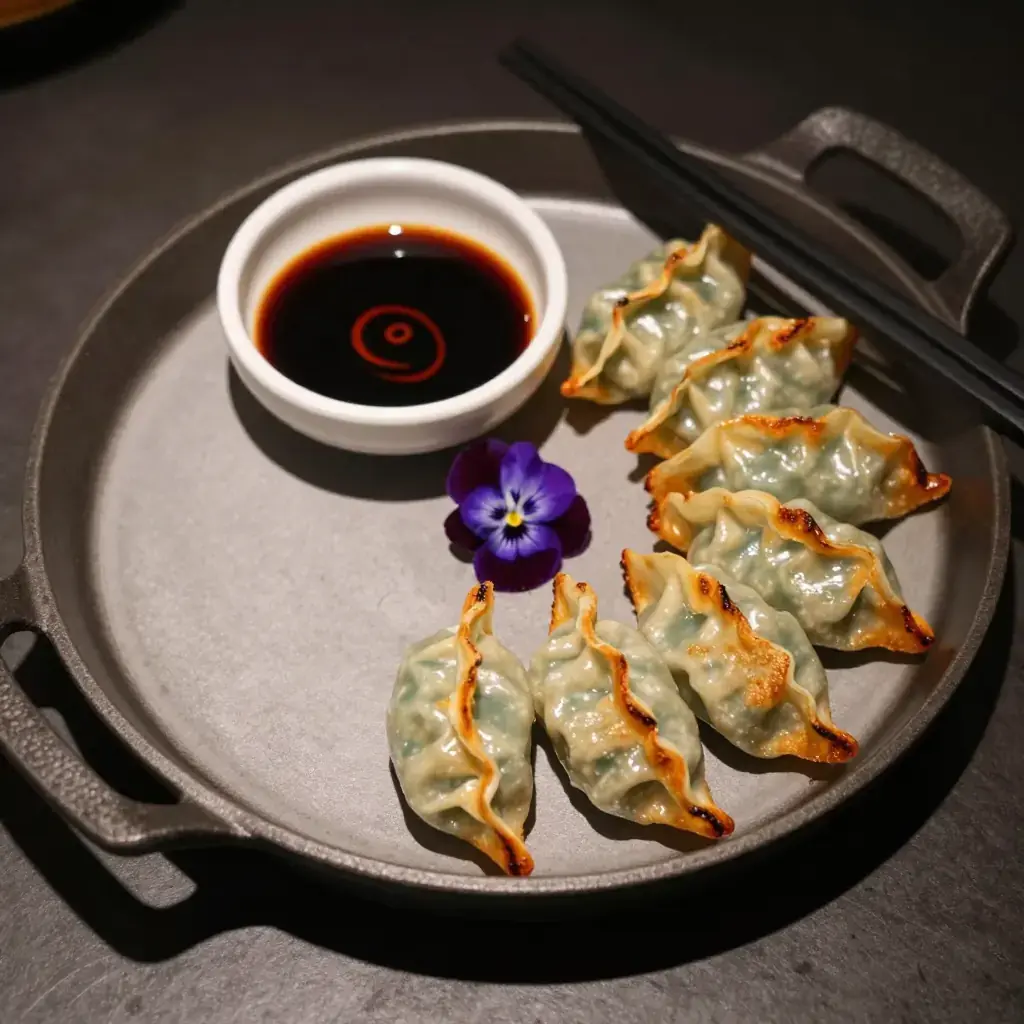
- Slide onto a plate, crisp-side up. Mix dipping sauce and serve immediately.
Cook's Notes: The pleating is for aesthetics and structure — even a half-moon press seal produces delicious gyoza. Freeze uncooked gyoza on a tray, then bag them; cook from frozen adding 2 extra minutes steaming.
All Revisions
generated
# Gyoza (焼き餃子) Gyoza arrived in Japan from China via returning soldiers after World War II and swiftly became one of the nation's most beloved street foods and izakaya staples. The Japanese version is thinner-skinned, more garlicky, and distinctively crisp on the bottom from a two-stage fry-steam-fry technique that produces the iconic lacquered crust. Serves: 4 (makes about 30 dumplings) ## Ingredients - 300g (10 oz) ground pork - 150g (5 oz) napa cabbage, very finely shredded - 1 tsp fine salt (for cabbage) - 3 spring onions, finely minced - 3 cloves garlic, grated - 1 tsp fresh ginger, grated - 2 tbsp (30ml) soy sauce - 1 tbsp (15ml) sesame oil - 1 tsp sugar - 30 gyoza wrappers (round, 9cm / 3.5 in) - 2 tbsp (30ml) neutral oil, divided - 80ml (⅓ cup) water **Dipping sauce:** - 2 tbsp (30ml) soy sauce - 1 tbsp (15ml) rice vinegar - Chilli oil to taste ## Instructions 1. Salt the shredded cabbage and let it sit 10 minutes. Squeeze out all moisture with your hands — this step is essential for a non-watery filling. 2. Combine pork, cabbage, spring onions, garlic, ginger, soy sauce, sesame oil, and sugar. Mix vigorously in one direction for 2 minutes until the filling is sticky and cohesive. 3. Place 1 tsp filling in the centre of a wrapper. Dampen the edge with water, fold in half, and pleat one side into 6–8 small folds, pressing firmly to seal. Rest pleated-side up. 4. Heat 1 tbsp oil in a non-stick or cast-iron pan over medium-high heat. Arrange gyoza flat-side down in a single layer and fry 2–3 minutes until golden. 5. Pour in 80ml water, immediately cover with a lid, and steam 5–6 minutes until water evaporates. 6. Remove lid, add remaining oil around the edge, and fry uncovered a further 1–2 minutes until the bottoms are deeply lacquered and crisp. 7. Slide onto a plate, crisp-side up. Mix dipping sauce and serve immediately. **Cook's Notes:** The pleating is for aesthetics and structure — even a half-moon press seal produces delicious gyoza. Freeze uncooked gyoza on a tray, then bag them; cook from frozen adding 2 extra minutes steaming.Images
Tags
- authentic
- dinner
- from-input
- japanese
- noodles
- snack