
Atakilt Wat
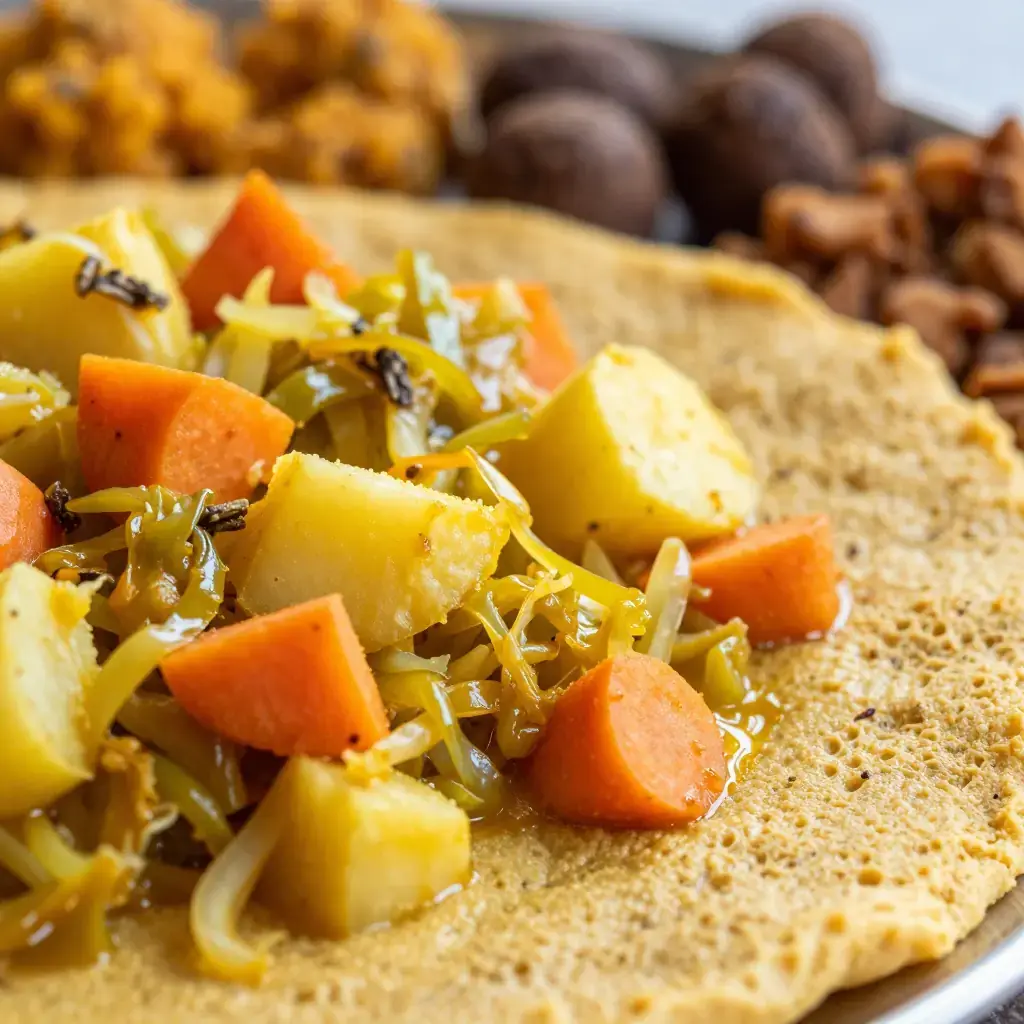
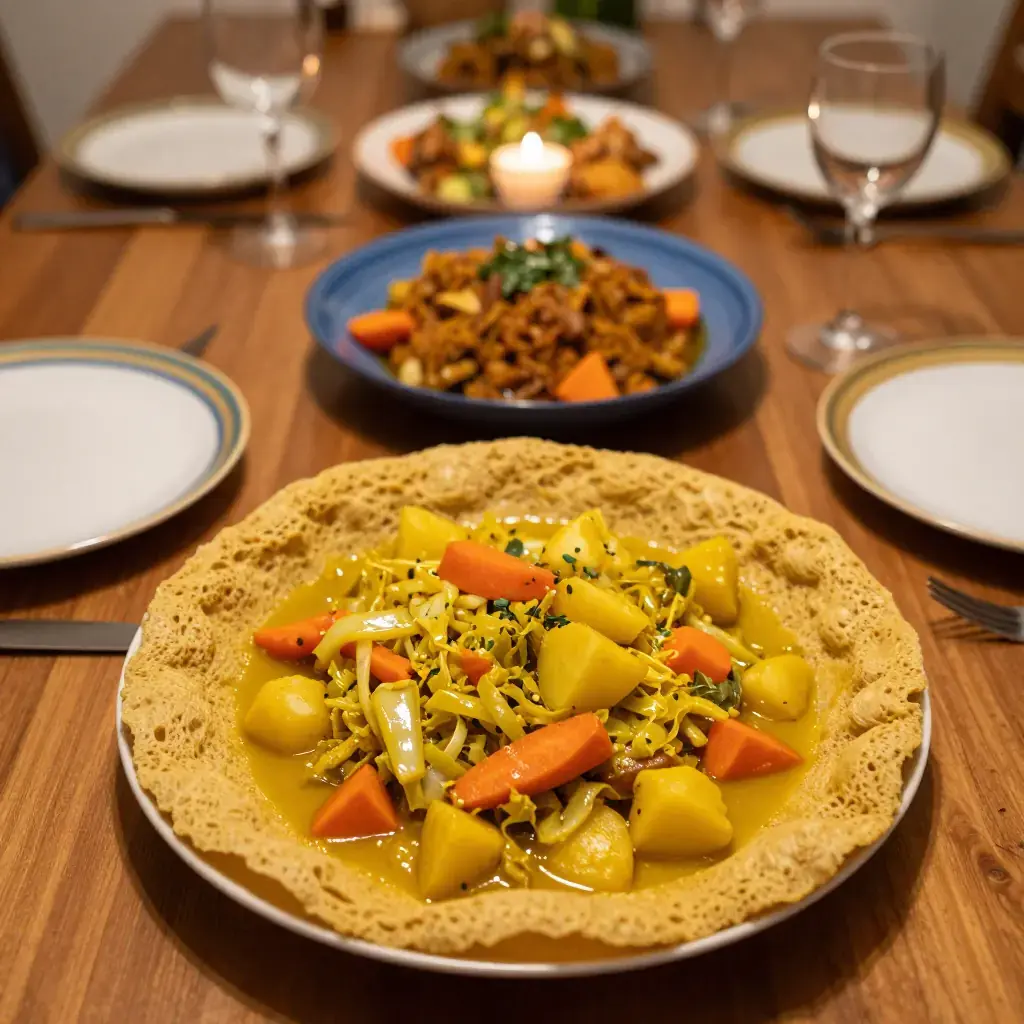
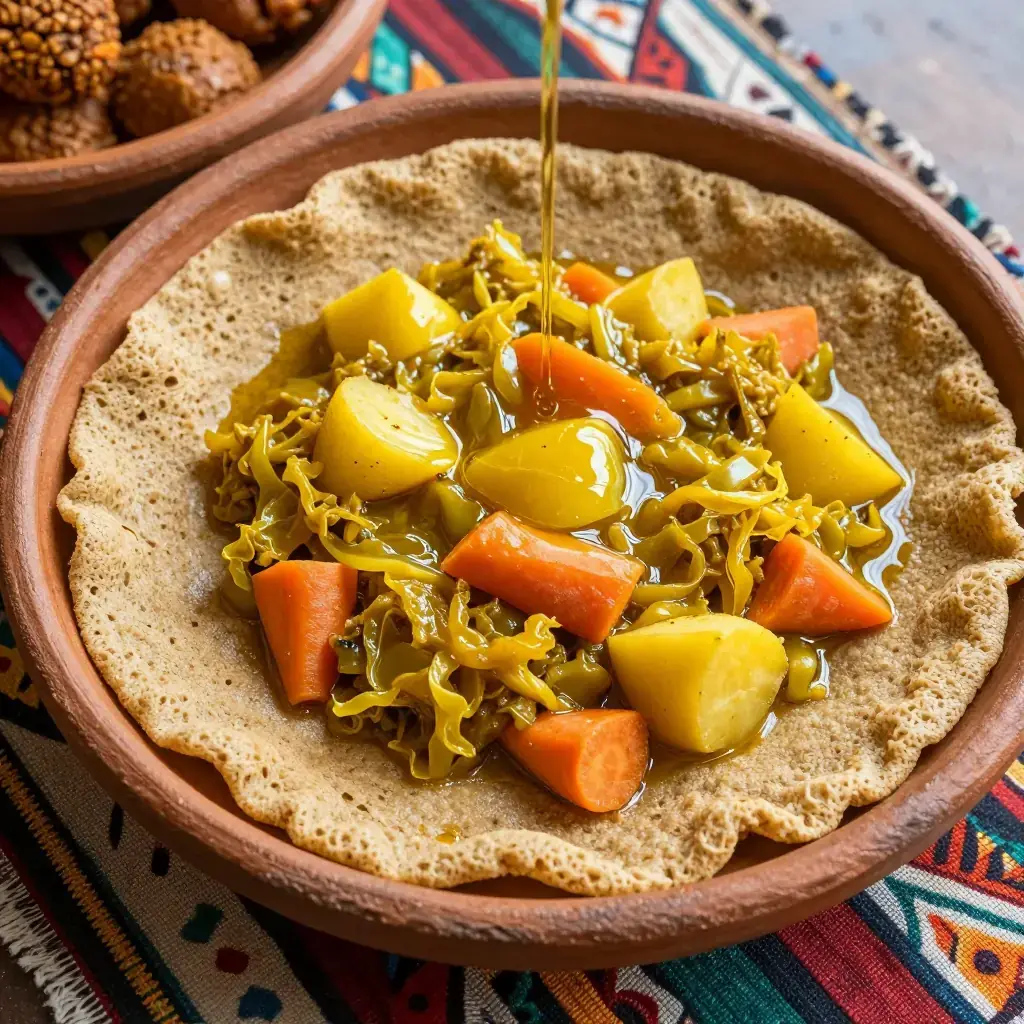
Atakilt wat is one of the most beloved of Ethiopia's many vegetable stews — mild, golden and comforting, made from cabbage, carrot and potatoes braised with onion, garlic, ginger and turmeric. It is a standard component of the traditional vegetarian fasting spread (ye'tsom beyaynetu) eaten on fasting days, when Orthodox Christians abstain from meat and dairy. The stew is served on spongy injera alongside other wots, its gentle flavour providing balance to the fiercer berbere-spiced dishes.
Serves: 4
Ingredients
- ½ head of green cabbage (about 500g / 1 lb), cut into rough chunks
- 3 medium carrots (200g / 7 oz), peeled and cut into thick rounds
- 3 medium potatoes (400g / 14 oz), peeled and cut into large cubes
- 3 tbsp (45ml) sunflower or vegetable oil
- 2 large onions, finely diced
- 5 garlic cloves, minced
- 25g (1 in) fresh ginger, grated
- 1 tsp ground turmeric
- ½ tsp ground cumin
- ½ tsp ground black pepper
- 100ml (scant ½ cup) water
- Salt to taste
To serve:
- Injera or flatbread
Instructions
- Heat the oil in a large heavy pot over medium heat. Add the diced onions and cook for 12-15 minutes, stirring often, until very soft and beginning to caramelise and turn golden. This step builds the flavour base — do not rush it.
- Add the garlic and ginger; cook for 2 minutes until fragrant. Add turmeric, cumin and black pepper; stir for 30 seconds.
- Add the potato cubes and stir to coat in the spiced onion base. Cook for 3-4 minutes.
- Add the carrot rounds and water. Stir, cover and cook for 10 minutes over medium-low heat.
- Add the cabbage chunks and a generous pinch of salt. Stir to combine — the cabbage will seem like too much but will wilt down dramatically. Cover and cook for 15-20 minutes, stirring every 5 minutes, until the potato and carrot are completely tender and the cabbage is silky.
- The finished stew should be fairly dry, not soupy. If too wet, cook uncovered for 5 minutes to reduce.
- Taste and season generously with salt. Serve warm on injera as part of a shared Ethiopian spread.
Cook's Notes: Atakilt wat is intentionally mild — it is a counterpoint to spicier wots on the injera platter. Resist adding extra chilli. The dish keeps well for 3 days refrigerated and tastes better reheated.
All Revisions
generated
# Atakilt Wat Atakilt wat is one of the most beloved of Ethiopia's many vegetable stews — mild, golden and comforting, made from cabbage, carrot and potatoes braised with onion, garlic, ginger and turmeric. It is a standard component of the traditional vegetarian fasting spread (ye'tsom beyaynetu) eaten on fasting days, when Orthodox Christians abstain from meat and dairy. The stew is served on spongy injera alongside other wots, its gentle flavour providing balance to the fiercer berbere-spiced dishes. Serves: 4 ## Ingredients - ½ head of green cabbage (about 500g / 1 lb), cut into rough chunks - 3 medium carrots (200g / 7 oz), peeled and cut into thick rounds - 3 medium potatoes (400g / 14 oz), peeled and cut into large cubes - 3 tbsp (45ml) sunflower or vegetable oil - 2 large onions, finely diced - 5 garlic cloves, minced - 25g (1 in) fresh ginger, grated - 1 tsp ground turmeric - ½ tsp ground cumin - ½ tsp ground black pepper - 100ml (scant ½ cup) water - Salt to taste **To serve:** - Injera or flatbread ## Instructions 1. Heat the oil in a large heavy pot over medium heat. Add the diced onions and cook for 12-15 minutes, stirring often, until very soft and beginning to caramelise and turn golden. This step builds the flavour base — do not rush it. 2. Add the garlic and ginger; cook for 2 minutes until fragrant. Add turmeric, cumin and black pepper; stir for 30 seconds. 3. Add the potato cubes and stir to coat in the spiced onion base. Cook for 3-4 minutes. 4. Add the carrot rounds and water. Stir, cover and cook for 10 minutes over medium-low heat. 5. Add the cabbage chunks and a generous pinch of salt. Stir to combine — the cabbage will seem like too much but will wilt down dramatically. Cover and cook for 15-20 minutes, stirring every 5 minutes, until the potato and carrot are completely tender and the cabbage is silky. 6. The finished stew should be fairly dry, not soupy. If too wet, cook uncovered for 5 minutes to reduce. 7. Taste and season generously with salt. Serve warm on injera as part of a shared Ethiopian spread. **Cook's Notes:** Atakilt wat is intentionally mild — it is a counterpoint to spicier wots on the injera platter. Resist adding extra chilli. The dish keeps well for 3 days refrigerated and tastes better reheated.Images

Tags
- comfort-food
- dairy-free
- ethiopian
- from-input
- gluten-free
- one-pot
- root-vegetables
- vegan
- vegetarian