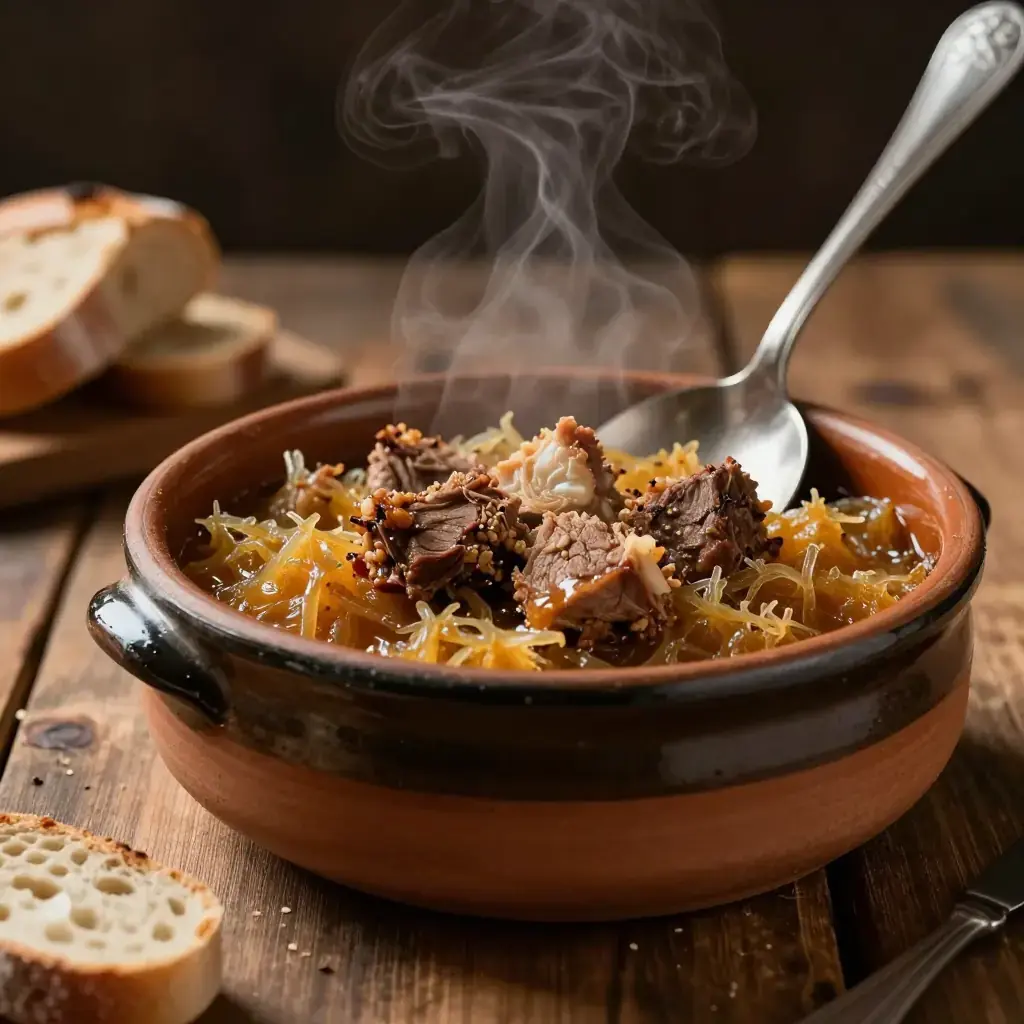
Podvarak
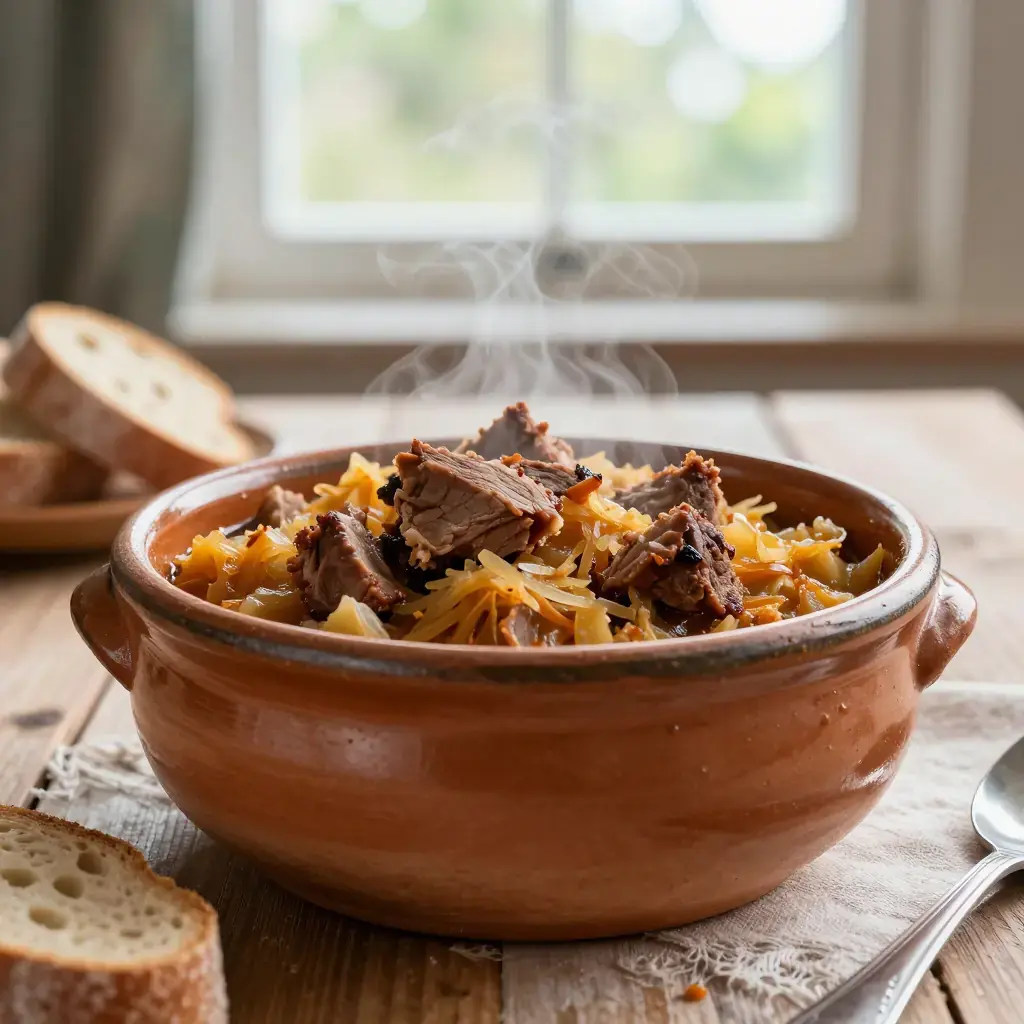
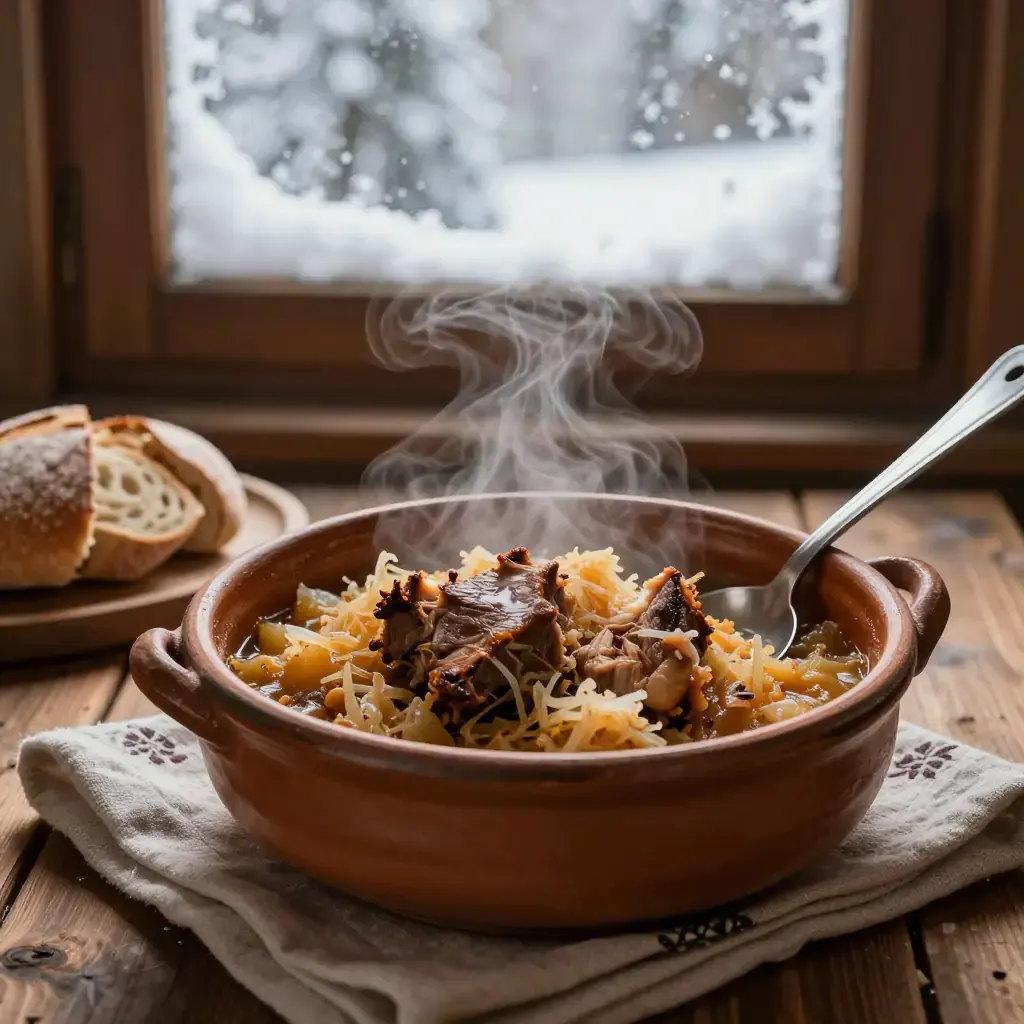
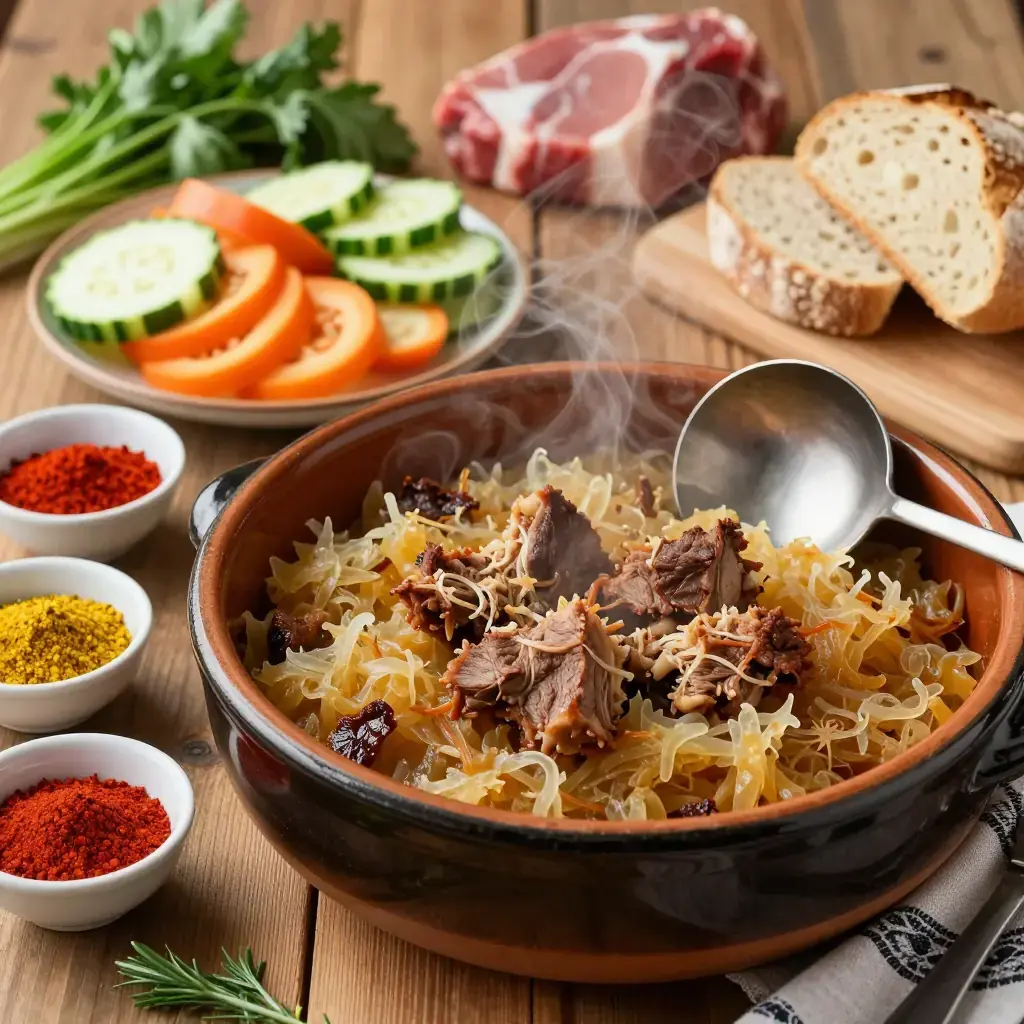
Podvarak is one of the oldest dishes in Serbian culinary tradition, with written references dating to medieval court feasts and monastery kitchens. Slow-braised sauerkraut (kiseli kupus) forms the base, with roast pork laid across it so the cooking juices drip down and enrich the cabbage over hours of slow oven cooking. It is the canonical Serbian Sunday dish, essential at Slava celebrations — the Serbian Orthodox family patron saint feast — and at Christmas, when the sour cabbage represents endurance through the winter.
Serves: 6
Ingredients
- 1 kg (2.2 lb) sauerkraut (kiseli kupus), drained and rinsed lightly
- 800 g (1.7 lb) bone-in pork shoulder or pork neck steaks
- 2 large onions, finely sliced
- 4 cloves garlic, minced
- 2 tbsp (30 ml) lard or sunflower oil
- 1 tsp (5 g) sweet paprika
- 1 tsp (5 g) hot smoked paprika
- 1 tsp (5 g) black pepper
- 2 bay leaves
- 100 ml (scant ½ cup) dry white wine
- Salt to taste
Instructions
- Heat lard in a heavy oven-safe pot (peć or Dutch oven) over medium heat. Fry the onions slowly for 15–20 minutes until deeply golden and soft.
- Add the garlic and paprikas and stir for 1 minute. Add the sauerkraut and toss to coat thoroughly. Pour in the white wine and 100 ml (scant ½ cup) water.
- Season the pork with salt and pepper. Lay the pork pieces directly on top of the sauerkraut.
- Add bay leaves. Cover tightly with a lid or foil.
- Cook in a preheated oven at 160 °C (320 °F) for 2 hours.
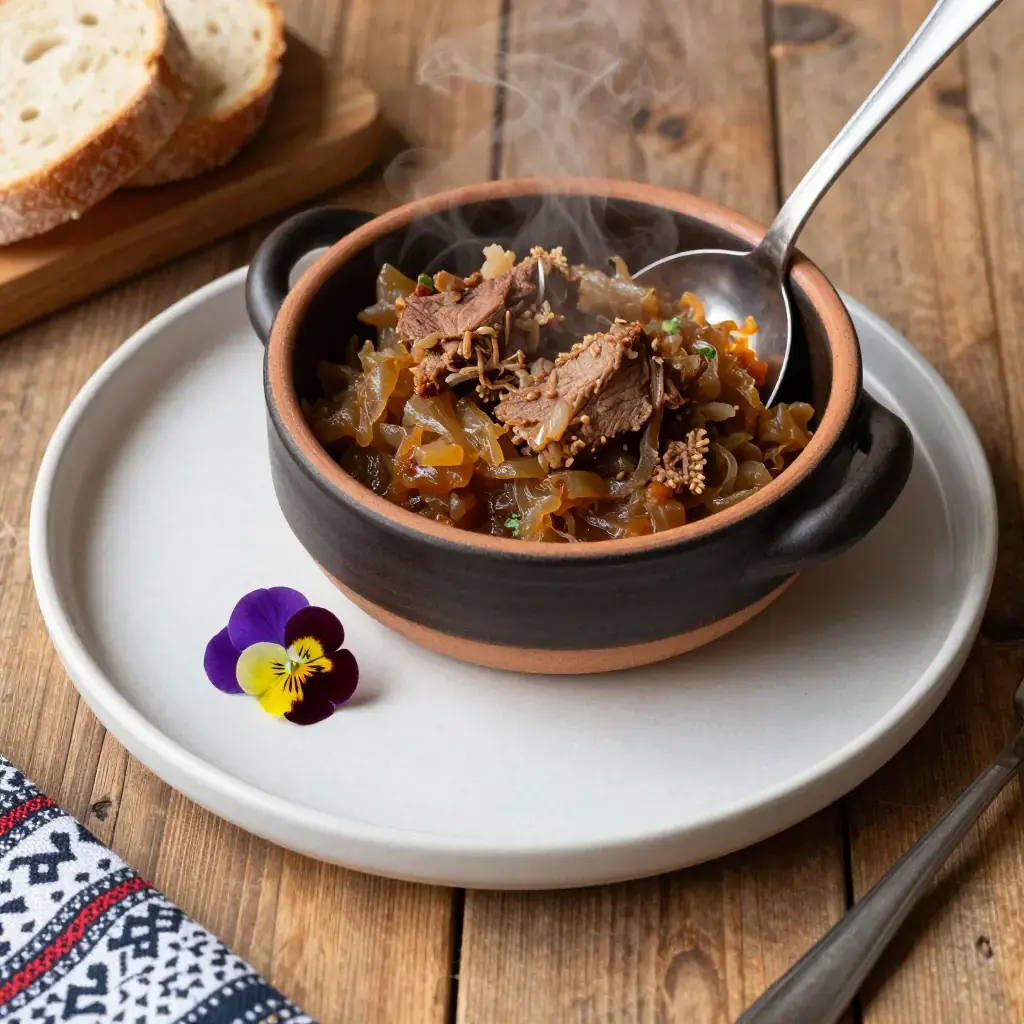
- Uncover and continue cooking for a further 30–40 minutes until the pork is tender and the exposed top is lightly caramelised. The sauerkraut should be jammy and dark gold.
- Taste and adjust salt. Serve directly from the pot with crusty bread or boiled potatoes.
Cook's Notes: The balance between rinsing and keeping the sauerkraut's sourness is personal — rinse once for a milder flavour, not at all for full tang. Podvarak always tastes better reheated the next day, which is why Serbian cooks often make it a day ahead for Slava feasts.
All Revisions
generated
# Podvarak Podvarak is one of the oldest dishes in Serbian culinary tradition, with written references dating to medieval court feasts and monastery kitchens. Slow-braised sauerkraut (kiseli kupus) forms the base, with roast pork laid across it so the cooking juices drip down and enrich the cabbage over hours of slow oven cooking. It is the canonical Serbian Sunday dish, essential at Slava celebrations — the Serbian Orthodox family patron saint feast — and at Christmas, when the sour cabbage represents endurance through the winter. Serves: 6 ## Ingredients - 1 kg (2.2 lb) sauerkraut (kiseli kupus), drained and rinsed lightly - 800 g (1.7 lb) bone-in pork shoulder or pork neck steaks - 2 large onions, finely sliced - 4 cloves garlic, minced - 2 tbsp (30 ml) lard or sunflower oil - 1 tsp (5 g) sweet paprika - 1 tsp (5 g) hot smoked paprika - 1 tsp (5 g) black pepper - 2 bay leaves - 100 ml (scant ½ cup) dry white wine - Salt to taste ## Instructions 1. Heat lard in a heavy oven-safe pot (peć or Dutch oven) over medium heat. Fry the onions slowly for 15–20 minutes until deeply golden and soft. 2. Add the garlic and paprikas and stir for 1 minute. Add the sauerkraut and toss to coat thoroughly. Pour in the white wine and 100 ml (scant ½ cup) water. 3. Season the pork with salt and pepper. Lay the pork pieces directly on top of the sauerkraut. 4. Add bay leaves. Cover tightly with a lid or foil. 5. Cook in a preheated oven at 160 °C (320 °F) for 2 hours. 6. Uncover and continue cooking for a further 30–40 minutes until the pork is tender and the exposed top is lightly caramelised. The sauerkraut should be jammy and dark gold. 7. Taste and adjust salt. Serve directly from the pot with crusty bread or boiled potatoes. **Cook's Notes:** The balance between rinsing and keeping the sauerkraut's sourness is personal — rinse once for a milder flavour, not at all for full tang. Podvarak always tastes better reheated the next day, which is why Serbian cooks often make it a day ahead for Slava feasts.Images
Tags
- authentic
- baked
- braised
- comfort-food
- dinner
- from-input
- historical
- serbian
- winter