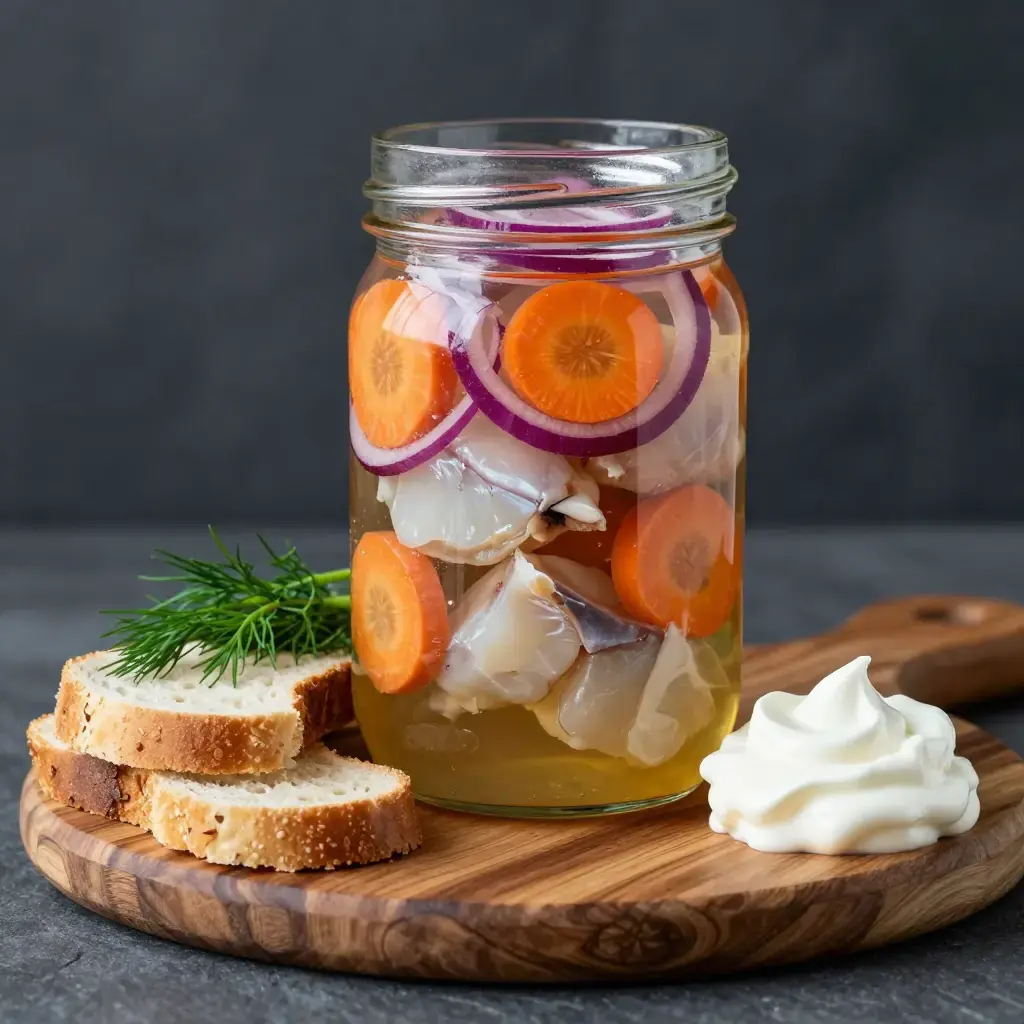
Inlagd Sill (Inlagd Sill)
Inlagd sill is the great constant of the Swedish smörgåsbord — sweet-sour pickled herring that appears at Midsommar, Christmas, and Easter with almost liturgical regularity. Salt herring is soaked to remove excess salt, then steeped in a 1-2-3 pickling brine (one part vinegar, two parts sugar, three parts water) with allspice, bay, and onion until the flavour is bracingly sharp and sweet. It is Sweden's most important preserved food tradition.
Serves: 8 (as part of a smörgåsbord)
Ingredients
Herring:
- 500g (1 lb) salt-cured herring fillets (matjes or Swedish salt herring), or very fresh herring fillets
- Cold water, for soaking
Pickling Brine:
- 100ml (⅓ cup + 1 tbsp) distilled white vinegar (12% acidity) or white wine vinegar
- 200g (1 cup) granulated sugar
- 300ml (1¼ cups) water
- 8 allspice berries
- 2 bay leaves
- 1 tsp white peppercorns
Aromatics:
- 1 medium red onion, thinly sliced into rings
- 1 medium carrot, thinly sliced into rounds
- 5 cm (2 inch) piece fresh horseradish, peeled and thinly sliced (optional)
Instructions
-
If using salt-cured herring, soak fillets in cold water in the refrigerator for 12–24 hours, changing water 2–3 times. Taste a small piece; it should be pleasantly salty but not overwhelming. Drain and pat dry. Cut into 3 cm (1 inch) pieces.
-
Combine vinegar, sugar, and water in a saucepan over medium heat. Add allspice, bay leaves, and peppercorns. Stir until sugar dissolves. Bring just to a boil, then remove from heat and allow to cool completely.
-
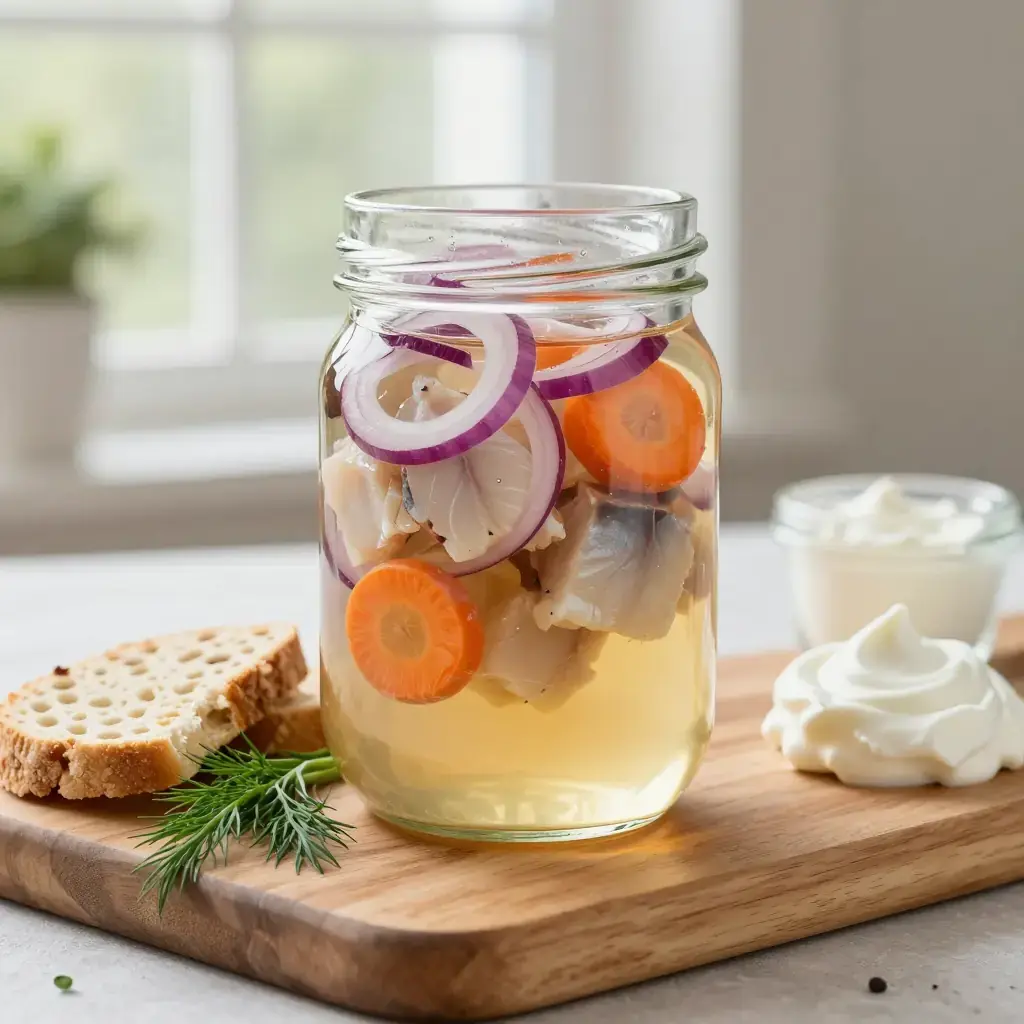
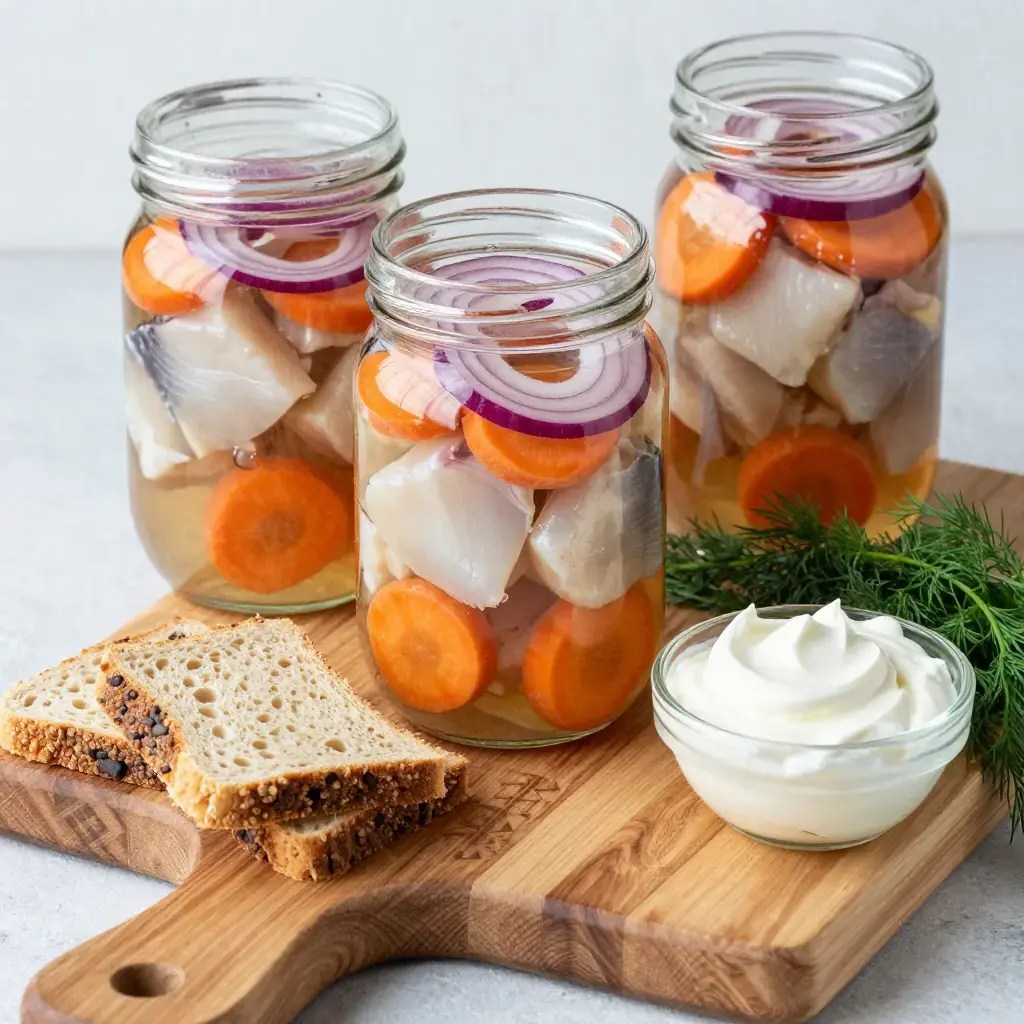
Layer herring pieces, red onion rings, carrot slices, and horseradish in a sterilised glass jar, alternating the layers.
-
Pour cooled brine over the herring, ensuring everything is submerged. Seal and refrigerate for a minimum of 24 hours before eating. Best after 48–72 hours.
-
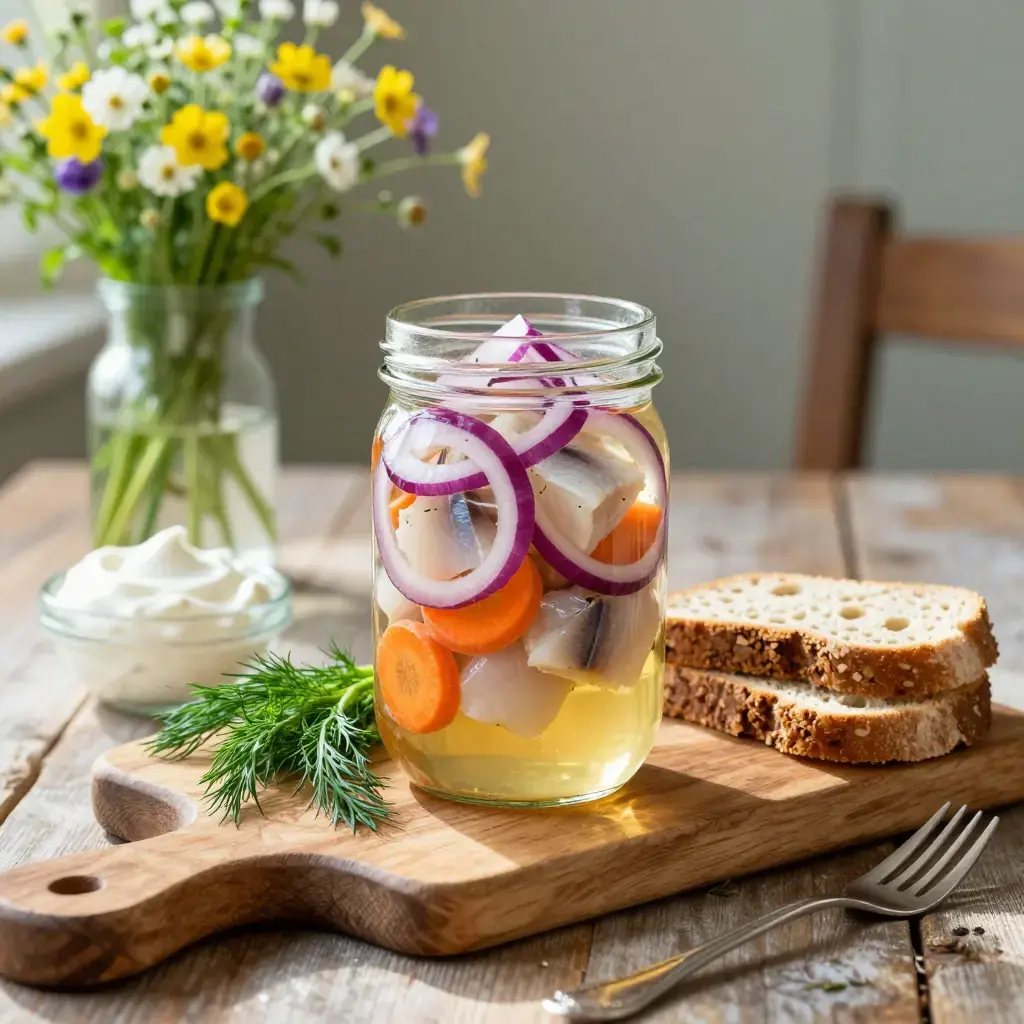
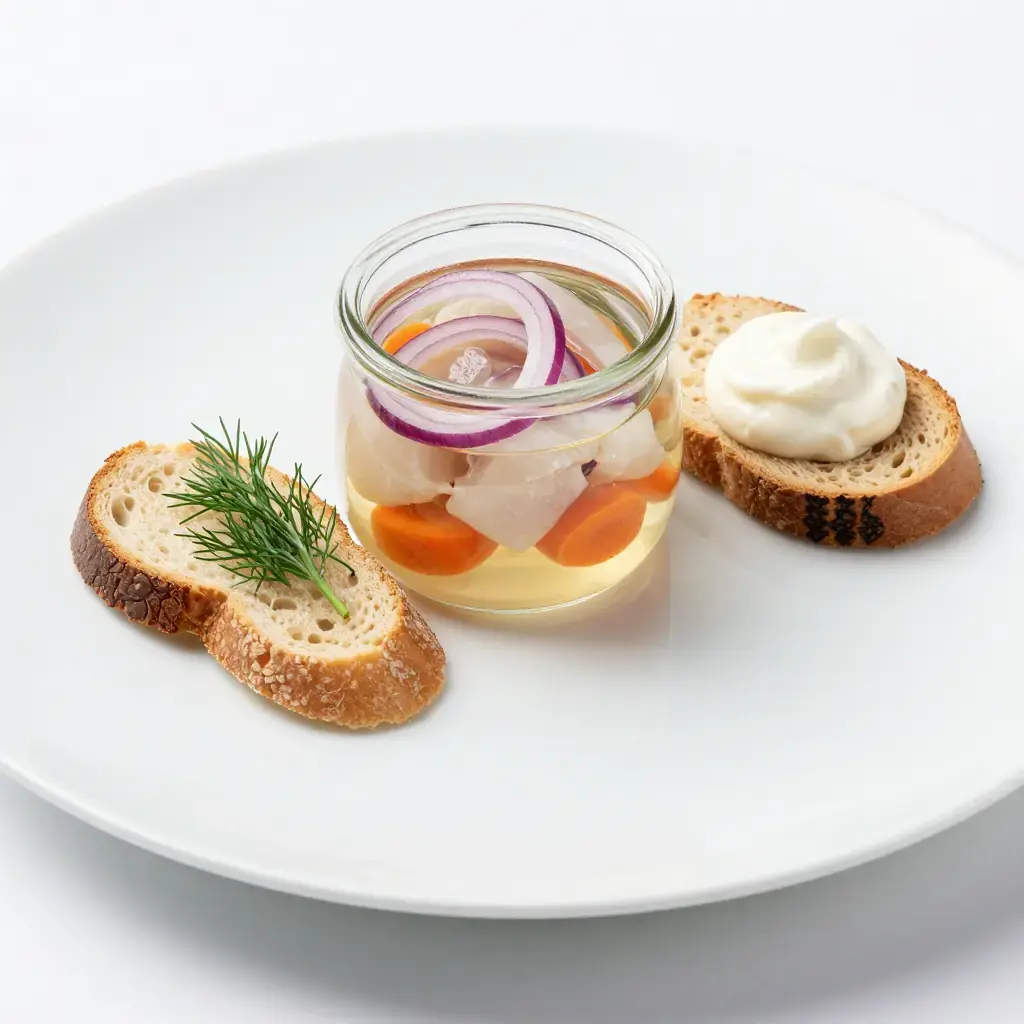
Serve cold with crispbread, sour cream, fresh dill, and boiled potatoes.
Cook's Notes: The 1-2-3 brine is the classic Swedish ratio — memorise it. Inlagd sill keeps refrigerated for up to 2 weeks. For a mustard herring variant (senapsill), stir 2 tbsp Swedish mustard and 1 tbsp chopped dill into the drained herring just before serving.
All Revisions
generated
# Inlagd Sill (Inlagd Sill) Inlagd sill is the great constant of the Swedish smörgåsbord — sweet-sour pickled herring that appears at Midsommar, Christmas, and Easter with almost liturgical regularity. Salt herring is soaked to remove excess salt, then steeped in a 1-2-3 pickling brine (one part vinegar, two parts sugar, three parts water) with allspice, bay, and onion until the flavour is bracingly sharp and sweet. It is Sweden's most important preserved food tradition. Serves: 8 (as part of a smörgåsbord) ## Ingredients **Herring:** - 500g (1 lb) salt-cured herring fillets (matjes or Swedish salt herring), or very fresh herring fillets - Cold water, for soaking **Pickling Brine:** - 100ml (⅓ cup + 1 tbsp) distilled white vinegar (12% acidity) or white wine vinegar - 200g (1 cup) granulated sugar - 300ml (1¼ cups) water - 8 allspice berries - 2 bay leaves - 1 tsp white peppercorns **Aromatics:** - 1 medium red onion, thinly sliced into rings - 1 medium carrot, thinly sliced into rounds - 5 cm (2 inch) piece fresh horseradish, peeled and thinly sliced (optional) ## Instructions 1. If using salt-cured herring, soak fillets in cold water in the refrigerator for 12–24 hours, changing water 2–3 times. Taste a small piece; it should be pleasantly salty but not overwhelming. Drain and pat dry. Cut into 3 cm (1 inch) pieces. 2. Combine vinegar, sugar, and water in a saucepan over medium heat. Add allspice, bay leaves, and peppercorns. Stir until sugar dissolves. Bring just to a boil, then remove from heat and allow to cool completely. 3. Layer herring pieces, red onion rings, carrot slices, and horseradish in a sterilised glass jar, alternating the layers. 4. Pour cooled brine over the herring, ensuring everything is submerged. Seal and refrigerate for a minimum of 24 hours before eating. Best after 48–72 hours. 5. Serve cold with crispbread, sour cream, fresh dill, and boiled potatoes. **Cook's Notes:** The 1-2-3 brine is the classic Swedish ratio — memorise it. Inlagd sill keeps refrigerated for up to 2 weeks. For a mustard herring variant (senapsill), stir 2 tbsp Swedish mustard and 1 tbsp chopped dill into the drained herring just before serving.Images
Tags
- authentic
- cold-dish
- fermented
- from-input
- multi-day
- pescatarian
- seafood
- swedish