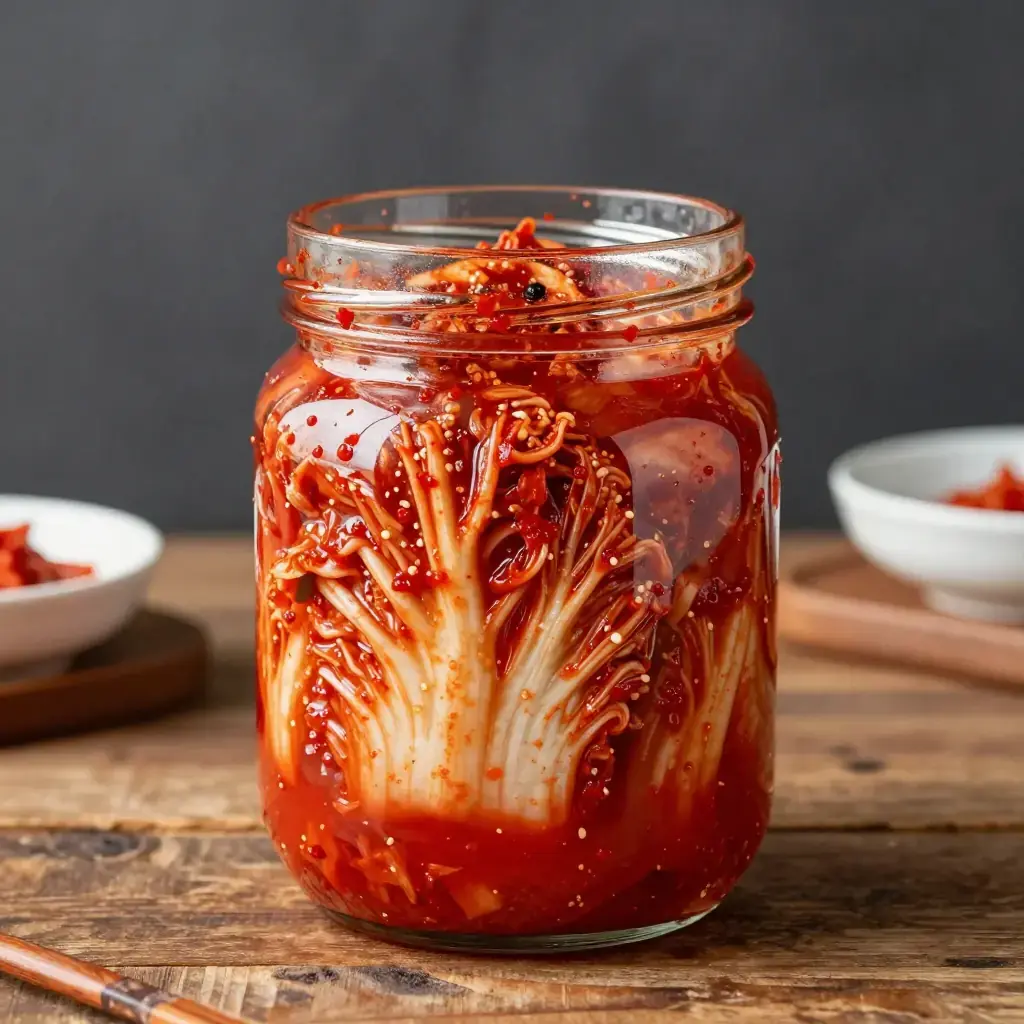
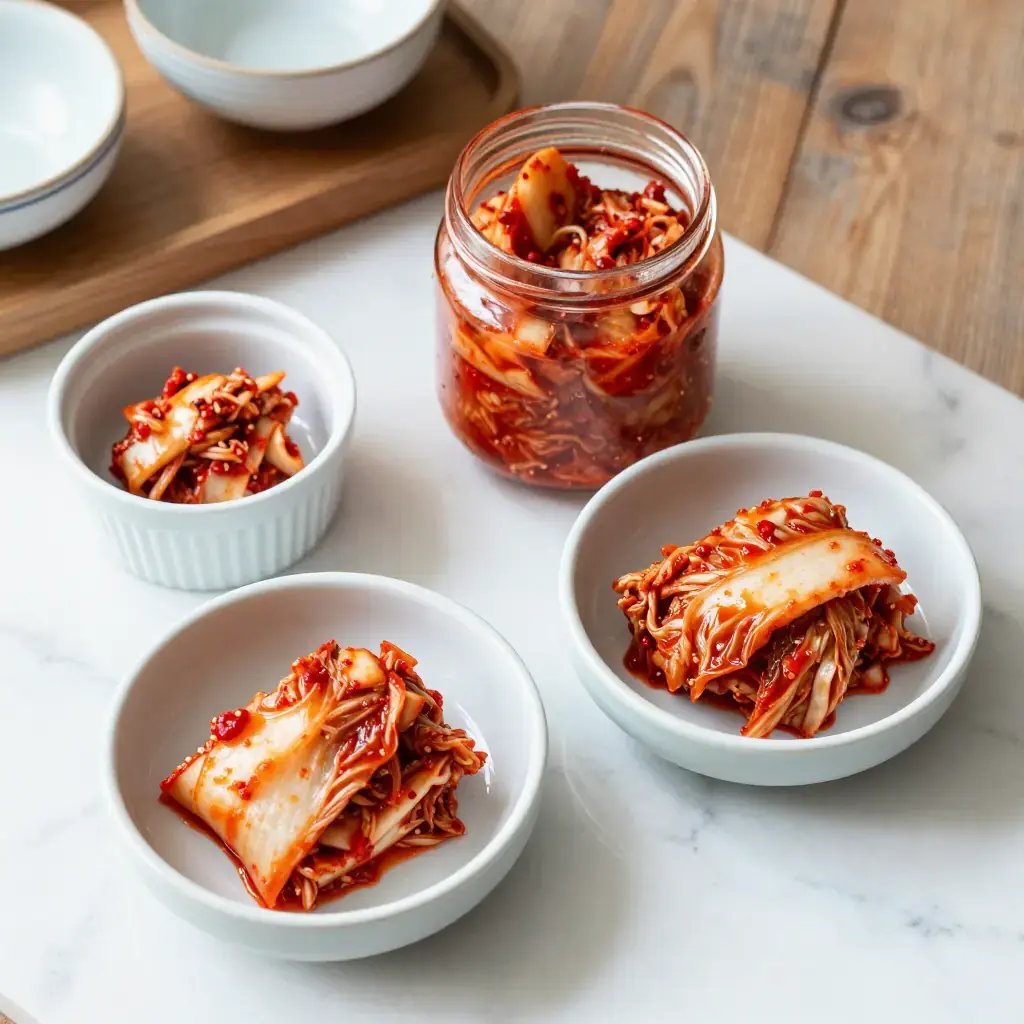
Baechu Kimchi (배추김치)
Baechu kimchi is the cornerstone of Korean cuisine and one of the world's most celebrated fermented foods — a whole napa cabbage cured in salt and packed with a fiery paste of gochugaru, garlic, ginger, and fermented seafood. In Korea, communal kimchi-making sessions called kimjang, recognised by UNESCO as Intangible Cultural Heritage, are held each autumn to prepare enough kimchi to last through winter.
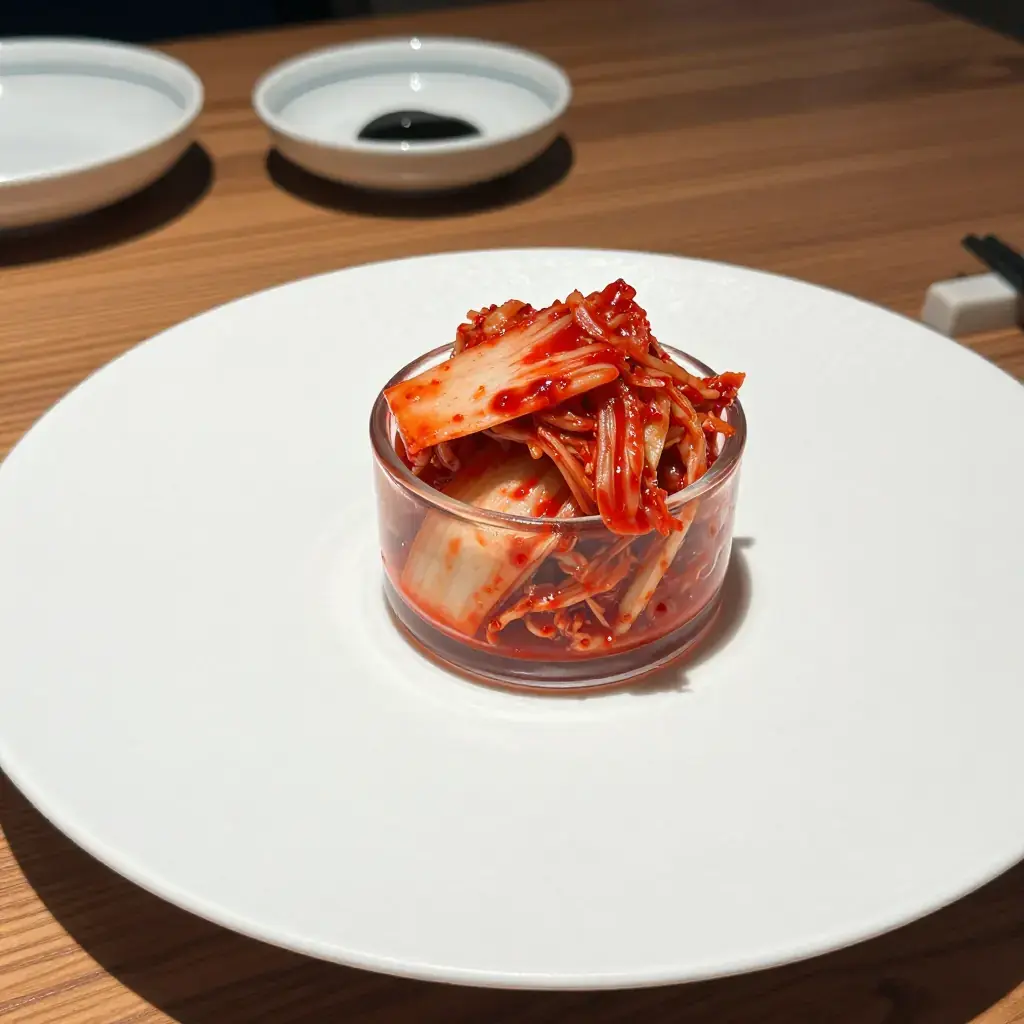
Serves: 8–10 (as a side dish)
Ingredients
- 1 large napa cabbage (about 2 kg / 4.5 lb)
- 100g (3.5 oz) coarse sea salt (for salting cabbage)
- 6 spring onions, cut into 5 cm (2 inch) pieces
- 1 medium daikon radish (200g / 7 oz), julienned
Kimchi Paste:
- 80g (¾ cup) gochugaru (Korean red pepper flakes)
- 6 cloves garlic, minced
- 1 tsp fresh ginger, grated
- 2 tbsp (30ml) fish sauce
- 1 tbsp (15ml) salted fermented shrimp (saeujeot), or extra fish sauce
- 1 tsp sugar
Instructions
-
Quarter the cabbage lengthwise and cut crosswise into 5 cm (2 inch) pieces. Toss with sea salt in a large bowl. Allow to sit for 1–2 hours, turning occasionally, until the cabbage wilts and releases liquid. Rinse thoroughly in cold water and drain well — squeeze out excess moisture with your hands.
-
Combine gochugaru, garlic, ginger, fish sauce, saeujeot, and sugar in a bowl. Mix into a thick red paste.
-
In a large bowl, toss the drained cabbage with spring onions and daikon. Add the kimchi paste and mix thoroughly with gloved hands until every piece is well coated.
-
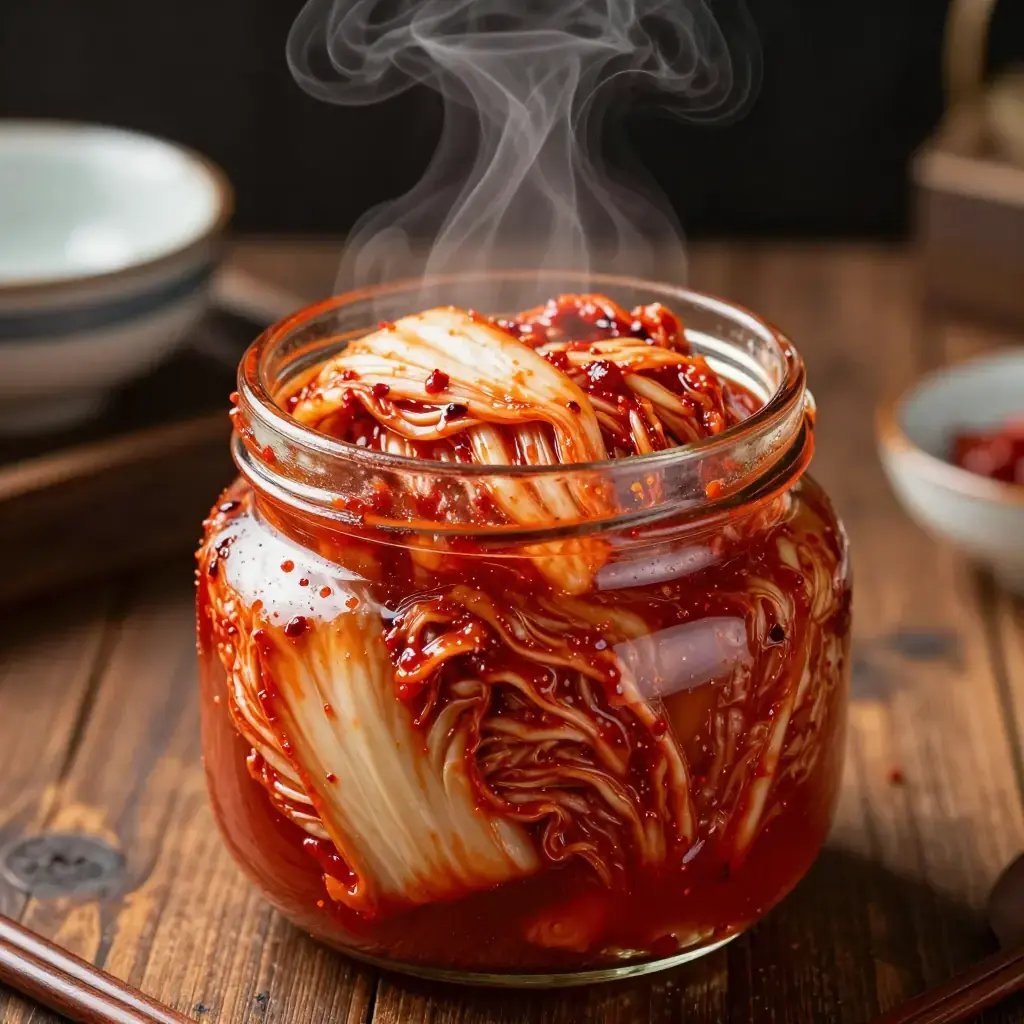
Pack tightly into sterilised glass jars, pressing down to eliminate air pockets. Leave 2–3 cm (1 inch) headspace as the kimchi will expand during fermentation. Seal loosely.
-
Leave at room temperature for 1–2 days until lightly sour and bubbly, then refrigerate. Kimchi improves over 2–4 weeks of slow cold fermentation and will keep for months.
Cook's Notes: For vegan kimchi, substitute the fish sauce and saeujeot with 2 tbsp soy sauce and 1 tbsp miso paste. Taste daily during room-temperature fermentation — the ideal sourness is personal. Freshly made kimchi (geotjeori) is also delicious before any fermentation begins.
All Revisions
generated
# Baechu Kimchi (배추김치) Baechu kimchi is the cornerstone of Korean cuisine and one of the world's most celebrated fermented foods — a whole napa cabbage cured in salt and packed with a fiery paste of gochugaru, garlic, ginger, and fermented seafood. In Korea, communal kimchi-making sessions called kimjang, recognised by UNESCO as Intangible Cultural Heritage, are held each autumn to prepare enough kimchi to last through winter. Serves: 8–10 (as a side dish) ## Ingredients - 1 large napa cabbage (about 2 kg / 4.5 lb) - 100g (3.5 oz) coarse sea salt (for salting cabbage) - 6 spring onions, cut into 5 cm (2 inch) pieces - 1 medium daikon radish (200g / 7 oz), julienned **Kimchi Paste:** - 80g (¾ cup) gochugaru (Korean red pepper flakes) - 6 cloves garlic, minced - 1 tsp fresh ginger, grated - 2 tbsp (30ml) fish sauce - 1 tbsp (15ml) salted fermented shrimp (saeujeot), or extra fish sauce - 1 tsp sugar ## Instructions 1. Quarter the cabbage lengthwise and cut crosswise into 5 cm (2 inch) pieces. Toss with sea salt in a large bowl. Allow to sit for 1–2 hours, turning occasionally, until the cabbage wilts and releases liquid. Rinse thoroughly in cold water and drain well — squeeze out excess moisture with your hands. 2. Combine gochugaru, garlic, ginger, fish sauce, saeujeot, and sugar in a bowl. Mix into a thick red paste. 3. In a large bowl, toss the drained cabbage with spring onions and daikon. Add the kimchi paste and mix thoroughly with gloved hands until every piece is well coated. 4. Pack tightly into sterilised glass jars, pressing down to eliminate air pockets. Leave 2–3 cm (1 inch) headspace as the kimchi will expand during fermentation. Seal loosely. 5. Leave at room temperature for 1–2 days until lightly sour and bubbly, then refrigerate. Kimchi improves over 2–4 weeks of slow cold fermentation and will keep for months. **Cook's Notes:** For vegan kimchi, substitute the fish sauce and saeujeot with 2 tbsp soy sauce and 1 tbsp miso paste. Taste daily during room-temperature fermentation — the ideal sourness is personal. Freshly made kimchi (geotjeori) is also delicious before any fermentation begins.Images
Tags
- authentic
- cold-dish
- dairy-free
- fermented
- from-input
- gluten-free
- korean
- multi-day
- snack