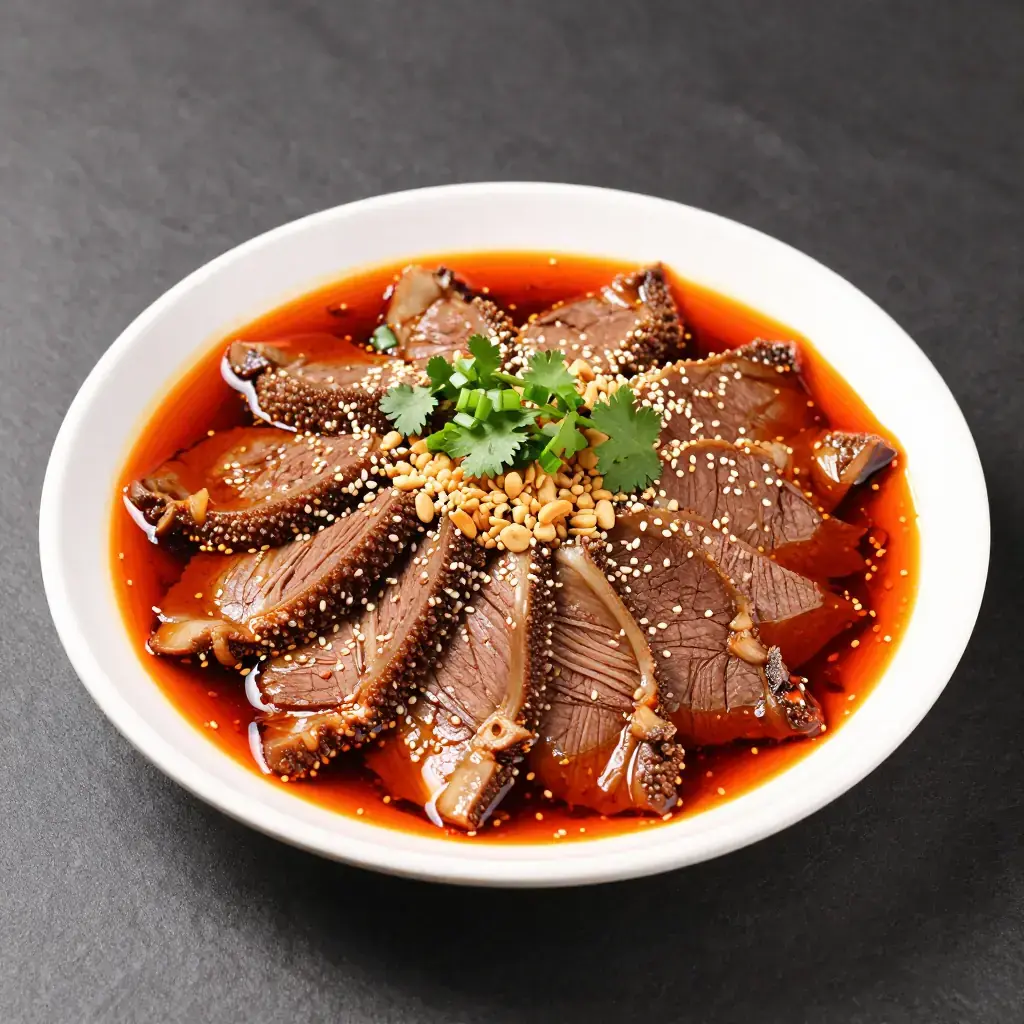
Fuqi Feipian
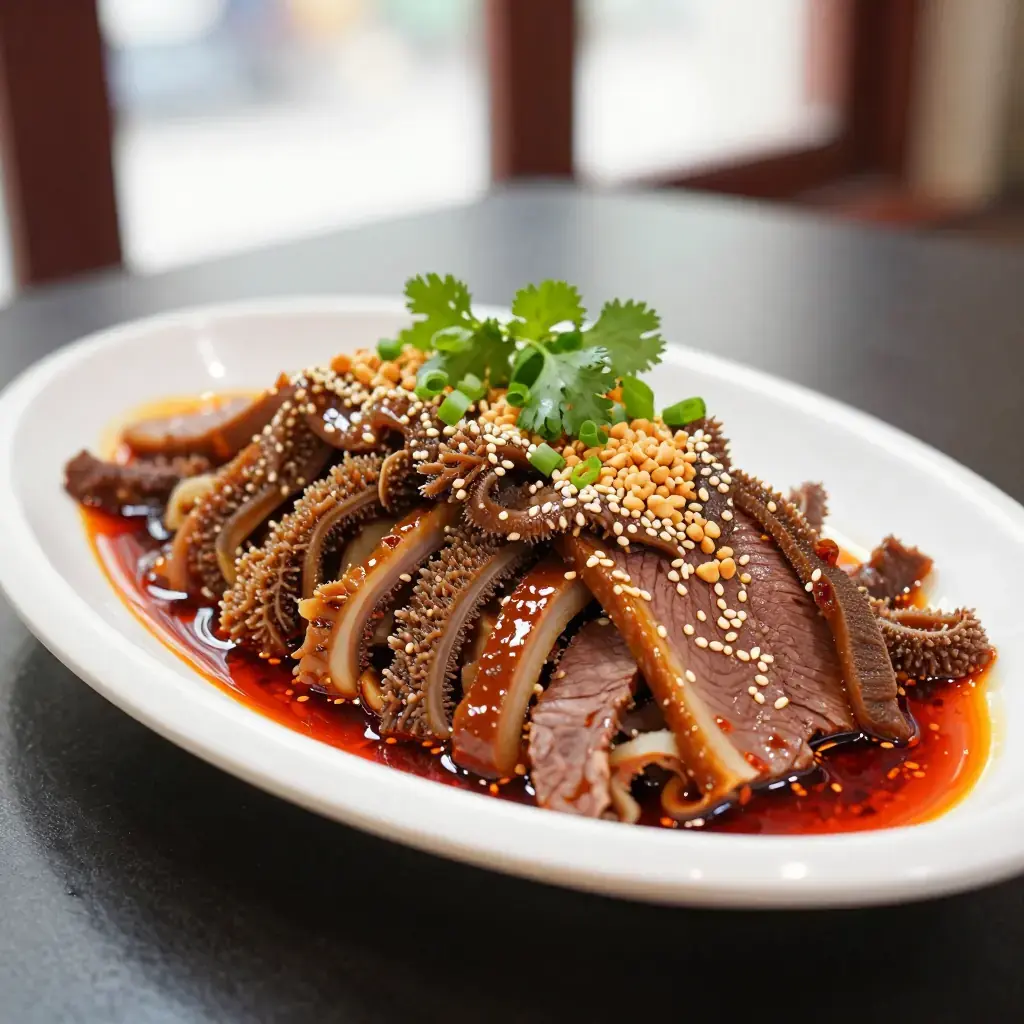
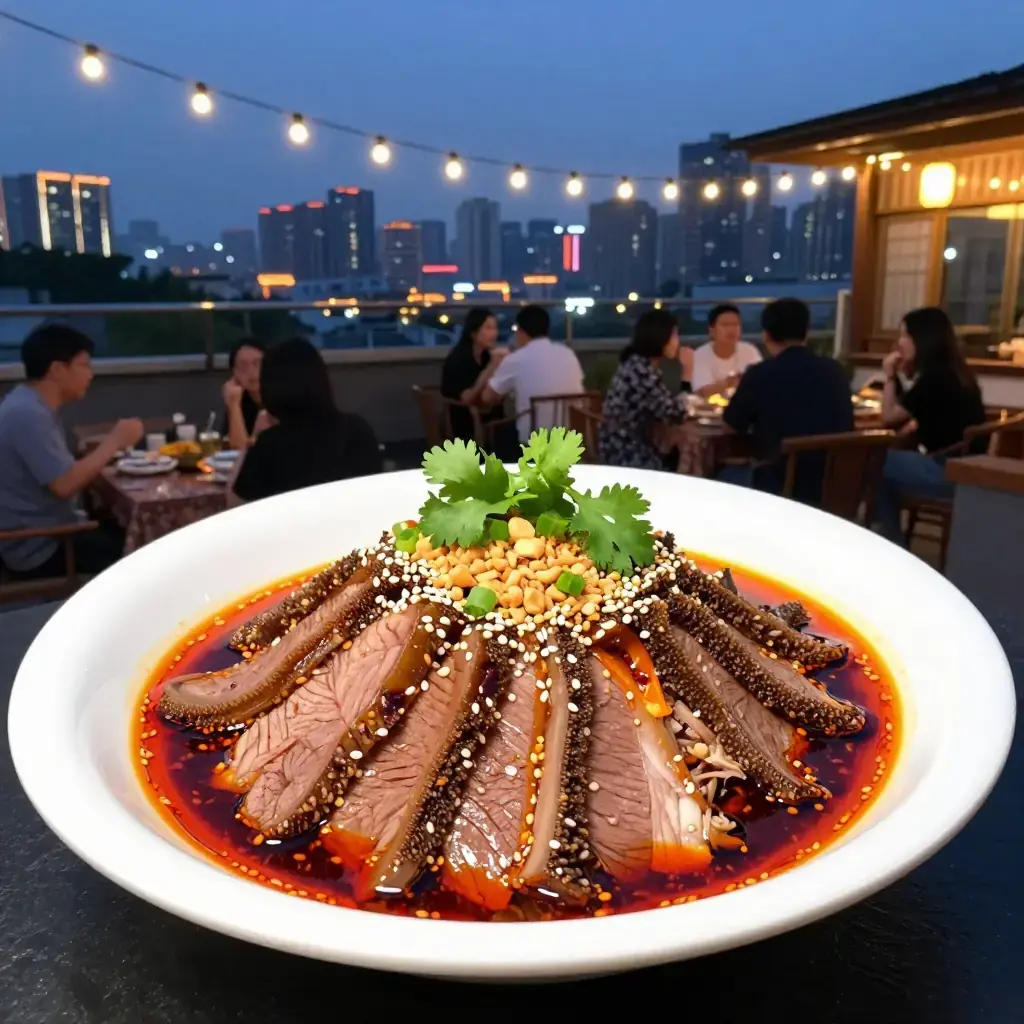
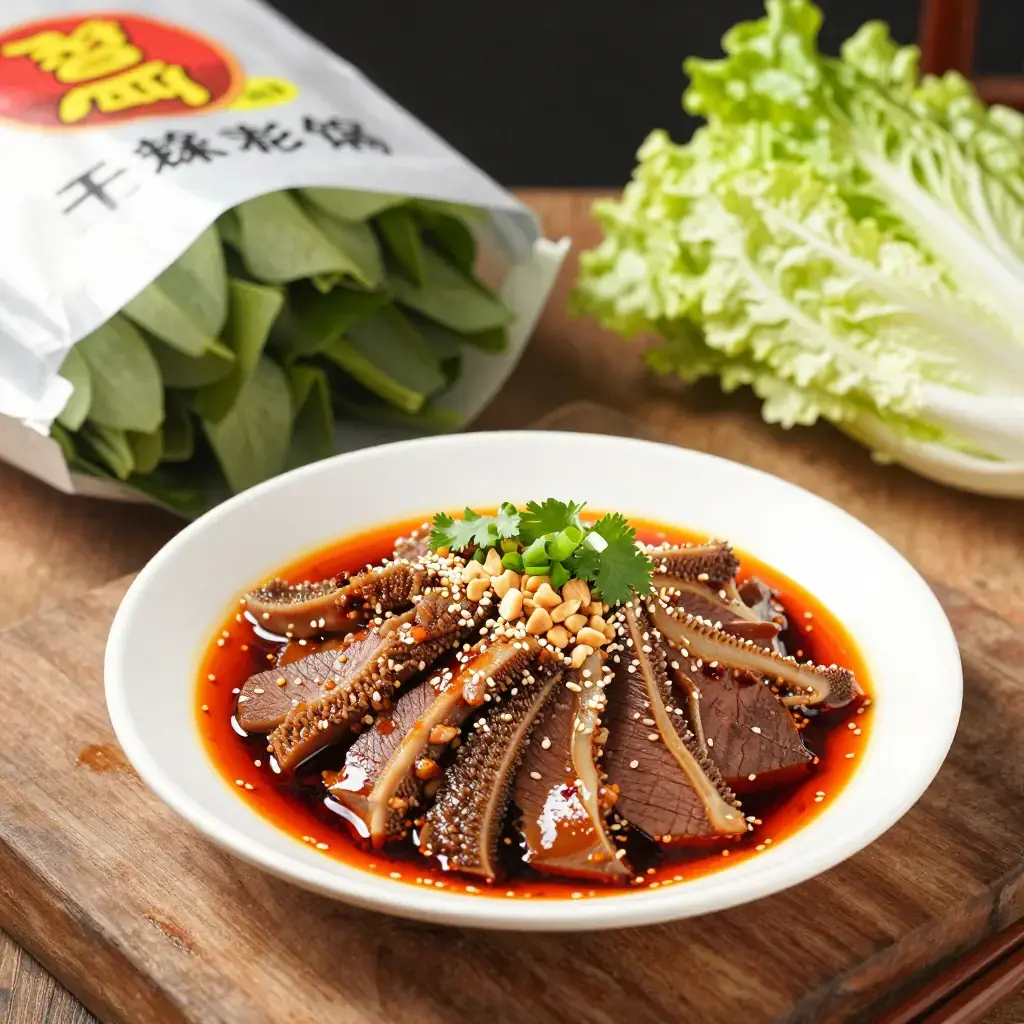
Fuqi Feipian — "husband and wife lung slices" — is one of Sichuan's most famous cold dishes, born in 1930s Chengdu when a street vendor couple named Guo Chaohua and Zhang Tianzheng sold slow-braised beef offal from shoulder baskets, dressed in the region's signature mala (numbing-spicy) sauce. The dish has since outlived its humble origins to become a staple of Chengdu restaurants worldwide. Despite the name, modern versions rarely include lung; instead a mix of thinly sliced beef shank, tripe, and tendon are used.
Serves: 4
Ingredients
- 300g (10.5 oz) beef shank, whole
- 200g (7 oz) honeycomb tripe, cleaned
- 150g (5 oz) beef tendon (optional)
- 1 litre (4 cups) water for braising
- 3 tbsp (45ml) light soy sauce (braising)
- 2 star anise, 1 cinnamon stick, 3 cloves (braising spices)
Dressing:
- 3 tbsp (45ml) light soy sauce
- 1.5 tbsp (22ml) Chinkiang black vinegar
- 2 tbsp (30ml) chilli oil with flakes
- 1 tsp Sichuan peppercorn oil or 1 tsp ground toasted Sichuan pepper
- 1 tsp sesame oil
- 1 tsp sugar
- 3 garlic cloves, minced
- 2cm ginger, minced
- 2 tbsp toasted sesame seeds
- 2 spring onions, sliced
- Fresh coriander, to garnish
- Crushed roasted peanuts, to garnish
Instructions
- Blanch tripe and shank in boiling water for 5 minutes. Drain, rinse under cold water.
- Combine water, soy sauce, and braising spices in a pot. Add the blanched meats. Bring to a boil, reduce heat, and braise covered for 1.5-2 hours until the shank is tender but sliceable and the tripe is soft. Cool completely in the braising liquid.
- Remove the meats and slice the beef shank thinly across the grain (3mm / ⅛ inch). Cut tripe into thin strips. Arrange together on a platter.
- Whisk together all dressing ingredients. Pour generously over the sliced meats.
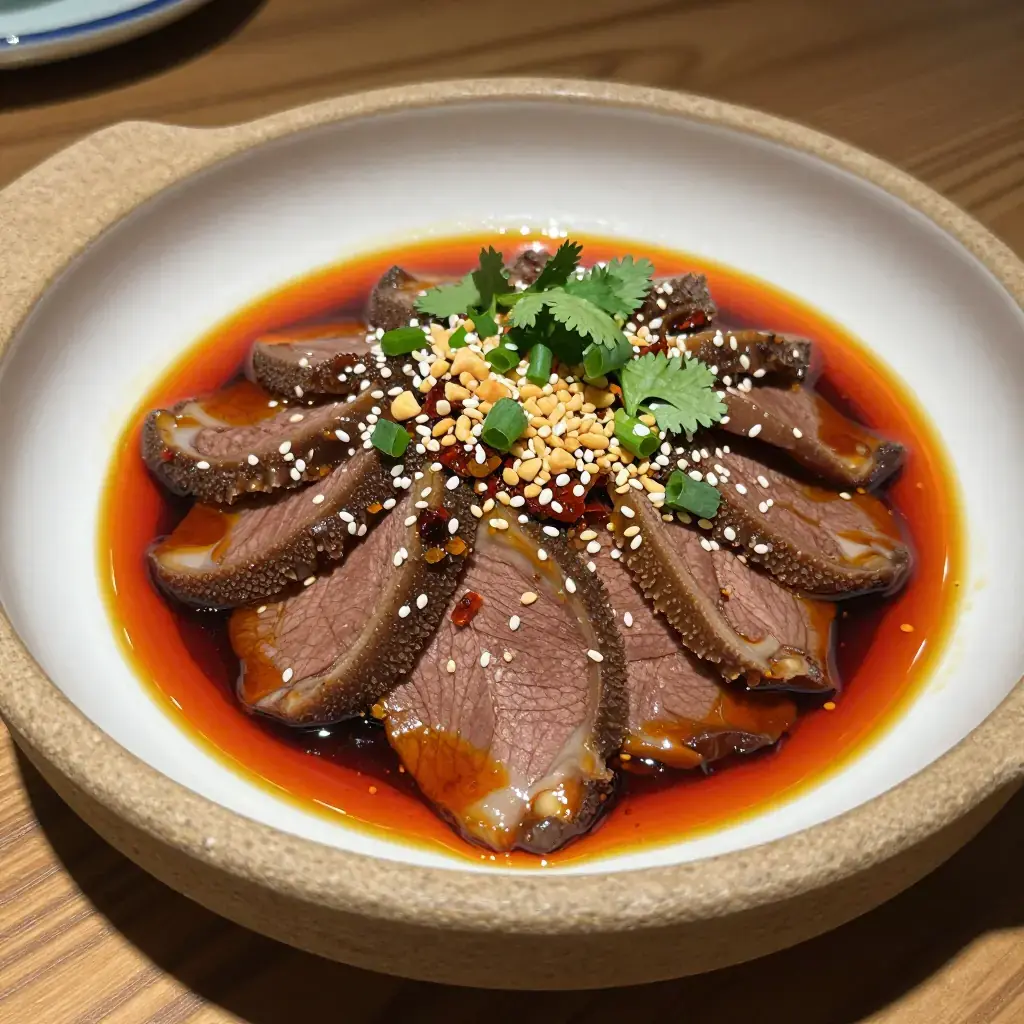
- Top with sesame seeds, spring onions, crushed peanuts, and fresh coriander. Serve cold or at room temperature.
Cook's Notes: The mala balance — ma (numbing) from Sichuan pepper, la (spicy) from chilli oil — should have both sensations distinct, not one dominating. Taste the dressing before pouring and adjust the Sichuan pepper oil if needed. Cold braised beef shank alone, without the tripe, is a simpler version if offal is unavailable.
All Revisions
generated
# Fuqi Feipian Fuqi Feipian — "husband and wife lung slices" — is one of Sichuan's most famous cold dishes, born in 1930s Chengdu when a street vendor couple named Guo Chaohua and Zhang Tianzheng sold slow-braised beef offal from shoulder baskets, dressed in the region's signature mala (numbing-spicy) sauce. The dish has since outlived its humble origins to become a staple of Chengdu restaurants worldwide. Despite the name, modern versions rarely include lung; instead a mix of thinly sliced beef shank, tripe, and tendon are used. Serves: 4 ## Ingredients - 300g (10.5 oz) beef shank, whole - 200g (7 oz) honeycomb tripe, cleaned - 150g (5 oz) beef tendon (optional) - 1 litre (4 cups) water for braising - 3 tbsp (45ml) light soy sauce (braising) - 2 star anise, 1 cinnamon stick, 3 cloves (braising spices) **Dressing:** - 3 tbsp (45ml) light soy sauce - 1.5 tbsp (22ml) Chinkiang black vinegar - 2 tbsp (30ml) chilli oil with flakes - 1 tsp Sichuan peppercorn oil or 1 tsp ground toasted Sichuan pepper - 1 tsp sesame oil - 1 tsp sugar - 3 garlic cloves, minced - 2cm ginger, minced - 2 tbsp toasted sesame seeds - 2 spring onions, sliced - Fresh coriander, to garnish - Crushed roasted peanuts, to garnish ## Instructions 1. Blanch tripe and shank in boiling water for 5 minutes. Drain, rinse under cold water. 2. Combine water, soy sauce, and braising spices in a pot. Add the blanched meats. Bring to a boil, reduce heat, and braise covered for 1.5-2 hours until the shank is tender but sliceable and the tripe is soft. Cool completely in the braising liquid. 3. Remove the meats and slice the beef shank thinly across the grain (3mm / ⅛ inch). Cut tripe into thin strips. Arrange together on a platter. 4. Whisk together all dressing ingredients. Pour generously over the sliced meats. 5. Top with sesame seeds, spring onions, crushed peanuts, and fresh coriander. Serve cold or at room temperature. **Cook's Notes:** The mala balance — ma (numbing) from Sichuan pepper, la (spicy) from chilli oil — should have both sensations distinct, not one dominating. Taste the dressing before pouring and adjust the Sichuan pepper oil if needed. Cold braised beef shank alone, without the tripe, is a simpler version if offal is unavailable.Images
Tags
- authentic
- braised
- cold-dish
- dairy-free
- from-input
- historical
- offal
- sichuan