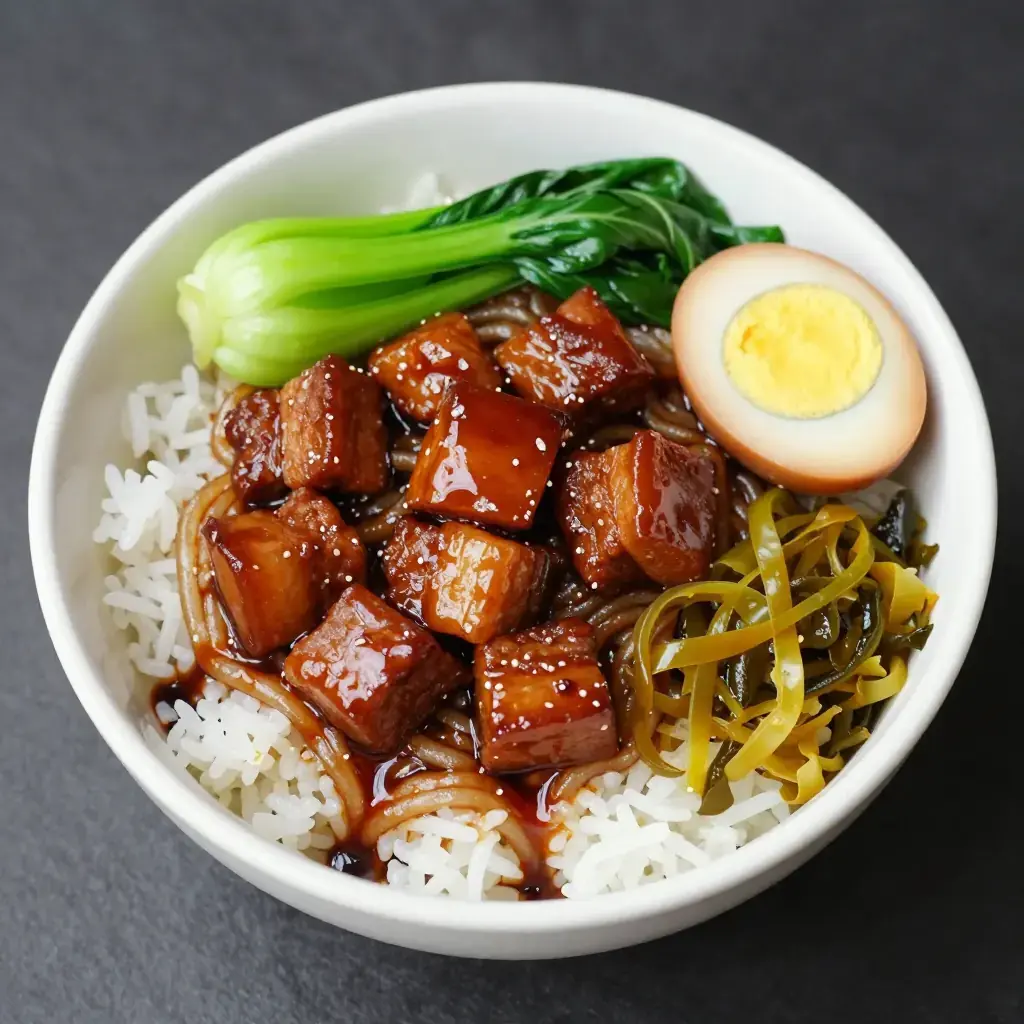
Lu Rou Fan
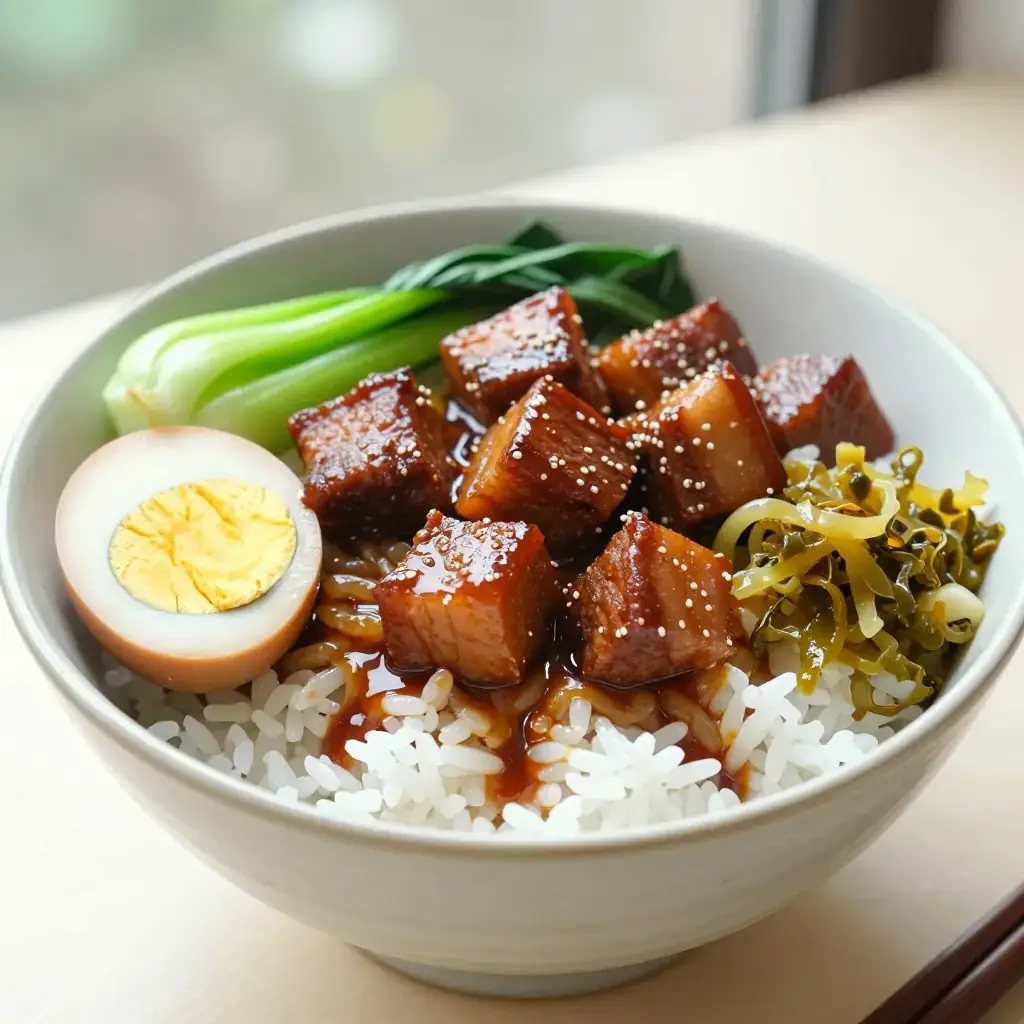
Lu Rou Fan, braised pork belly over white rice, is arguably the most beloved everyday dish of Fujian and Taiwan's Hoklo communities. The technique of slow-braising pork in a fragrant soy-and-spice master sauce — the lu — dates back to Fujian's Song dynasty culinary traditions. Every family and noodle shop maintains its own lu, replenishing it batch after batch across years, the sauce deepening with each cycle. The result is fat that melts into silk, skin that quivers with gelatin, and rice that turns amber at the edges.
Serves: 4
Ingredients
- 600g (1.3 lb) pork belly, skin on, cut into 1.5cm (0.5 inch) dice
- 4 tbsp (60ml) light soy sauce
- 2 tbsp dark soy sauce
- 2 tbsp (30ml) Shaoxing rice wine
- 1 tbsp (15g) rock sugar or brown sugar
- 4 shallots, thinly sliced and deep-fried until golden
- 5 garlic cloves, minced
- 3 slices ginger
- 2 star anise
- 1 cinnamon stick
- 3 cloves
- 250ml (1 cup) water
- 4 hard-boiled eggs, peeled
- Steamed white rice, to serve
- Blanched bok choy, to serve
- Pickled mustard greens (zha cai), to serve
Instructions
- In a wok or Dutch oven, dry-fry the diced pork belly over medium-high heat for 5-6 minutes until the fat renders and the edges begin to brown. Pour off excess fat.
- Add garlic, ginger, and shallots, stir-frying 2 minutes. Add Shaoxing wine and let it sizzle.
- Add both soy sauces, sugar, star anise, cinnamon, and cloves. Stir well. Add water to just cover.
- Add the peeled boiled eggs. Bring to a boil, then reduce to the lowest possible simmer. Cover and braise for 1 hour 15 minutes, turning the eggs halfway, until the pork is completely tender and the sauce has thickened to a glossy coat.
- Taste the sauce and adjust sugar or soy. Halve the eggs before serving.
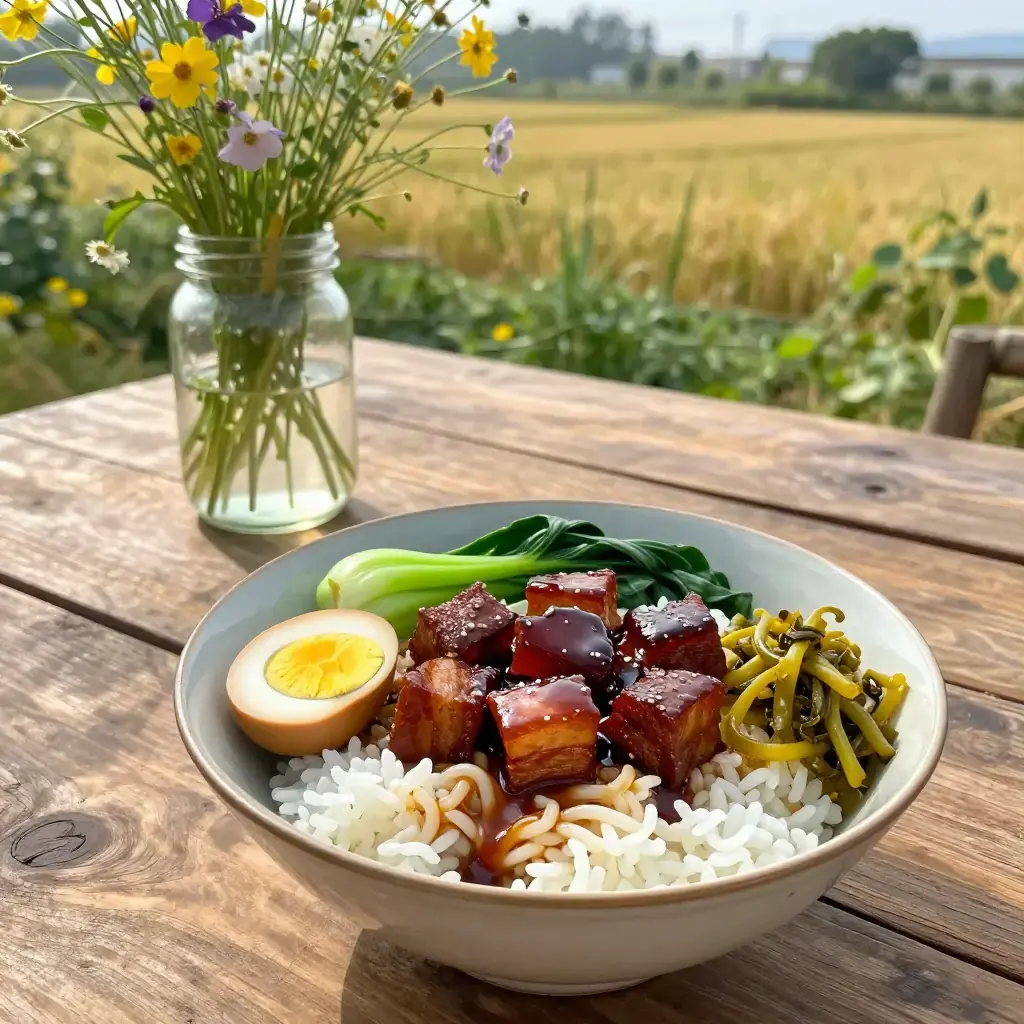
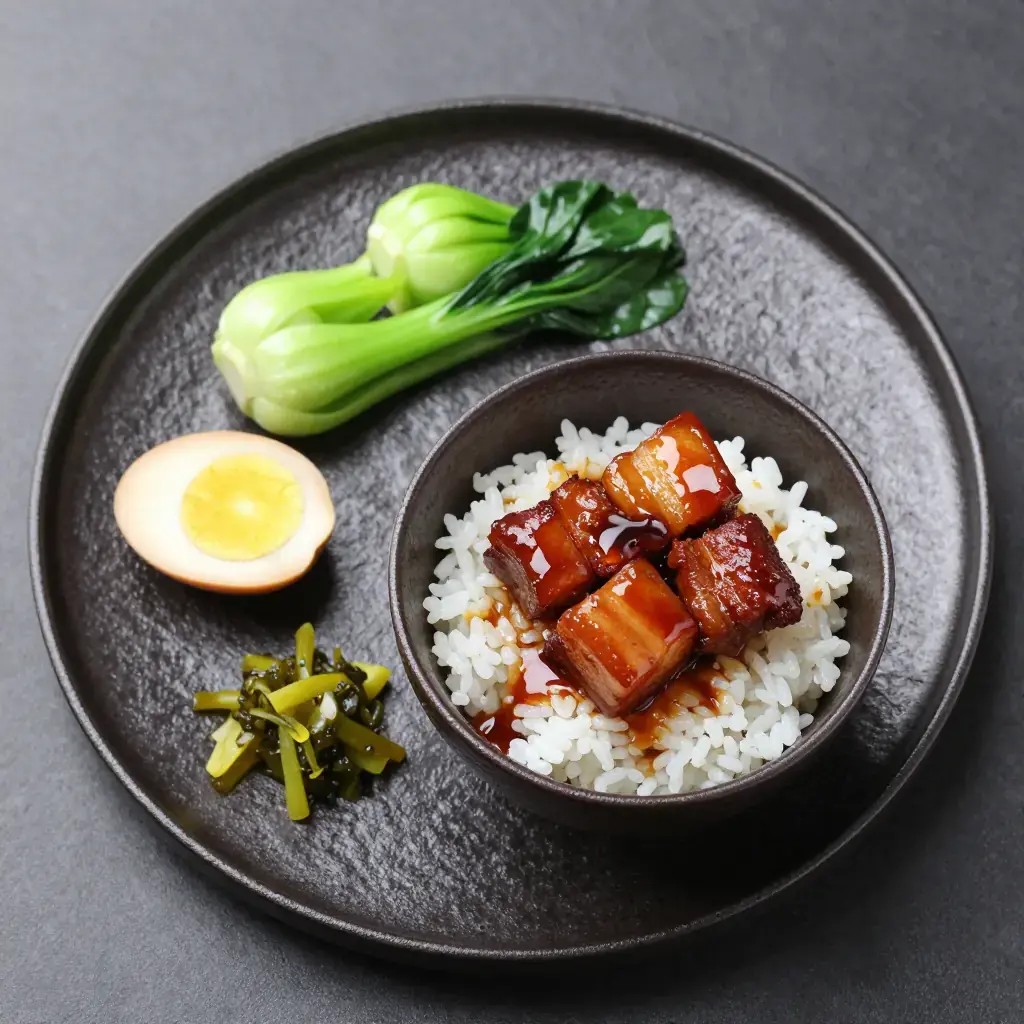
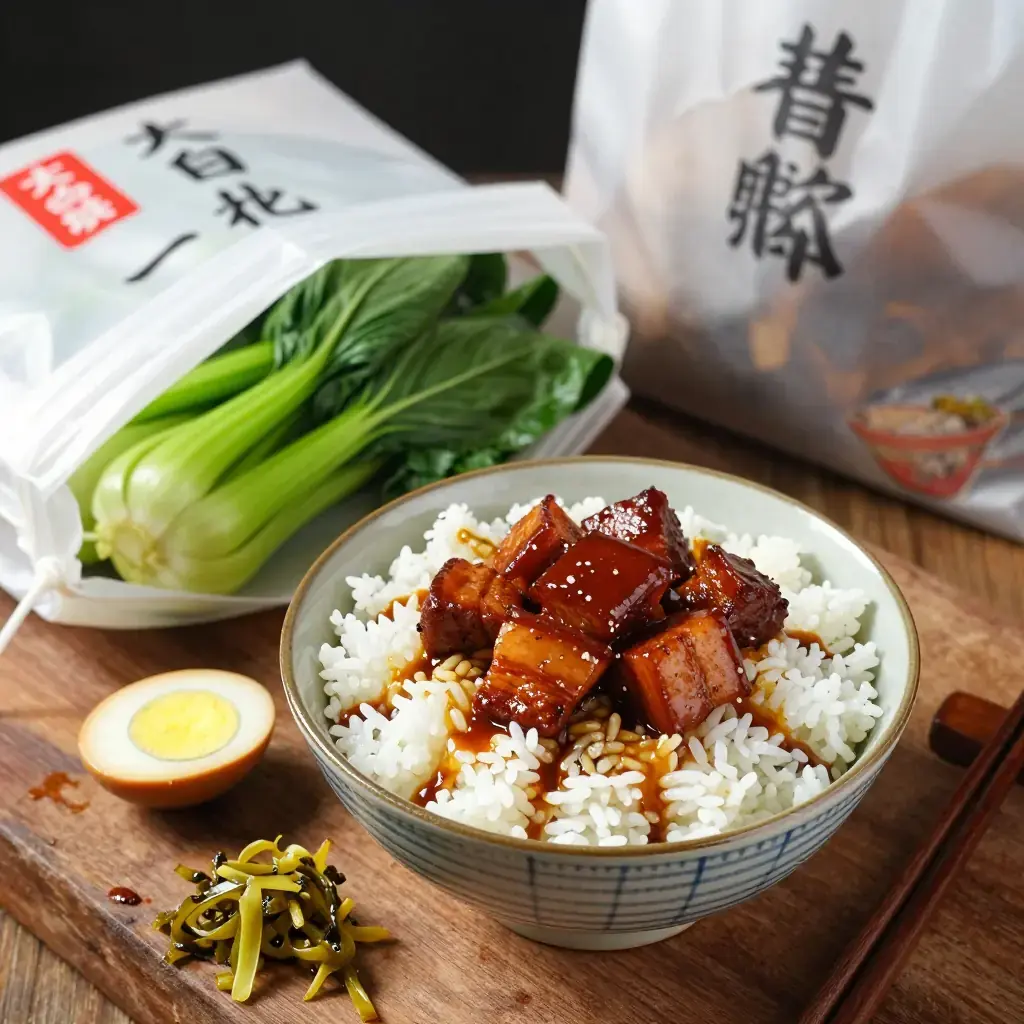
- Serve over steamed rice, with the braising sauce spooned generously over everything, flanked by bok choy and pickled mustard greens.
Cook's Notes: Fried shallots are non-negotiable — they form the sweet backbone of the sauce. You can buy them pre-fried at Asian grocers. The spices should be subtle, supporting the pork rather than dominating; remove after braising.
All Revisions
generated
# Lu Rou Fan Lu Rou Fan, braised pork belly over white rice, is arguably the most beloved everyday dish of Fujian and Taiwan's Hoklo communities. The technique of slow-braising pork in a fragrant soy-and-spice master sauce — the lu — dates back to Fujian's Song dynasty culinary traditions. Every family and noodle shop maintains its own lu, replenishing it batch after batch across years, the sauce deepening with each cycle. The result is fat that melts into silk, skin that quivers with gelatin, and rice that turns amber at the edges. Serves: 4 ## Ingredients - 600g (1.3 lb) pork belly, skin on, cut into 1.5cm (0.5 inch) dice - 4 tbsp (60ml) light soy sauce - 2 tbsp dark soy sauce - 2 tbsp (30ml) Shaoxing rice wine - 1 tbsp (15g) rock sugar or brown sugar - 4 shallots, thinly sliced and deep-fried until golden - 5 garlic cloves, minced - 3 slices ginger - 2 star anise - 1 cinnamon stick - 3 cloves - 250ml (1 cup) water - 4 hard-boiled eggs, peeled - Steamed white rice, to serve - Blanched bok choy, to serve - Pickled mustard greens (zha cai), to serve ## Instructions 1. In a wok or Dutch oven, dry-fry the diced pork belly over medium-high heat for 5-6 minutes until the fat renders and the edges begin to brown. Pour off excess fat. 2. Add garlic, ginger, and shallots, stir-frying 2 minutes. Add Shaoxing wine and let it sizzle. 3. Add both soy sauces, sugar, star anise, cinnamon, and cloves. Stir well. Add water to just cover. 4. Add the peeled boiled eggs. Bring to a boil, then reduce to the lowest possible simmer. Cover and braise for 1 hour 15 minutes, turning the eggs halfway, until the pork is completely tender and the sauce has thickened to a glossy coat. 5. Taste the sauce and adjust sugar or soy. Halve the eggs before serving. 6. Serve over steamed rice, with the braising sauce spooned generously over everything, flanked by bok choy and pickled mustard greens. **Cook's Notes:** Fried shallots are non-negotiable — they form the sweet backbone of the sauce. You can buy them pre-fried at Asian grocers. The spices should be subtle, supporting the pork rather than dominating; remove after braising.Images
Tags
- authentic
- braised
- comfort-food
- dinner
- from-input
- fujian
- historical
- rice