Lapi
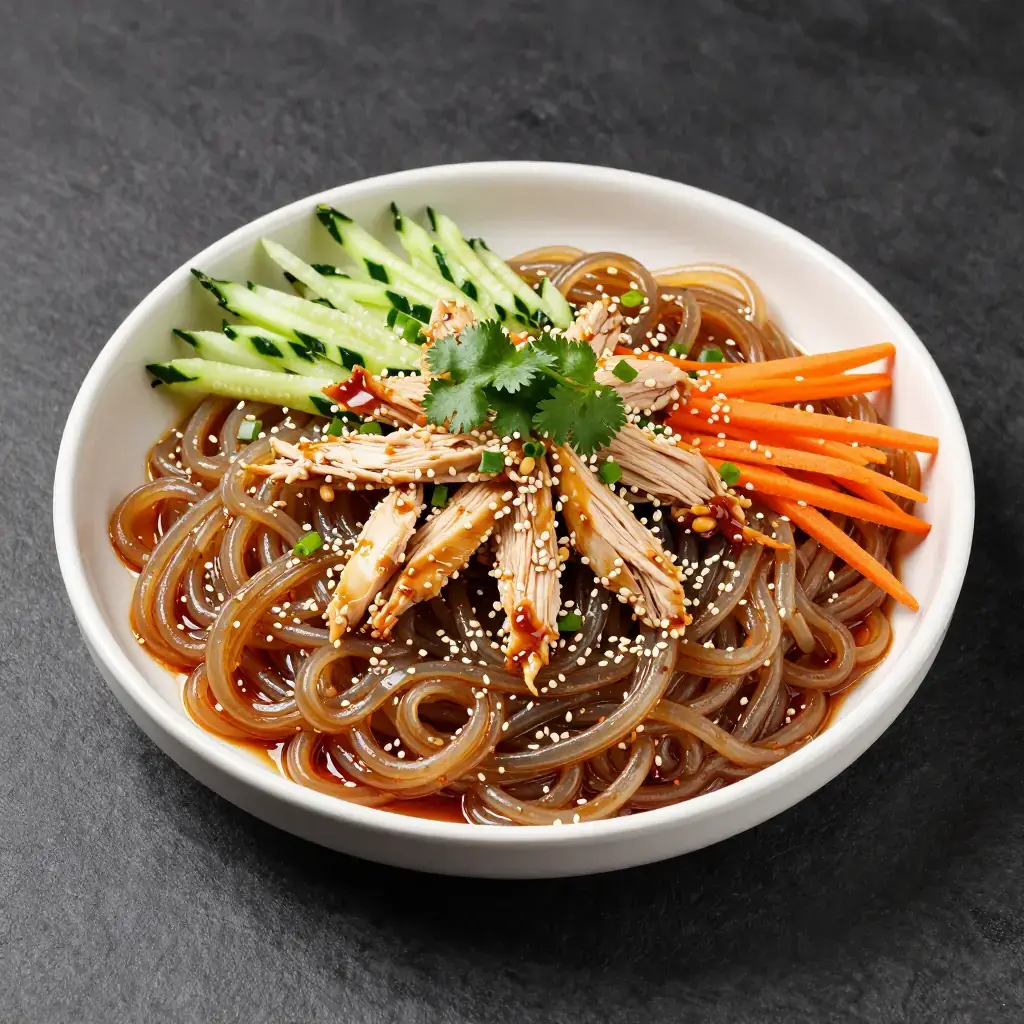
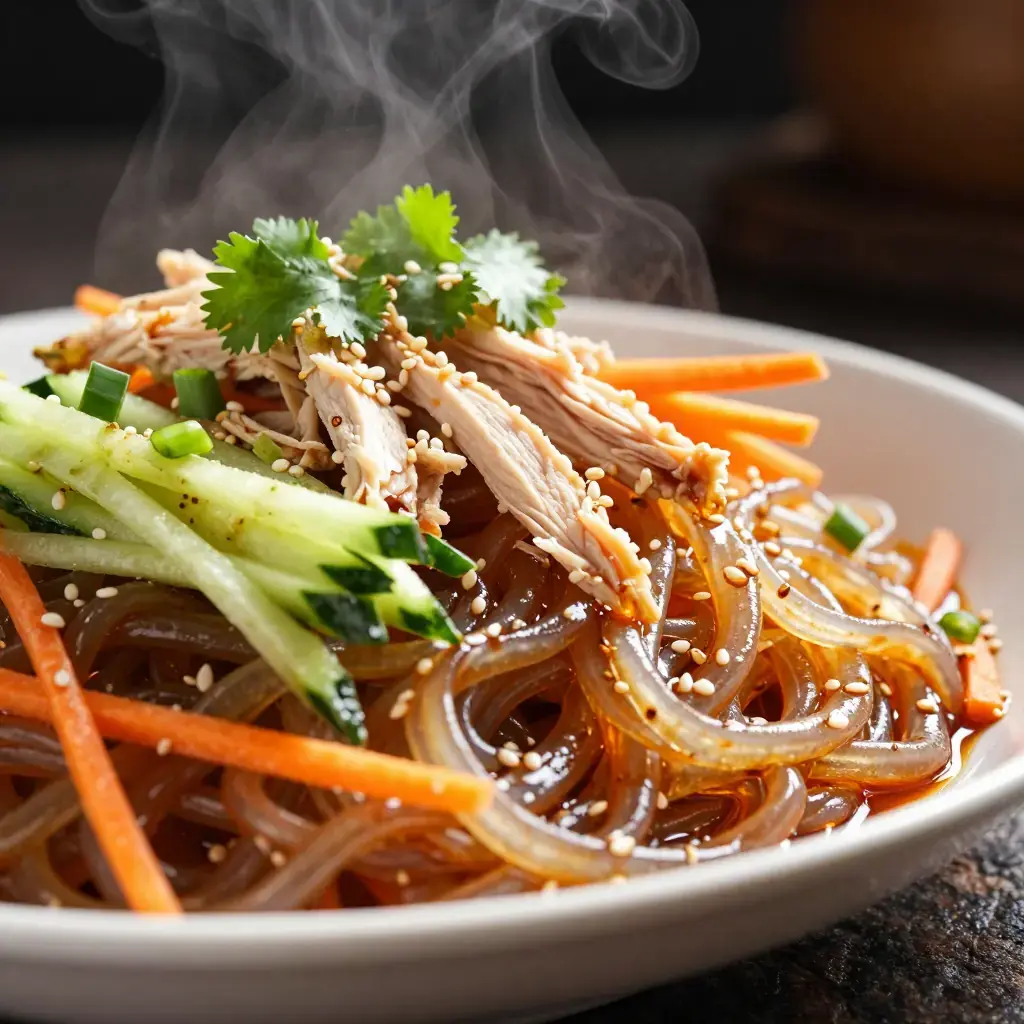
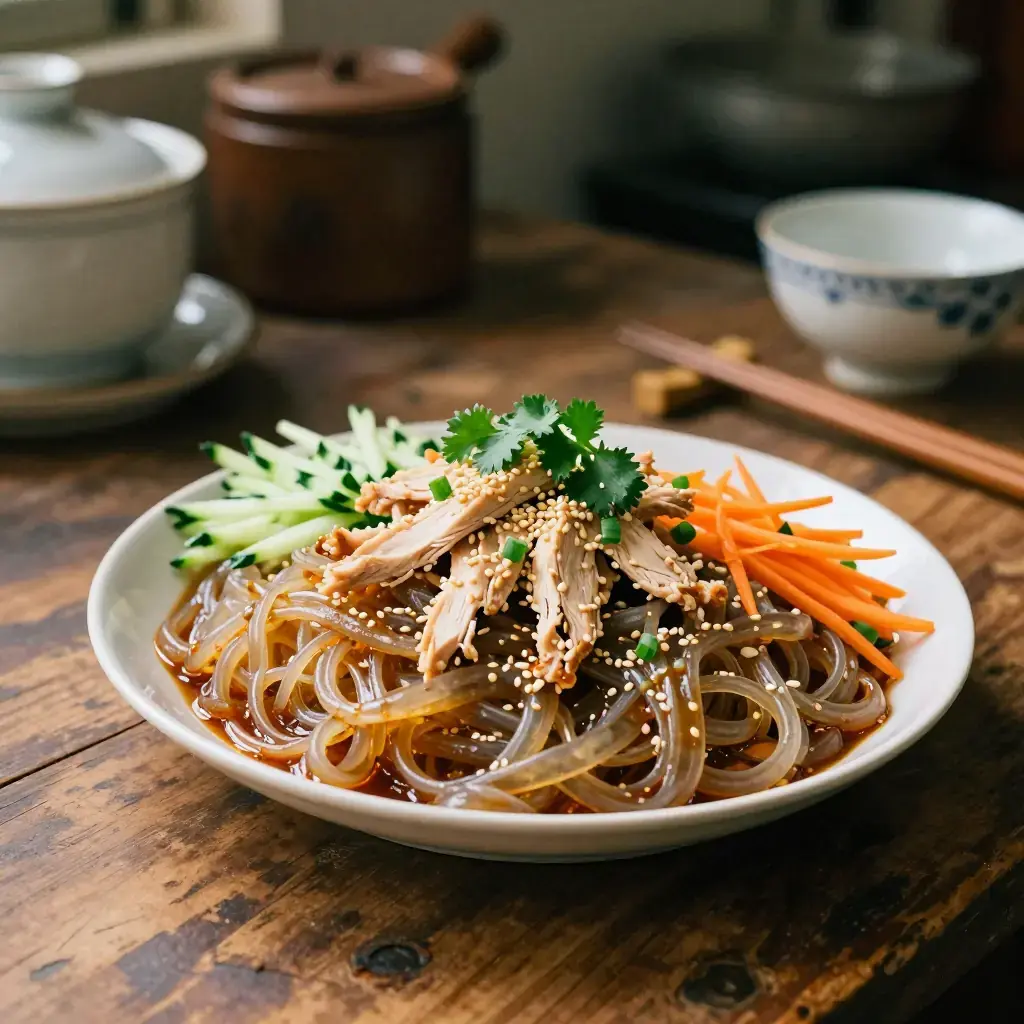
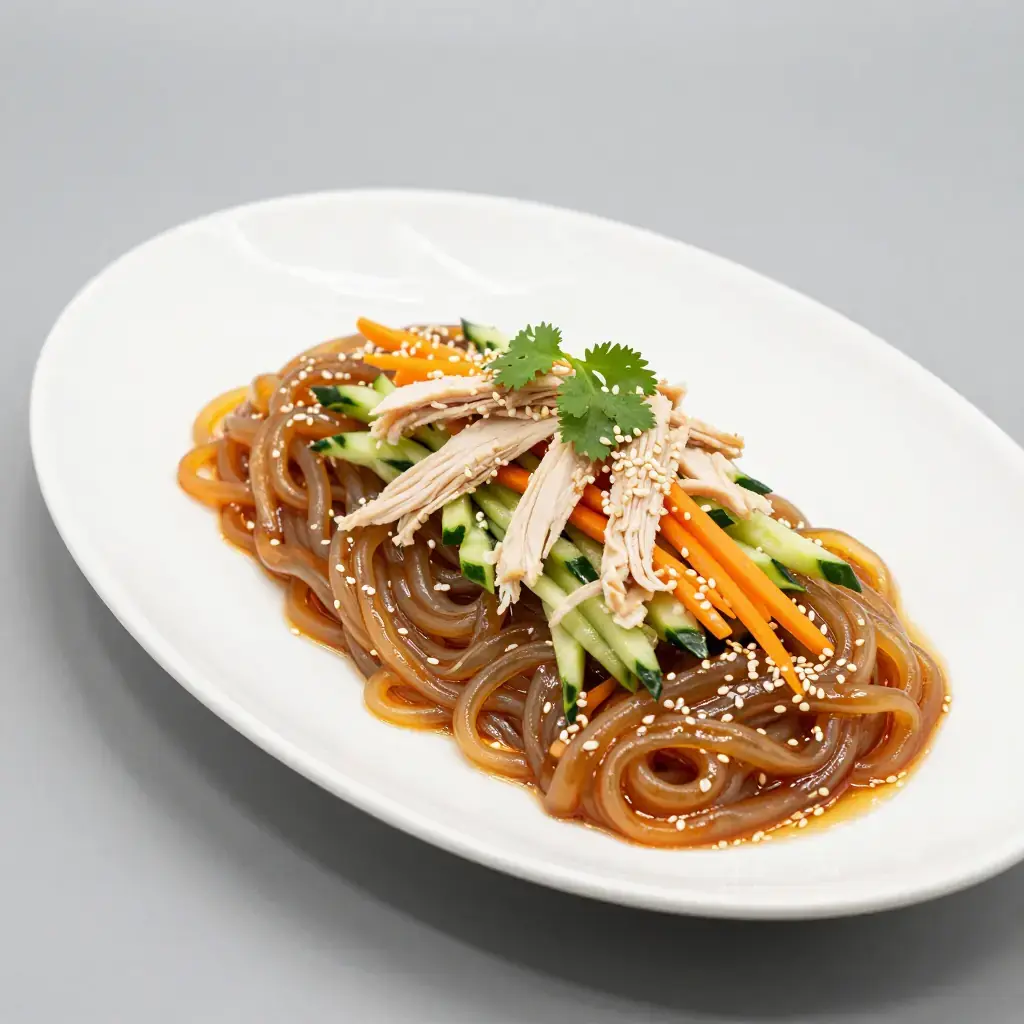
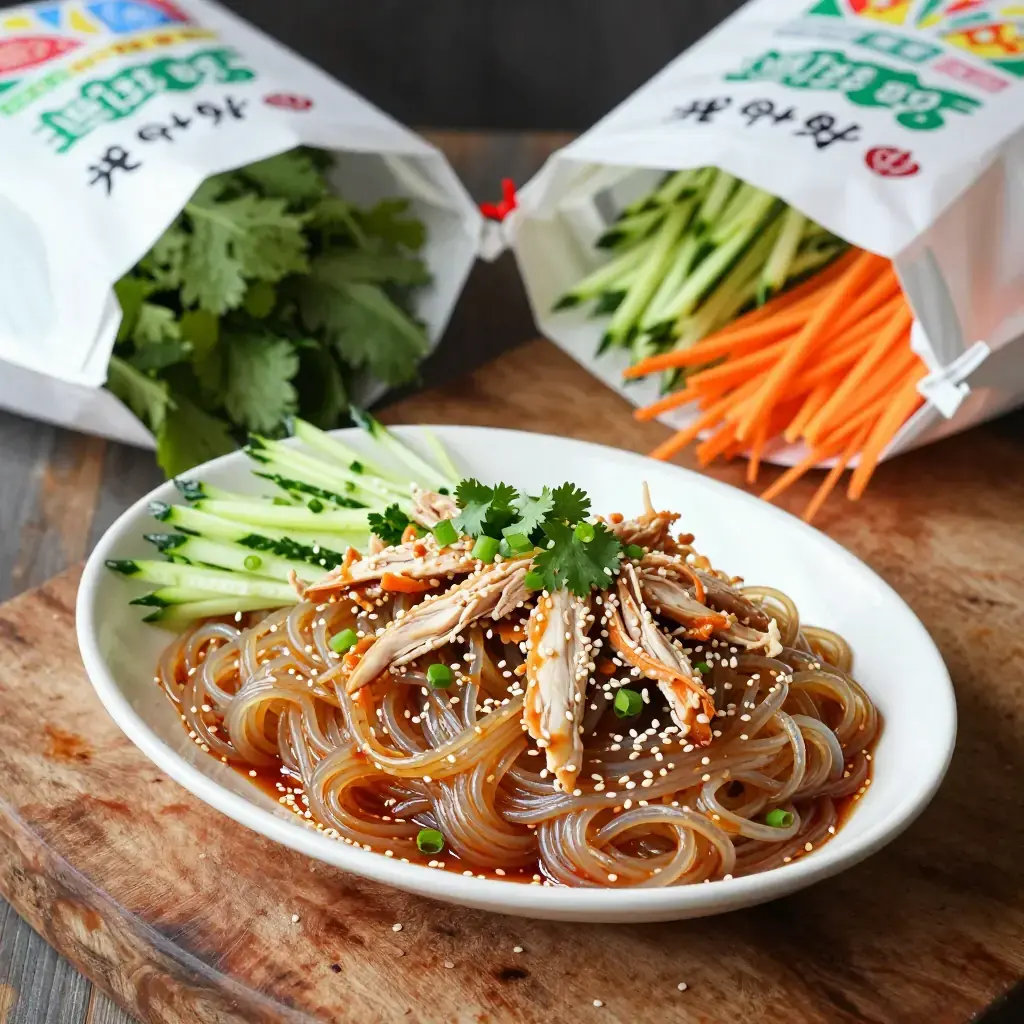
Lapi is the quintessential cold dish of China's northeast — broad, silky sheets of mung bean starch noodle tossed in a bold sesame-garlic dressing with julienned cucumber, carrot, and poached chicken. A staple of Dongbei banquets and home tables alike, it is especially beloved in summer when the craving for cool, slippery noodles against sharp vinegar and toasted sesame oil is at its peak. The wide noodles are sometimes called "river ribbons" for their pale, translucent appearance.
Serves: 4
Ingredients
- 300g (10.5 oz) dried wide mung bean glass noodles (lapi or kuanfenkuai)
- 200g (7 oz) cooked chicken breast, shredded
- 1 small cucumber, julienned
- 1 medium carrot, julienned
- 3 garlic cloves, minced to a paste
- 3 tbsp (45ml) light soy sauce
- 2 tbsp (30ml) Chinkiang black rice vinegar
- 1.5 tbsp (22ml) sesame oil
- 1 tbsp (15ml) chilli oil (optional)
- 1 tsp sugar
- 2 tbsp toasted sesame seeds
- 3 spring onions, thinly sliced
- Small handful of fresh coriander (cilantro)
Instructions
- Cook the glass noodles in a large pot of boiling water for 5-7 minutes until softened but still pleasantly chewy. Drain and immediately rinse under cold running water for 2 minutes to cool and stop cooking.
- Using scissors or a knife, cut the noodles into roughly 20cm (8 inch) lengths so they are manageable.
- Whisk together the garlic paste, soy sauce, vinegar, sesame oil, chilli oil, and sugar until the sugar dissolves.
- In a large bowl, combine the noodles, shredded chicken, cucumber, and carrot. Pour over the dressing and toss thoroughly with tongs.
- Transfer to a serving platter. Top with spring onions, coriander, and toasted sesame seeds. Serve cold or at room temperature.
Cook's Notes: Dongbei lapi noodles are wider than typical vermicelli — look for the flat sheet-style mung bean starch noodles at Chinese grocers. If unavailable, sweet potato glass noodles work well but need slightly longer cooking. Make the salad up to 2 hours ahead, but add cucumber and coriander just before serving.
All Revisions
generated
# Lapi Lapi is the quintessential cold dish of China's northeast — broad, silky sheets of mung bean starch noodle tossed in a bold sesame-garlic dressing with julienned cucumber, carrot, and poached chicken. A staple of Dongbei banquets and home tables alike, it is especially beloved in summer when the craving for cool, slippery noodles against sharp vinegar and toasted sesame oil is at its peak. The wide noodles are sometimes called "river ribbons" for their pale, translucent appearance. Serves: 4 ## Ingredients - 300g (10.5 oz) dried wide mung bean glass noodles (lapi or kuanfenkuai) - 200g (7 oz) cooked chicken breast, shredded - 1 small cucumber, julienned - 1 medium carrot, julienned - 3 garlic cloves, minced to a paste - 3 tbsp (45ml) light soy sauce - 2 tbsp (30ml) Chinkiang black rice vinegar - 1.5 tbsp (22ml) sesame oil - 1 tbsp (15ml) chilli oil (optional) - 1 tsp sugar - 2 tbsp toasted sesame seeds - 3 spring onions, thinly sliced - Small handful of fresh coriander (cilantro) ## Instructions 1. Cook the glass noodles in a large pot of boiling water for 5-7 minutes until softened but still pleasantly chewy. Drain and immediately rinse under cold running water for 2 minutes to cool and stop cooking. 2. Using scissors or a knife, cut the noodles into roughly 20cm (8 inch) lengths so they are manageable. 3. Whisk together the garlic paste, soy sauce, vinegar, sesame oil, chilli oil, and sugar until the sugar dissolves. 4. In a large bowl, combine the noodles, shredded chicken, cucumber, and carrot. Pour over the dressing and toss thoroughly with tongs. 5. Transfer to a serving platter. Top with spring onions, coriander, and toasted sesame seeds. Serve cold or at room temperature. **Cook's Notes:** Dongbei lapi noodles are wider than typical vermicelli — look for the flat sheet-style mung bean starch noodles at Chinese grocers. If unavailable, sweet potato glass noodles work well but need slightly longer cooking. Make the salad up to 2 hours ahead, but add cucumber and coriander just before serving.Images
Tags
- authentic
- cold-dish
- dairy-free
- dongbei
- from-input
- lunch
- noodles
- quick-and-easy
- summer