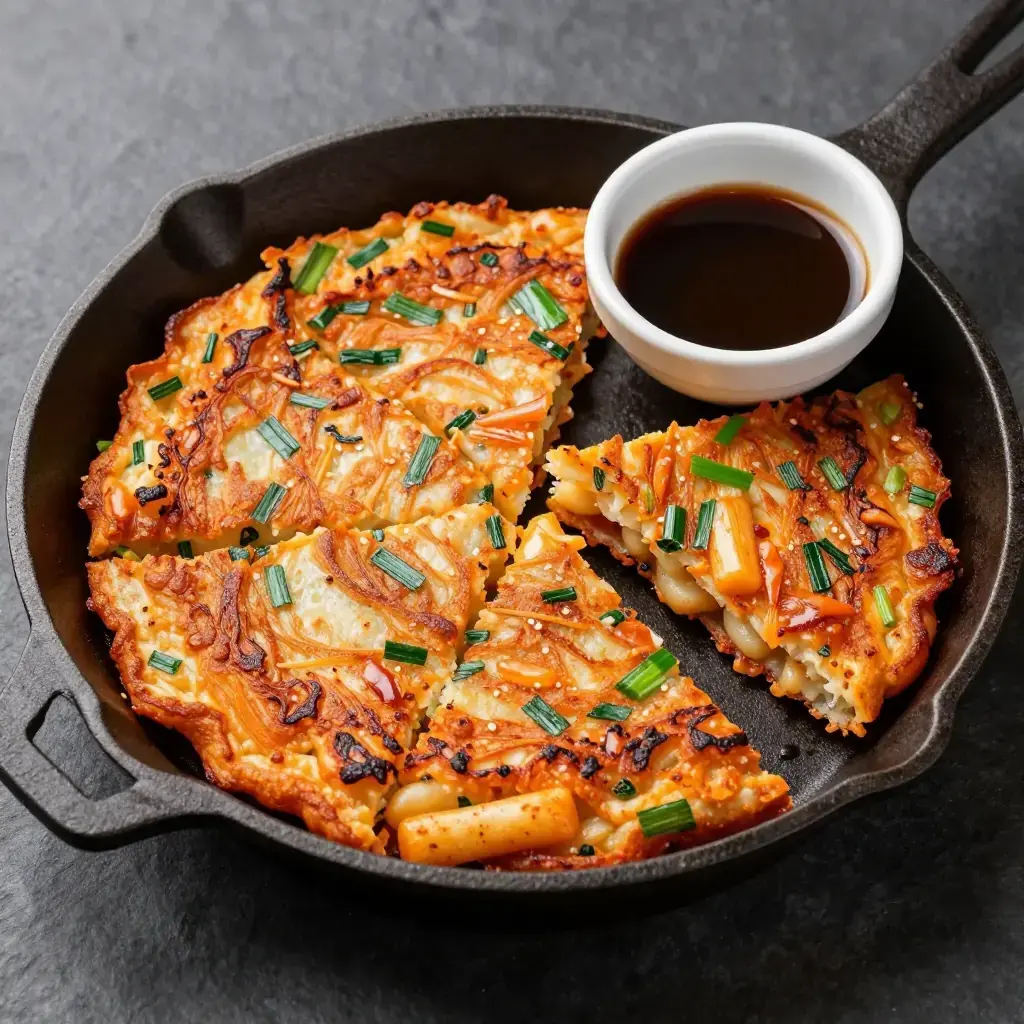
Bindaetteok
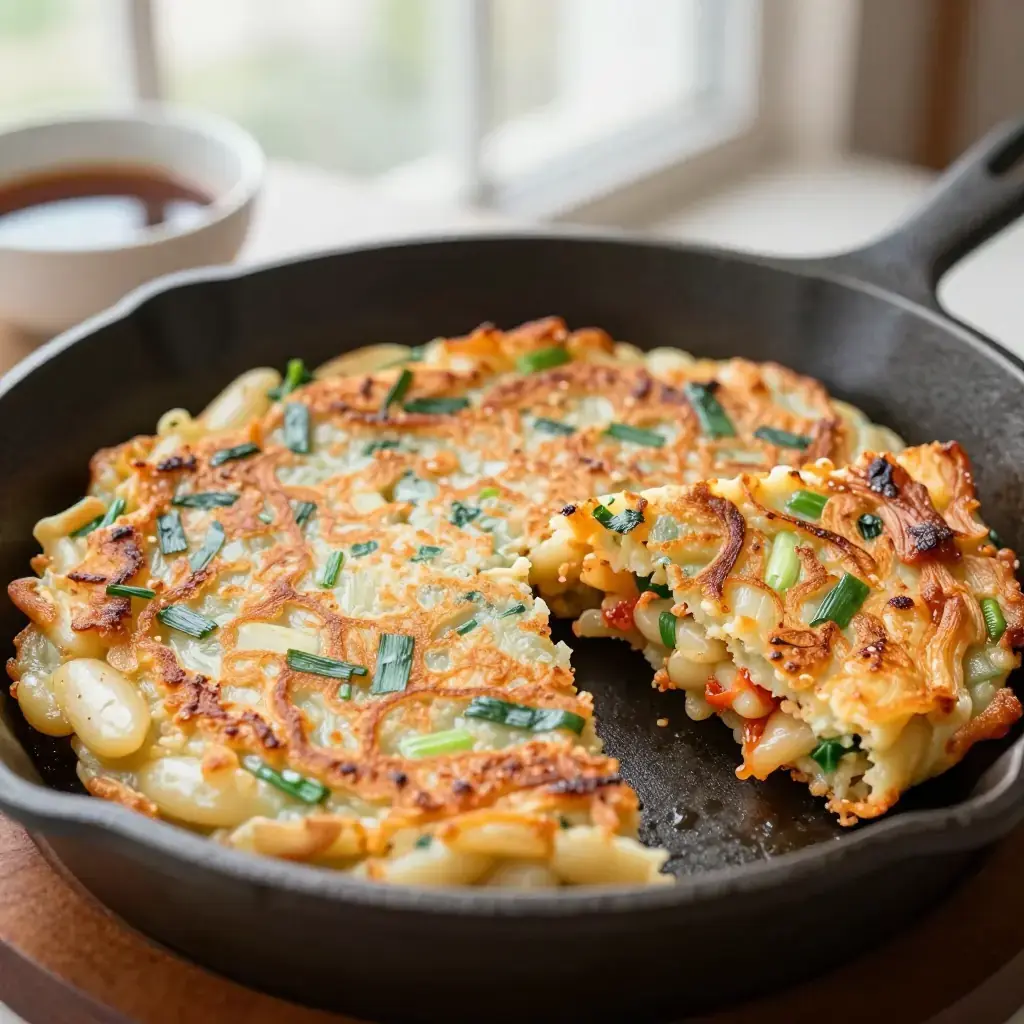
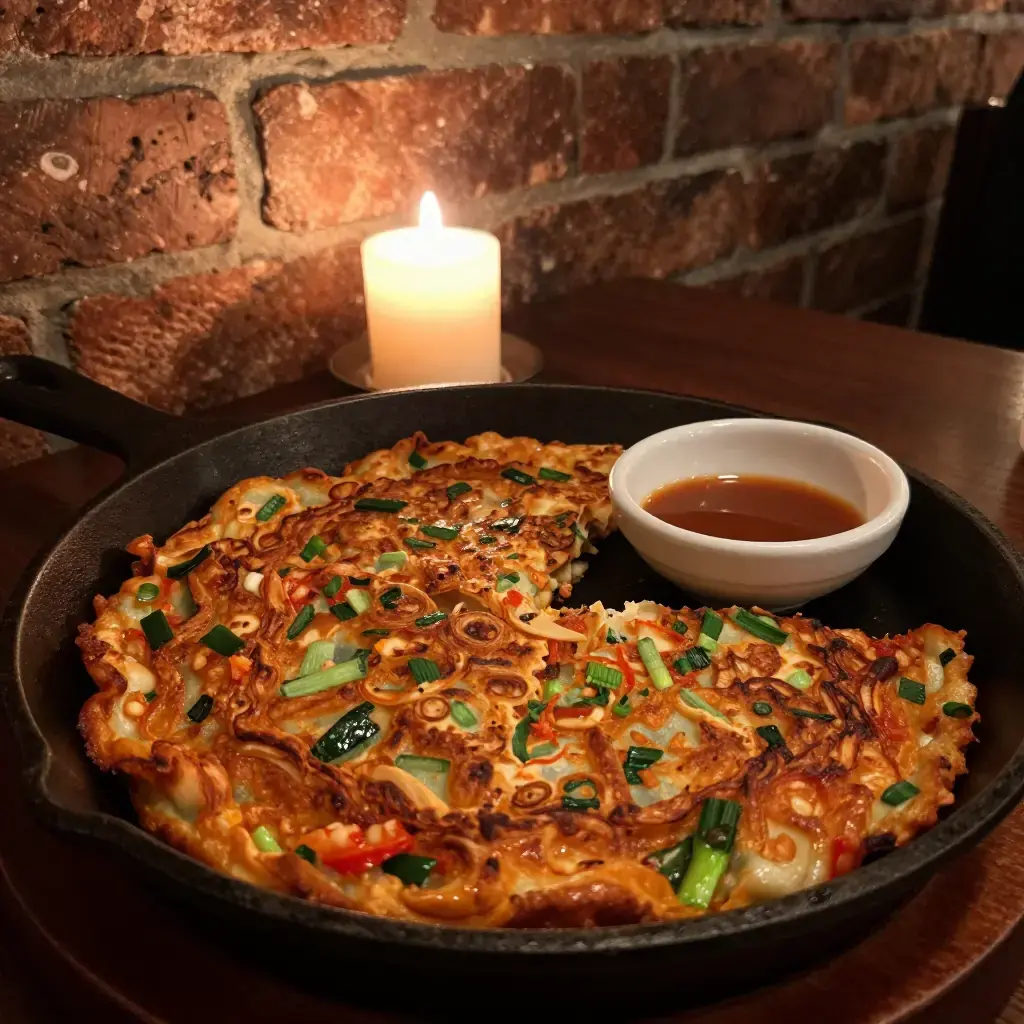
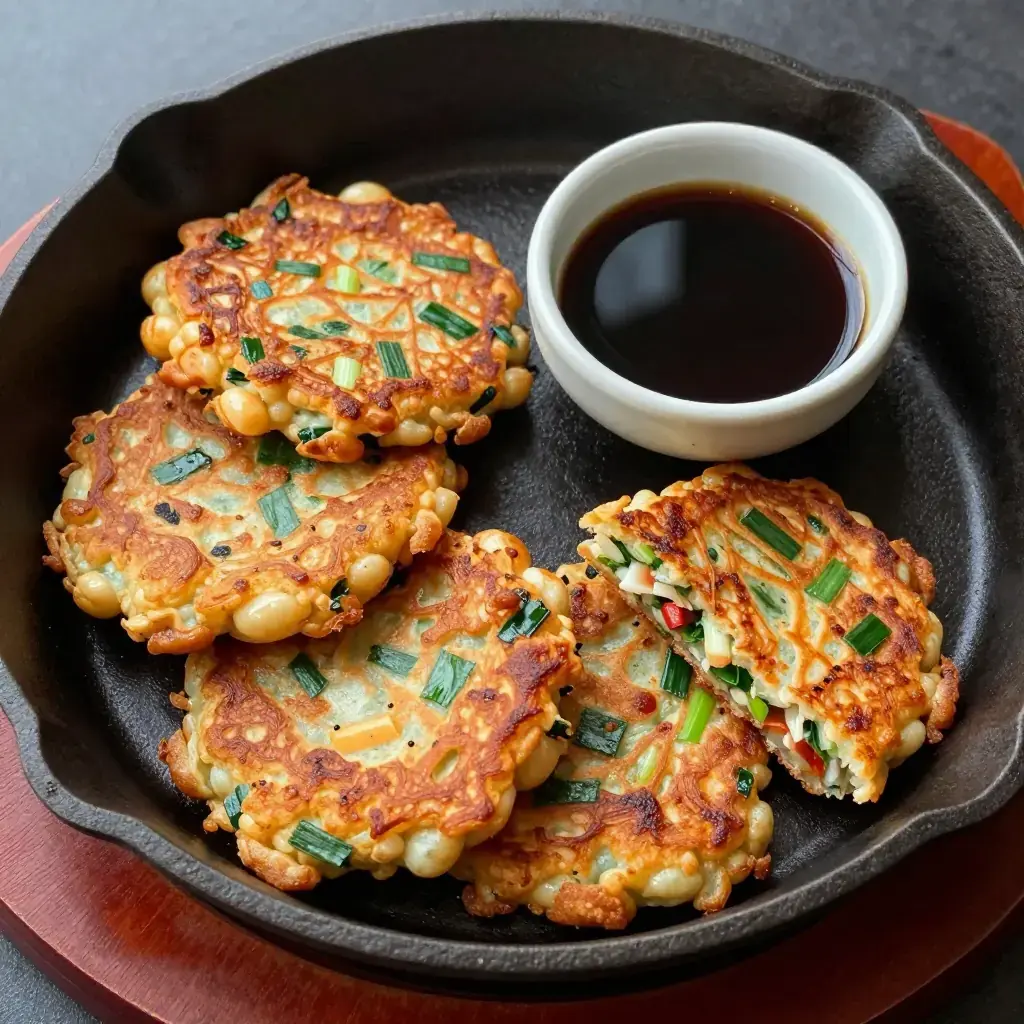
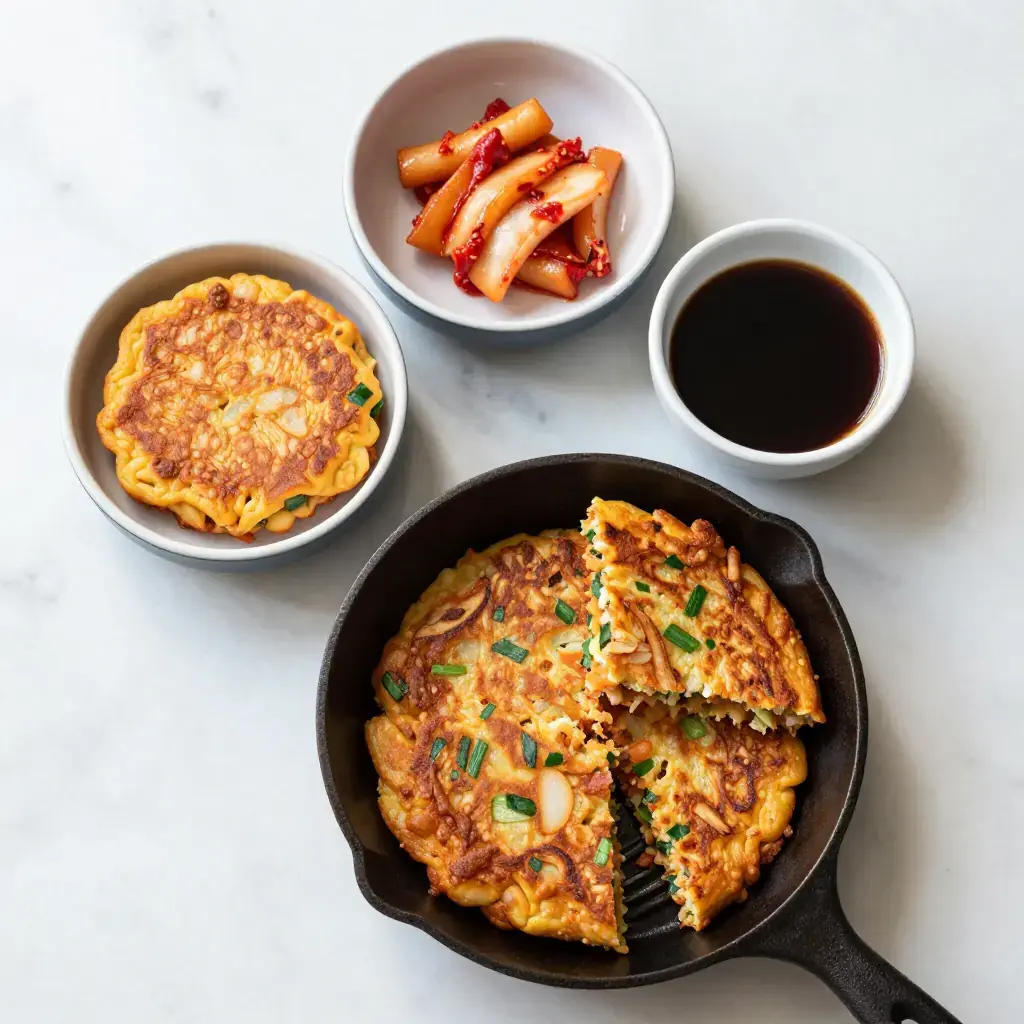
Bindaetteok is one of Korea's oldest street foods, traced back centuries to market vendors who fried thick mung bean pancakes on hot griddles. Soaked and coarsely ground mung beans form a nutty, protein-rich batter studded with kimchi and pork, pan-fried to a deeply crunchy golden crust with a dense, satisfying interior. They are eaten at winter festivals and pojangmacha stalls, best paired with cold makgeolli rice wine.
Serves: 4 (makes 8 pancakes)
Ingredients
- 300g (1½ cups) split yellow mung beans (moong dal), soaked overnight and drained
- 100g (3.5 oz) pork belly or shoulder, thinly sliced into small pieces
- 150g (5 oz) napa cabbage kimchi, squeezed very dry, roughly chopped
- 3 spring onions, thinly sliced
- 1 egg
- 1 tsp fine salt
- ¼ tsp white pepper
- 4 tbsp (60ml) neutral oil, divided
Dipping Sauce
- 3 tbsp (45ml) soy sauce
- 1 tbsp (15ml) rice vinegar
- ½ tsp sesame oil
- 1 tsp sesame seeds
Instructions
- Drain the soaked mung beans thoroughly. Working in batches, blend with 3–4 tbsp water per batch until a coarse, grainy paste forms — some texture is desirable, do not over-blend to smoothness.
- Transfer to a bowl. Add pork, kimchi, spring onions, egg, salt, and pepper. Mix well. The mixture should be thick enough to hold its shape when spooned.
- Mix dipping sauce ingredients together and set aside.
- Heat 1 tbsp oil in a heavy skillet over medium-high heat. When very hot, spoon 2 large dollops of batter (about 80g each) into the pan, pressing each into a round about 1cm (½ inch) thick and 10cm (4 inches) across.
- Fry for 4–5 minutes until the bottom is dark golden and very crisp — resist moving them early. Flip and fry a further 3–4 minutes until fully cooked through and crisp on both sides.
- Drain on a wire rack. Repeat with remaining batter, adding oil as needed.
- Serve hot with the dipping sauce.
Cook's Notes: Overnight soaking is essential — under-soaked beans will not blend. Squeeze the kimchi absolutely dry or the batter will be watery. The pan must be very hot before adding batter. These are best eaten immediately; they lose crunch within 10 minutes.
All Revisions
generated
# Bindaetteok Bindaetteok is one of Korea's oldest street foods, traced back centuries to market vendors who fried thick mung bean pancakes on hot griddles. Soaked and coarsely ground mung beans form a nutty, protein-rich batter studded with kimchi and pork, pan-fried to a deeply crunchy golden crust with a dense, satisfying interior. They are eaten at winter festivals and pojangmacha stalls, best paired with cold makgeolli rice wine. Serves: 4 (makes 8 pancakes) ## Ingredients - 300g (1½ cups) split yellow mung beans (moong dal), soaked overnight and drained - 100g (3.5 oz) pork belly or shoulder, thinly sliced into small pieces - 150g (5 oz) napa cabbage kimchi, squeezed very dry, roughly chopped - 3 spring onions, thinly sliced - 1 egg - 1 tsp fine salt - ¼ tsp white pepper - 4 tbsp (60ml) neutral oil, divided ### Dipping Sauce - 3 tbsp (45ml) soy sauce - 1 tbsp (15ml) rice vinegar - ½ tsp sesame oil - 1 tsp sesame seeds ## Instructions 1. Drain the soaked mung beans thoroughly. Working in batches, blend with 3–4 tbsp water per batch until a coarse, grainy paste forms — some texture is desirable, do not over-blend to smoothness. 2. Transfer to a bowl. Add pork, kimchi, spring onions, egg, salt, and pepper. Mix well. The mixture should be thick enough to hold its shape when spooned. 3. Mix dipping sauce ingredients together and set aside. 4. Heat 1 tbsp oil in a heavy skillet over medium-high heat. When very hot, spoon 2 large dollops of batter (about 80g each) into the pan, pressing each into a round about 1cm (½ inch) thick and 10cm (4 inches) across. 5. Fry for 4–5 minutes until the bottom is dark golden and very crisp — resist moving them early. Flip and fry a further 3–4 minutes until fully cooked through and crisp on both sides. 6. Drain on a wire rack. Repeat with remaining batter, adding oil as needed. 7. Serve hot with the dipping sauce. **Cook's Notes:** Overnight soaking is essential — under-soaked beans will not blend. Squeeze the kimchi absolutely dry or the batter will be watery. The pan must be very hot before adding batter. These are best eaten immediately; they lose crunch within 10 minutes.Images
Tags
- authentic
- beans
- deep-fried
- fermented
- from-input
- korean
- snack
- winter