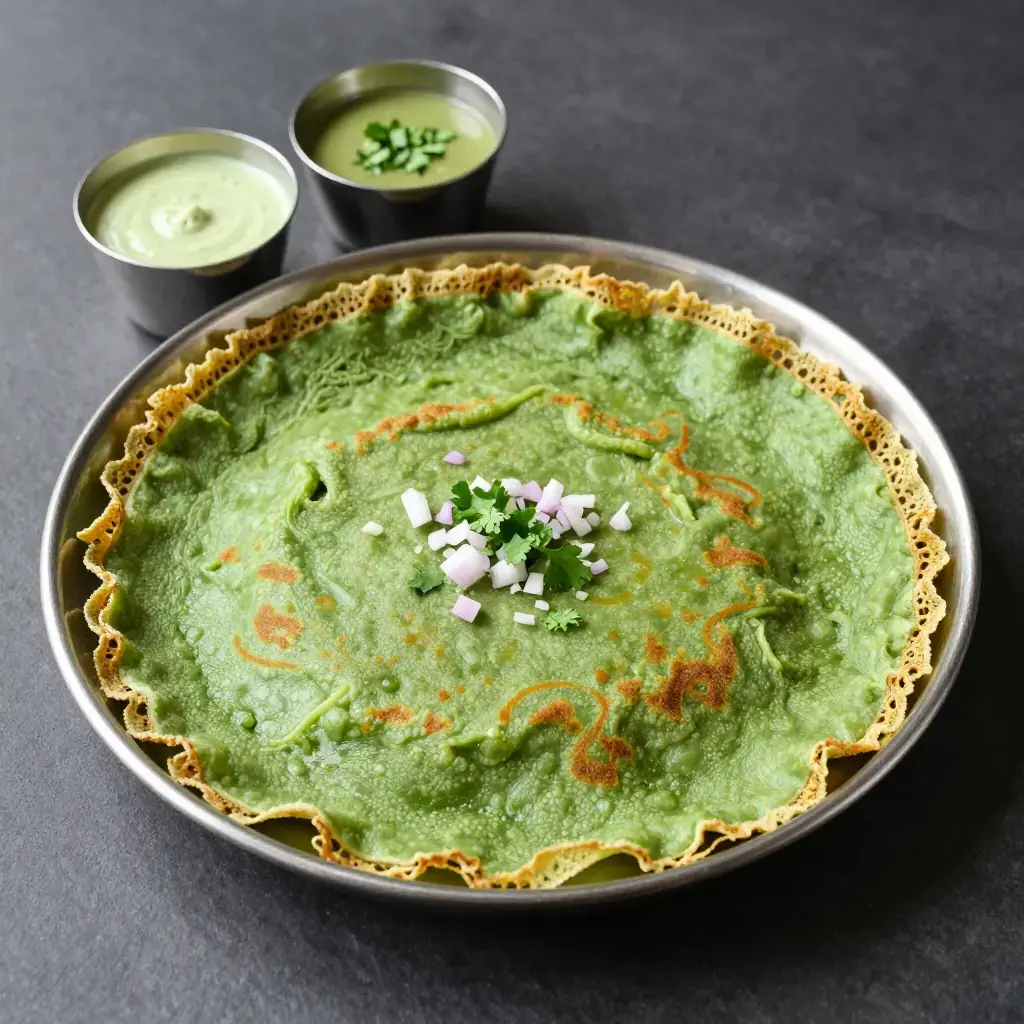
Pesarattu
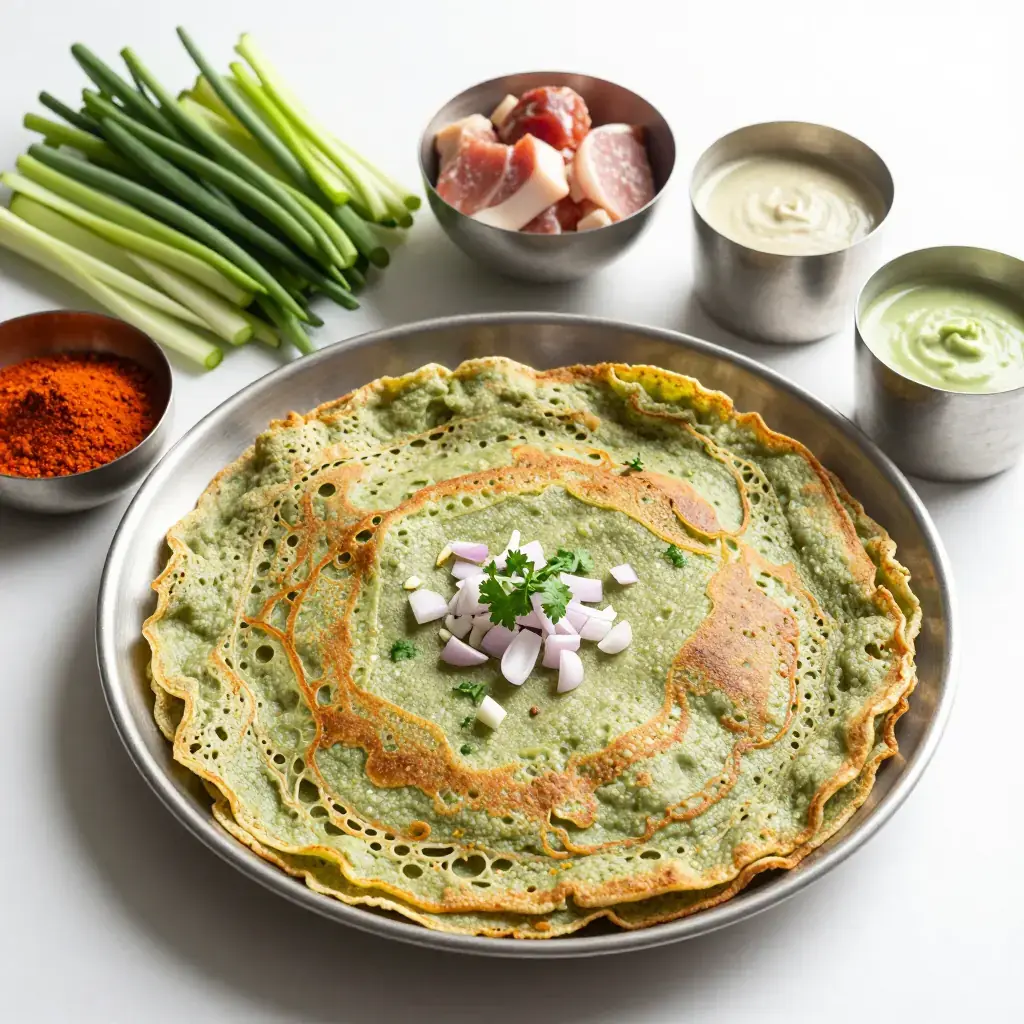
Pesarattu is the breakfast crepe of Andhra Pradesh — made from whole green moong dal (mung beans) soaked overnight, ground to a coarse batter with fresh ginger and green chillies, and spread thin on a hot iron griddle. Unlike dosa, pesarattu needs no rice and no fermentation; the mung beans are inherently protein-rich and naturally slightly earthy. In Vijaywada and Hyderabad, pesarattu is served with upma — semolina porridge — spread inside the crepe in a combination called MLA Pesarattu, said to have originated in the Andhra Pradesh legislative assembly canteen.
Serves: 4 (makes 8 crepes)
Ingredients
- 300g (1½ cups) whole green moong dal (mung beans), soaked 8 hours or overnight
- 2.5cm (1 inch) piece fresh ginger, roughly chopped
- 2–3 green chillies, roughly chopped
- 1 tsp cumin seeds
- Salt to taste
- Water as needed
Topping (applied before folding):
- 1 small onion, very finely chopped
- 2 tbsp fresh coriander, chopped
- 1 green chilli, finely sliced
- Cumin seeds, pinch per crepe
To serve:
- Ginger chutney (allam pachadi)
- Coconut chutney
Instructions
- Drain soaked mung beans. Transfer to a blender with ginger, green chillies, cumin seeds, and salt. Add just enough water (about 100–150ml / ½ cup) to grind to a coarse but pourable batter. Some texture is desirable — do not over-blend.
- Heat a cast-iron or non-stick griddle over medium-high heat. Sprinkle a few drops of water — they should sizzle and evaporate immediately.
- Lightly oil the surface. Pour a ladleful of batter (about 80ml / ⅓ cup) onto the center and immediately spread in wide circular motions to a thin crepe of about 20cm (8 inches) diameter.
- Scatter a pinch of chopped onion, coriander, green chilli, and cumin seeds over the surface. Press gently with the back of a spoon.
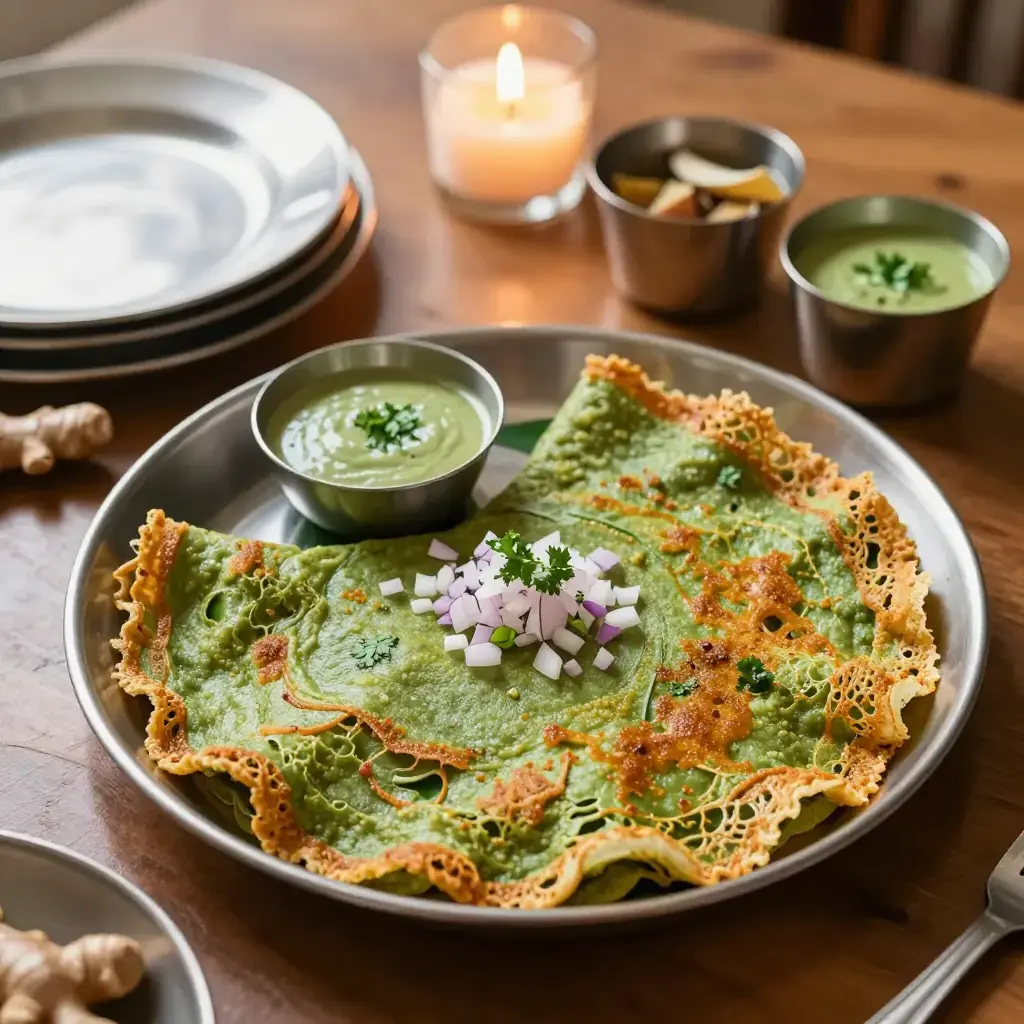
- Drizzle a little oil around the edges. Cook for 2–3 minutes until the edges lift and the underside is golden-green with crisp spots.
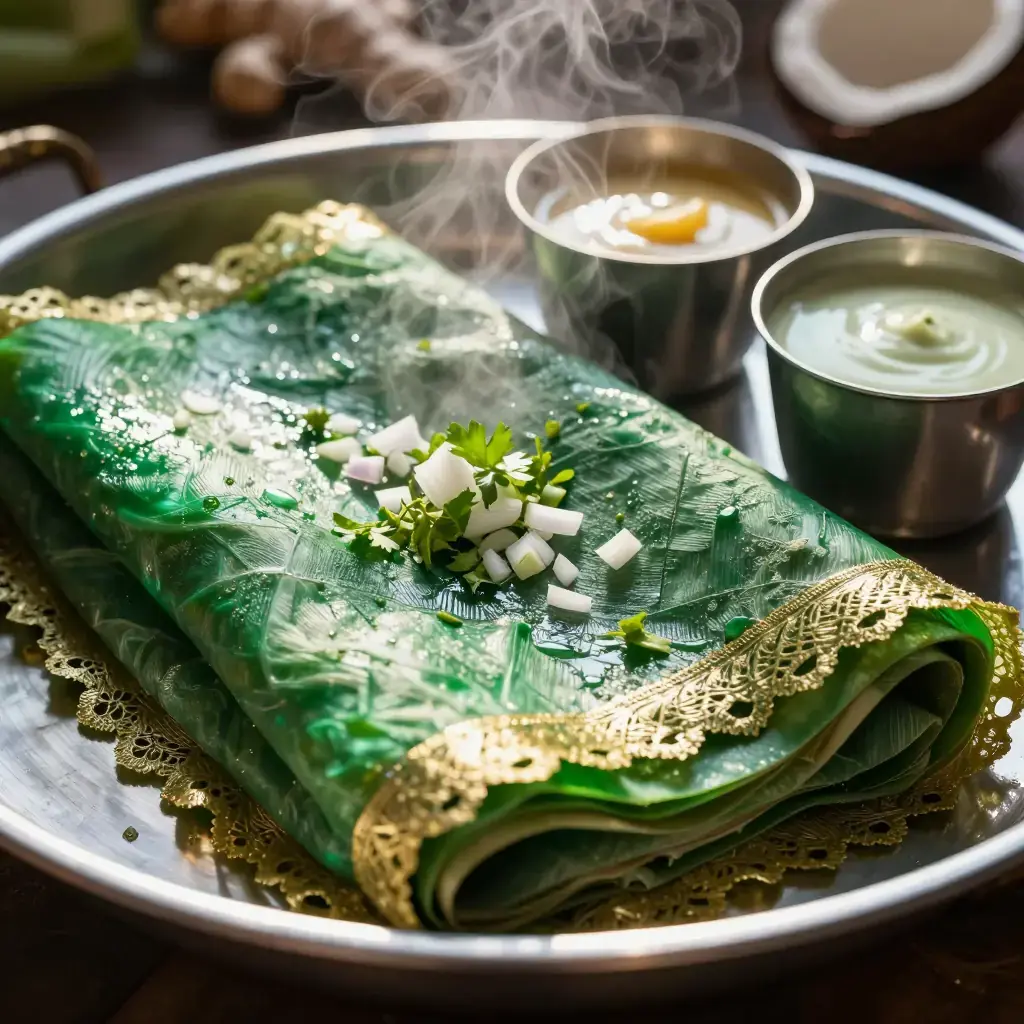
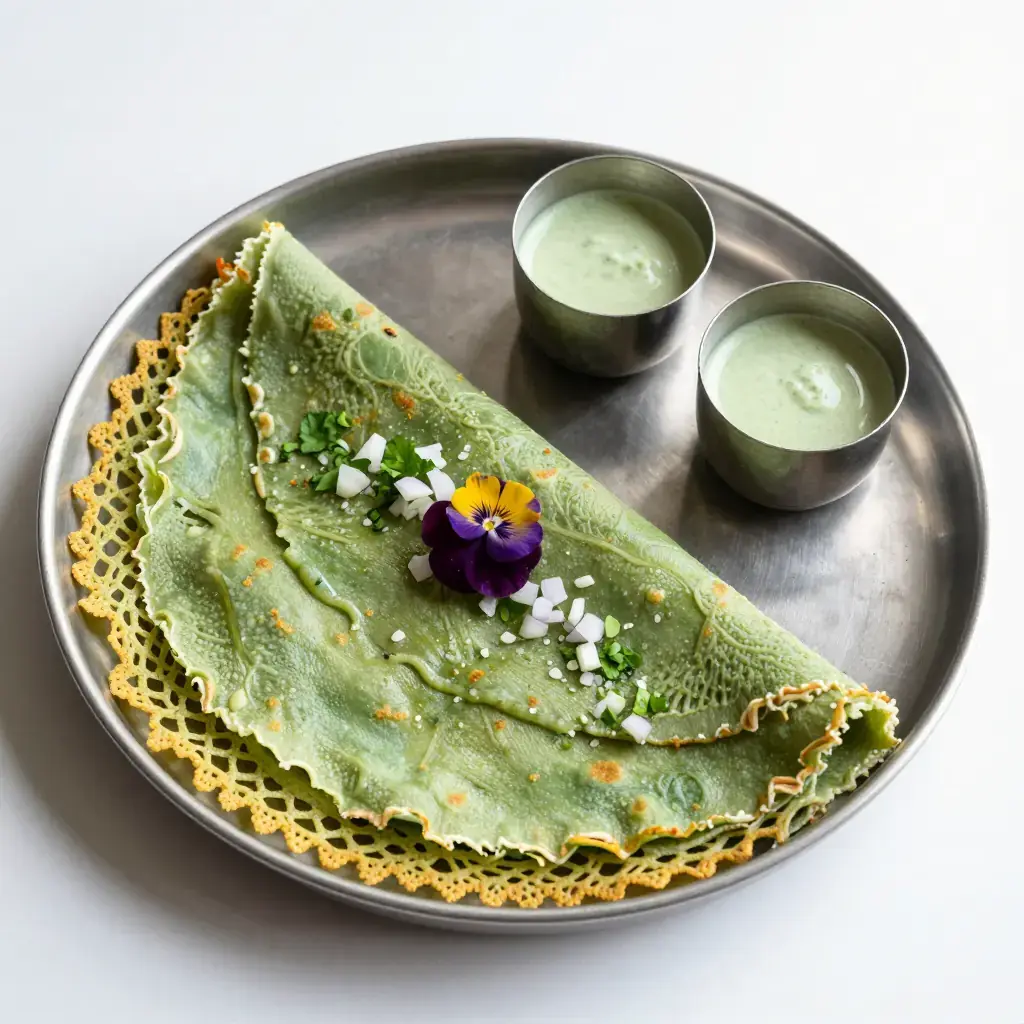
- Fold in half or roll and slide onto a plate. Pesarattu is not flipped.
- Serve immediately with ginger chutney and coconut chutney.
Cook's Notes: The batter should be used within a day — it doesn't need fermentation and will not improve with long storage. A lightly coarser grind gives pesarattu its characteristic texture; smoother batters produce a softer, less interesting result.
All Revisions
generated
# Pesarattu Pesarattu is the breakfast crepe of Andhra Pradesh — made from whole green moong dal (mung beans) soaked overnight, ground to a coarse batter with fresh ginger and green chillies, and spread thin on a hot iron griddle. Unlike dosa, pesarattu needs no rice and no fermentation; the mung beans are inherently protein-rich and naturally slightly earthy. In Vijaywada and Hyderabad, pesarattu is served with upma — semolina porridge — spread inside the crepe in a combination called MLA Pesarattu, said to have originated in the Andhra Pradesh legislative assembly canteen. Serves: 4 (makes 8 crepes) ## Ingredients - 300g (1½ cups) whole green moong dal (mung beans), soaked 8 hours or overnight - 2.5cm (1 inch) piece fresh ginger, roughly chopped - 2–3 green chillies, roughly chopped - 1 tsp cumin seeds - Salt to taste - Water as needed **Topping (applied before folding):** - 1 small onion, very finely chopped - 2 tbsp fresh coriander, chopped - 1 green chilli, finely sliced - Cumin seeds, pinch per crepe **To serve:** - Ginger chutney (allam pachadi) - Coconut chutney ## Instructions 1. Drain soaked mung beans. Transfer to a blender with ginger, green chillies, cumin seeds, and salt. Add just enough water (about 100–150ml / ½ cup) to grind to a coarse but pourable batter. Some texture is desirable — do not over-blend. 2. Heat a cast-iron or non-stick griddle over medium-high heat. Sprinkle a few drops of water — they should sizzle and evaporate immediately. 3. Lightly oil the surface. Pour a ladleful of batter (about 80ml / ⅓ cup) onto the center and immediately spread in wide circular motions to a thin crepe of about 20cm (8 inches) diameter. 4. Scatter a pinch of chopped onion, coriander, green chilli, and cumin seeds over the surface. Press gently with the back of a spoon. 5. Drizzle a little oil around the edges. Cook for 2–3 minutes until the edges lift and the underside is golden-green with crisp spots. 6. Fold in half or roll and slide onto a plate. Pesarattu is not flipped. 7. Serve immediately with ginger chutney and coconut chutney. **Cook's Notes:** The batter should be used within a day — it doesn't need fermentation and will not improve with long storage. A lightly coarser grind gives pesarattu its characteristic texture; smoother batters produce a softer, less interesting result.Images
Tags
- authentic
- breakfast
- dairy-free
- from-input
- gluten-free
- indian-south
- nut-free
- vegan
- vegetarian