Injera
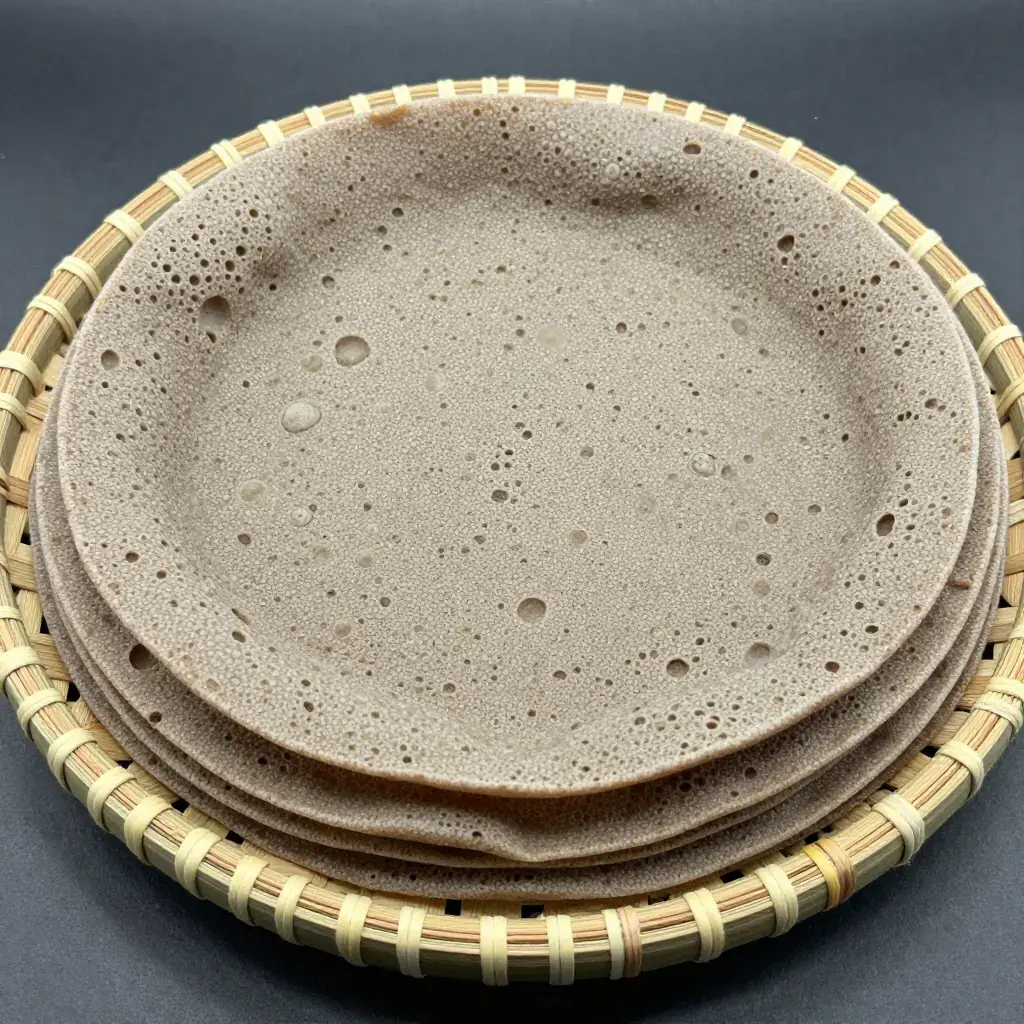
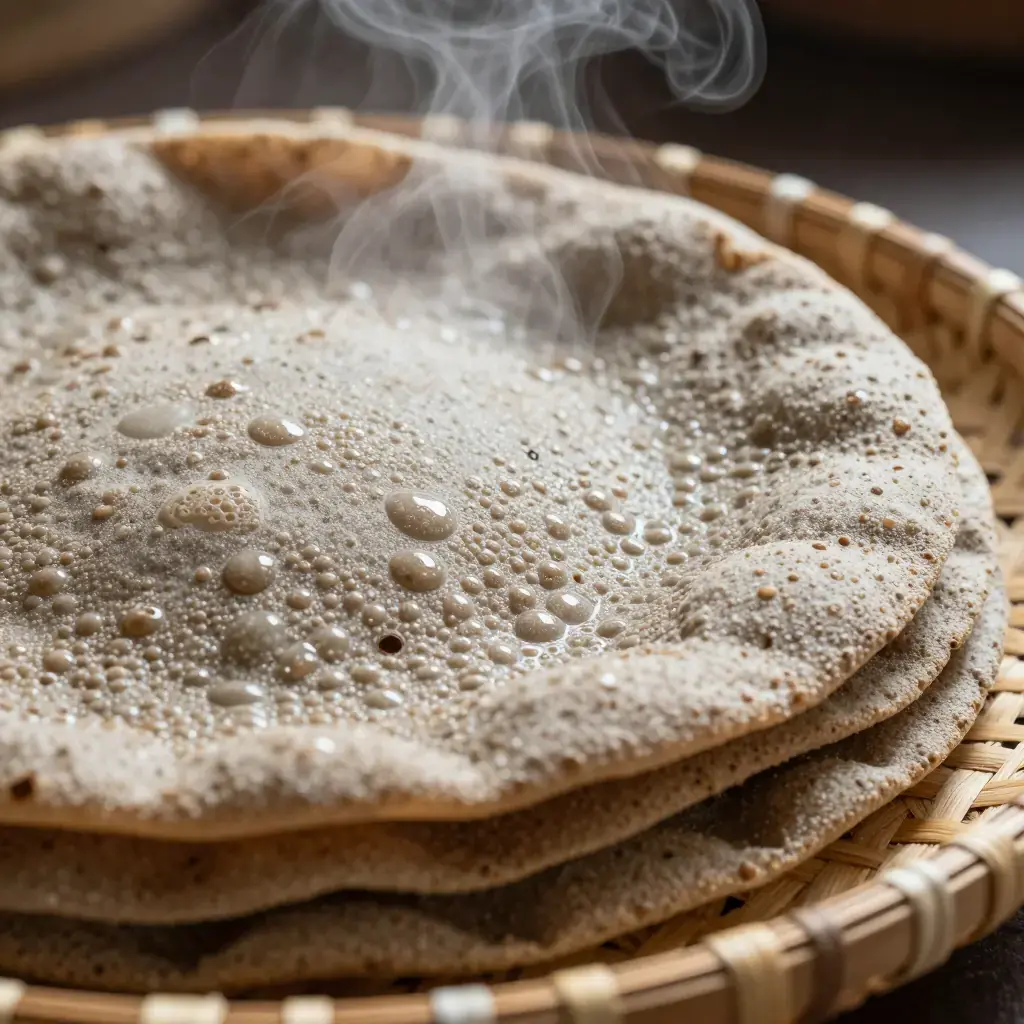
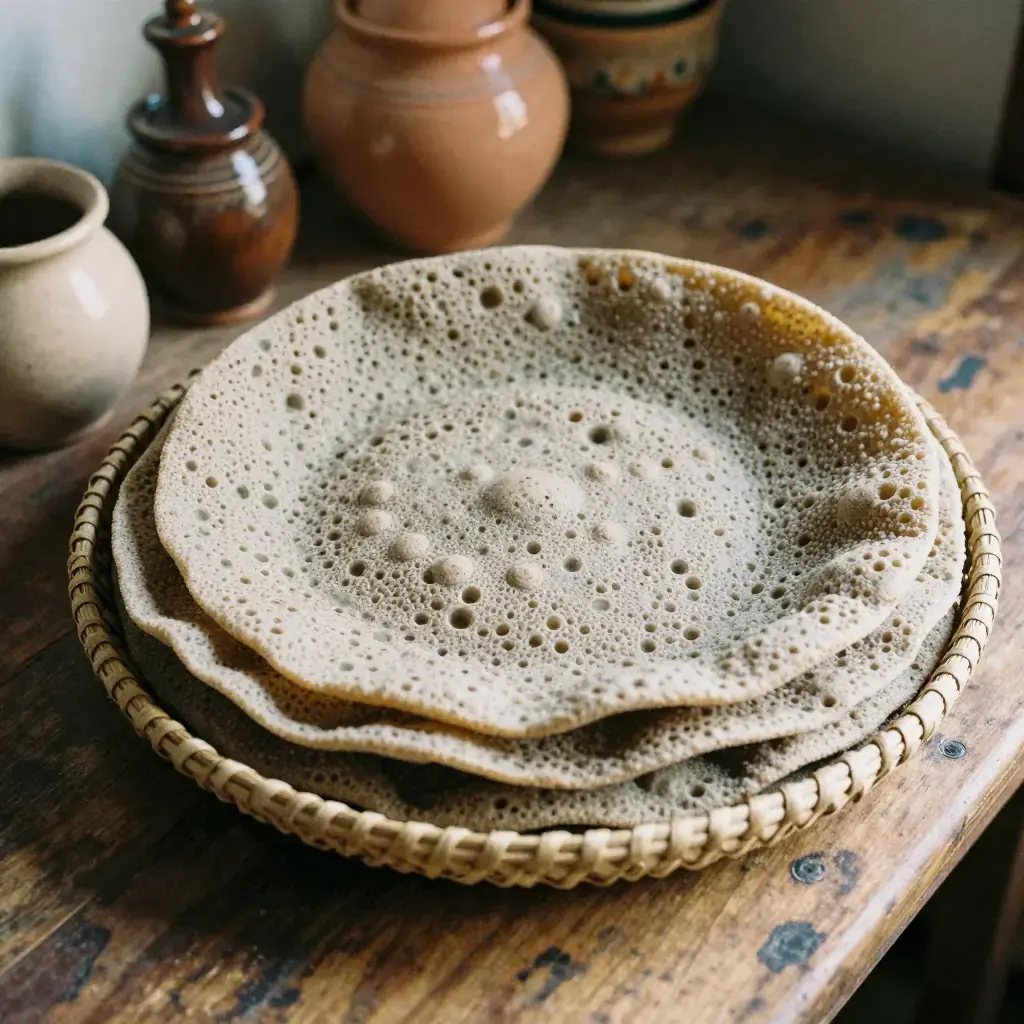
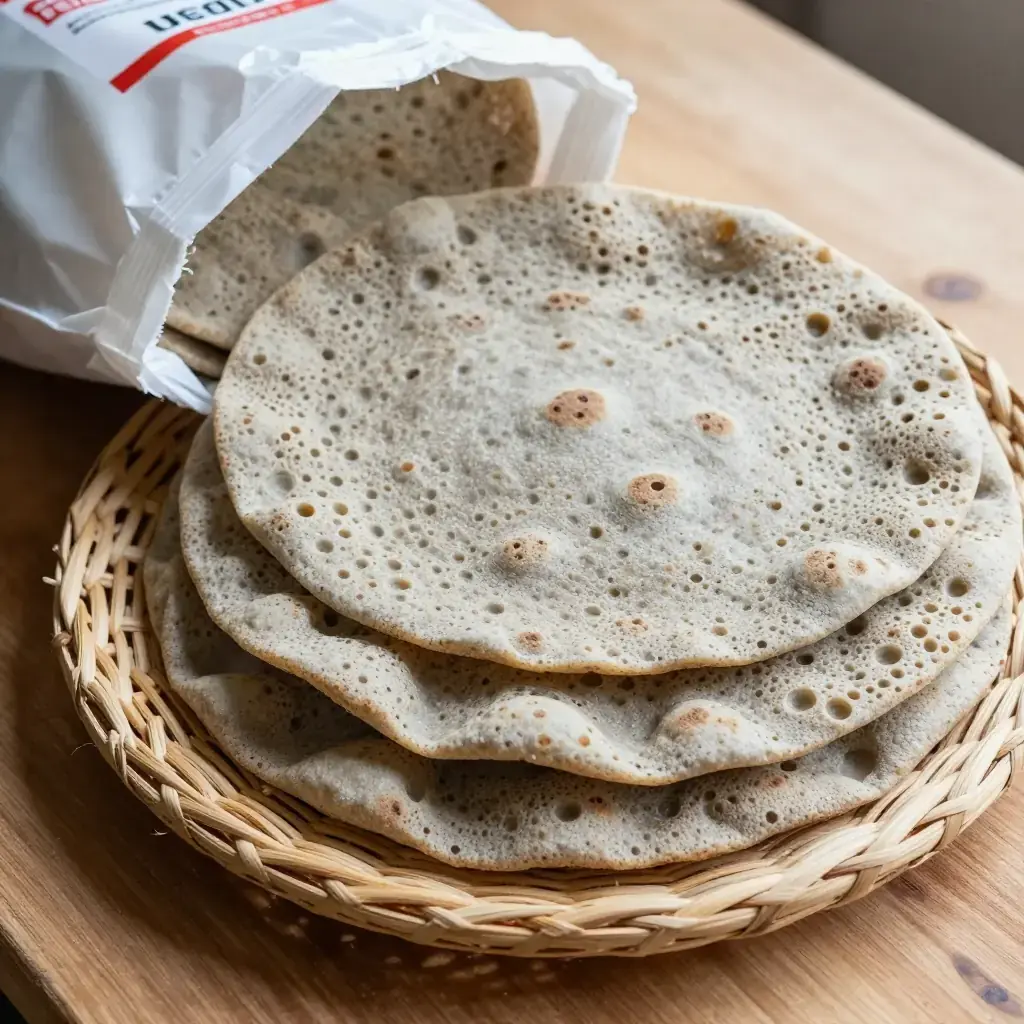
Injera is simultaneously the plate, the utensil, and the bread of Ethiopian and Eritrean cuisine. Made from teff — an ancient grain native to the Ethiopian highlands — injera ferments for two to three days, developing its signature sour tang that balances rich, spiced stews (wots). The batter is poured onto a large pan and cooked only from below, producing the characteristic bubbly, sponge-like surface. Learning to make injera is an act of patience — the fermentation cannot be hurried — but the reward is a bread of extraordinary character that no commercial substitute replicates.
Serves: 4 (makes about 8 injera, 25 cm / 10 in diameter)
Ingredients
- 300 g (2 cups) teff flour (brown or ivory)
- 500 ml (2 cups) water, at room temperature, plus more as needed
- ½ teaspoon active dry yeast (optional, to start fermentation)
- ½ teaspoon salt
Instructions
- Day 1: Whisk teff flour with 500 ml water until smooth. Add yeast if using. Pour into a large clean bowl, cover loosely, and leave at room temperature (21–24 °C / 70–75 °F).
- Days 1–3 — Ferment: Leave undisturbed for 48–72 hours. Bubbles will form and the batter will develop a pleasantly sour smell. Stir gently once daily. Warmer kitchens need only 48 hours; cooler kitchens may need 72.
- Before cooking: The batter should smell sour and be slightly thinner than crêpe batter. Add water as needed so it pours easily. Stir in salt.
- Absit: Pour 120 ml (½ cup) of batter into a small saucepan. Cook over medium heat, stirring, until thickened to a paste, about 2 minutes. Stir this cooked paste back into the main batter — this helps the injera set properly.
- Cook: Heat a large non-stick pan over medium heat. Pour about 160 ml (⅔ cup) batter in a spiral from the outside in. Immediately cover tightly. Cook 2–3 minutes — the surface will look completely dry and covered in bubbles. Do not flip. Slide onto a clean cloth to cool. Repeat with remaining batter, letting the pan return to temperature between each.
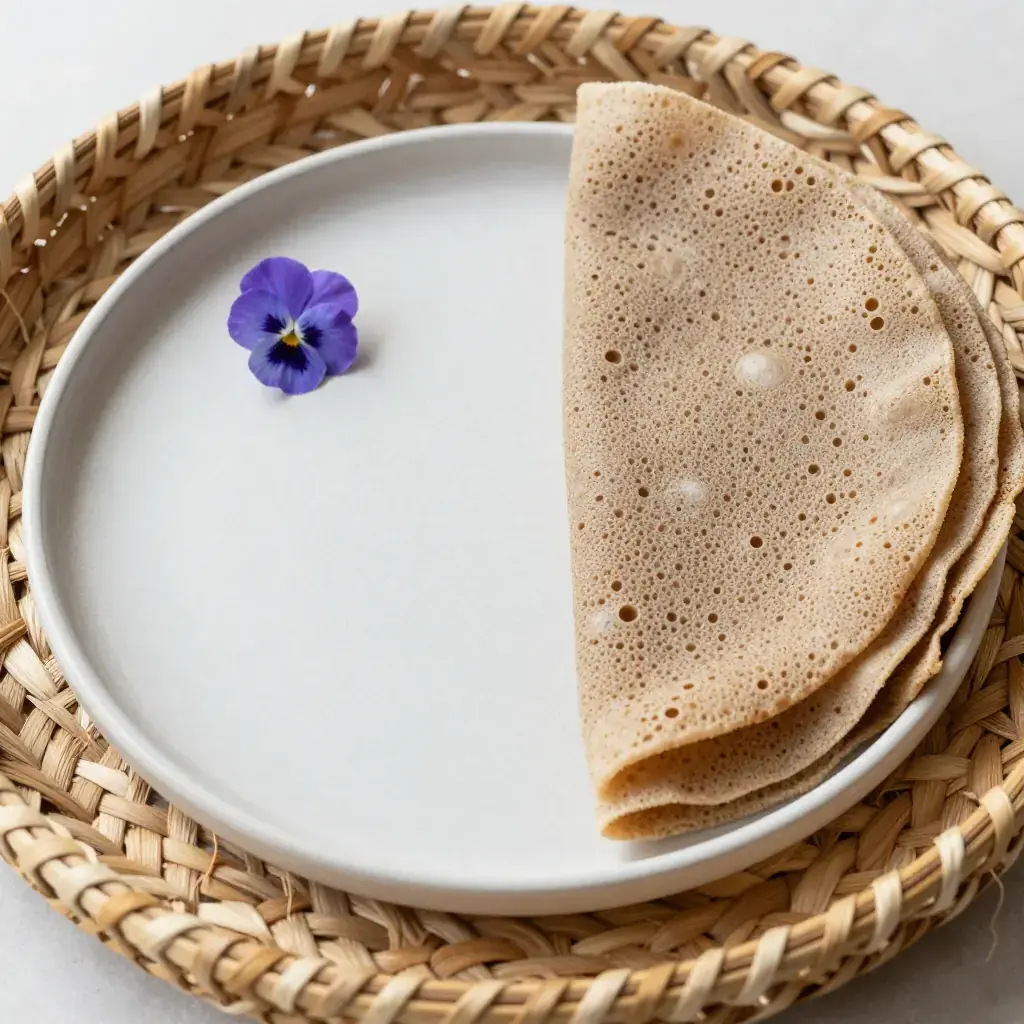
- Layer cooled injera between clean cloths to prevent drying. Serve at room temperature with stews spooned on top.
Cook's Notes: Injera cools and firms as it rests — this is normal. Store at room temperature up to 2 days, loosely covered. Teff flour is available at Ethiopian grocery stores, health food shops, and online. Do not oil the pan; the batter needs to grip slightly to spread evenly.
All Revisions
generated
# Injera Injera is simultaneously the plate, the utensil, and the bread of Ethiopian and Eritrean cuisine. Made from teff — an ancient grain native to the Ethiopian highlands — injera ferments for two to three days, developing its signature sour tang that balances rich, spiced stews (wots). The batter is poured onto a large pan and cooked only from below, producing the characteristic bubbly, sponge-like surface. Learning to make injera is an act of patience — the fermentation cannot be hurried — but the reward is a bread of extraordinary character that no commercial substitute replicates. Serves: 4 (makes about 8 injera, 25 cm / 10 in diameter) ## Ingredients - 300 g (2 cups) teff flour (brown or ivory) - 500 ml (2 cups) water, at room temperature, plus more as needed - ½ teaspoon active dry yeast (optional, to start fermentation) - ½ teaspoon salt ## Instructions 1. **Day 1:** Whisk teff flour with 500 ml water until smooth. Add yeast if using. Pour into a large clean bowl, cover loosely, and leave at room temperature (21–24 °C / 70–75 °F). 2. **Days 1–3 — Ferment:** Leave undisturbed for 48–72 hours. Bubbles will form and the batter will develop a pleasantly sour smell. Stir gently once daily. Warmer kitchens need only 48 hours; cooler kitchens may need 72. 3. **Before cooking:** The batter should smell sour and be slightly thinner than crêpe batter. Add water as needed so it pours easily. Stir in salt. 4. **Absit:** Pour 120 ml (½ cup) of batter into a small saucepan. Cook over medium heat, stirring, until thickened to a paste, about 2 minutes. Stir this cooked paste back into the main batter — this helps the injera set properly. 5. **Cook:** Heat a large non-stick pan over medium heat. Pour about 160 ml (⅔ cup) batter in a spiral from the outside in. Immediately cover tightly. Cook 2–3 minutes — the surface will look completely dry and covered in bubbles. Do not flip. Slide onto a clean cloth to cool. Repeat with remaining batter, letting the pan return to temperature between each. 6. Layer cooled injera between clean cloths to prevent drying. Serve at room temperature with stews spooned on top. **Cook's Notes:** Injera cools and firms as it rests — this is normal. Store at room temperature up to 2 days, loosely covered. Teff flour is available at Ethiopian grocery stores, health food shops, and online. Do not oil the pan; the batter needs to grip slightly to spread evenly.Images
Tags
- authentic
- dairy-free
- ethiopian
- fermented
- from-input
- gluten-free
- nut-free
- vegan
- vegetarian