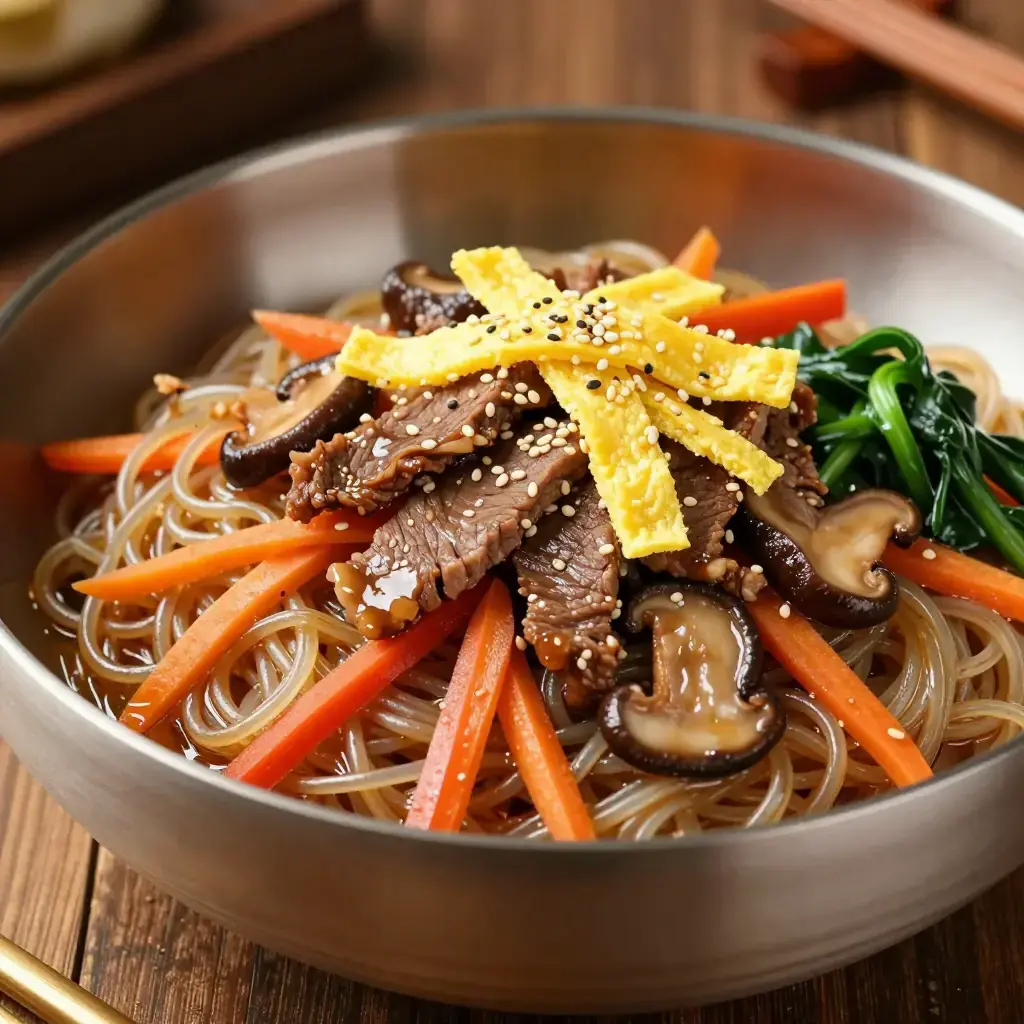
Japchae
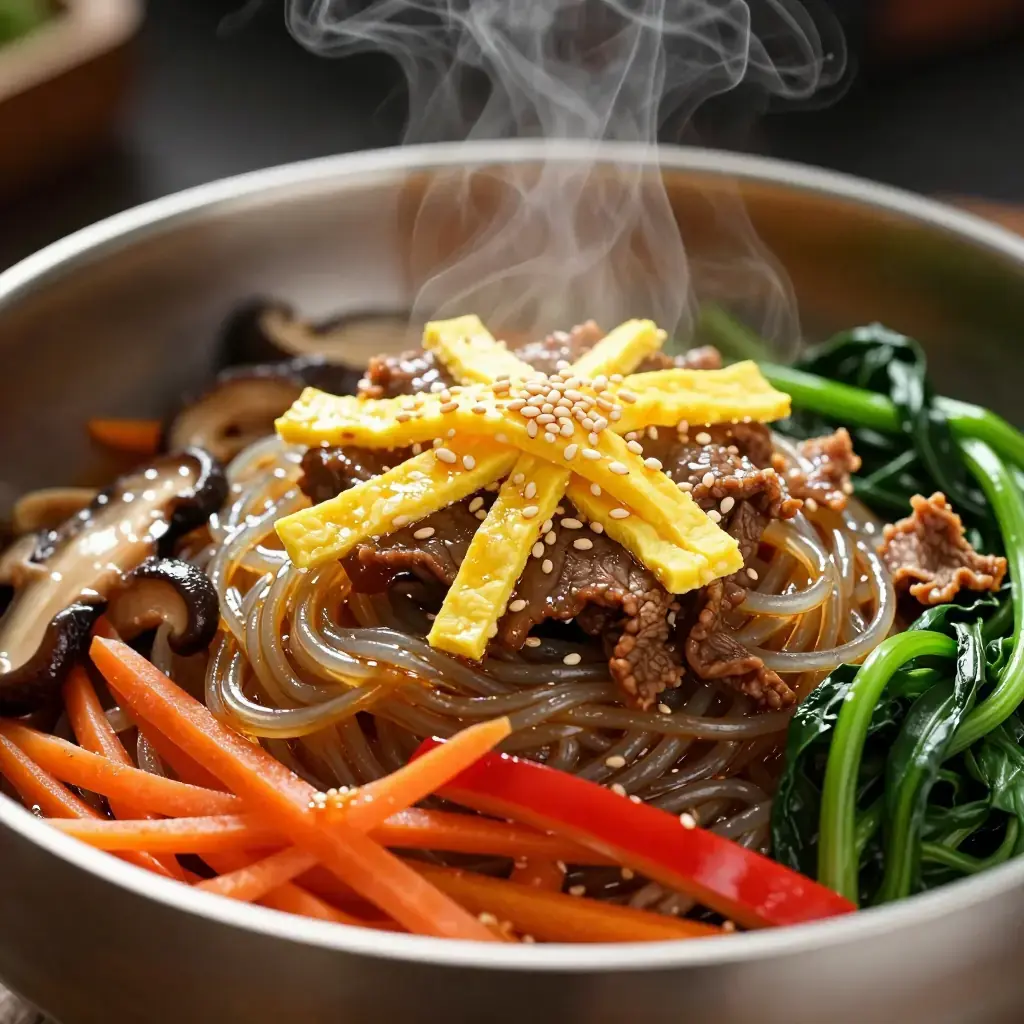
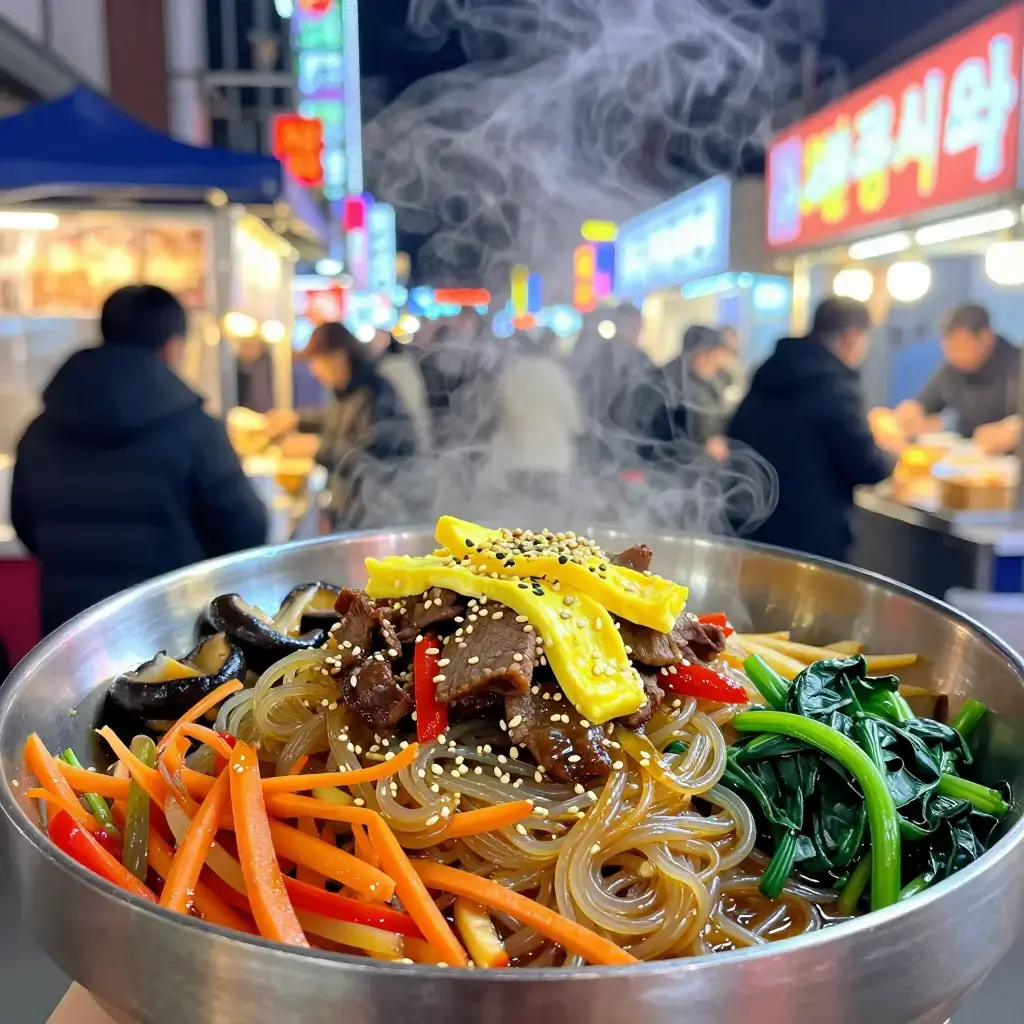
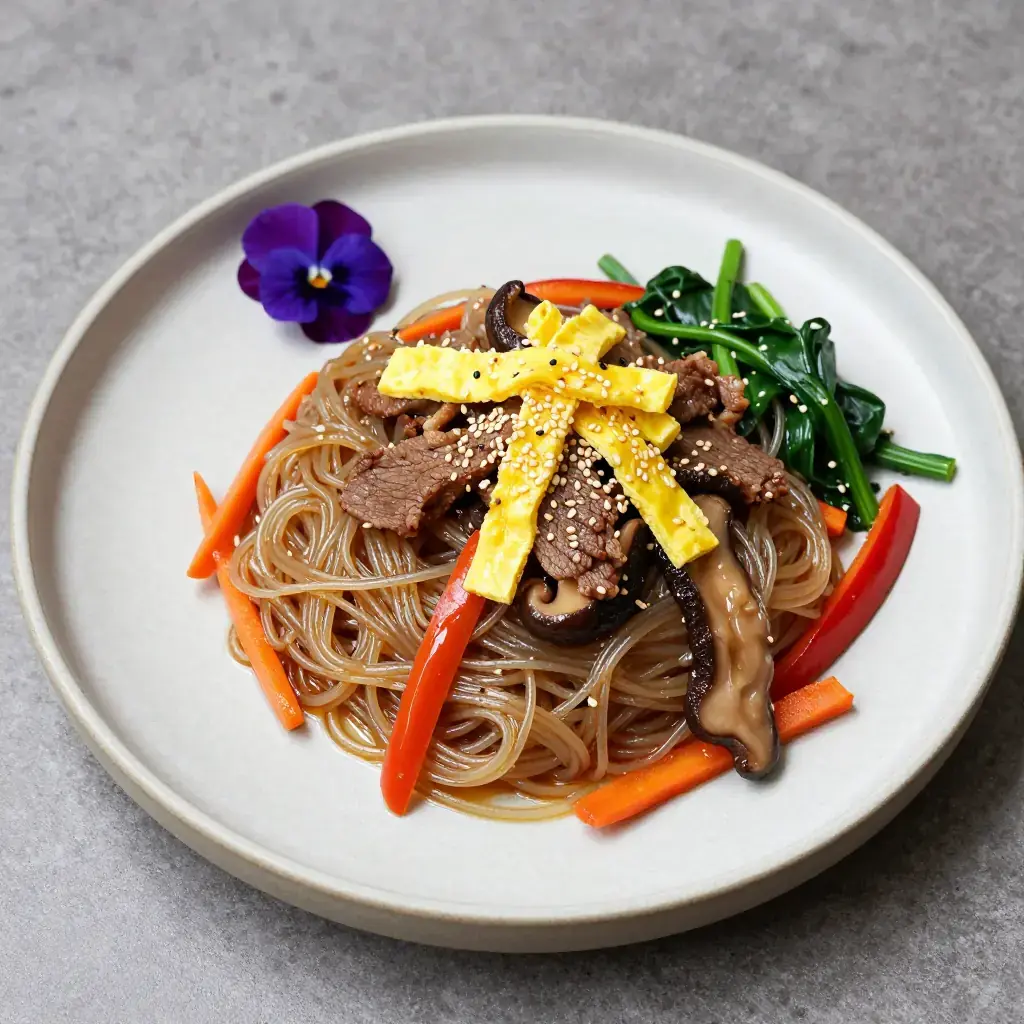
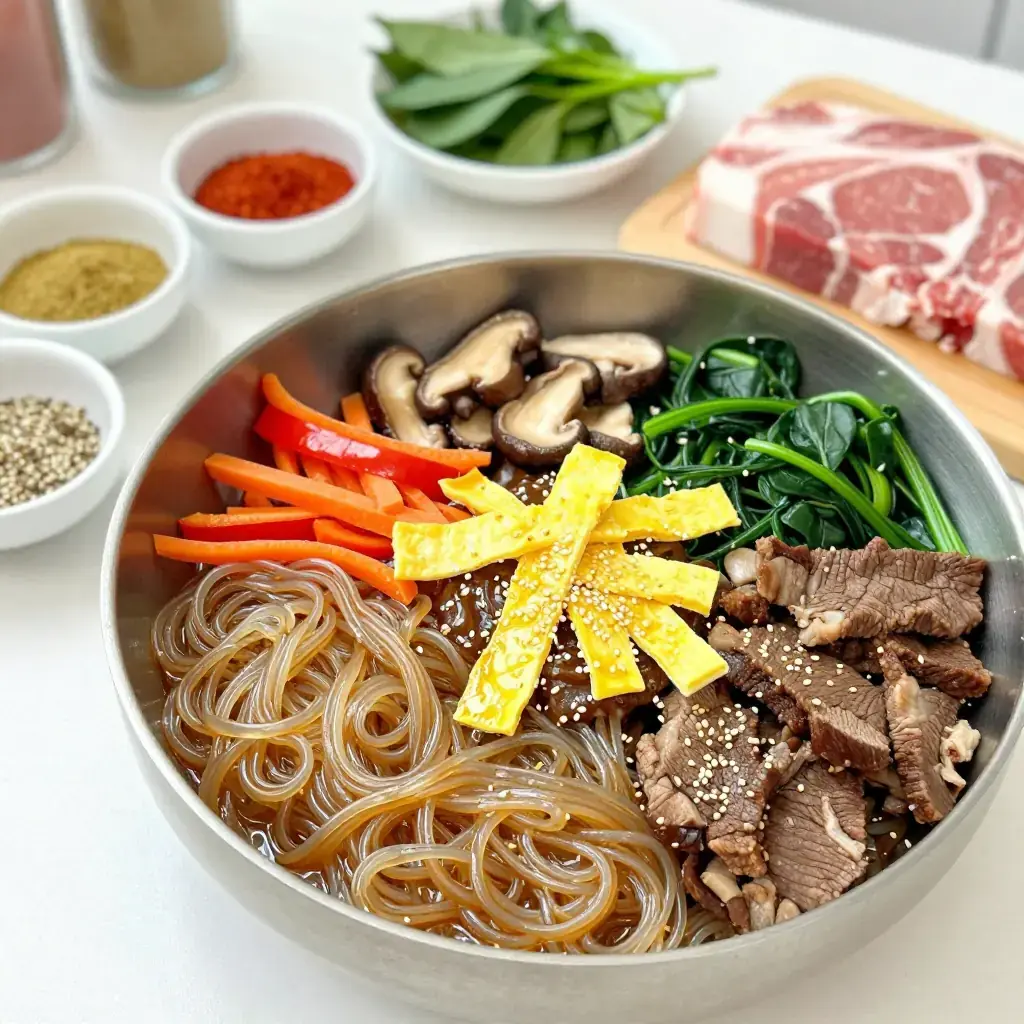
Japchae — glass noodles stir-fried with colorful vegetables and beef — was originally created in the 17th century for King Gwanghaegun of Joseon. The royal cook improvised the dish without noodles at first; they were added later and the recipe never looked back. Today japchae graces every Korean celebration table, from New Year feasts to birthdays, prized for its glossy, lightly sweet-savory flavor and satisfying chew. The key is cooking each ingredient separately to preserve its individual texture and color.
Serves: 4
Ingredients
- 200g (7 oz) dangmyeon (sweet potato glass noodles)
- 200g (7 oz) beef sirloin, cut into thin strips
- 100g (3.5 oz) spinach
- 1 medium carrot, julienned
- 1 medium onion, thinly sliced
- 4 dried shiitake mushrooms, soaked and sliced
- 1 red bell pepper, julienned
- 3 tbsp soy sauce, divided
- 2 tbsp sesame oil, divided
- 1.5 tbsp sugar, divided
- 2 cloves garlic, minced
- Neutral oil for cooking
- Toasted sesame seeds and egg jidan (thin egg strips) to garnish
Instructions
- Marinate the beef strips in 1 tbsp soy sauce, 1 tsp sesame oil, 1 tsp sugar, and half the garlic for 20 minutes.
- Cook the dangmyeon in boiling water for 6–7 minutes until tender. Drain, rinse with cold water, and cut into 15cm (6 in) lengths. Toss with 1 tbsp soy sauce and 1 tsp sesame oil.
- In a hot oiled pan, cook each vegetable separately — carrot, onion, bell pepper, mushrooms — 2–3 minutes each, seasoning lightly with salt. Set aside. Blanch spinach 30 seconds, squeeze dry, season with a little sesame oil and salt.
- Sear the beef over high heat for 2–3 minutes until cooked through.
- Combine noodles, all vegetables, and beef in a large bowl. Add remaining soy sauce, sugar, sesame oil, and garlic. Toss well.
- Garnish with sesame seeds and egg jidan.
Cook's Notes: Cooking each component separately is the defining technique — it prevents the vegetables from going soggy and keeps colors vivid. Glass noodles absorb seasoning fast; taste and adjust before serving.
All Revisions
generated
# Japchae Japchae — glass noodles stir-fried with colorful vegetables and beef — was originally created in the 17th century for King Gwanghaegun of Joseon. The royal cook improvised the dish without noodles at first; they were added later and the recipe never looked back. Today japchae graces every Korean celebration table, from New Year feasts to birthdays, prized for its glossy, lightly sweet-savory flavor and satisfying chew. The key is cooking each ingredient separately to preserve its individual texture and color. Serves: 4 ## Ingredients - 200g (7 oz) dangmyeon (sweet potato glass noodles) - 200g (7 oz) beef sirloin, cut into thin strips - 100g (3.5 oz) spinach - 1 medium carrot, julienned - 1 medium onion, thinly sliced - 4 dried shiitake mushrooms, soaked and sliced - 1 red bell pepper, julienned - 3 tbsp soy sauce, divided - 2 tbsp sesame oil, divided - 1.5 tbsp sugar, divided - 2 cloves garlic, minced - Neutral oil for cooking - Toasted sesame seeds and egg jidan (thin egg strips) to garnish ## Instructions 1. Marinate the beef strips in 1 tbsp soy sauce, 1 tsp sesame oil, 1 tsp sugar, and half the garlic for 20 minutes. 2. Cook the dangmyeon in boiling water for 6–7 minutes until tender. Drain, rinse with cold water, and cut into 15cm (6 in) lengths. Toss with 1 tbsp soy sauce and 1 tsp sesame oil. 3. In a hot oiled pan, cook each vegetable separately — carrot, onion, bell pepper, mushrooms — 2–3 minutes each, seasoning lightly with salt. Set aside. Blanch spinach 30 seconds, squeeze dry, season with a little sesame oil and salt. 4. Sear the beef over high heat for 2–3 minutes until cooked through. 5. Combine noodles, all vegetables, and beef in a large bowl. Add remaining soy sauce, sugar, sesame oil, and garlic. Toss well. 6. Garnish with sesame seeds and egg jidan. **Cook's Notes:** Cooking each component separately is the defining technique — it prevents the vegetables from going soggy and keeps colors vivid. Glass noodles absorb seasoning fast; taste and adjust before serving.Images
Tags
- authentic
- dinner
- dinner-party
- from-input
- korean
- noodles
- room-temp
- stir-fried