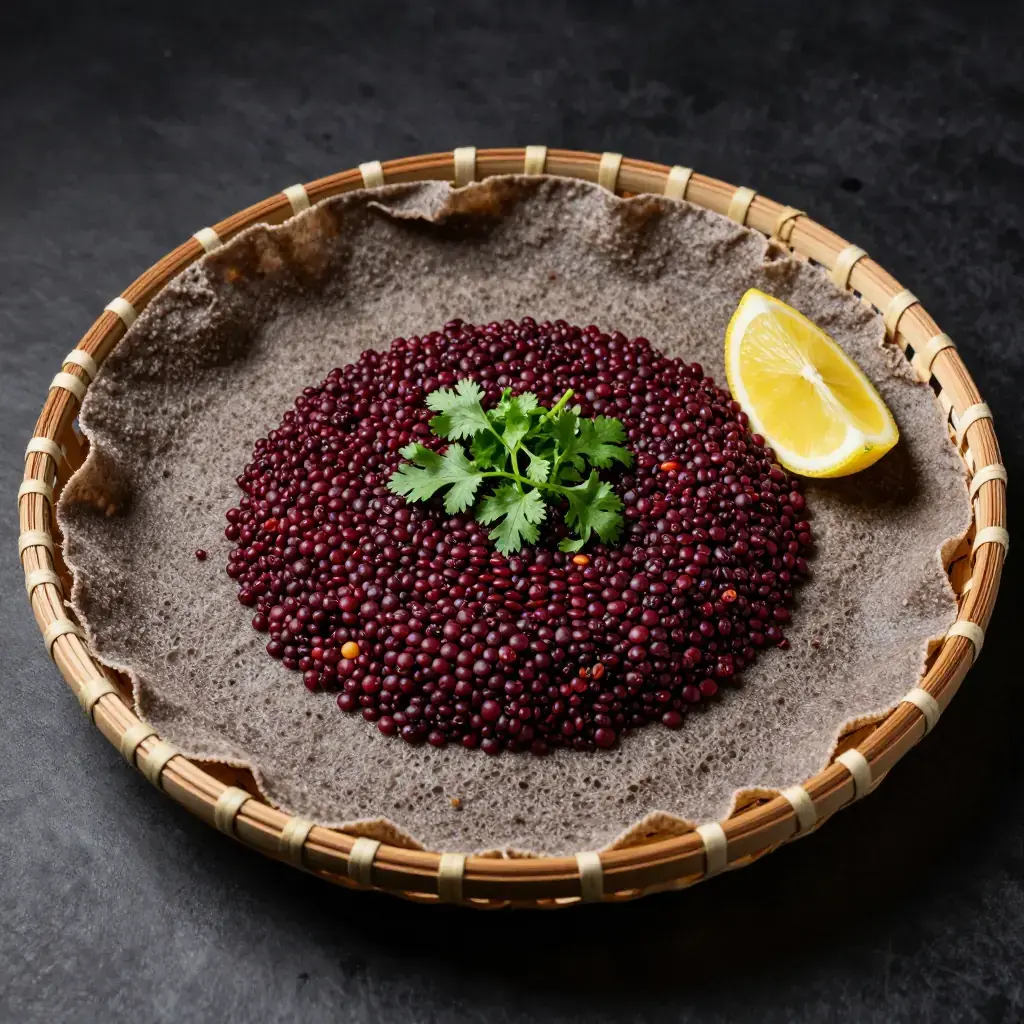
Misir Wot
Misir wot is Ethiopia's beloved spiced red lentil stew, a cornerstone of the country's rich tradition of plant-based cooking rooted in Ethiopian Orthodox fasting days (tsomawi), during which abstinence from animal products is observed. The defining ingredient is berbere — a complex blend of chili, fenugreek, coriander, and warming spices — combined with niter kibbeh, the clarified spiced butter that underlies much of Ethiopian cooking. It is traditionally eaten communally on injera flatbread.
Serves: 4
Ingredients
- 300g (1.5 cups) red lentils, rinsed
- 4 tbsp niter kibbeh (Ethiopian spiced clarified butter) or ghee
- 2 large red onions, very finely diced
- 5 garlic cloves, minced
- 2cm (1 inch) fresh ginger, grated
- 3 tbsp berbere spice blend
- 1/2 tsp ground turmeric
- 720ml (3 cups) water or vegetable stock
- Salt to taste
- Injera or rice to serve
- Lemon wedges and fresh coriander, to garnish
Instructions
- In a heavy pot, melt the niter kibbeh over medium heat. Add onions and cook, stirring frequently, for 20–25 minutes until very soft, sweet, and a deep copper colour. This slow caramelisation is the foundation of the dish — do not rush it.
- Add garlic and ginger; cook for 2 minutes. Stir in berbere and turmeric and cook for 3 minutes, adding a splash of water if the spices begin to stick.
- Add the rinsed lentils and pour in the water or stock. Stir well and bring to a boil.
- Reduce heat to low, partially cover, and cook for 20–25 minutes, stirring every 5 minutes to prevent the bottom from catching, until the lentils have completely broken down into a thick, porridge-like consistency.
- Season generously with salt. The stew should be thick enough to mound on injera — add a little water if too stiff.
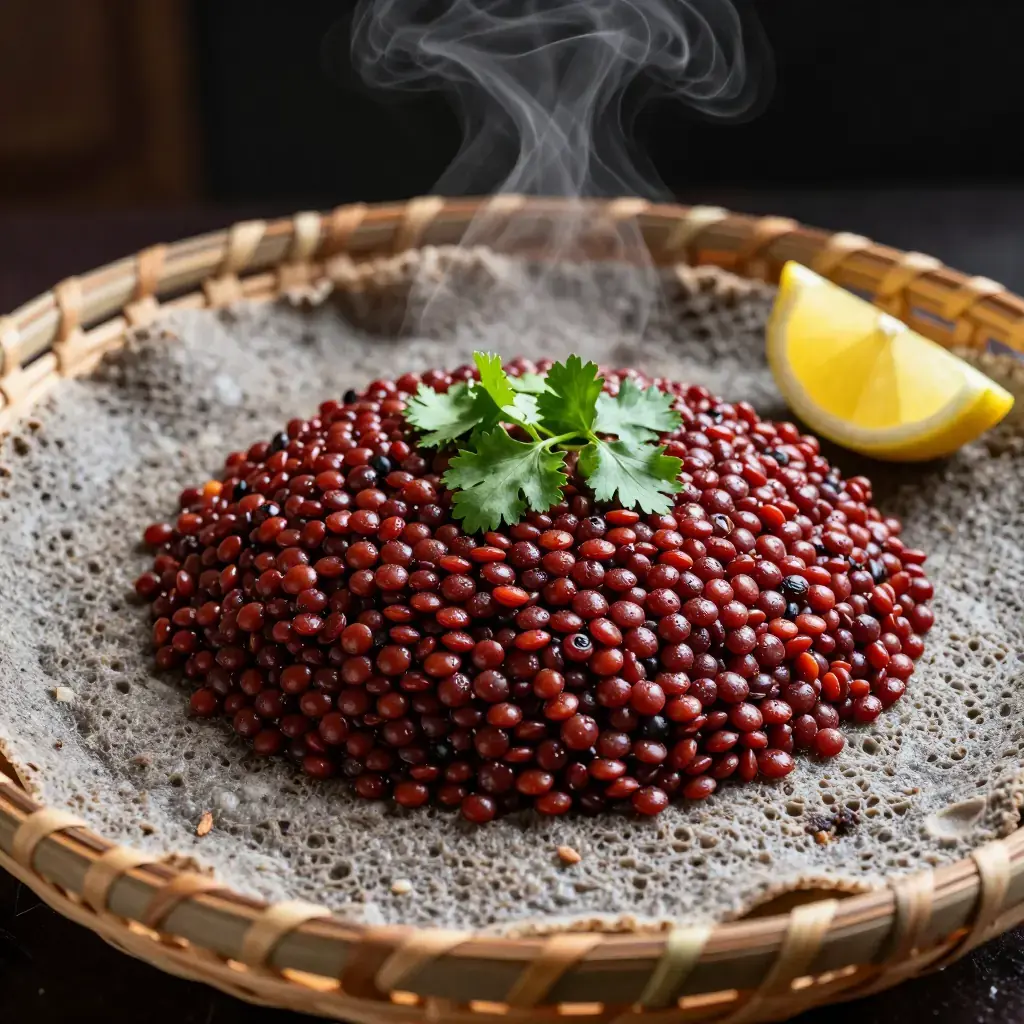
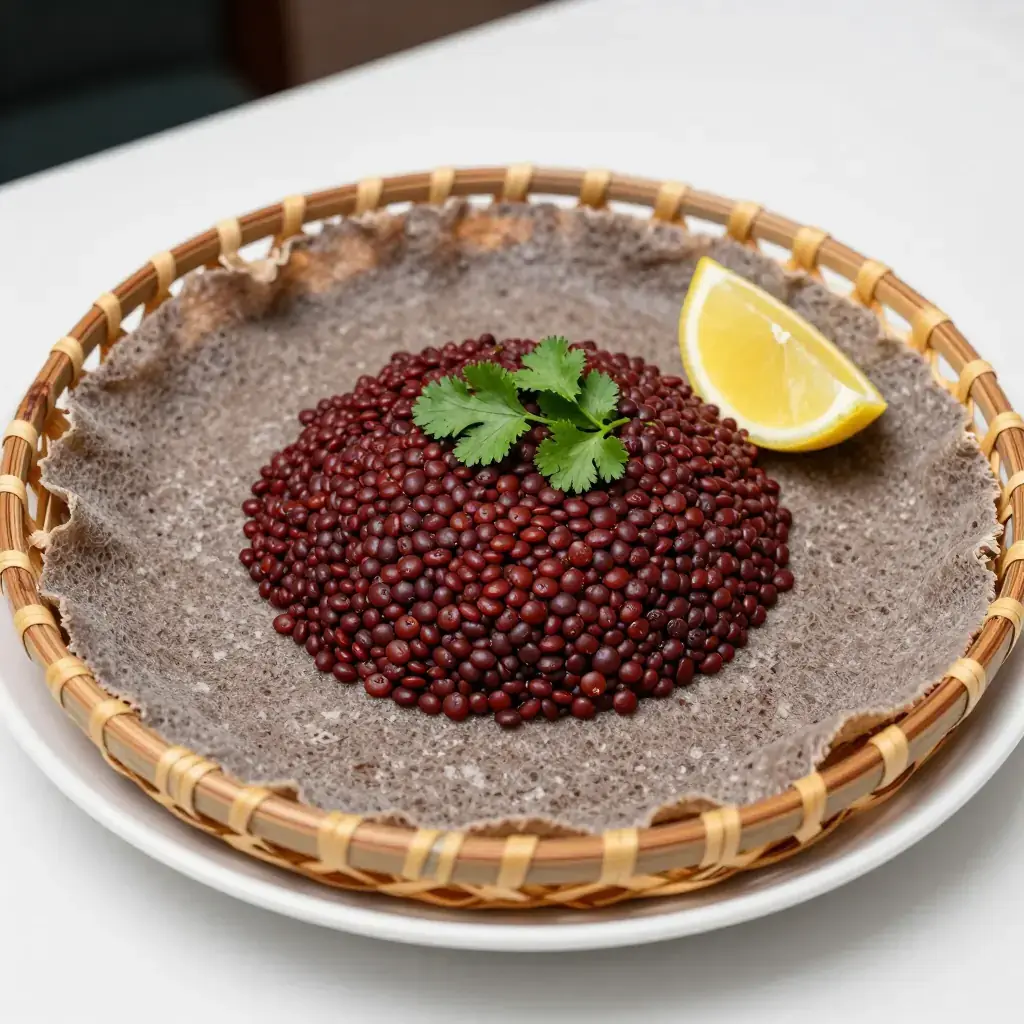
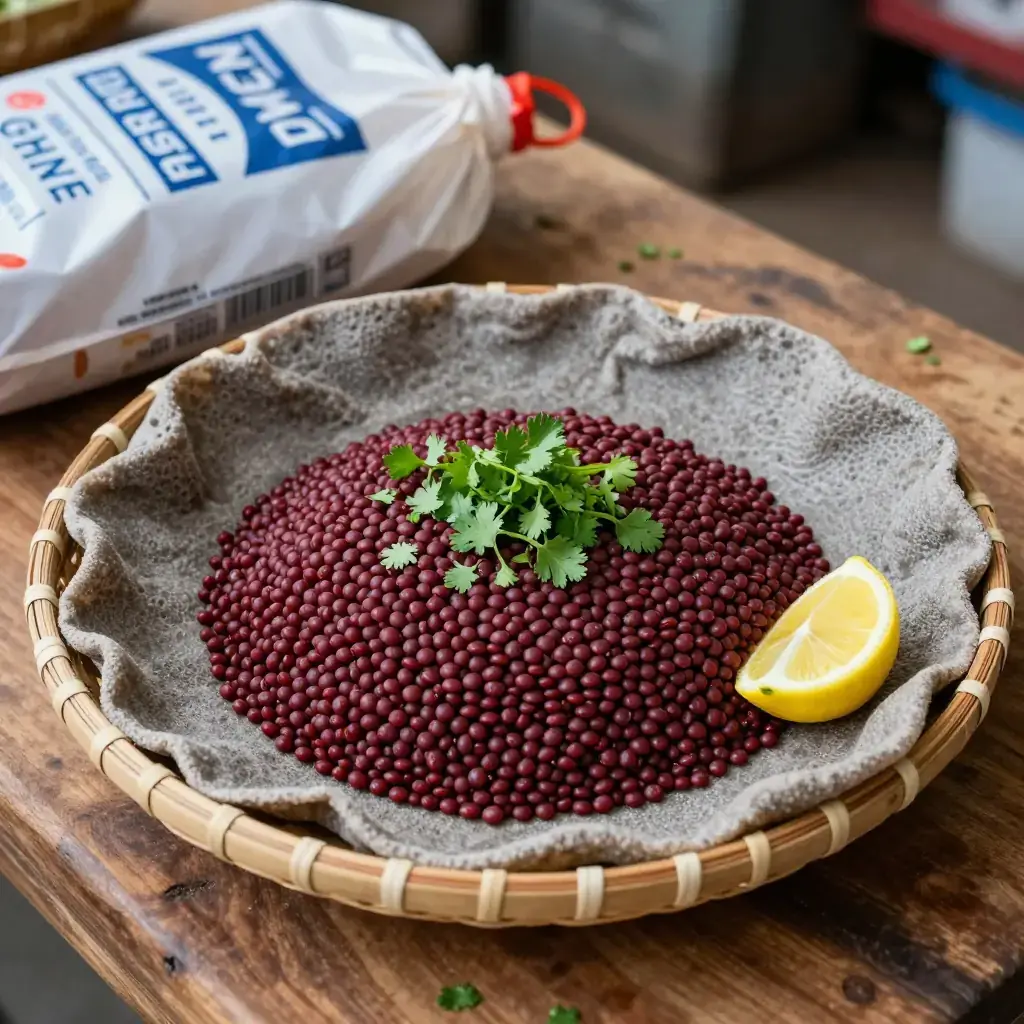
- Serve warm on injera or with rice, garnished with coriander and lemon wedges.
Cook's Notes: Berbere blends vary widely; a good Ethiopian grocery brand will be far more complex than a home-ground substitute. Niter kibbeh is worth making from scratch — it keeps refrigerated for a month and transforms Ethiopian dishes. Leftover wot thickens considerably overnight; loosen with a little water when reheating.
All Revisions
generated
# Misir Wot Misir wot is Ethiopia's beloved spiced red lentil stew, a cornerstone of the country's rich tradition of plant-based cooking rooted in Ethiopian Orthodox fasting days (tsomawi), during which abstinence from animal products is observed. The defining ingredient is berbere — a complex blend of chili, fenugreek, coriander, and warming spices — combined with niter kibbeh, the clarified spiced butter that underlies much of Ethiopian cooking. It is traditionally eaten communally on injera flatbread. Serves: 4 ## Ingredients - 300g (1.5 cups) red lentils, rinsed - 4 tbsp niter kibbeh (Ethiopian spiced clarified butter) or ghee - 2 large red onions, very finely diced - 5 garlic cloves, minced - 2cm (1 inch) fresh ginger, grated - 3 tbsp berbere spice blend - 1/2 tsp ground turmeric - 720ml (3 cups) water or vegetable stock - Salt to taste - Injera or rice to serve - Lemon wedges and fresh coriander, to garnish ## Instructions 1. In a heavy pot, melt the niter kibbeh over medium heat. Add onions and cook, stirring frequently, for 20–25 minutes until very soft, sweet, and a deep copper colour. This slow caramelisation is the foundation of the dish — do not rush it. 2. Add garlic and ginger; cook for 2 minutes. Stir in berbere and turmeric and cook for 3 minutes, adding a splash of water if the spices begin to stick. 3. Add the rinsed lentils and pour in the water or stock. Stir well and bring to a boil. 4. Reduce heat to low, partially cover, and cook for 20–25 minutes, stirring every 5 minutes to prevent the bottom from catching, until the lentils have completely broken down into a thick, porridge-like consistency. 5. Season generously with salt. The stew should be thick enough to mound on injera — add a little water if too stiff. 6. Serve warm on injera or with rice, garnished with coriander and lemon wedges. **Cook's Notes:** Berbere blends vary widely; a good Ethiopian grocery brand will be far more complex than a home-ground substitute. Niter kibbeh is worth making from scratch — it keeps refrigerated for a month and transforms Ethiopian dishes. Leftover wot thickens considerably overnight; loosen with a little water when reheating.Images

Tags
- authentic
- comfort-food
- dinner
- ethiopian
- from-input
- gluten-free
- healthy
- lentils
- vegetarian