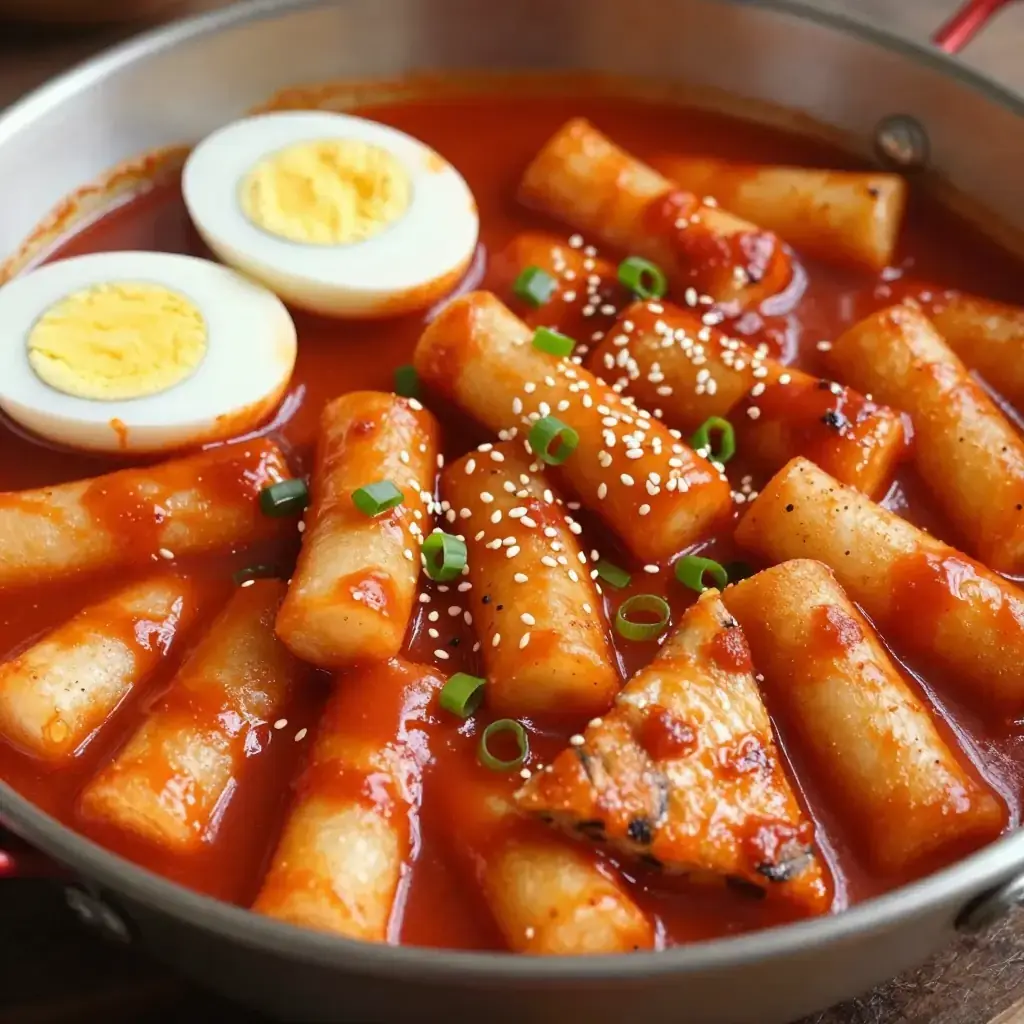
Tteok-bokki
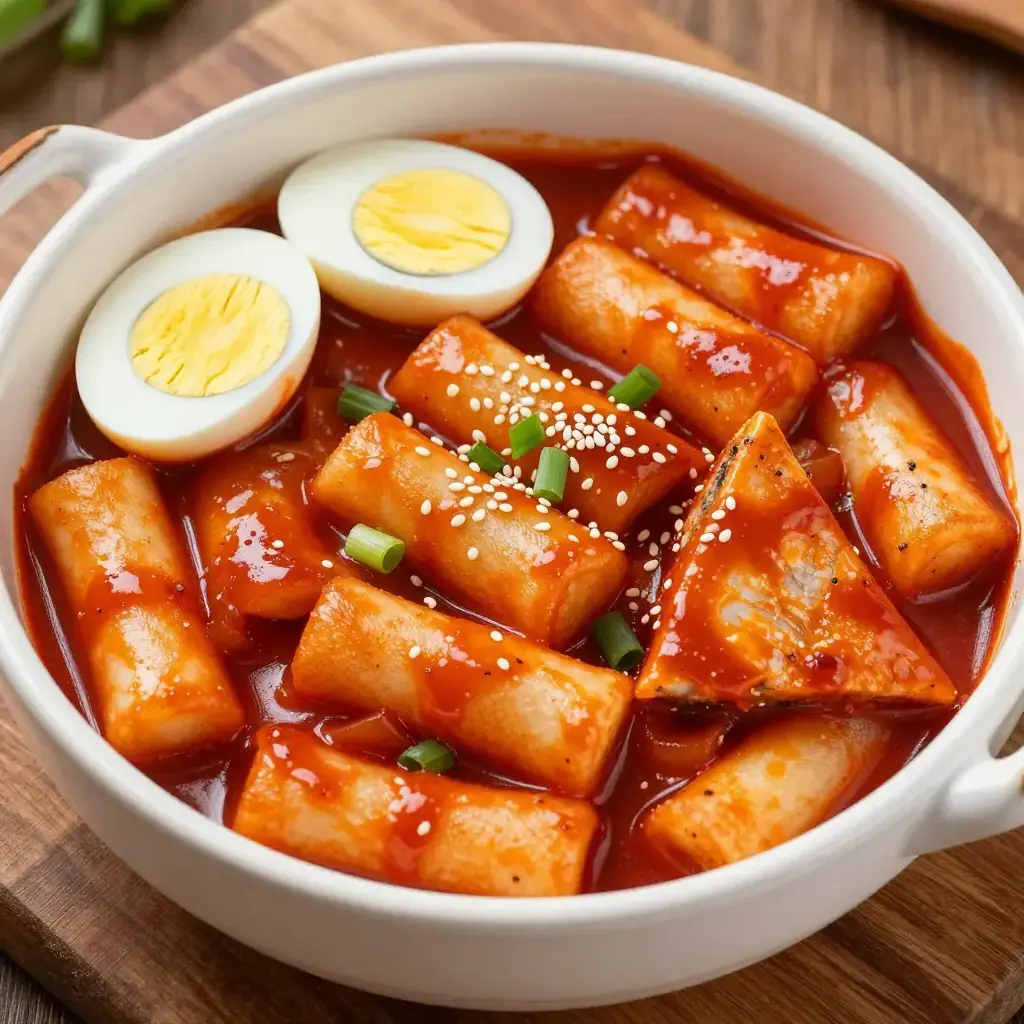
Few dishes capture the late-night energy of Seoul better than tteok-bokki. The chewy, cylindrical garae-tteok rice cakes bathed in an intensely red, sweet-spicy gochujang sauce are sold from pojangmacha (street tent stalls) across South Korea from the afternoon into the small hours, drawing crowds of office workers, students, and drinkers looking for something warm and fiercely satisfying. Modern tteok-bokki has evolved into dozens of regional variations, but the original Sindang-dong style — with its umami-rich sauce built on anchovy stock — remains the gold standard.
Serves: 4
Ingredients
- 500g (1.1 lb) cylinder-shaped rice cakes (garae-tteok), fresh or thawed from frozen
- 200g (7 oz) Korean fish cakes (eomuk), sliced into triangles or strips
- 4 hard-boiled eggs, peeled
- 3 spring onions, cut into 5cm (2-inch) lengths
For the sauce:
- 750ml (3 cups) anchovy or kombu stock
- 3 tbsp gochujang (Korean chili paste)
- 1.5 tbsp gochugaru (Korean chili flakes)
- 2 tbsp soy sauce
- 2 tbsp sugar
- 1 tbsp corn syrup or honey
- 3 cloves garlic, minced
To garnish:
- Toasted sesame seeds
- Sliced spring onion greens
Instructions
- If using refrigerated or frozen rice cakes, soak them in cold water for 30 minutes to prevent clumping. Drain.
- Combine all sauce ingredients in a wide, shallow pan or skillet. Bring to a boil over medium-high heat, stirring to dissolve the gochujang.
- Add the rice cakes and fish cakes. Cook at a rolling simmer for 8-10 minutes, stirring frequently and turning the rice cakes so they cook evenly in the sauce, until the rice cakes are completely tender and the sauce has thickened and turned glossy.
- Add the spring onion pieces and hard-boiled eggs in the final 2 minutes of cooking, turning the eggs to coat in the sauce.
- Transfer to serving bowls or serve directly from the pan. Garnish with sesame seeds and spring onion.
Cook's Notes: The sauce reduces quickly — keep the heat at an active simmer rather than a rolling boil, and add splashes of stock if it gets too thick before the rice cakes are tender. Mozzarella cheese melted over the top is a popular modern addition. Ramen noodles can be added in the final 3 minutes for a more filling version (rabokki).
All Revisions
generated
# Tteok-bokki Few dishes capture the late-night energy of Seoul better than tteok-bokki. The chewy, cylindrical garae-tteok rice cakes bathed in an intensely red, sweet-spicy gochujang sauce are sold from pojangmacha (street tent stalls) across South Korea from the afternoon into the small hours, drawing crowds of office workers, students, and drinkers looking for something warm and fiercely satisfying. Modern tteok-bokki has evolved into dozens of regional variations, but the original Sindang-dong style — with its umami-rich sauce built on anchovy stock — remains the gold standard. Serves: 4 ## Ingredients - 500g (1.1 lb) cylinder-shaped rice cakes (garae-tteok), fresh or thawed from frozen - 200g (7 oz) Korean fish cakes (eomuk), sliced into triangles or strips - 4 hard-boiled eggs, peeled - 3 spring onions, cut into 5cm (2-inch) lengths **For the sauce:** - 750ml (3 cups) anchovy or kombu stock - 3 tbsp gochujang (Korean chili paste) - 1.5 tbsp gochugaru (Korean chili flakes) - 2 tbsp soy sauce - 2 tbsp sugar - 1 tbsp corn syrup or honey - 3 cloves garlic, minced **To garnish:** - Toasted sesame seeds - Sliced spring onion greens ## Instructions 1. If using refrigerated or frozen rice cakes, soak them in cold water for 30 minutes to prevent clumping. Drain. 2. Combine all sauce ingredients in a wide, shallow pan or skillet. Bring to a boil over medium-high heat, stirring to dissolve the gochujang. 3. Add the rice cakes and fish cakes. Cook at a rolling simmer for 8-10 minutes, stirring frequently and turning the rice cakes so they cook evenly in the sauce, until the rice cakes are completely tender and the sauce has thickened and turned glossy. 4. Add the spring onion pieces and hard-boiled eggs in the final 2 minutes of cooking, turning the eggs to coat in the sauce. 5. Transfer to serving bowls or serve directly from the pan. Garnish with sesame seeds and spring onion. **Cook's Notes:** The sauce reduces quickly — keep the heat at an active simmer rather than a rolling boil, and add splashes of stock if it gets too thick before the rice cakes are tender. Mozzarella cheese melted over the top is a popular modern addition. Ramen noodles can be added in the final 3 minutes for a more filling version (rabokki).Images
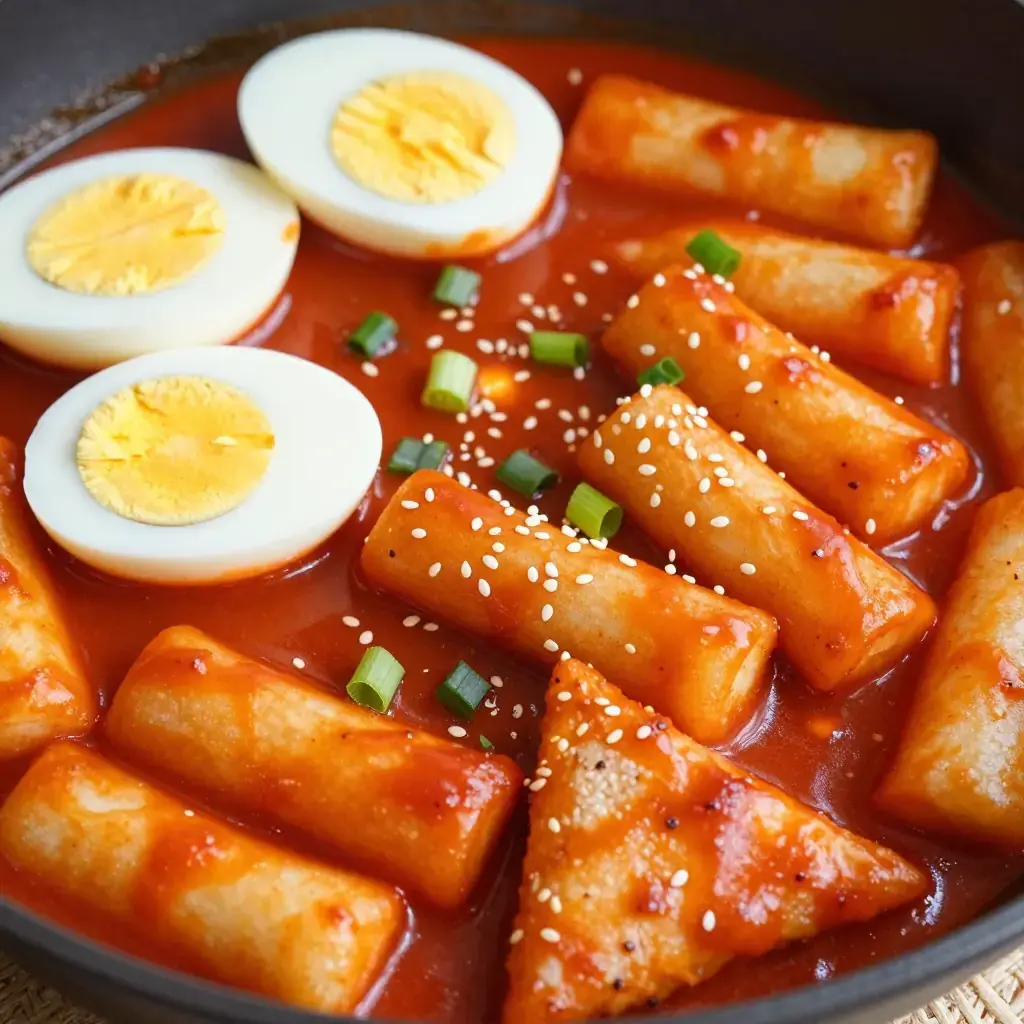
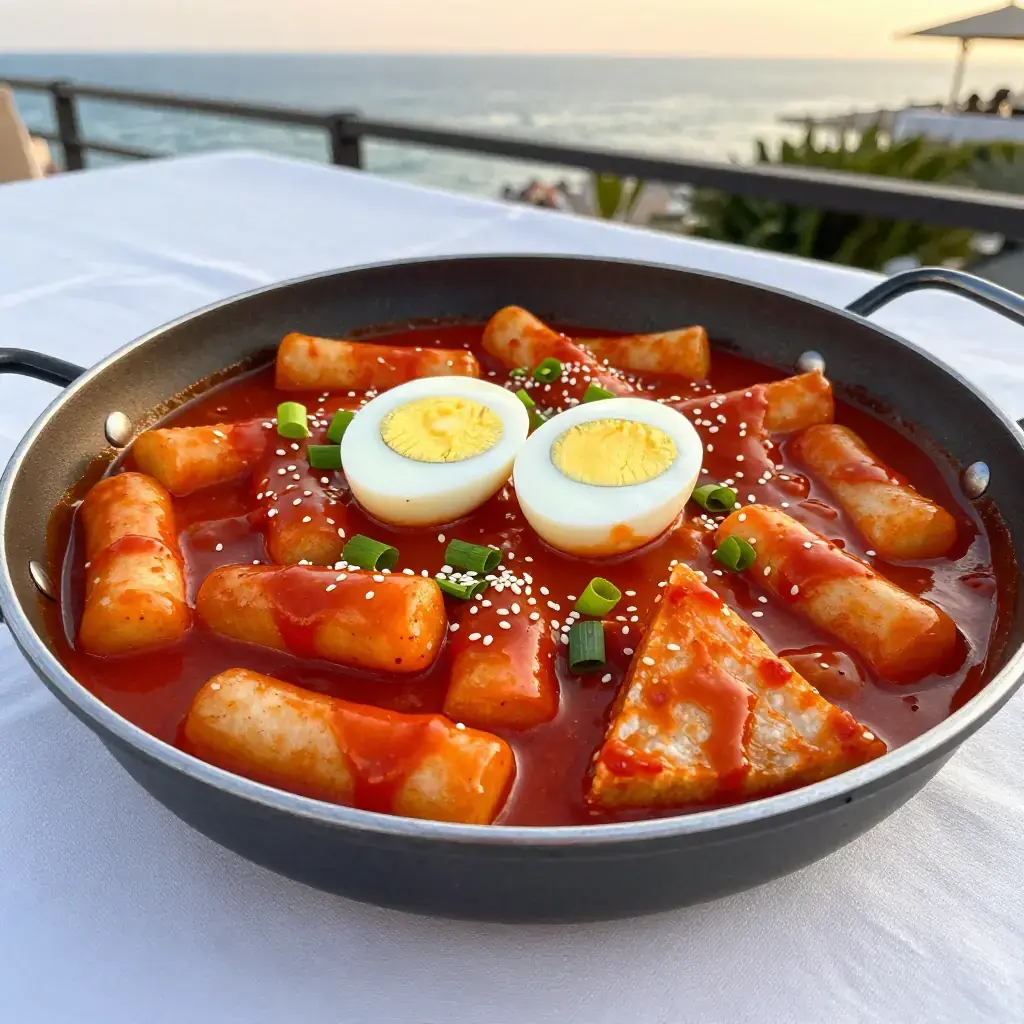
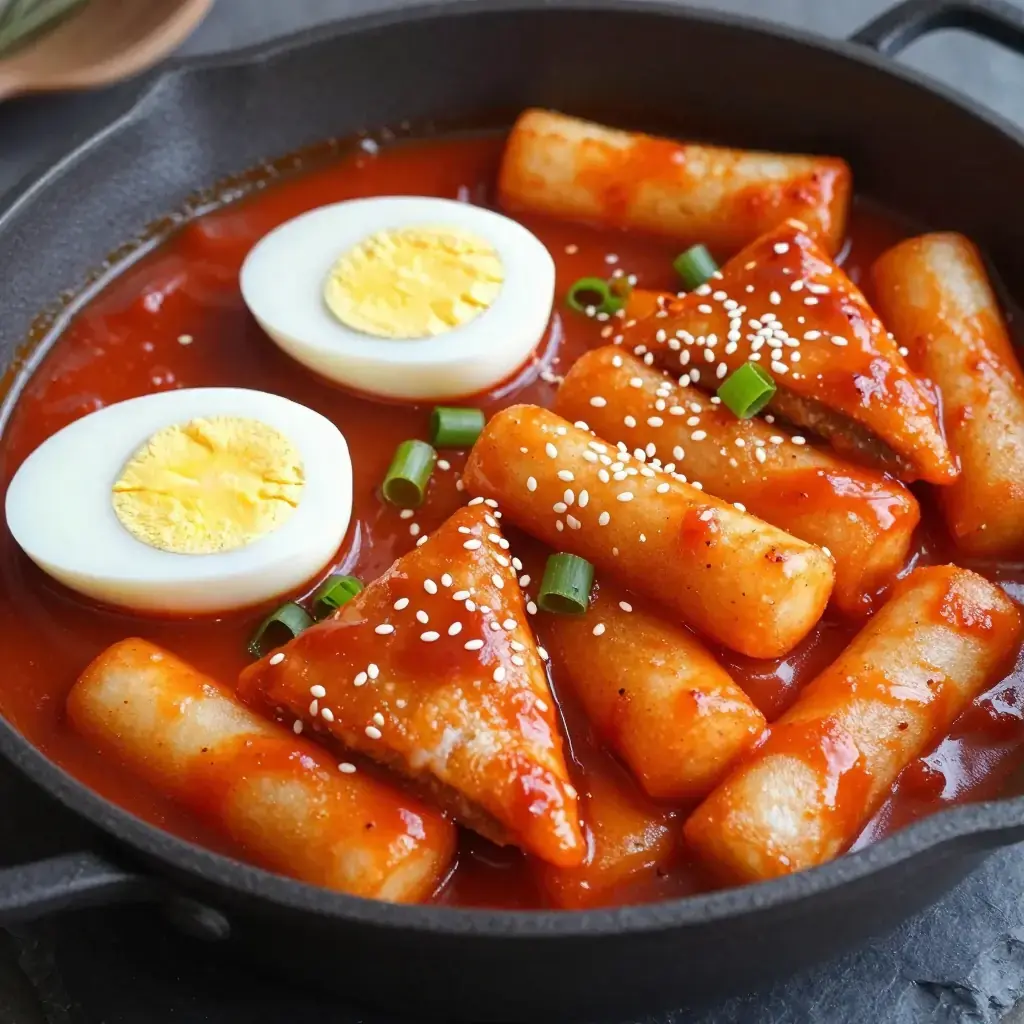
Tags
- authentic
- comfort-food
- from-input
- korean
- late-night
- quick-and-easy
- rice
- snack