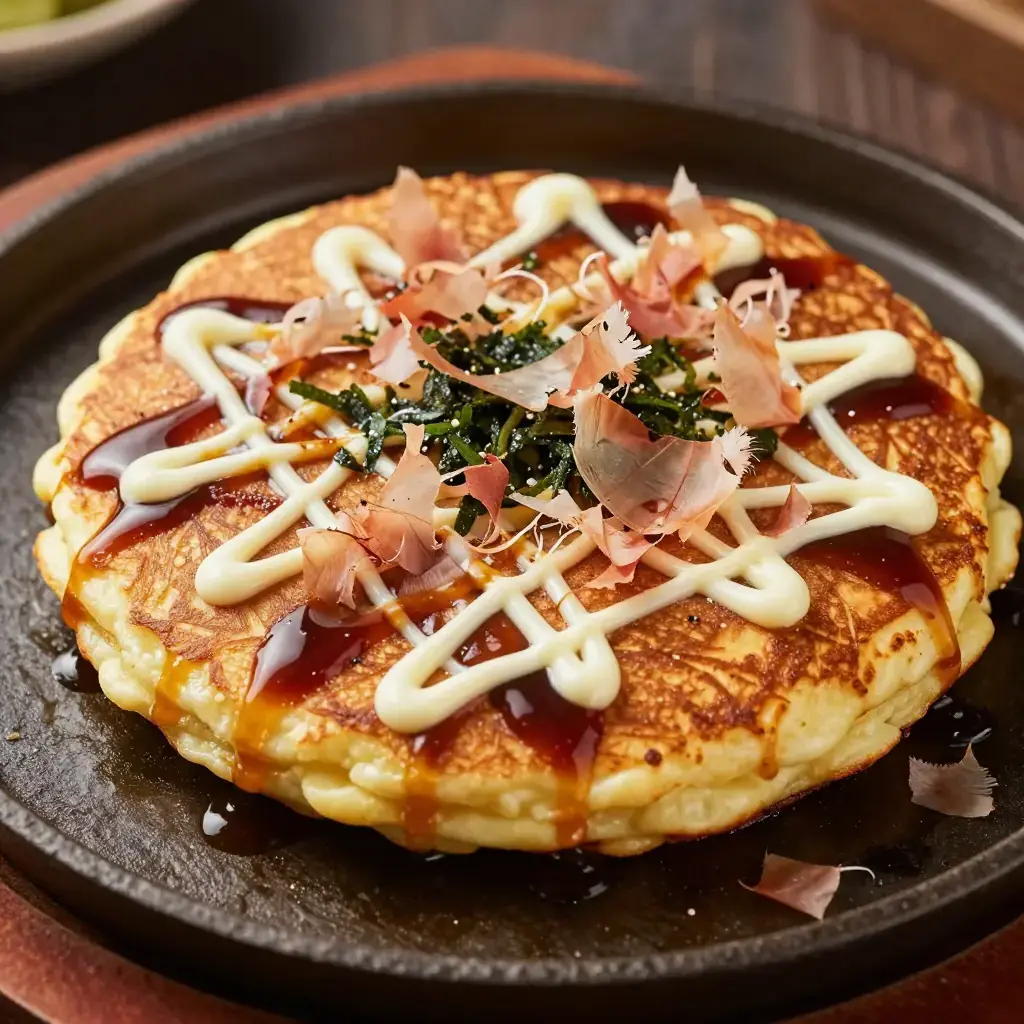
Okonomiyaki
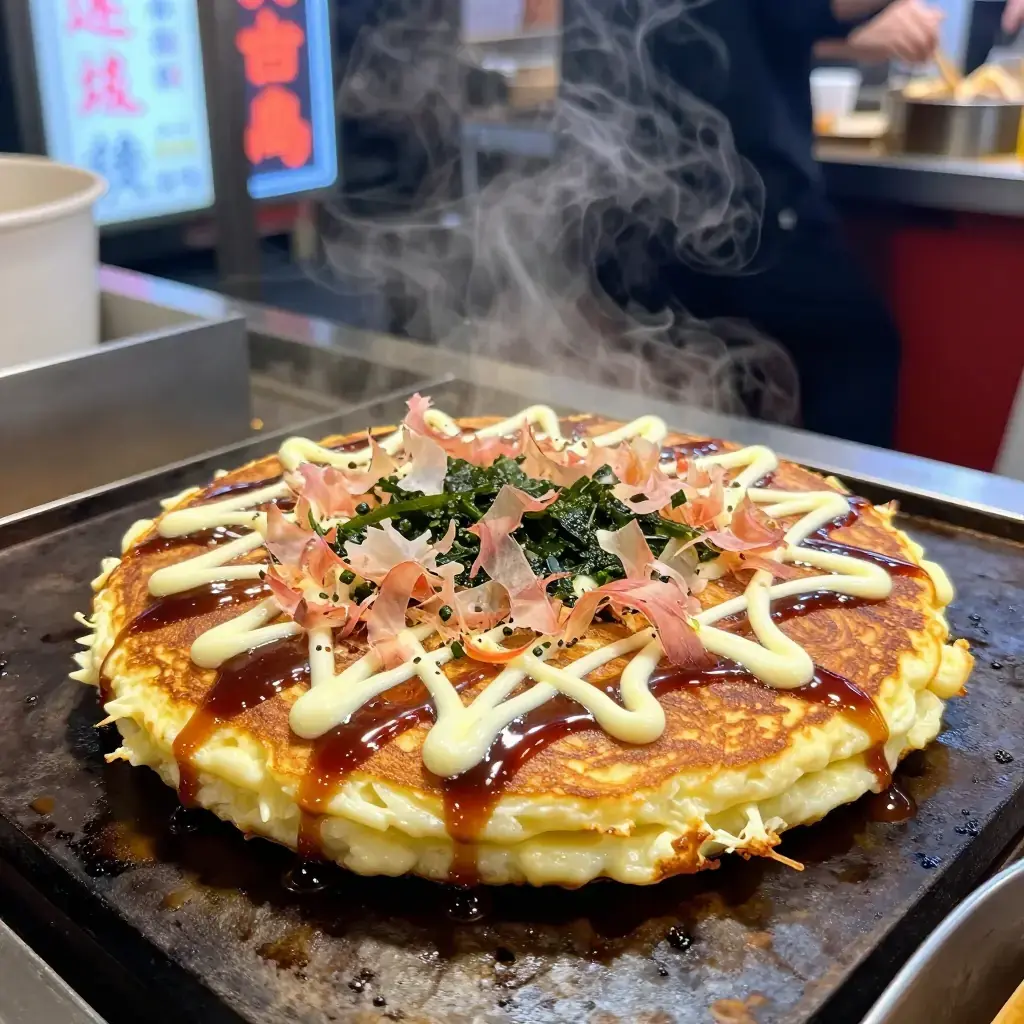
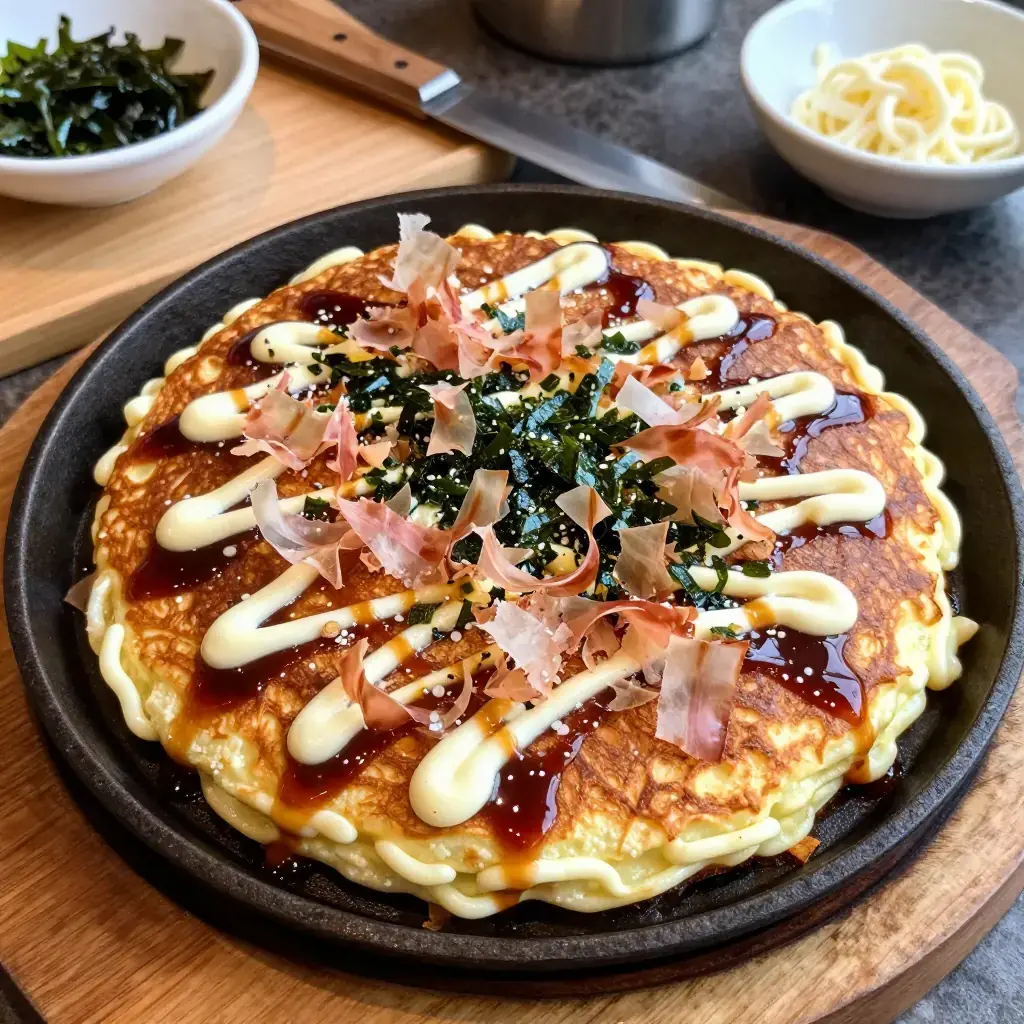
Okonomiyaki translates literally as "grilled as you like it" — a name that captures the free-form, improvisational spirit of this Osaka street food. Equal parts savory pancake and social occasion, okonomiyaki is cooked on iron griddles (teppan) at restaurant tables where diners cook their own. The Osaka version folds everything into the batter together, while the Hiroshima version layers ingredients with noodles. Both are covered in a rich brown okonomiyaki sauce, Japanese mayonnaise, bonito flakes that wave in the heat, and dried green aonori seaweed. It is the definitive Japanese late-night comfort food.
Serves: 4
Ingredients
For the batter:
- 200g (1.5 cups) plain (all-purpose) flour
- 1 tsp baking powder
- 250ml (1 cup) dashi stock (or water)
- 4 large eggs
- 400g (14 oz) green cabbage, very finely shredded
- 4 spring onions, sliced
- 200g (7 oz) thinly sliced pork belly or bacon
- Vegetable oil for cooking
To top:
- Okonomiyaki sauce (or Worcestershire sauce mixed with ketchup)
- Japanese Kewpie mayonnaise
- Katsuobushi (bonito flakes)
- Aonori (dried green seaweed flakes)
- Beni shoga (pickled red ginger)
Instructions
- Whisk together flour, baking powder, dashi, and eggs until a smooth batter forms. Fold in the shredded cabbage and spring onions. The batter will be very thick — this is correct.
- Heat a griddle or large non-stick frying pan over medium-high heat with a thin film of oil.
- Pour a quarter of the batter into the pan, shaping into a round roughly 20cm (8 inches) across. Lay 3-4 slices of pork belly across the top.
- Cook for 4-5 minutes until the bottom is deeply golden. Carefully slide a spatula underneath and flip in one confident movement. Cook for another 4-5 minutes until cooked through and the pork is crispy.
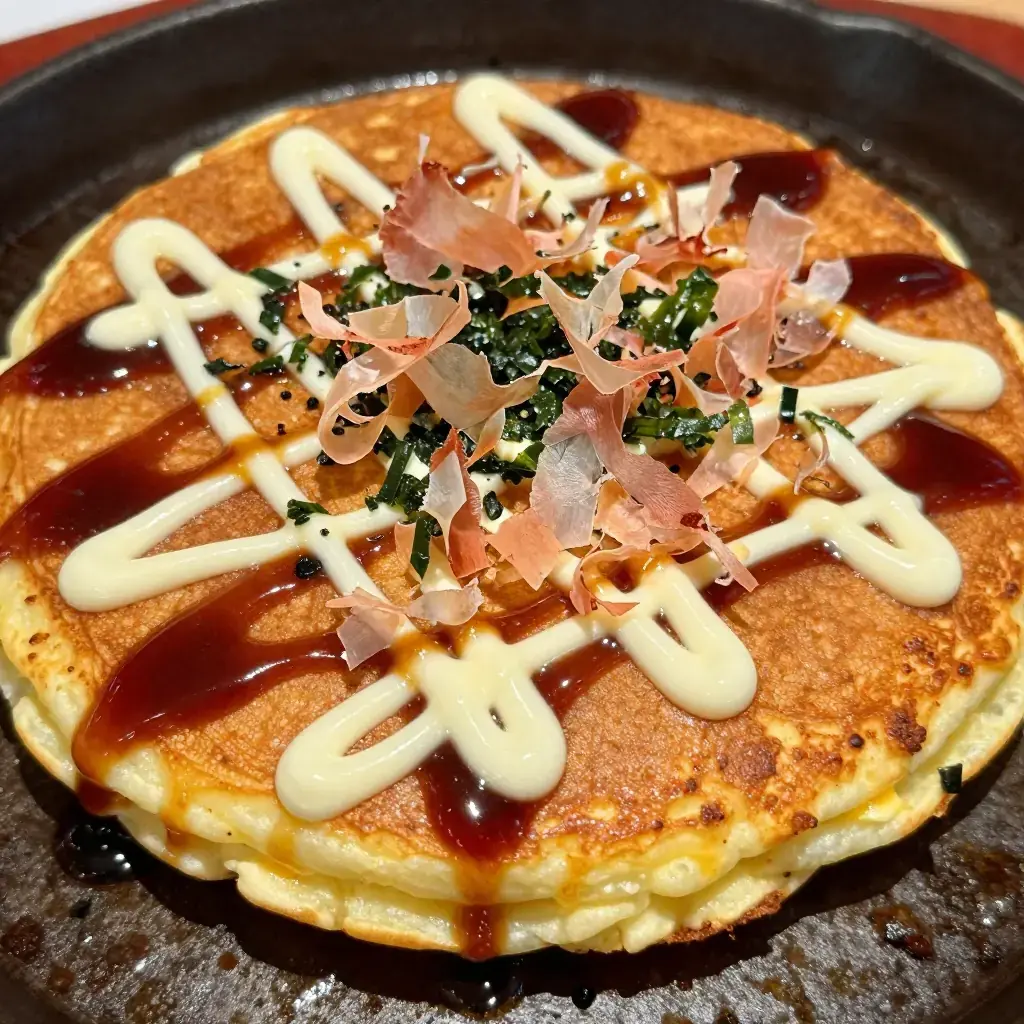
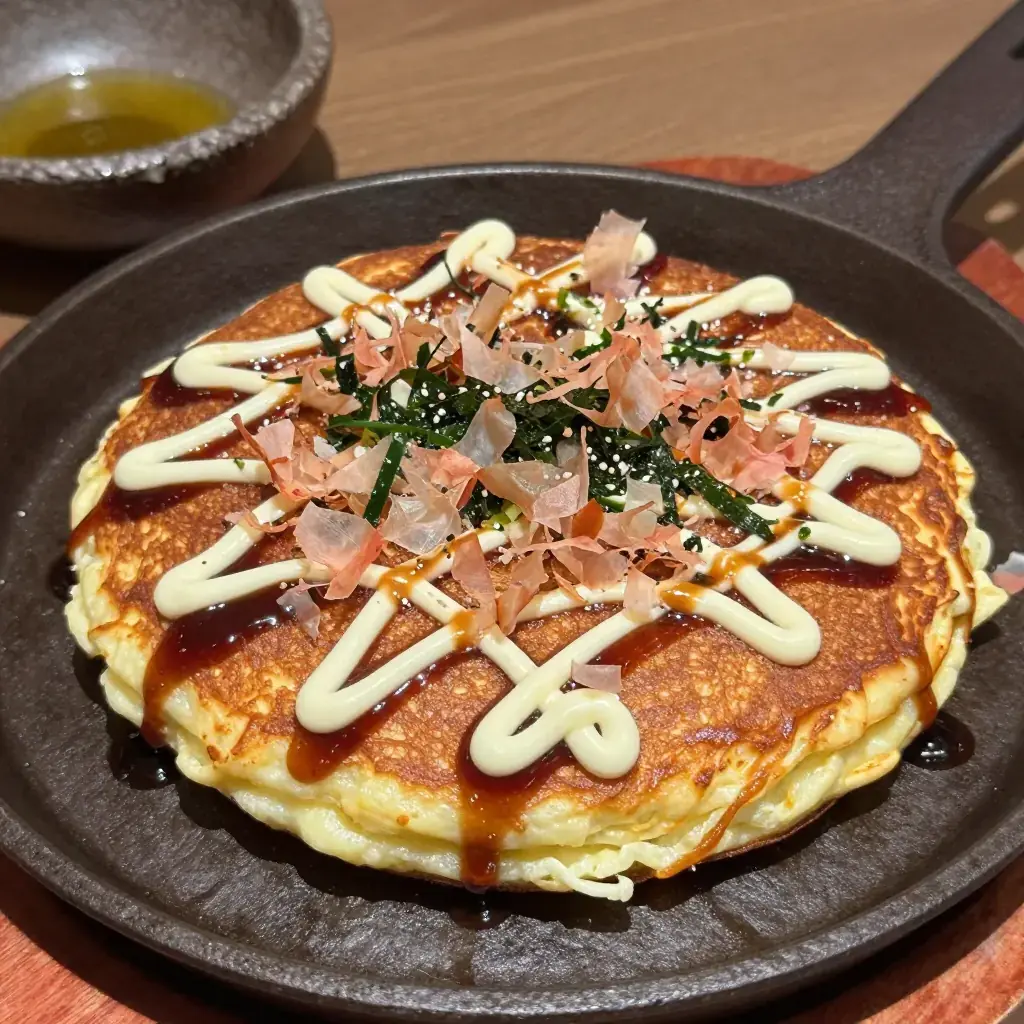
- Transfer to a plate, pork side up. Generously brush with okonomiyaki sauce, then drizzle Kewpie mayo in zigzag lines. Scatter over bonito flakes, aonori, and a pinch of beni shoga.
- Repeat with remaining batter and serve immediately while hot.
Cook's Notes: Grating a small amount of nagaimo (Japanese mountain yam) into the batter creates an exceptionally light, fluffy texture — add about 60g (2 oz) if available. The flip is the trickiest part; use a wide spatula and be decisive. Leftover okonomiyaki reheats well in a dry pan.
All Revisions
generated
# Okonomiyaki Okonomiyaki translates literally as "grilled as you like it" — a name that captures the free-form, improvisational spirit of this Osaka street food. Equal parts savory pancake and social occasion, okonomiyaki is cooked on iron griddles (teppan) at restaurant tables where diners cook their own. The Osaka version folds everything into the batter together, while the Hiroshima version layers ingredients with noodles. Both are covered in a rich brown okonomiyaki sauce, Japanese mayonnaise, bonito flakes that wave in the heat, and dried green aonori seaweed. It is the definitive Japanese late-night comfort food. Serves: 4 ## Ingredients **For the batter:** - 200g (1.5 cups) plain (all-purpose) flour - 1 tsp baking powder - 250ml (1 cup) dashi stock (or water) - 4 large eggs - 400g (14 oz) green cabbage, very finely shredded - 4 spring onions, sliced - 200g (7 oz) thinly sliced pork belly or bacon - Vegetable oil for cooking **To top:** - Okonomiyaki sauce (or Worcestershire sauce mixed with ketchup) - Japanese Kewpie mayonnaise - Katsuobushi (bonito flakes) - Aonori (dried green seaweed flakes) - Beni shoga (pickled red ginger) ## Instructions 1. Whisk together flour, baking powder, dashi, and eggs until a smooth batter forms. Fold in the shredded cabbage and spring onions. The batter will be very thick — this is correct. 2. Heat a griddle or large non-stick frying pan over medium-high heat with a thin film of oil. 3. Pour a quarter of the batter into the pan, shaping into a round roughly 20cm (8 inches) across. Lay 3-4 slices of pork belly across the top. 4. Cook for 4-5 minutes until the bottom is deeply golden. Carefully slide a spatula underneath and flip in one confident movement. Cook for another 4-5 minutes until cooked through and the pork is crispy. 5. Transfer to a plate, pork side up. Generously brush with okonomiyaki sauce, then drizzle Kewpie mayo in zigzag lines. Scatter over bonito flakes, aonori, and a pinch of beni shoga. 6. Repeat with remaining batter and serve immediately while hot. **Cook's Notes:** Grating a small amount of nagaimo (Japanese mountain yam) into the batter creates an exceptionally light, fluffy texture — add about 60g (2 oz) if available. The flip is the trickiest part; use a wide spatula and be decisive. Leftover okonomiyaki reheats well in a dry pan.Images
Tags
- authentic
- comfort-food
- dinner
- from-input
- japanese
- late-night
- quick-and-easy
- snack