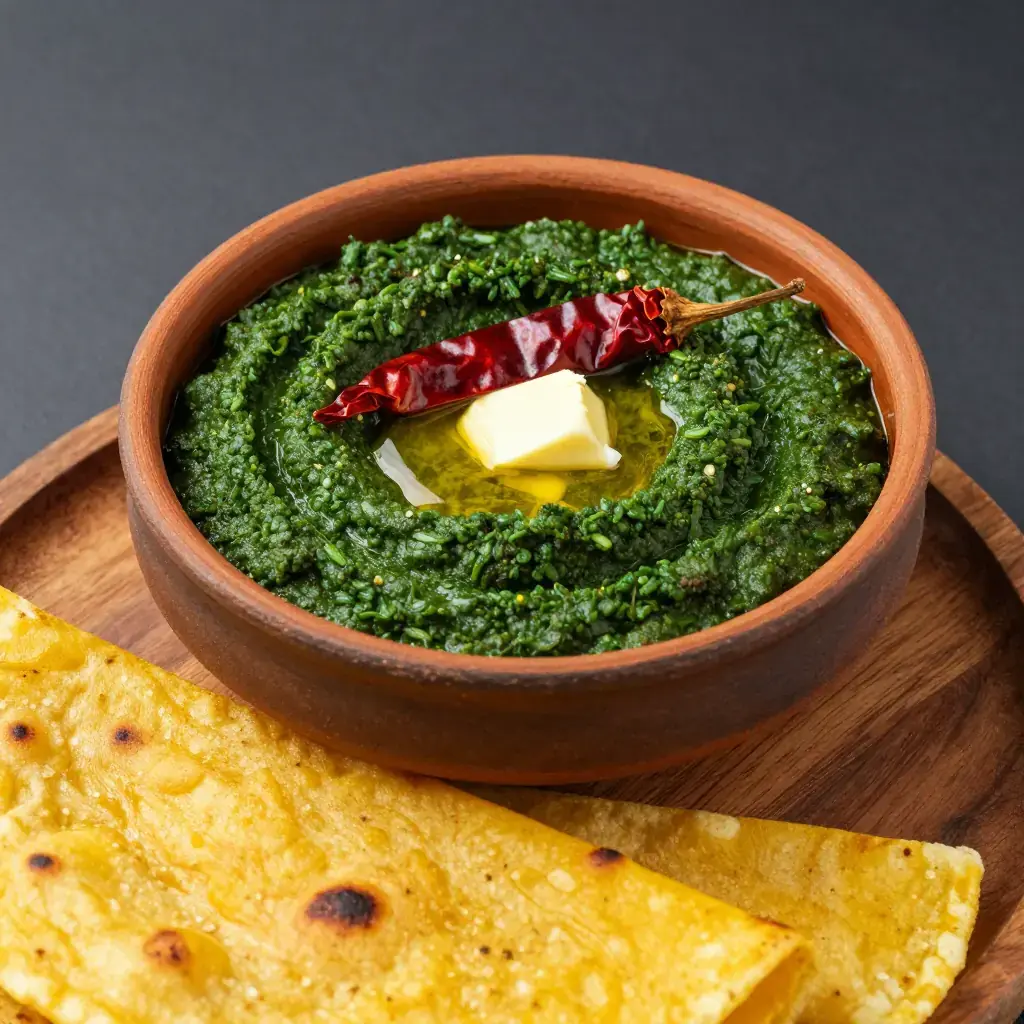
Sarson da Saag
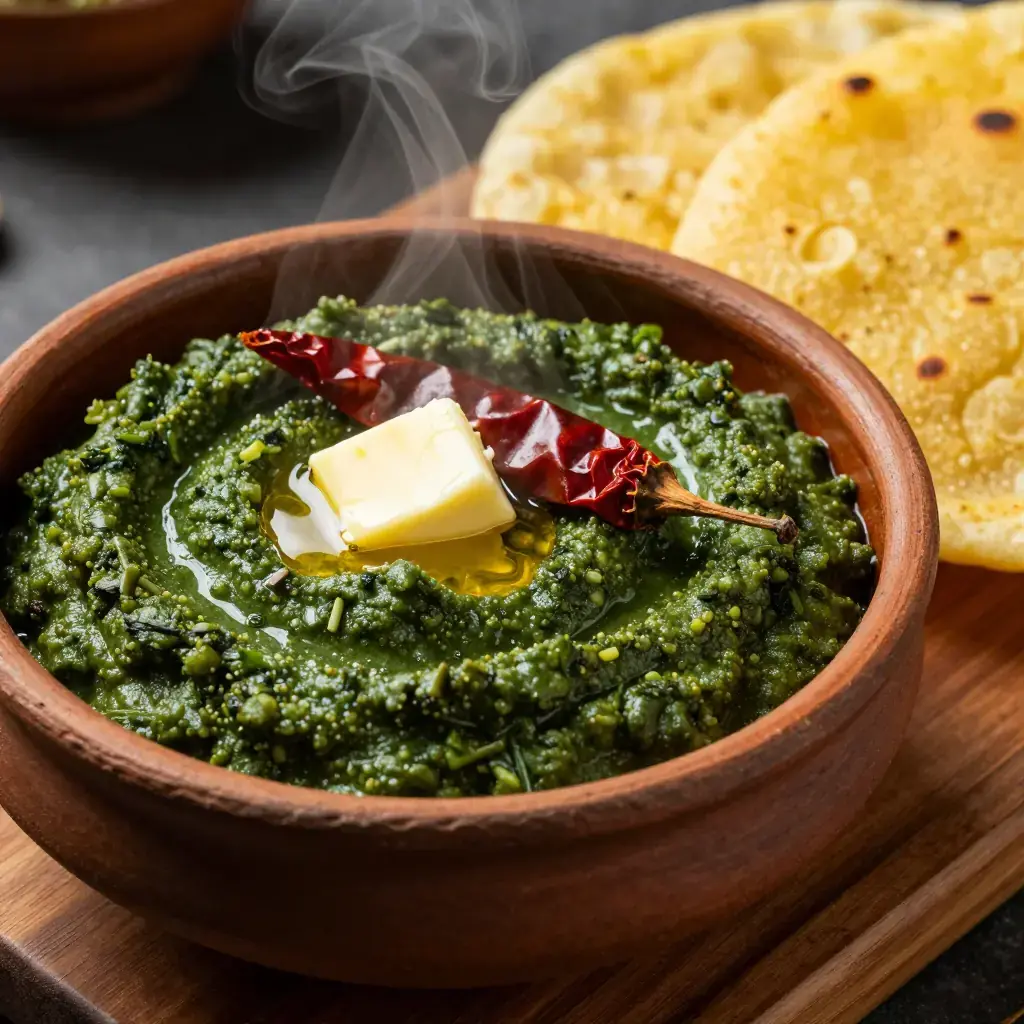
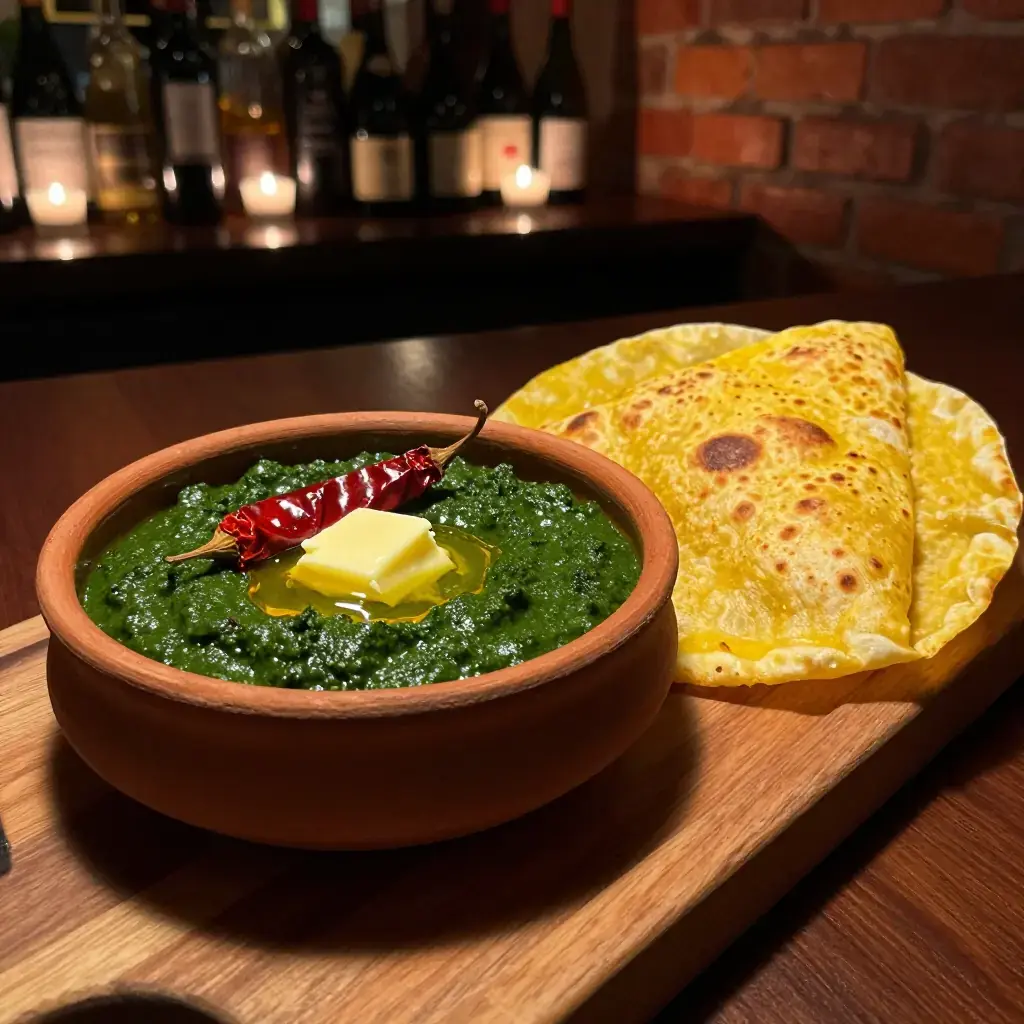
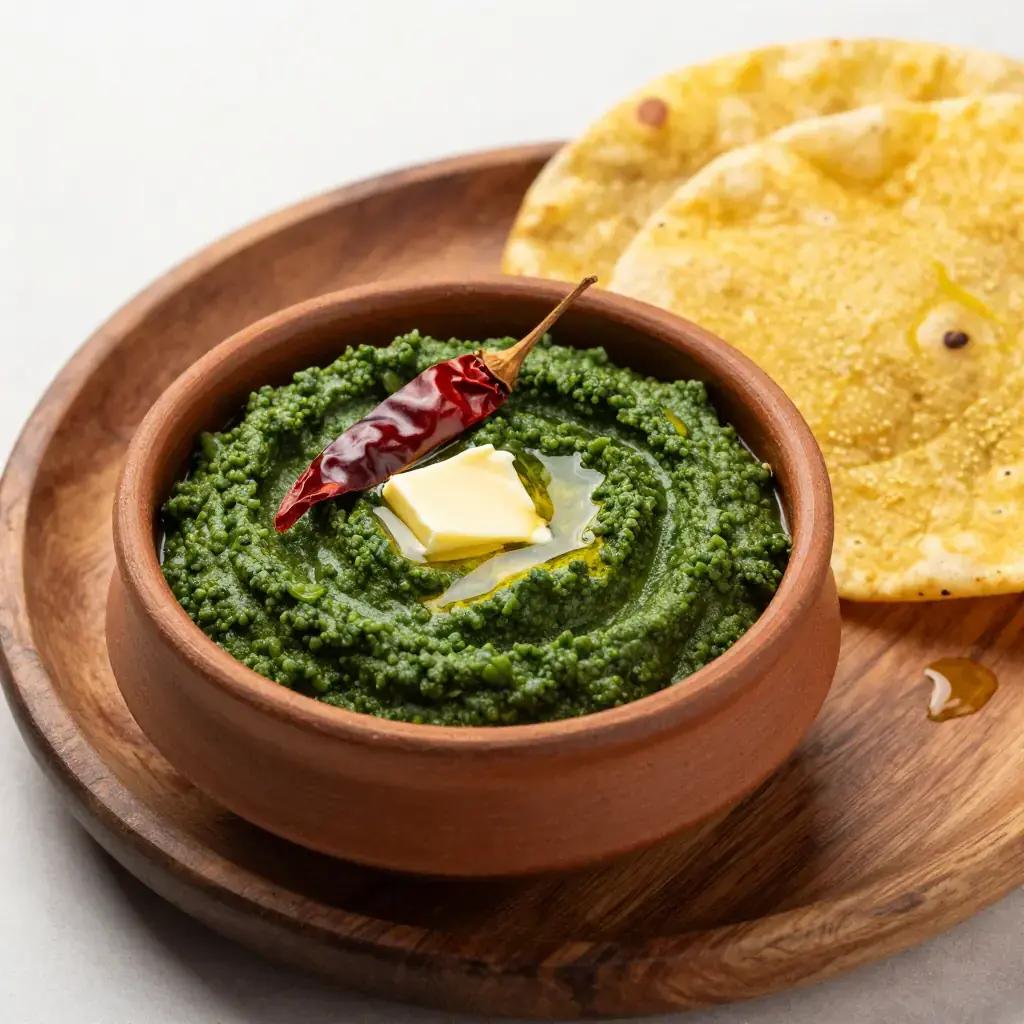
Sarson da saag is the soul food of the Punjab, a slow-cooked green purée of mustard leaves, spinach, and bathua (pigweed) eaten through the winter months when mustard grows in vast yellow fields across the region. Eaten with makki di roti (cornmeal flatbread) and a knob of white butter, it is one of the great cold-weather peasant dishes of the world. The bitterness of mustard leaves is its defining character.
Serves: 4
Ingredients
- 600g (1.3 lb) fresh mustard leaves (sarson), roughly chopped
- 200g (7 oz) fresh spinach
- 100g (3½ oz) bathua (pigweed/lamb's quarters) or extra spinach
- 4 tbsp makki ka atta (maize/cornmeal flour)
- 2 tbsp ghee
- 1 medium onion, finely chopped
- 1 tbsp ginger, finely grated
- 5 garlic cloves, minced
- 2 green chillies, chopped
- 1 tsp cumin seeds
- Salt to taste
To finish:
- 2 tbsp white butter or extra ghee
- 1 tsp red chilli powder (optional)
Instructions
- Cook greens (30 minutes): Place mustard leaves, spinach, and bathua in a large pot with 200ml (¾ cup) water. Bring to a boil, then reduce heat and simmer covered for 25–30 minutes until completely wilted and tender. Add salt.
- Blend: Use an immersion blender to roughly blend the greens — the texture should be coarse, not smooth. Stir in maize flour to thicken, cook a further 5 minutes stirring constantly.
- Temper (8 minutes): Heat ghee in a separate pan. Fry cumin seeds 30 seconds. Add onion and cook 8 minutes until golden. Add ginger, garlic, and green chillies; fry 2 more minutes.
- Combine: Pour tempering into the greens. Stir well and simmer together 5 minutes.
- Serve: Top with a generous knob of white butter. Serve with makki di roti or whole wheat roti.
Cook's Notes: Mustard leaves are genuinely bitter and this is intentional — do not try to blanch out the bitterness. The maize flour is essential for thickening and adds its own earthy sweetness. Sarson da saag reheats well and is even better the next day.
All Revisions
generated
# Sarson da Saag Sarson da saag is the soul food of the Punjab, a slow-cooked green purée of mustard leaves, spinach, and bathua (pigweed) eaten through the winter months when mustard grows in vast yellow fields across the region. Eaten with makki di roti (cornmeal flatbread) and a knob of white butter, it is one of the great cold-weather peasant dishes of the world. The bitterness of mustard leaves is its defining character. Serves: 4 ## Ingredients - 600g (1.3 lb) fresh mustard leaves (sarson), roughly chopped - 200g (7 oz) fresh spinach - 100g (3½ oz) bathua (pigweed/lamb's quarters) or extra spinach - 4 tbsp makki ka atta (maize/cornmeal flour) - 2 tbsp ghee - 1 medium onion, finely chopped - 1 tbsp ginger, finely grated - 5 garlic cloves, minced - 2 green chillies, chopped - 1 tsp cumin seeds - Salt to taste **To finish:** - 2 tbsp white butter or extra ghee - 1 tsp red chilli powder (optional) ## Instructions 1. **Cook greens (30 minutes):** Place mustard leaves, spinach, and bathua in a large pot with 200ml (¾ cup) water. Bring to a boil, then reduce heat and simmer covered for 25–30 minutes until completely wilted and tender. Add salt. 2. **Blend:** Use an immersion blender to roughly blend the greens — the texture should be coarse, not smooth. Stir in maize flour to thicken, cook a further 5 minutes stirring constantly. 3. **Temper (8 minutes):** Heat ghee in a separate pan. Fry cumin seeds 30 seconds. Add onion and cook 8 minutes until golden. Add ginger, garlic, and green chillies; fry 2 more minutes. 4. **Combine:** Pour tempering into the greens. Stir well and simmer together 5 minutes. 5. **Serve:** Top with a generous knob of white butter. Serve with makki di roti or whole wheat roti. **Cook's Notes:** Mustard leaves are genuinely bitter and this is intentional — do not try to blanch out the bitterness. The maize flour is essential for thickening and adds its own earthy sweetness. Sarson da saag reheats well and is even better the next day.Images

Tags
- authentic
- comfort-food
- dinner
- from-input
- healthy
- heirloom
- indian-north
- vegetarian
- winter