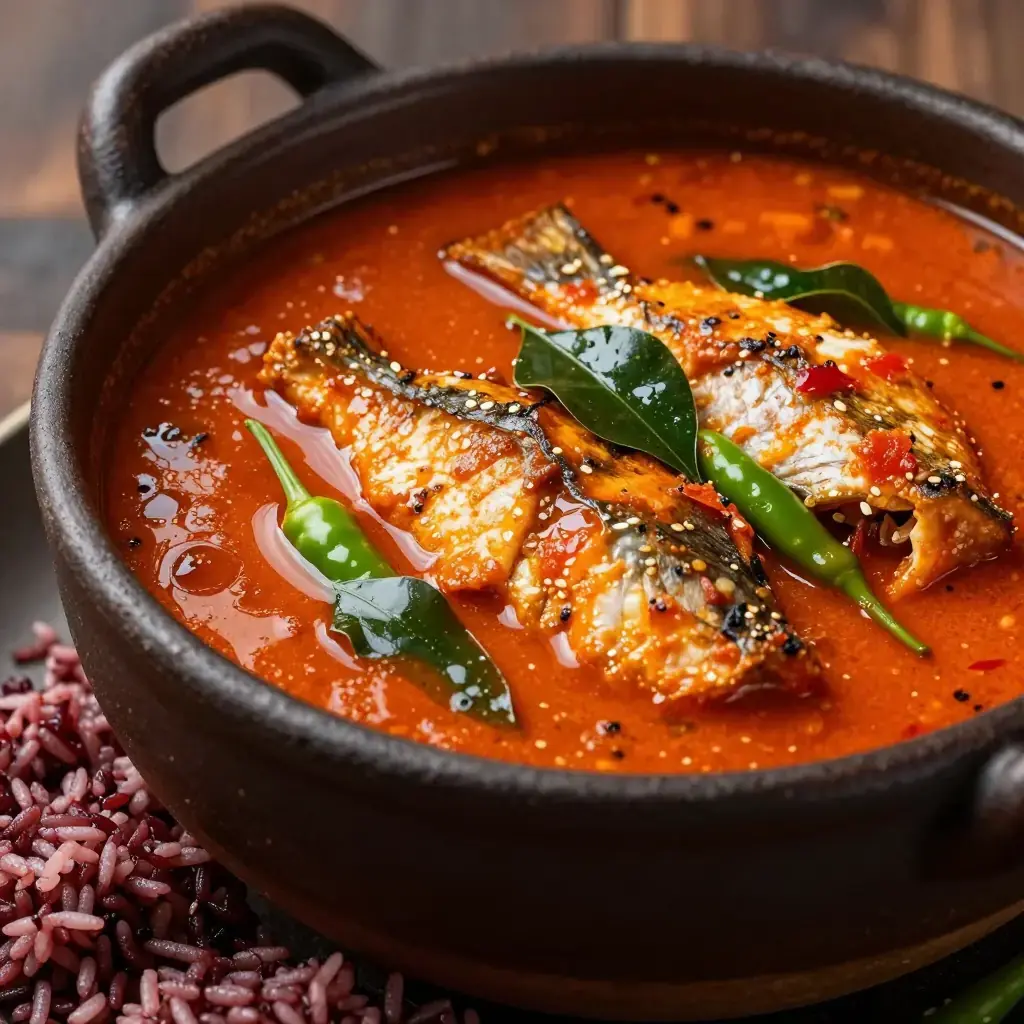
Kerala Fish Curry
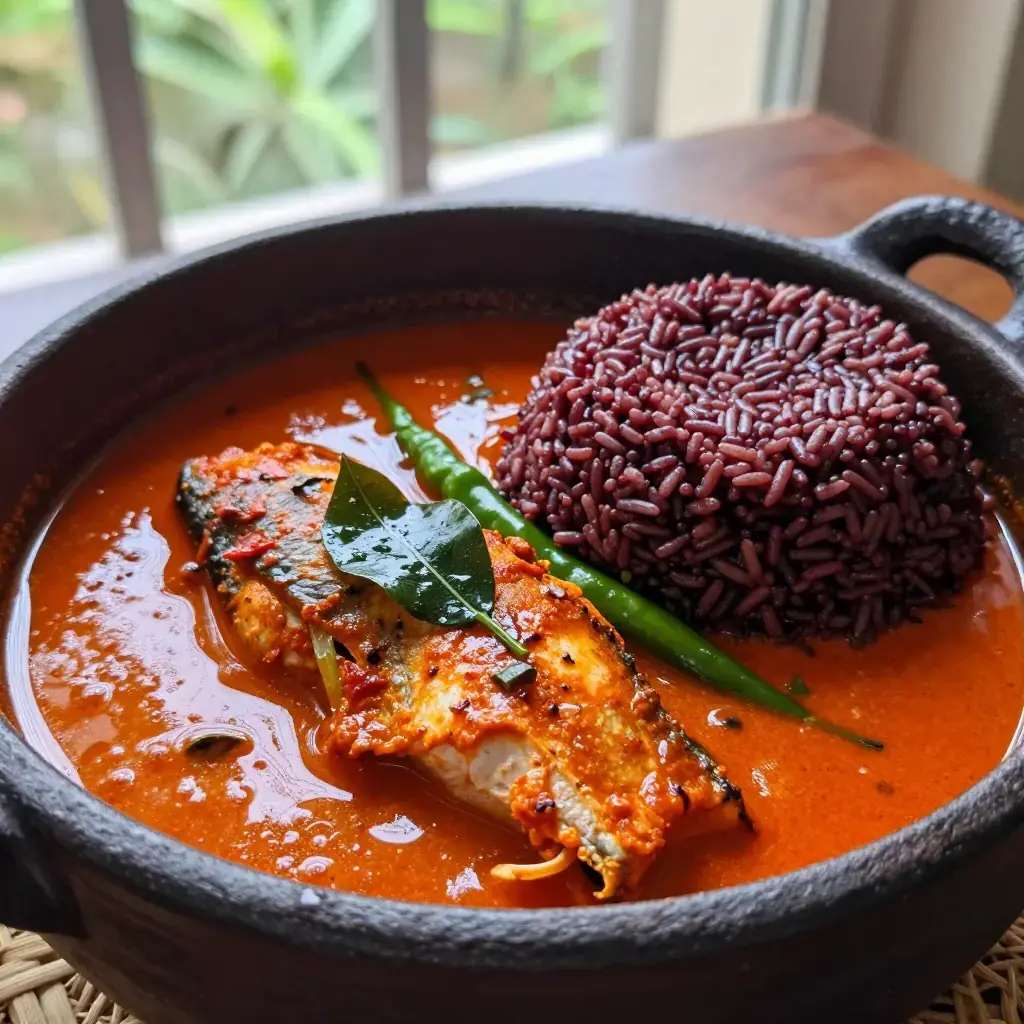
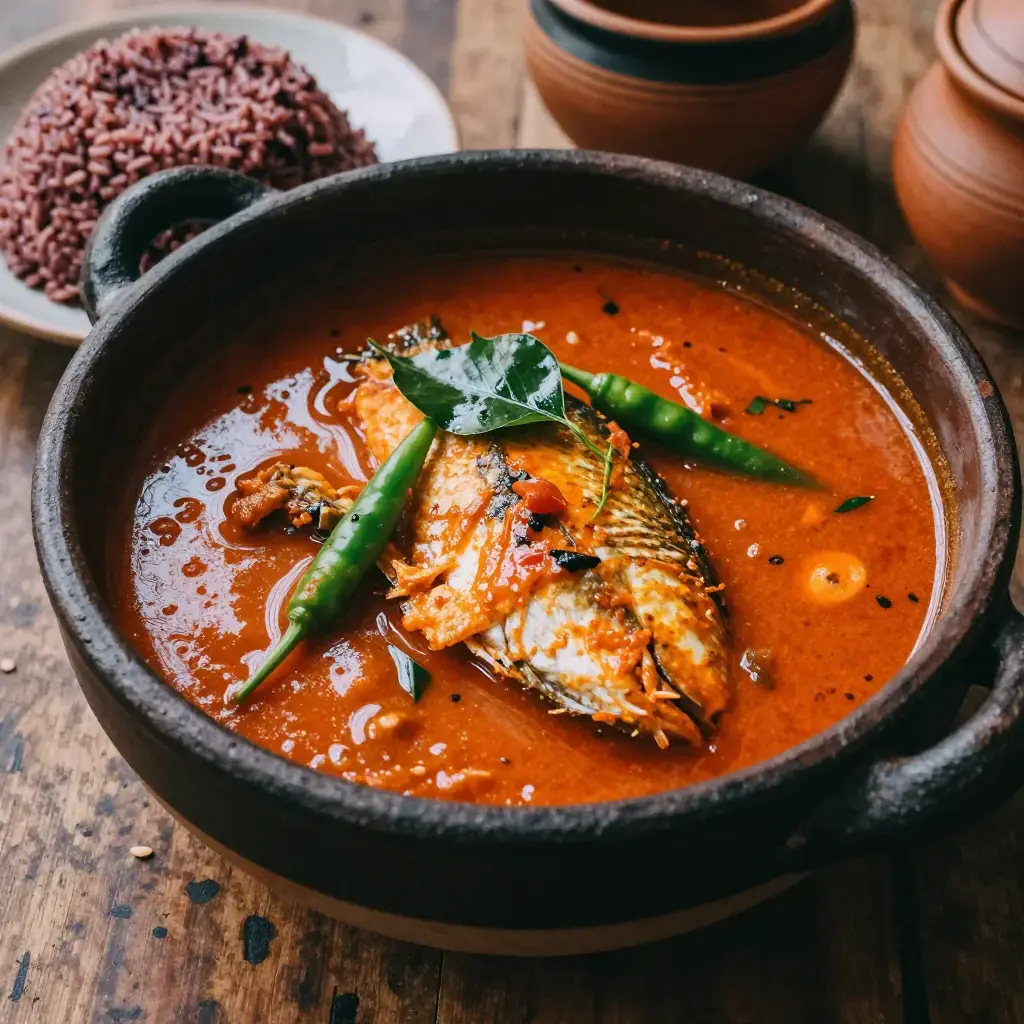
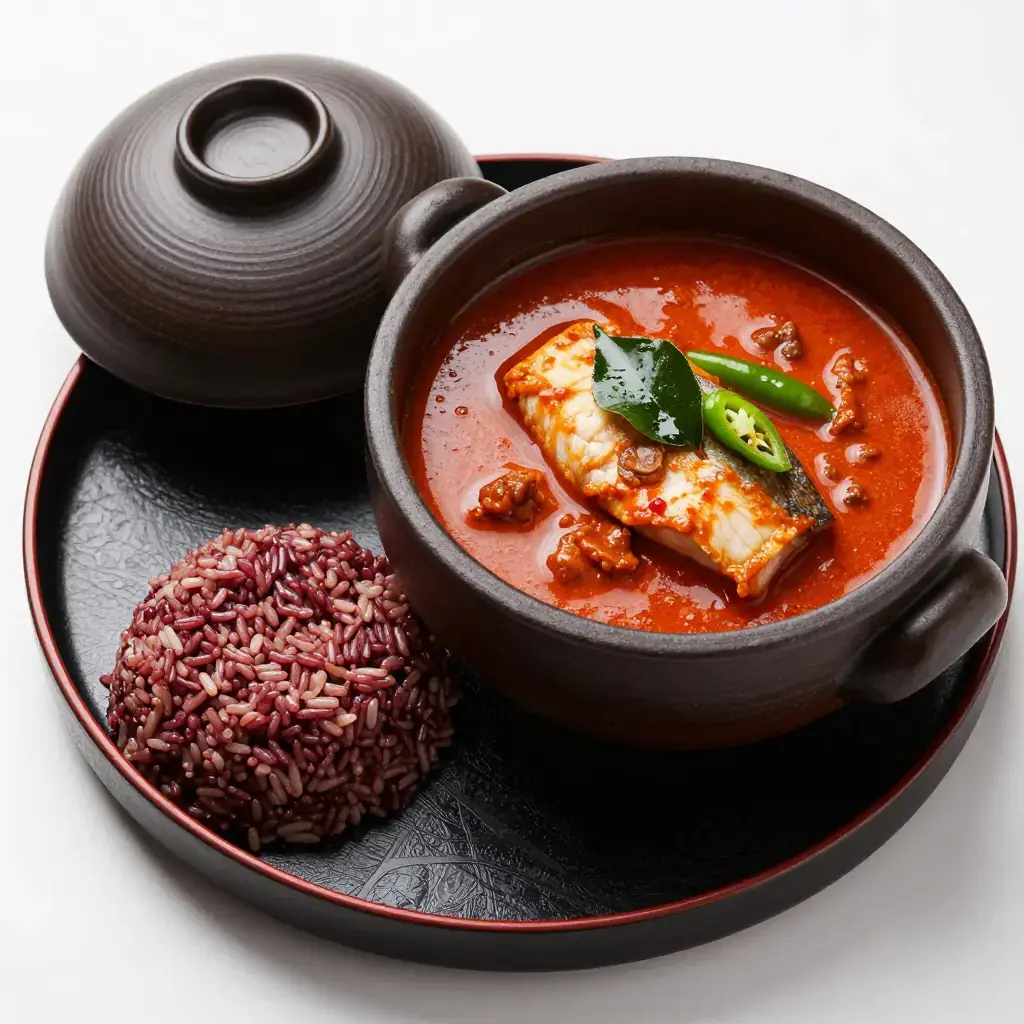
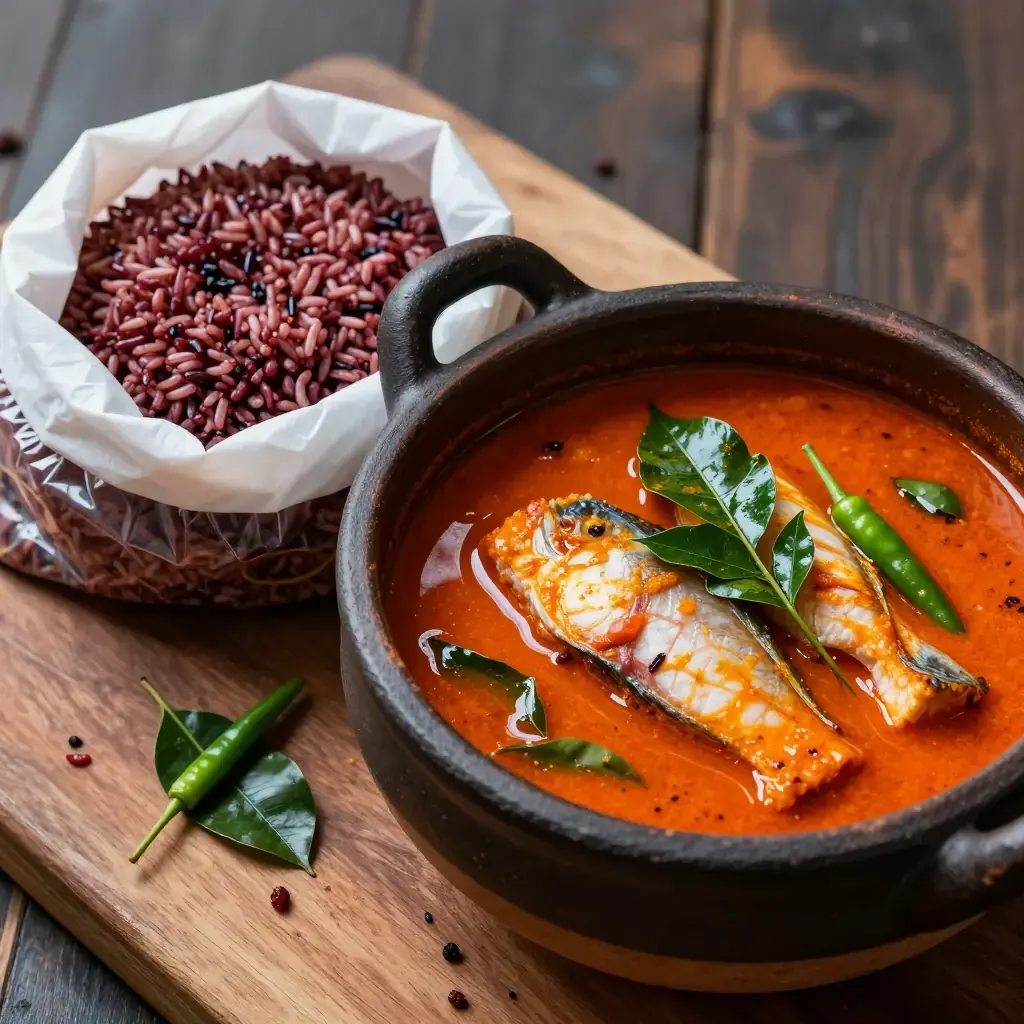
Meen curry from Kerala's coastal belt is one of India's most distinctive fish preparations, cooked in an earthenware pot called a manchatti that imparts a subtle mineral quality to the gravy. The defining flavours are Kodampuli (Gamboge/Malabar tamarind), ground coconut, and the slow-built heat of Kashmiri and bird's-eye chillies. Traditionally made with kingfish or sardines, it improves dramatically overnight.
Serves: 4
Ingredients
- 700g (1½ lb) firm fish steaks (kingfish, mackerel, or snapper), cut into 4cm pieces
- 4 pieces Kodampuli (Malabar tamarind) or 1 tsp kokum
- 100ml (7 tbsp) hot water
- 2 tbsp coconut oil
- 1 tsp mustard seeds
- 20 fresh curry leaves
- 2 medium onions, finely sliced
- 1 tbsp fresh ginger, julienned
- 6 garlic cloves, sliced
- 3 green chillies, slit
- 2 tbsp Kashmiri chilli powder
- 1 tsp coriander powder
- ½ tsp turmeric
- 200ml (¾ cup) coconut milk
- Salt to taste
Instructions
- Soak Kodampuli (15 minutes): Soak the tamarind pieces in 100ml hot water. Set aside.
- Build the base (10 minutes): Heat coconut oil in a deep pan or earthenware pot over medium heat. Splutter mustard seeds, then fry curry leaves 20 seconds. Add sliced onions and cook 8–10 minutes until golden at the edges.
- Aromatics (3 minutes): Add ginger, garlic, and green chillies. Fry 2 minutes. Add Kashmiri chilli powder, coriander, and turmeric. Fry 1 minute, adding a splash of water to prevent burning.
- Add liquids: Pour in the soaked Kodampuli along with its soaking water. Add coconut milk and 100ml (7 tbsp) plain water. Bring to a gentle simmer.
- Cook fish (12–15 minutes): Slide fish pieces into the simmering gravy. Do not stir — shake the pan gently. Cook uncovered 12–15 minutes until the fish is cooked through and the oil floats to the surface. Season with salt.
- Rest: Allow to rest 10 minutes before serving over steamed red rice.
Cook's Notes: Kodampuli cannot be substituted with regular tamarind — the flavour profile is entirely different. If unavailable, use kokum. The curry improves dramatically the next day as the flavours meld.
All Revisions
generated
# Kerala Fish Curry Meen curry from Kerala's coastal belt is one of India's most distinctive fish preparations, cooked in an earthenware pot called a manchatti that imparts a subtle mineral quality to the gravy. The defining flavours are Kodampuli (Gamboge/Malabar tamarind), ground coconut, and the slow-built heat of Kashmiri and bird's-eye chillies. Traditionally made with kingfish or sardines, it improves dramatically overnight. Serves: 4 ## Ingredients - 700g (1½ lb) firm fish steaks (kingfish, mackerel, or snapper), cut into 4cm pieces - 4 pieces Kodampuli (Malabar tamarind) or 1 tsp kokum - 100ml (7 tbsp) hot water - 2 tbsp coconut oil - 1 tsp mustard seeds - 20 fresh curry leaves - 2 medium onions, finely sliced - 1 tbsp fresh ginger, julienned - 6 garlic cloves, sliced - 3 green chillies, slit - 2 tbsp Kashmiri chilli powder - 1 tsp coriander powder - ½ tsp turmeric - 200ml (¾ cup) coconut milk - Salt to taste ## Instructions 1. **Soak Kodampuli (15 minutes):** Soak the tamarind pieces in 100ml hot water. Set aside. 2. **Build the base (10 minutes):** Heat coconut oil in a deep pan or earthenware pot over medium heat. Splutter mustard seeds, then fry curry leaves 20 seconds. Add sliced onions and cook 8–10 minutes until golden at the edges. 3. **Aromatics (3 minutes):** Add ginger, garlic, and green chillies. Fry 2 minutes. Add Kashmiri chilli powder, coriander, and turmeric. Fry 1 minute, adding a splash of water to prevent burning. 4. **Add liquids:** Pour in the soaked Kodampuli along with its soaking water. Add coconut milk and 100ml (7 tbsp) plain water. Bring to a gentle simmer. 5. **Cook fish (12–15 minutes):** Slide fish pieces into the simmering gravy. Do not stir — shake the pan gently. Cook uncovered 12–15 minutes until the fish is cooked through and the oil floats to the surface. Season with salt. 6. **Rest:** Allow to rest 10 minutes before serving over steamed red rice. **Cook's Notes:** Kodampuli cannot be substituted with regular tamarind — the flavour profile is entirely different. If unavailable, use kokum. The curry improves dramatically the next day as the flavours meld.Images
Tags
- authentic
- dairy-free
- dinner
- from-input
- gluten-free
- indian-south
- one-pot
- pescatarian
- seafood