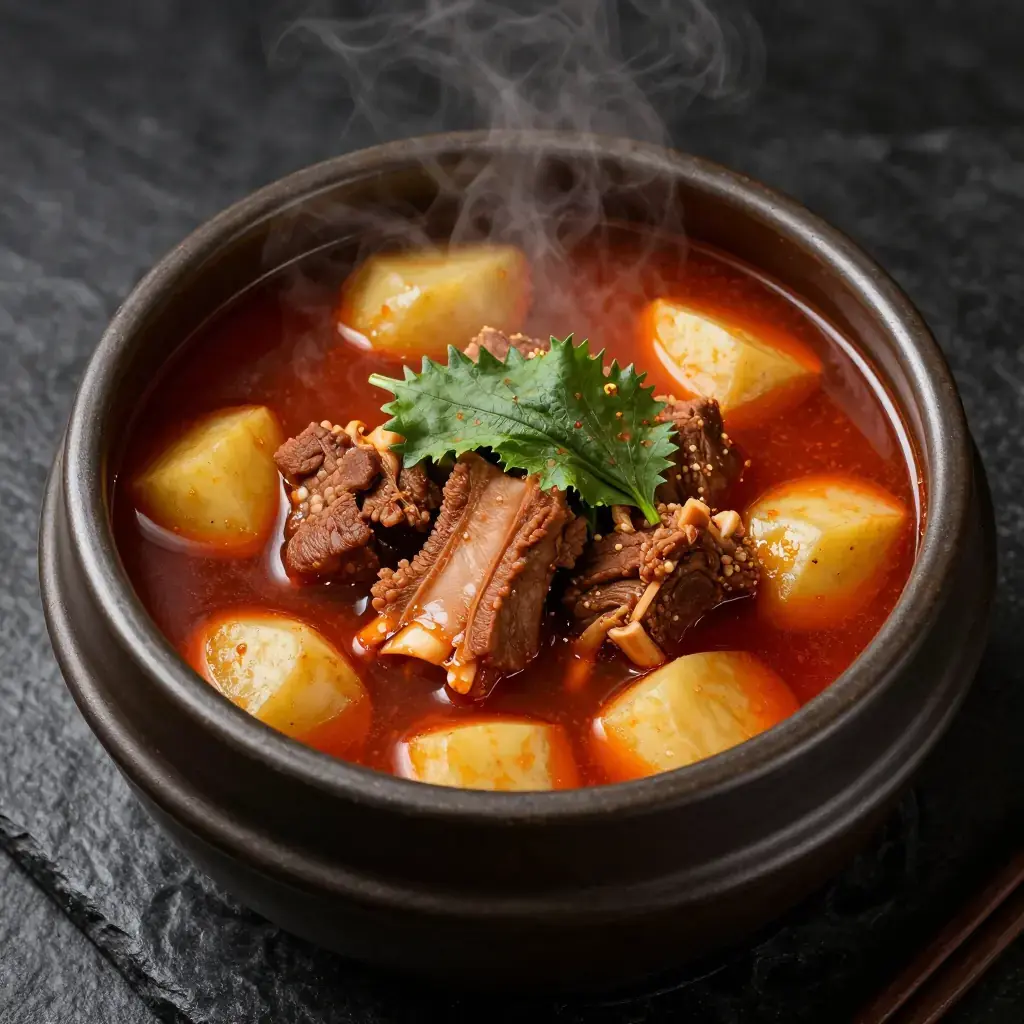
Gamjatang
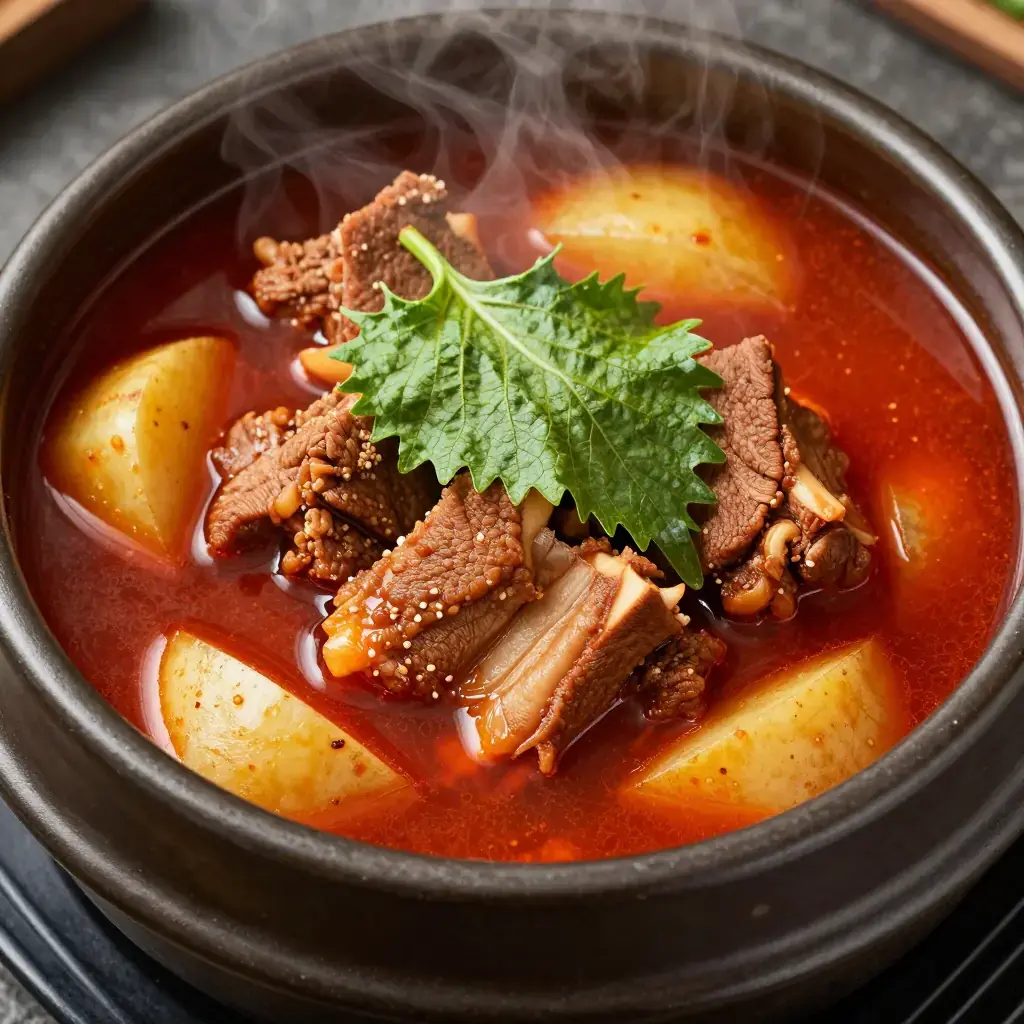
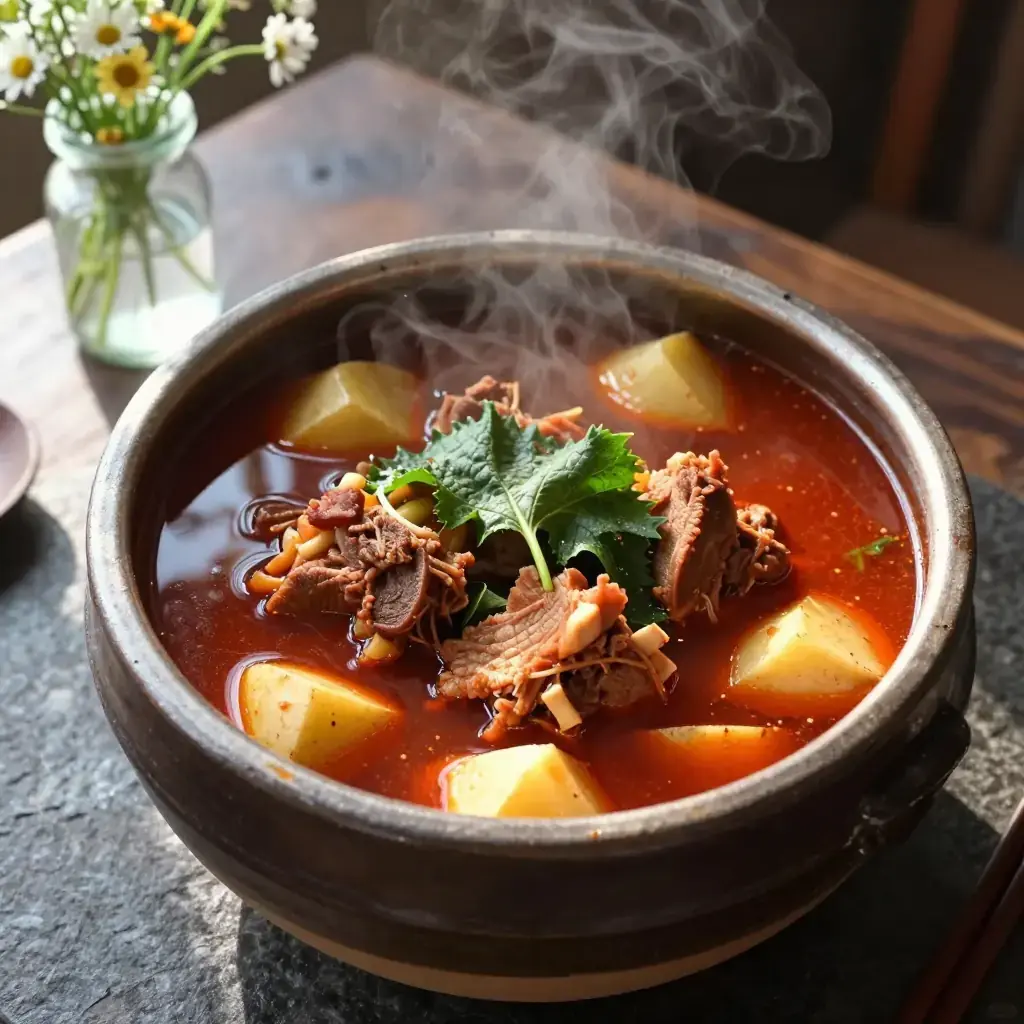
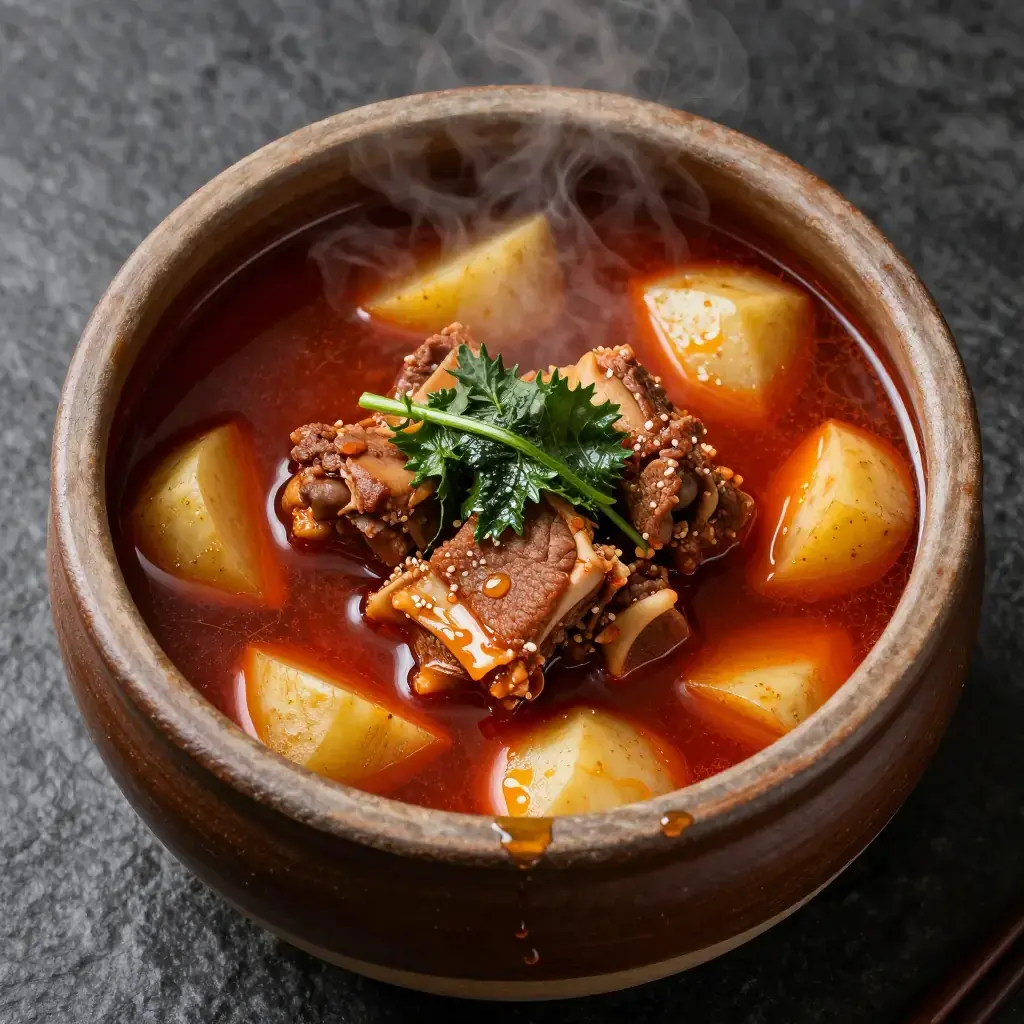
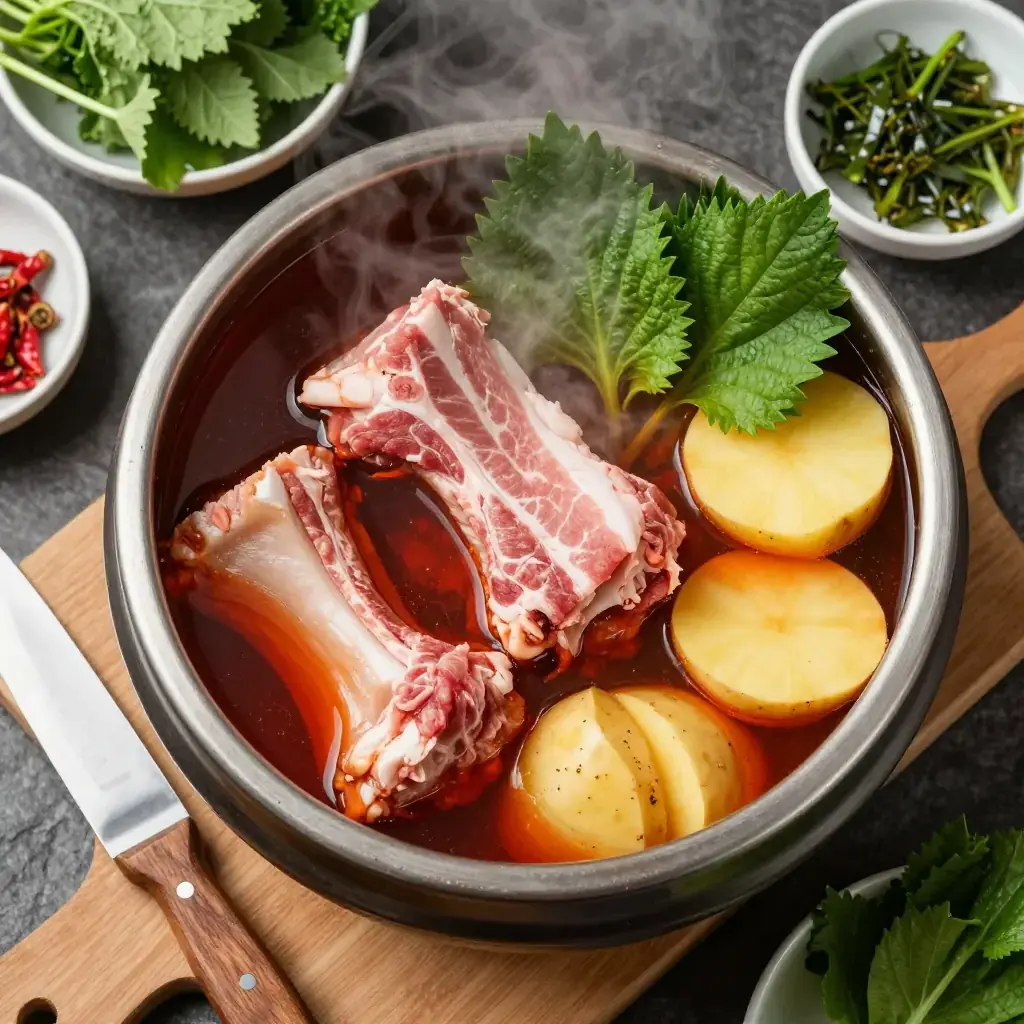
Gamjatang is a bold, spicy pork neck bone stew with potatoes that has sustained Korean laborers and late-night revelers alike for generations. Despite the name — gamja means potato — the dish likely takes its name from the gamja bone, another term for the pork spine. This hearty, rust-red broth is a fixture at 24-hour restaurants near markets and train stations, eaten in the early hours of the morning.
Serves: 4
Ingredients
- 1.2kg (2.6 lbs) pork neck bones
- 4 medium potatoes (about 600g / 1.3 lbs), peeled and halved
- 100g (3.5 oz) perilla leaves (kkaennip), roughly torn
- 3 tbsp gochugaru
- 2 tbsp doenjang
- 1 tbsp gochujang
- 6 cloves garlic, minced
- 1 tbsp ginger, grated
- 2 tbsp soy sauce
- 1 tsp black pepper
- 2 green onions, sliced
- 1.5 liters (6 cups) water
Instructions
- Soak pork bones in cold water for 1 hour to remove blood. Drain and rinse.
- Blanch bones in boiling water for 5 minutes, drain and rinse again. This removes impurities.
- Combine bones and 1.5 liters fresh water in a large pot. Bring to a boil, then reduce heat and simmer 1 hour.
- Mix gochugaru, doenjang, gochujang, garlic, ginger, soy sauce, and black pepper into a paste.
- Add potatoes and seasoning paste to the pot. Stir to combine and simmer 30 minutes until potatoes are fully tender.
- Stir in perilla leaves in the final 5 minutes. Top with green onions and serve with rice.
Cook's Notes: The double blanching step is essential — don't skip it. Perilla leaves add a distinctive herbal note that sets gamjatang apart from other Korean pork stews. Leftovers improve significantly the next day.
All Revisions
generated
# Gamjatang Gamjatang is a bold, spicy pork neck bone stew with potatoes that has sustained Korean laborers and late-night revelers alike for generations. Despite the name — gamja means potato — the dish likely takes its name from the gamja bone, another term for the pork spine. This hearty, rust-red broth is a fixture at 24-hour restaurants near markets and train stations, eaten in the early hours of the morning. Serves: 4 ## Ingredients - 1.2kg (2.6 lbs) pork neck bones - 4 medium potatoes (about 600g / 1.3 lbs), peeled and halved - 100g (3.5 oz) perilla leaves (kkaennip), roughly torn - 3 tbsp gochugaru - 2 tbsp doenjang - 1 tbsp gochujang - 6 cloves garlic, minced - 1 tbsp ginger, grated - 2 tbsp soy sauce - 1 tsp black pepper - 2 green onions, sliced - 1.5 liters (6 cups) water ## Instructions 1. Soak pork bones in cold water for 1 hour to remove blood. Drain and rinse. 2. Blanch bones in boiling water for 5 minutes, drain and rinse again. This removes impurities. 3. Combine bones and 1.5 liters fresh water in a large pot. Bring to a boil, then reduce heat and simmer 1 hour. 4. Mix gochugaru, doenjang, gochujang, garlic, ginger, soy sauce, and black pepper into a paste. 5. Add potatoes and seasoning paste to the pot. Stir to combine and simmer 30 minutes until potatoes are fully tender. 6. Stir in perilla leaves in the final 5 minutes. Top with green onions and serve with rice. **Cook's Notes:** The double blanching step is essential — don't skip it. Perilla leaves add a distinctive herbal note that sets gamjatang apart from other Korean pork stews. Leftovers improve significantly the next day.Images
Tags
- authentic
- braised
- comfort-food
- from-input
- hot-soup
- korean
- late-night
- one-pot
- winter