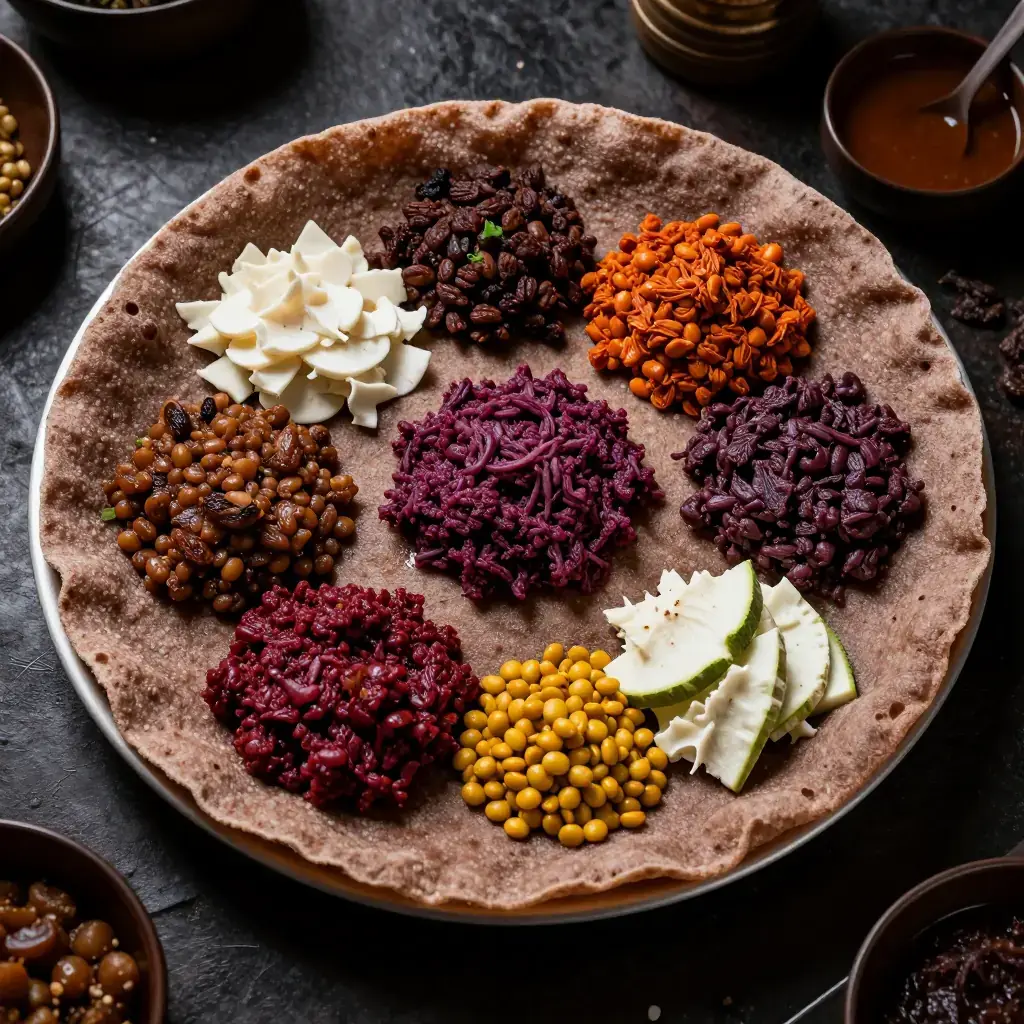
Injera with Misir Wat
Injera is the spongy, slightly sour sourdough flatbread that forms the plate, utensil, and staple starch of Ethiopian cuisine. Misir wat — a slow-simmered red lentil stew fragrant with berbere spice — is one of the most common accompaniments and forms the backbone of the Ethiopian fasting tradition, observed on over 200 days per year. Together they represent one of the world's most distinctive and nourishing everyday meals.
Serves: 4
Ingredients
Injera (makes 6 large):
- 300g (2.5 cups) teff flour
- 400ml (1.75 cups) water
- 0.5 tsp salt
- Note: batter requires 2-3 days fermentation
Misir Wat:
- 300g (1.5 cups) red lentils, rinsed
- 2 large onions, very finely diced
- 4 tbsp niter kibbeh (Ethiopian spiced butter) or ghee
- 3 tbsp berbere spice blend
- 5 garlic cloves, minced
- 1 tbsp fresh ginger, grated
- 1 tbsp tomato paste
- 800ml (3.25 cups) water or vegetable stock
- Salt to taste
- Fresh coriander to garnish
Instructions
- For injera: Mix teff flour and water until smooth. Cover loosely and ferment at room temperature for 2-3 days until mildly sour and bubbles appear. Stir in salt.
- Heat a non-stick pan or mitad over medium-high heat. Pour a ladle of batter in a circular motion from outside in. Cover and cook for 2-3 minutes until holes form across the surface and edges lift. Do not flip. Rest on a clean cloth.
- For misir wat: Fry onions in niter kibbeh in a heavy pot over medium-low heat, stirring often, for 25 minutes until deeply caramelised and collapsing.
- Add berbere, garlic, ginger, and tomato paste. Cook stirring for 4 minutes until paste darkens.
- Add lentils and stock. Bring to a boil, then simmer uncovered for 25-30 minutes, stirring frequently as it thickens, until lentils are completely dissolved into a thick stew.
- Season with salt. Serve mounds of misir wat on injera, garnished with fresh coriander.
Cook's Notes: The onion-frying step cannot be rushed — the long caramelisation is what gives Ethiopian stews their characteristic depth. Pre-made berbere blends vary widely; Ziyad and Brundo brands are reliable.
All Revisions
generated
# Injera with Misir Wat Injera is the spongy, slightly sour sourdough flatbread that forms the plate, utensil, and staple starch of Ethiopian cuisine. Misir wat — a slow-simmered red lentil stew fragrant with berbere spice — is one of the most common accompaniments and forms the backbone of the Ethiopian fasting tradition, observed on over 200 days per year. Together they represent one of the world's most distinctive and nourishing everyday meals. Serves: 4 ## Ingredients **Injera (makes 6 large):** - 300g (2.5 cups) teff flour - 400ml (1.75 cups) water - 0.5 tsp salt - Note: batter requires 2-3 days fermentation **Misir Wat:** - 300g (1.5 cups) red lentils, rinsed - 2 large onions, very finely diced - 4 tbsp niter kibbeh (Ethiopian spiced butter) or ghee - 3 tbsp berbere spice blend - 5 garlic cloves, minced - 1 tbsp fresh ginger, grated - 1 tbsp tomato paste - 800ml (3.25 cups) water or vegetable stock - Salt to taste - Fresh coriander to garnish ## Instructions 1. For injera: Mix teff flour and water until smooth. Cover loosely and ferment at room temperature for 2-3 days until mildly sour and bubbles appear. Stir in salt. 2. Heat a non-stick pan or mitad over medium-high heat. Pour a ladle of batter in a circular motion from outside in. Cover and cook for 2-3 minutes until holes form across the surface and edges lift. Do not flip. Rest on a clean cloth. 3. For misir wat: Fry onions in niter kibbeh in a heavy pot over medium-low heat, stirring often, for 25 minutes until deeply caramelised and collapsing. 4. Add berbere, garlic, ginger, and tomato paste. Cook stirring for 4 minutes until paste darkens. 5. Add lentils and stock. Bring to a boil, then simmer uncovered for 25-30 minutes, stirring frequently as it thickens, until lentils are completely dissolved into a thick stew. 6. Season with salt. Serve mounds of misir wat on injera, garnished with fresh coriander. **Cook's Notes:** The onion-frying step cannot be rushed — the long caramelisation is what gives Ethiopian stews their characteristic depth. Pre-made berbere blends vary widely; Ziyad and Brundo brands are reliable.Images


Tags
- authentic
- comfort-food
- dinner
- ethiopian
- fermented
- from-input
- lentils
- multi-day
- vegetarian