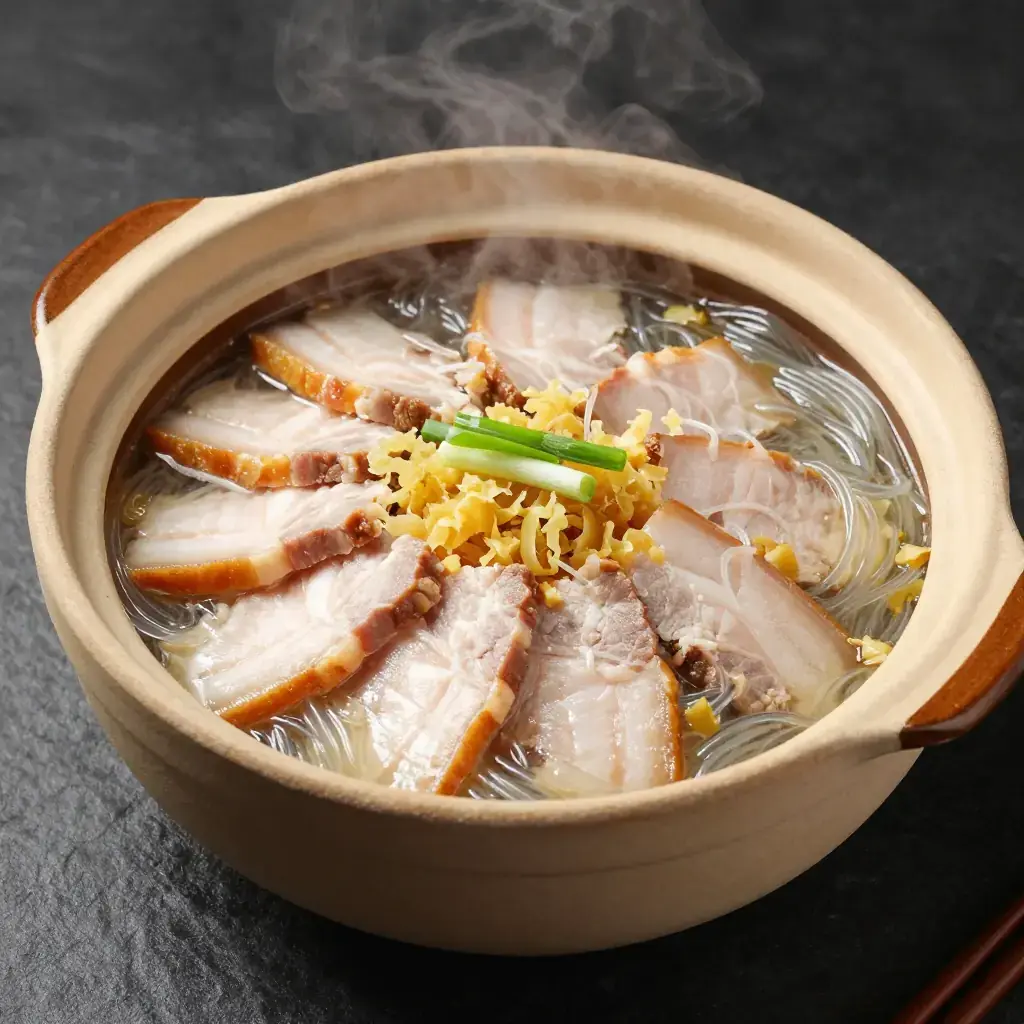
Dongbei Suan Cai Bai Rou
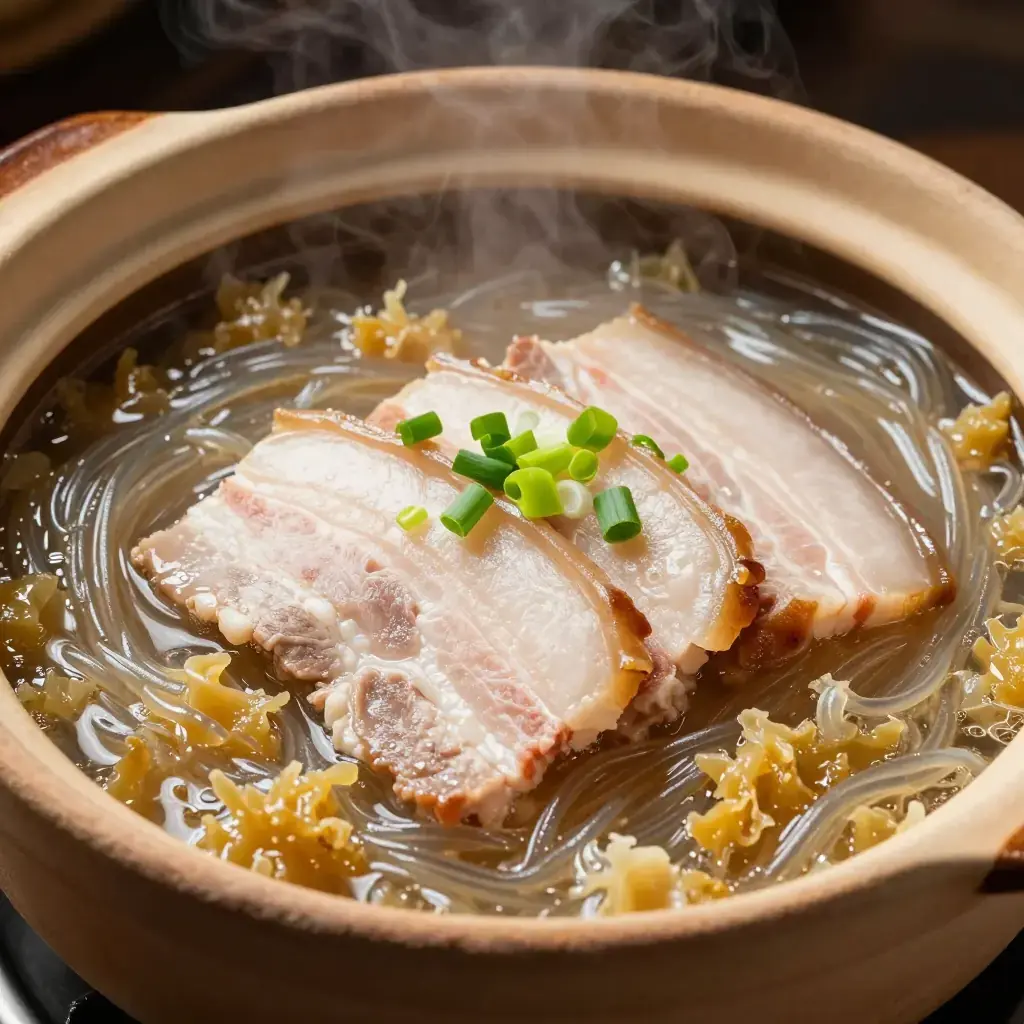
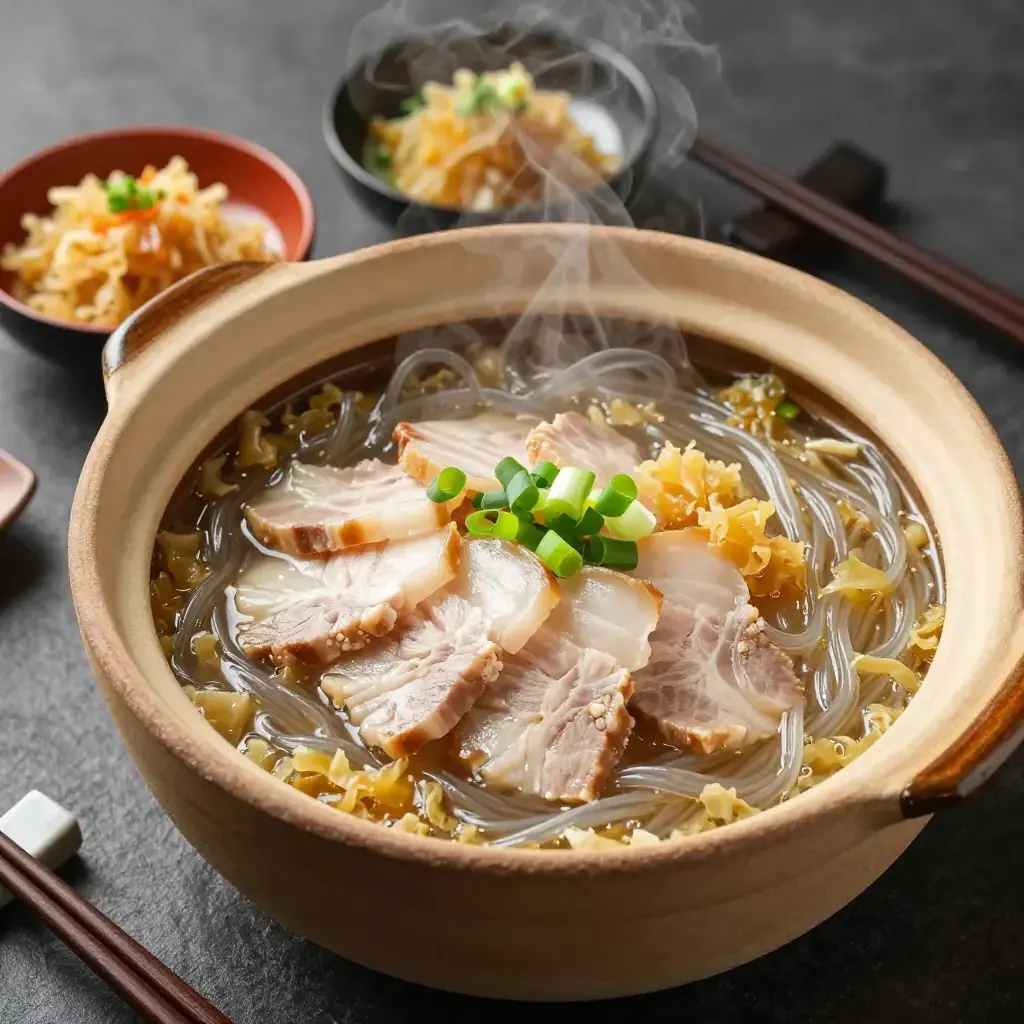
Suan Cai Bai Rou — thinly sliced pork belly with fermented Dongbei sauerkraut — is the definitive winter hot pot of China's northeastern provinces. The region's brutal winters inspired a tradition of fermenting napa cabbage in large clay crocks, producing a sour, funky sauerkraut (suan cai) that forms the backbone of this dish. Slices of silky pork belly, pungent tofu, and glass noodles simmer together in a clean broth, cut by the acidity of the cabbage. It is warming, restorative, and utterly satisfying.
Serves: 4
Ingredients
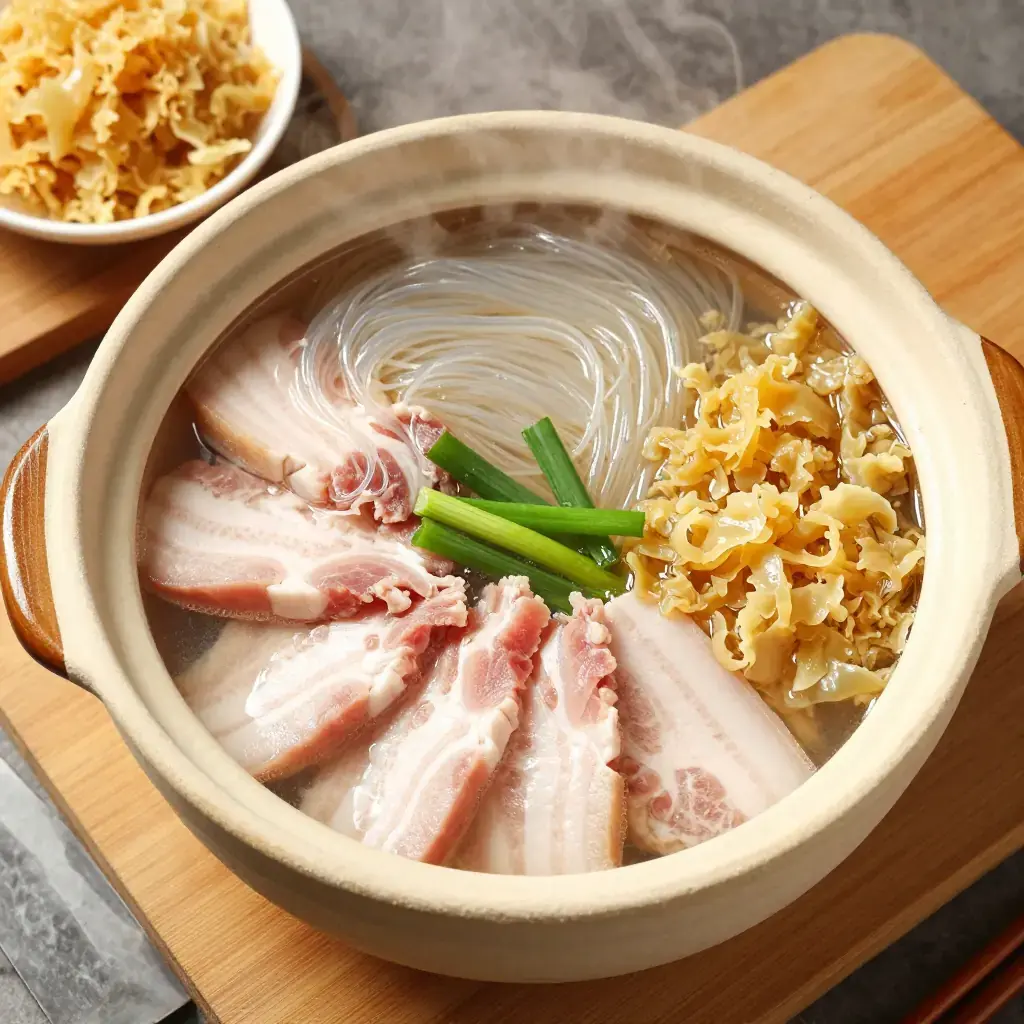
- 400g (14 oz) pork belly, skin-on, in one piece
- 400g (14 oz) Dongbei suan cai (fermented napa cabbage), rinsed and squeezed dry
- 80g (3 oz) dried glass noodles (sweet potato vermicelli), soaked in cold water for 30 minutes
- 200g (7 oz) firm tofu, cut into thick slices
- 1.2 litres (5 cups) pork or chicken broth
- 5 slices fresh ginger
- 3 garlic cloves, lightly smashed
- 2 tbsp neutral oil
- 1 tbsp light soy sauce
- Salt and white pepper, to taste
- Spring onion, sliced, to serve
Instructions
- Place the pork belly in a pot, cover with cold water, add 3 ginger slices and bring to a boil. Simmer for 25–30 minutes until just cooked through. Remove, cool slightly, and slice thinly against the grain, about 3mm (⅛ in) thick.
- Heat the oil in a large clay pot or heavy saucepan over medium-high heat. Add remaining ginger and garlic; stir for 30 seconds. Add the suan cai and stir-fry for 3–4 minutes until fragrant.
- Pour in the broth and bring to a boil. Add the tofu slices and soy sauce. Simmer for 10 minutes.
- Add the drained glass noodles and pork belly slices. Simmer for 4–5 minutes until the noodles are tender and translucent. Season with salt and white pepper.
- Ladle into deep bowls and top with spring onion. Serve with steamed rice or mantou buns.
Cook's Notes: Rinsing the suan cai moderates the sourness; use more or less rinsing to suit your taste. Dongbei suan cai is available at Chinese supermarkets — do not substitute Korean kimchi, as the flavor profile is entirely different.
All Revisions
generated
# Dongbei Suan Cai Bai Rou Suan Cai Bai Rou — thinly sliced pork belly with fermented Dongbei sauerkraut — is the definitive winter hot pot of China's northeastern provinces. The region's brutal winters inspired a tradition of fermenting napa cabbage in large clay crocks, producing a sour, funky sauerkraut (suan cai) that forms the backbone of this dish. Slices of silky pork belly, pungent tofu, and glass noodles simmer together in a clean broth, cut by the acidity of the cabbage. It is warming, restorative, and utterly satisfying. Serves: 4 ## Ingredients - 400g (14 oz) pork belly, skin-on, in one piece - 400g (14 oz) Dongbei suan cai (fermented napa cabbage), rinsed and squeezed dry - 80g (3 oz) dried glass noodles (sweet potato vermicelli), soaked in cold water for 30 minutes - 200g (7 oz) firm tofu, cut into thick slices - 1.2 litres (5 cups) pork or chicken broth - 5 slices fresh ginger - 3 garlic cloves, lightly smashed - 2 tbsp neutral oil - 1 tbsp light soy sauce - Salt and white pepper, to taste - Spring onion, sliced, to serve ## Instructions 1. Place the pork belly in a pot, cover with cold water, add 3 ginger slices and bring to a boil. Simmer for 25–30 minutes until just cooked through. Remove, cool slightly, and slice thinly against the grain, about 3mm (⅛ in) thick. 2. Heat the oil in a large clay pot or heavy saucepan over medium-high heat. Add remaining ginger and garlic; stir for 30 seconds. Add the suan cai and stir-fry for 3–4 minutes until fragrant. 3. Pour in the broth and bring to a boil. Add the tofu slices and soy sauce. Simmer for 10 minutes. 4. Add the drained glass noodles and pork belly slices. Simmer for 4–5 minutes until the noodles are tender and translucent. Season with salt and white pepper. 5. Ladle into deep bowls and top with spring onion. Serve with steamed rice or mantou buns. **Cook's Notes:** Rinsing the suan cai moderates the sourness; use more or less rinsing to suit your taste. Dongbei suan cai is available at Chinese supermarkets — do not substitute Korean kimchi, as the flavor profile is entirely different.Images
Tags
- authentic
- comfort-food
- dinner
- dongbei
- fermented
- from-input
- hot-soup
- noodles
- winter