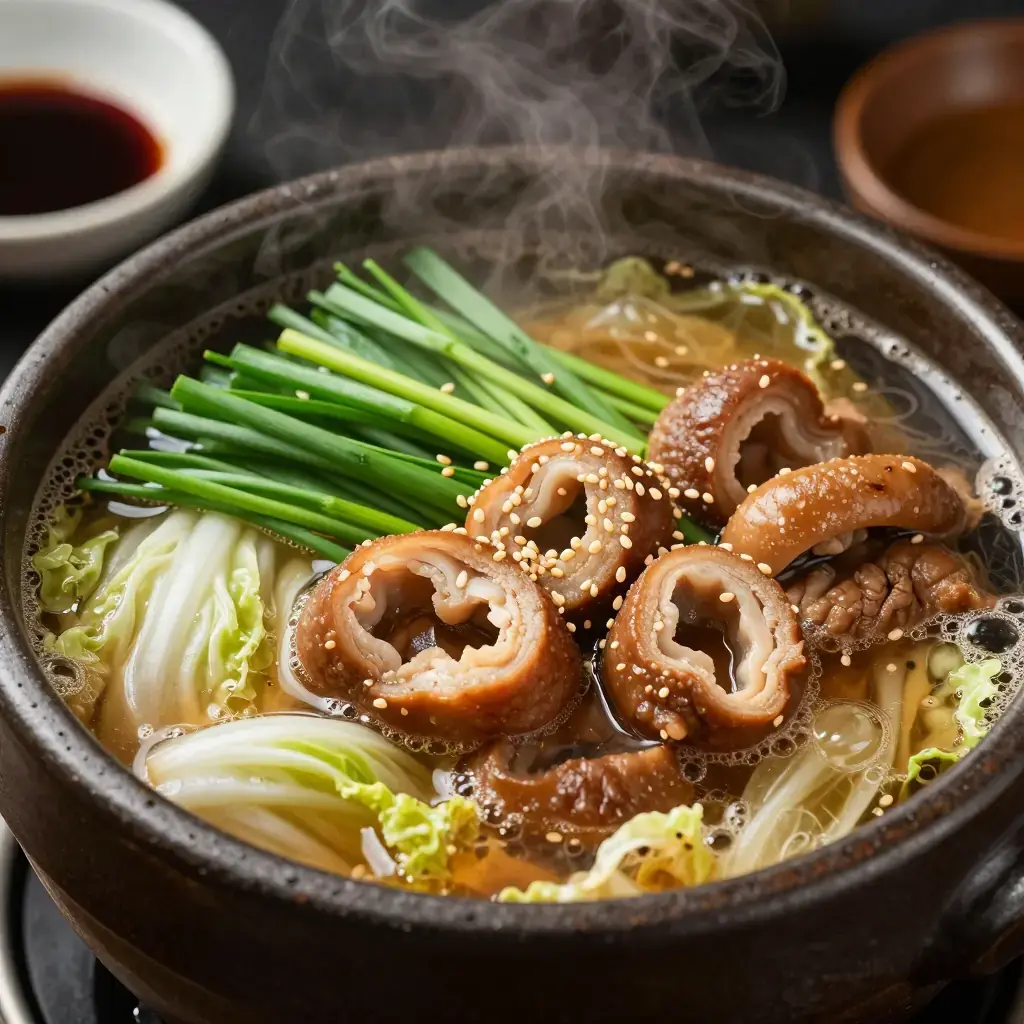
Motsu Nabe
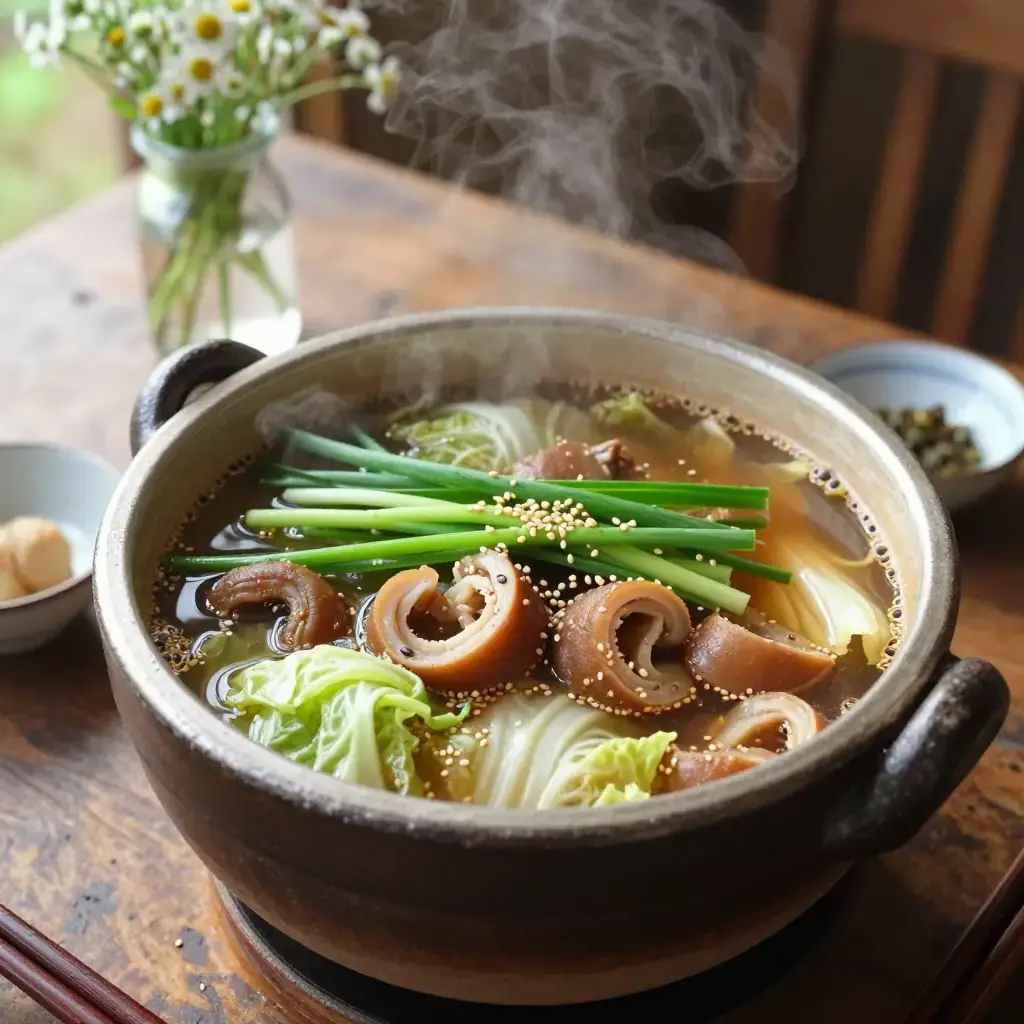
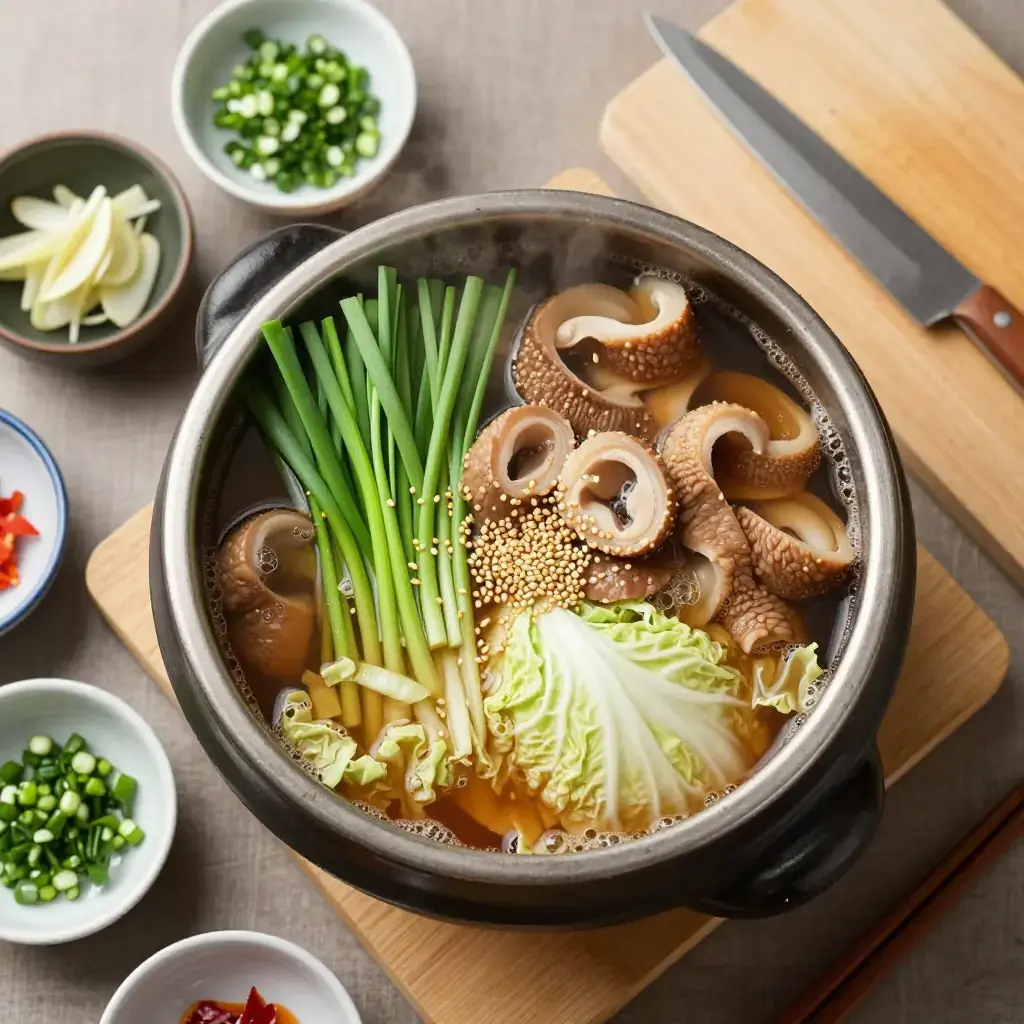
Motsu Nabe is a Fukuoka specialty hot-pot built around beef or pork offal — specifically intestines — simmered in a rich miso or soy-based broth with mountains of garlic chives and cabbage. A staple of the city's izakaya late-night scene since the postwar era, it is an unpretentious, deeply satisfying dish beloved by locals and food pilgrims alike.
Serves: 4
Ingredients
- 600g (1.3 lb) beef small intestine (motsu/offal), cleaned and cut into 4cm (1.5 inch) pieces
- 300g (10 oz) green cabbage, roughly chopped into large pieces
- 1 large bunch garlic chives (nira), cut into 5cm (2 inch) sections
- 6 cloves garlic, thinly sliced
- 5cm (2 inch) piece ginger, julienned
- 2 dried red chillies
- 1 litre (4 cups) dashi stock (kombu and katsuobushi)
- 3 tbsp (45ml) white miso paste
- 2 tbsp (30ml) soy sauce
- 1 tbsp (15ml) mirin
- 1 tbsp (15ml) sake
- 1 tsp (5ml) sesame oil
- 1 tbsp toasted sesame seeds
- 200g (7 oz) udon noodles, to finish (optional)
Instructions
- Blanch intestines in boiling water for 3-4 minutes to remove impurities. Drain and rinse under cold water.
- In a wide earthenware pot or heavy casserole, combine dashi, miso, soy sauce, mirin, and sake. Whisk until miso dissolves and bring to a simmer.
- Add intestines, garlic, ginger, and dried chillies. Simmer over medium heat for 20-25 minutes until offal is tender and the broth is fragrant.
- Add cabbage and cook for 4-5 minutes until just tender but still with some bite.
- Add garlic chives in the final 1-2 minutes — they should wilt but stay vibrant green.
- Drizzle with sesame oil and scatter sesame seeds over the top.
- Serve communally at the table. When the main ingredients are eaten, add udon noodles to the remaining broth and cook for 3-4 minutes for the traditional shime (finishing course).
Cook's Notes: Sourcing properly cleaned beef intestine from an Asian butcher makes a huge difference. The offal should smell fresh and mild, not ammonia-like. Pork intestine is a common substitute. The shime noodle course is considered the best part by many regulars — don't skip it.
All Revisions
generated
# Motsu Nabe Motsu Nabe is a Fukuoka specialty hot-pot built around beef or pork offal — specifically intestines — simmered in a rich miso or soy-based broth with mountains of garlic chives and cabbage. A staple of the city's izakaya late-night scene since the postwar era, it is an unpretentious, deeply satisfying dish beloved by locals and food pilgrims alike. Serves: 4 ## Ingredients - 600g (1.3 lb) beef small intestine (motsu/offal), cleaned and cut into 4cm (1.5 inch) pieces - 300g (10 oz) green cabbage, roughly chopped into large pieces - 1 large bunch garlic chives (nira), cut into 5cm (2 inch) sections - 6 cloves garlic, thinly sliced - 5cm (2 inch) piece ginger, julienned - 2 dried red chillies - 1 litre (4 cups) dashi stock (kombu and katsuobushi) - 3 tbsp (45ml) white miso paste - 2 tbsp (30ml) soy sauce - 1 tbsp (15ml) mirin - 1 tbsp (15ml) sake - 1 tsp (5ml) sesame oil - 1 tbsp toasted sesame seeds - 200g (7 oz) udon noodles, to finish (optional) ## Instructions 1. Blanch intestines in boiling water for 3-4 minutes to remove impurities. Drain and rinse under cold water. 2. In a wide earthenware pot or heavy casserole, combine dashi, miso, soy sauce, mirin, and sake. Whisk until miso dissolves and bring to a simmer. 3. Add intestines, garlic, ginger, and dried chillies. Simmer over medium heat for 20-25 minutes until offal is tender and the broth is fragrant. 4. Add cabbage and cook for 4-5 minutes until just tender but still with some bite. 5. Add garlic chives in the final 1-2 minutes — they should wilt but stay vibrant green. 6. Drizzle with sesame oil and scatter sesame seeds over the top. 7. Serve communally at the table. When the main ingredients are eaten, add udon noodles to the remaining broth and cook for 3-4 minutes for the traditional shime (finishing course). **Cook's Notes:** Sourcing properly cleaned beef intestine from an Asian butcher makes a huge difference. The offal should smell fresh and mild, not ammonia-like. Pork intestine is a common substitute. The shime noodle course is considered the best part by many regulars — don't skip it.Images
Tags
- authentic
- from-input
- hot-soup
- japanese
- late-night
- noodles
- offal
- one-pot
- winter