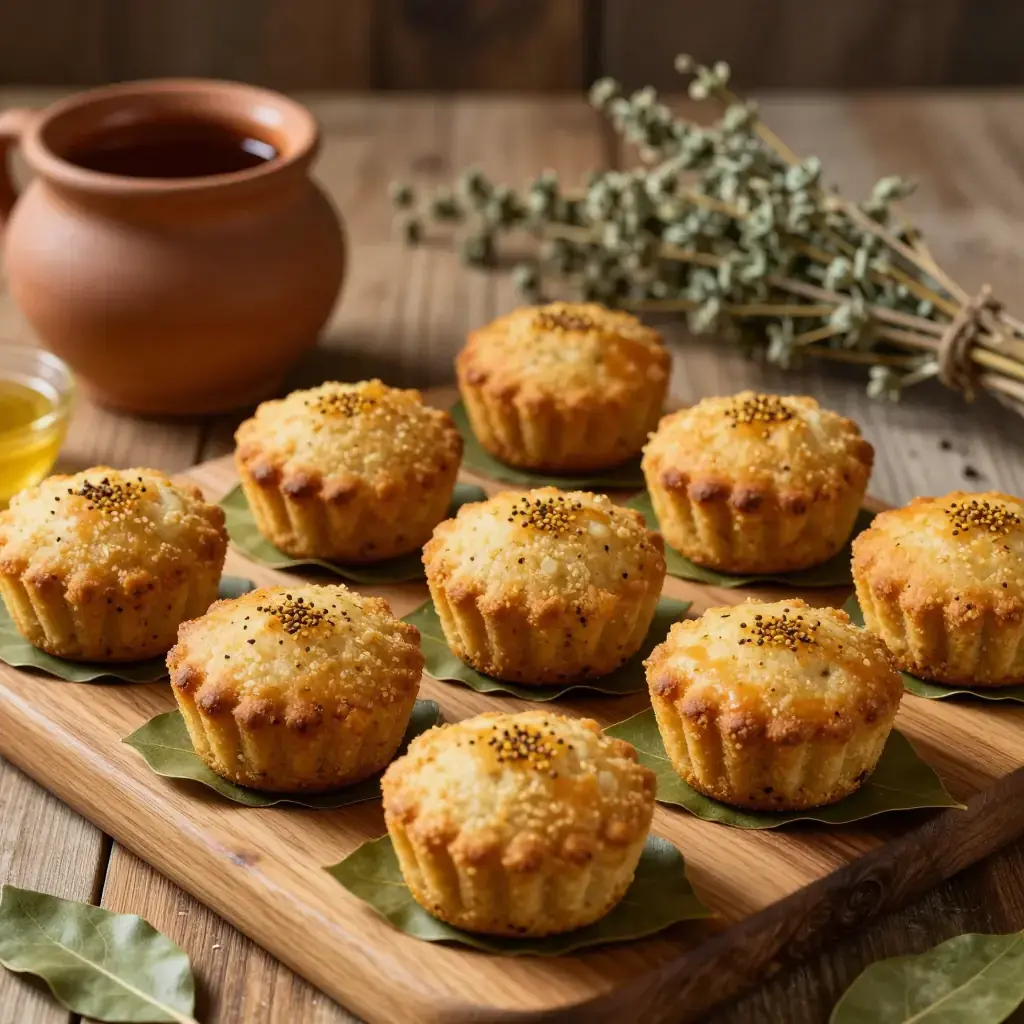
Ancient Roman Honey and Spice Cake
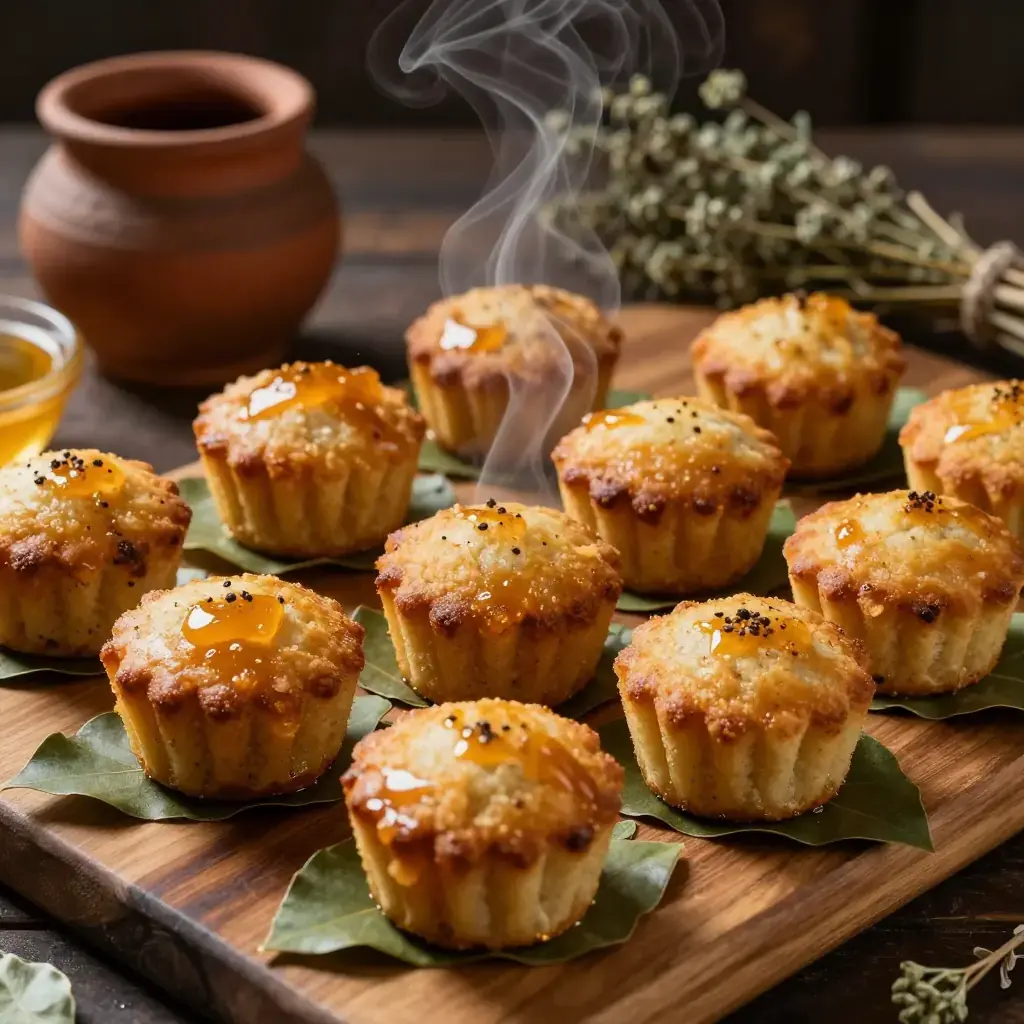
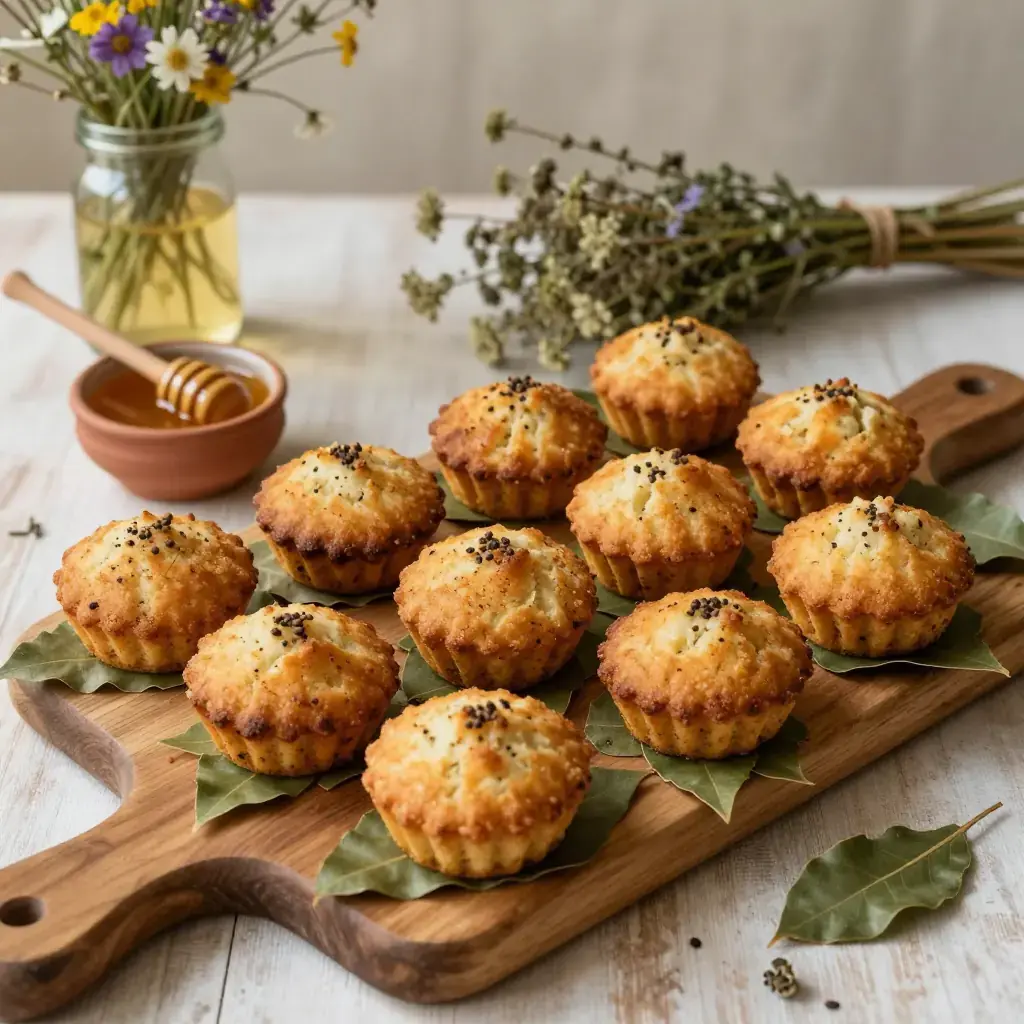
Mustacei are small spiced cakes recorded by Cato the Elder in his agricultural treatise De Agri Cultura around 160 BCE, making them among the oldest documented Roman recipes. Sweetened with must or honey and flavored with anise and cumin, they were traditionally baked on bay leaves and served at harvest festivals and weddings.
Serves: 12 small cakes
Ingredients
- 500g (4 cups) spelt flour or emmer wheat flour
- 150ml (0.6 cup) good honey
- 80ml (0.3 cup) red wine or grape must
- 60ml (0.25 cup) olive oil, plus extra for brushing
- 2 tsp (10ml) anise seeds, lightly crushed
- 1 tsp (5ml) cumin seeds, lightly crushed
- 0.5 tsp (2.5ml) black pepper, ground
- 1 tsp (5ml) fine salt
- Fresh or dried bay leaves for baking (optional)
Instructions
- Preheat oven to 180°C (350°F).
- In a large bowl, combine spelt flour, anise, cumin, pepper, and salt. Mix well.
- In a small saucepan, warm honey, wine, and olive oil together over low heat until honey has dissolved, about 2 minutes. Do not boil.
- Pour the warm liquid into the dry ingredients and mix with a wooden spoon until a stiff, slightly sticky dough forms. If too dry, add wine a tablespoon at a time.
- Knead briefly on a floured surface for 1-2 minutes until smooth.
- Divide dough into 12 equal pieces and shape each into a flat round disc about 1.5cm (0.6 inch) thick.
- If using bay leaves, place each cake on a bay leaf on the baking tray — this is the historical method and imparts a faint herbal aroma.
- Brush tops lightly with olive oil. Bake for 20-25 minutes until golden and firm to the touch.
- Cool on a rack. The cakes harden as they cool, in the style of ancient biscotti.
Cook's Notes: These are intentionally dense and not sweet by modern standards. They pair beautifully with soft cheese, dried figs, and wine — exactly as ancient Romans would have eaten them. Spelt flour is the closest modern equivalent to Roman far; all-purpose flour can substitute but produces a less authentic texture.
All Revisions
generated
# Ancient Roman Honey and Spice Cake Mustacei are small spiced cakes recorded by Cato the Elder in his agricultural treatise De Agri Cultura around 160 BCE, making them among the oldest documented Roman recipes. Sweetened with must or honey and flavored with anise and cumin, they were traditionally baked on bay leaves and served at harvest festivals and weddings. Serves: 12 small cakes ## Ingredients - 500g (4 cups) spelt flour or emmer wheat flour - 150ml (0.6 cup) good honey - 80ml (0.3 cup) red wine or grape must - 60ml (0.25 cup) olive oil, plus extra for brushing - 2 tsp (10ml) anise seeds, lightly crushed - 1 tsp (5ml) cumin seeds, lightly crushed - 0.5 tsp (2.5ml) black pepper, ground - 1 tsp (5ml) fine salt - Fresh or dried bay leaves for baking (optional) ## Instructions 1. Preheat oven to 180°C (350°F). 2. In a large bowl, combine spelt flour, anise, cumin, pepper, and salt. Mix well. 3. In a small saucepan, warm honey, wine, and olive oil together over low heat until honey has dissolved, about 2 minutes. Do not boil. 4. Pour the warm liquid into the dry ingredients and mix with a wooden spoon until a stiff, slightly sticky dough forms. If too dry, add wine a tablespoon at a time. 5. Knead briefly on a floured surface for 1-2 minutes until smooth. 6. Divide dough into 12 equal pieces and shape each into a flat round disc about 1.5cm (0.6 inch) thick. 7. If using bay leaves, place each cake on a bay leaf on the baking tray — this is the historical method and imparts a faint herbal aroma. 8. Brush tops lightly with olive oil. Bake for 20-25 minutes until golden and firm to the touch. 9. Cool on a rack. The cakes harden as they cool, in the style of ancient biscotti. **Cook's Notes:** These are intentionally dense and not sweet by modern standards. They pair beautifully with soft cheese, dried figs, and wine — exactly as ancient Romans would have eaten them. Spelt flour is the closest modern equivalent to Roman far; all-purpose flour can substitute but produces a less authentic texture.Images
Tags
- baked
- baking
- dairy-free
- from-input
- heirloom
- historical
- italian
- vegetarian