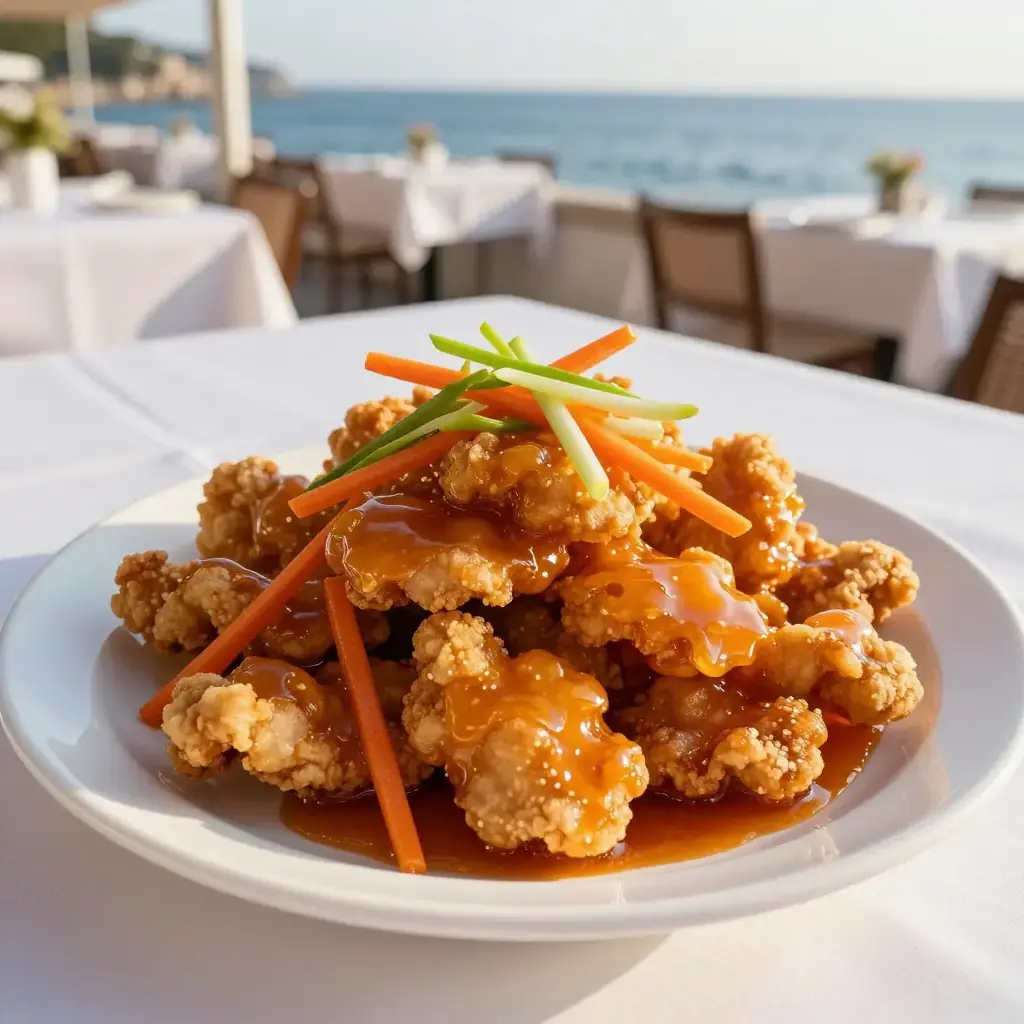
Guo Bao Rou
Guo Bao Rou is a beloved Dongbei classic from Harbin, created in the late Qing dynasty to satisfy the sweet-sour palate of Russian diplomats. The dish transforms humble pork slices into a lacquered, tangy masterpiece that remains one of northeast China's most iconic exports.
Serves: 4
Ingredients
- 500g (1 lb) pork tenderloin, sliced 5mm (¼ inch) thick
- 120g (1 cup) potato starch
- 3 tbsp (45ml) rice vinegar
- 3 tbsp (45ml) light soy sauce
- 3 tbsp (40g) granulated sugar
- 1 tbsp (15ml) Shaoxing wine
- 4 cloves garlic, thinly sliced
- 5cm (2 inch) piece ginger, julienned
- 2 spring onions, cut into 4cm (1.5 inch) sections
- 1 small carrot, julienned
- 700ml (3 cups) neutral oil for deep-frying
- Salt to taste
Instructions
- Pound pork slices lightly to even thickness. Season with a pinch of salt and a splash of Shaoxing wine and let marinate for 10 minutes.
- Coat each slice thoroughly in potato starch, pressing so it adheres, then dip briefly in cold water and re-coat in starch. This double coat creates the characteristic crisp shell.
- Heat oil in a wok to 180°C (350°F). Deep-fry pork slices in batches for 3-4 minutes until pale golden. Remove and drain.
- Raise oil temperature to 200°C (390°F) and fry slices a second time for 1-2 minutes until deeply golden and very crisp. Drain on a rack.
- Pour off all but 1 tbsp of oil. Stir-fry garlic, ginger, and carrot over high heat for 1 minute.
- Add vinegar, soy sauce, and sugar, stirring until sugar dissolves and sauce bubbles and thickens slightly, about 2 minutes.
- Toss pork slices and spring onions into the sauce, coat quickly — no more than 30 seconds — and plate immediately.
Cook's Notes: Speed is essential in the final toss; the crust softens rapidly once sauced. Authentic Harbin versions use only vinegar and sugar with no ketchup — resist the shortcut. Potato starch gives a crispier, more translucent crust than cornstarch.
All Revisions
generated
# Guo Bao Rou Guo Bao Rou is a beloved Dongbei classic from Harbin, created in the late Qing dynasty to satisfy the sweet-sour palate of Russian diplomats. The dish transforms humble pork slices into a lacquered, tangy masterpiece that remains one of northeast China's most iconic exports. Serves: 4 ## Ingredients - 500g (1 lb) pork tenderloin, sliced 5mm (¼ inch) thick - 120g (1 cup) potato starch - 3 tbsp (45ml) rice vinegar - 3 tbsp (45ml) light soy sauce - 3 tbsp (40g) granulated sugar - 1 tbsp (15ml) Shaoxing wine - 4 cloves garlic, thinly sliced - 5cm (2 inch) piece ginger, julienned - 2 spring onions, cut into 4cm (1.5 inch) sections - 1 small carrot, julienned - 700ml (3 cups) neutral oil for deep-frying - Salt to taste ## Instructions 1. Pound pork slices lightly to even thickness. Season with a pinch of salt and a splash of Shaoxing wine and let marinate for 10 minutes. 2. Coat each slice thoroughly in potato starch, pressing so it adheres, then dip briefly in cold water and re-coat in starch. This double coat creates the characteristic crisp shell. 3. Heat oil in a wok to 180°C (350°F). Deep-fry pork slices in batches for 3-4 minutes until pale golden. Remove and drain. 4. Raise oil temperature to 200°C (390°F) and fry slices a second time for 1-2 minutes until deeply golden and very crisp. Drain on a rack. 5. Pour off all but 1 tbsp of oil. Stir-fry garlic, ginger, and carrot over high heat for 1 minute. 6. Add vinegar, soy sauce, and sugar, stirring until sugar dissolves and sauce bubbles and thickens slightly, about 2 minutes. 7. Toss pork slices and spring onions into the sauce, coat quickly — no more than 30 seconds — and plate immediately. **Cook's Notes:** Speed is essential in the final toss; the crust softens rapidly once sauced. Authentic Harbin versions use only vinegar and sugar with no ketchup — resist the shortcut. Potato starch gives a crispier, more translucent crust than cornstarch.Images
Tags
- authentic
- deep-fried
- dinner
- dongbei
- from-input
- historical