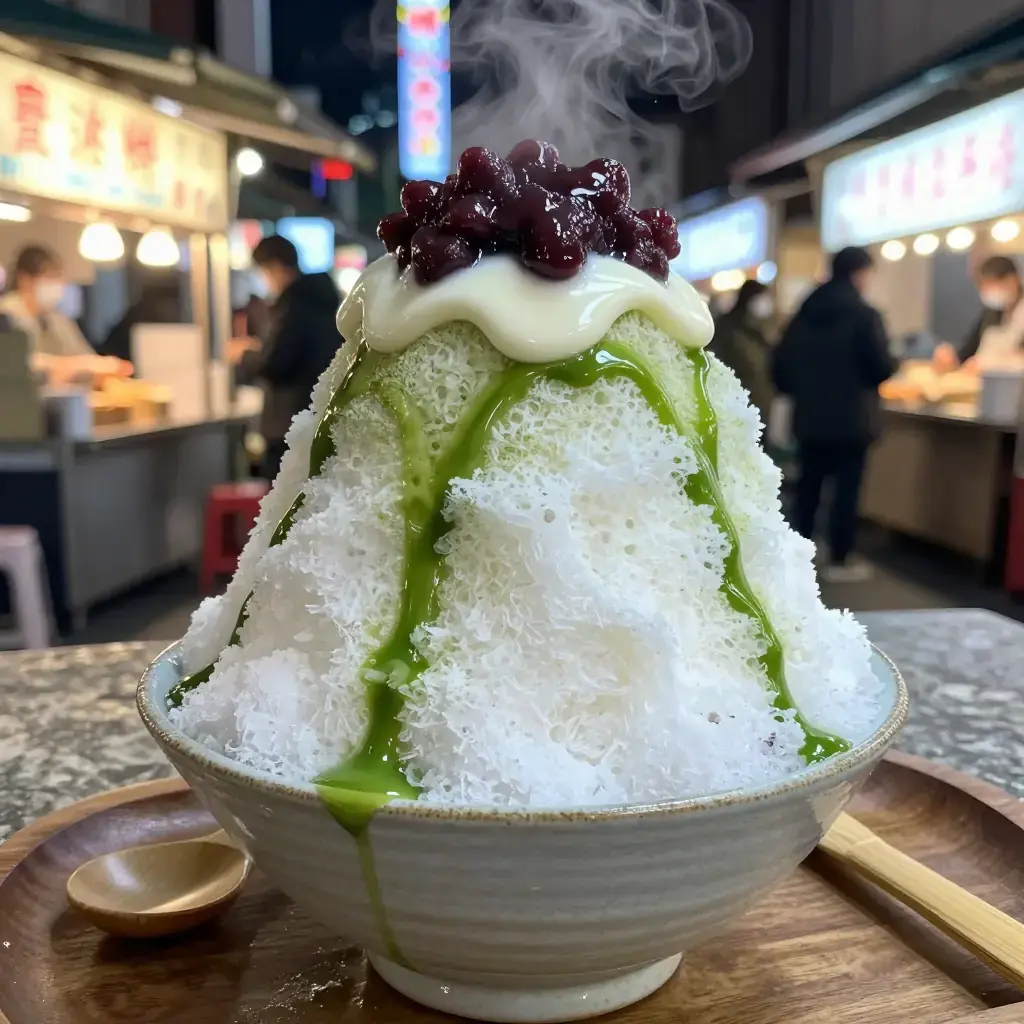
Japanese Matcha Kakigori (Matcha Kakigōri)
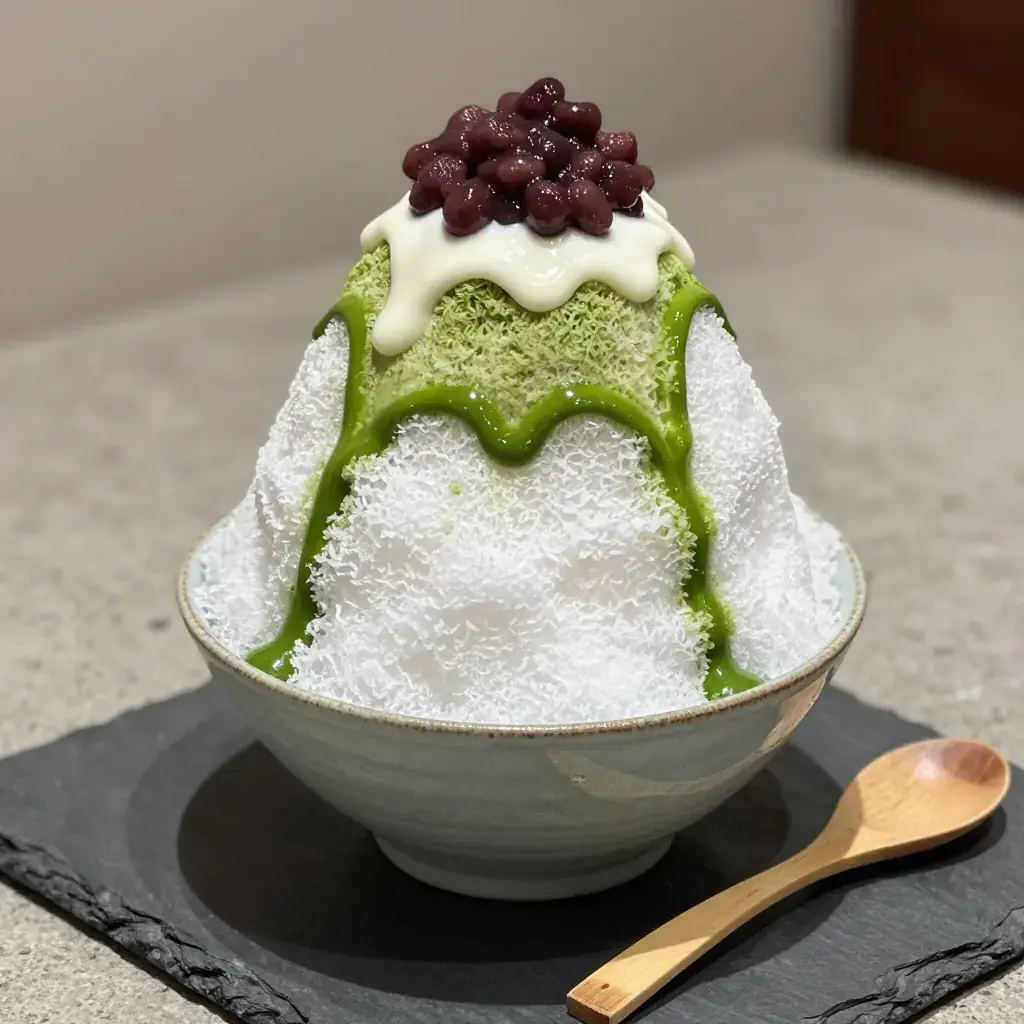
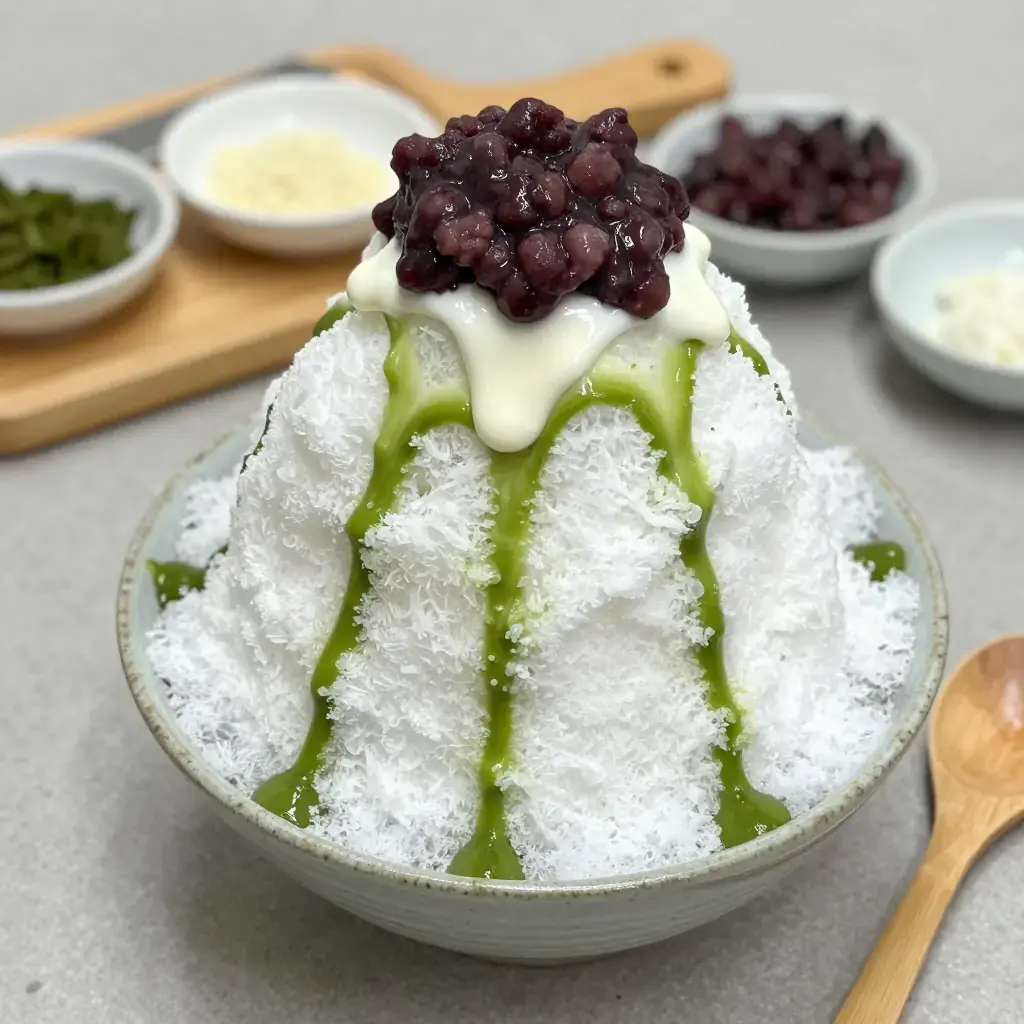
Kakigori — shaved ice piled into a mountain and drenched in flavored syrups — has been a fixture of Japanese summers for over a thousand years. The earliest written records appear in the Pillow Book of Sei Shōnagon, a court lady who wrote in the year 1000 CE of chipped ice flavored with sweet vine syrup served in a metal cup. Today it is the defining street food of Japanese summer festivals (matsuri), sold from small stalls alongside takoyaki and yakisoba. The matcha version, perfected in Kyoto's tea-house districts, layers ceremonial-grade green tea syrup with sweet red bean paste (anko) and condensed milk to create something that is simultaneously refreshing, bitter, sweet, and deeply Japanese in its restrained complexity. Proper kakigori requires ice shaved to the texture of fresh snow — dense packaged ice cubes do not work; you need a block of very clear ice or a kakigori machine.
Serves: 2
Ingredients
For the matcha syrup:
- 2 tbsp ceremonial-grade matcha powder
- 60 ml (¼ cup) hot water (70°C / 158°F, not boiling)
- 80 g (⅓ cup + 1 tbsp) caster sugar
- 60 ml (¼ cup) cold water
For the sweet red bean paste (anko) — or use store-bought:
- 200 g (7 oz) dried adzuki beans, soaked overnight
- 150 g (¾ cup) caster sugar
- Pinch of salt
To assemble:
- 600 g (1 lb 5 oz) very clear ice block (or clear ice cubes packed tightly)
- 4 tbsp sweetened condensed milk
- Optional: shiratama mochi balls or a scoop of vanilla ice cream in the centre
Instructions
- Make the simple syrup: combine sugar and cold water in a small saucepan. Bring to a boil, stirring until dissolved. Cool completely.
- Make the matcha syrup: whisk matcha powder into the hot (not boiling) water until completely smooth with no lumps — a bamboo chasen (matcha whisk) gives the best result. Combine with the cooled simple syrup. Refrigerate until cold.
- Make the anko (if making from scratch): drain soaked adzuki beans, cover with fresh cold water, and boil 5 minutes. Drain, add fresh water, and simmer 45–60 minutes until the beans crush easily between your fingers. Drain, return to pot, add sugar and salt. Cook over medium heat, stirring constantly, until the paste thickens and pulls away from the sides. Cool completely.
- Shave the ice: using a kakigori machine, a box grater held at a steep angle, or a powerful blender set to pulse, reduce the ice block to a light, fluffy texture resembling fresh snow. Do not use a food processor — it produces coarse, wet chips, not snow.
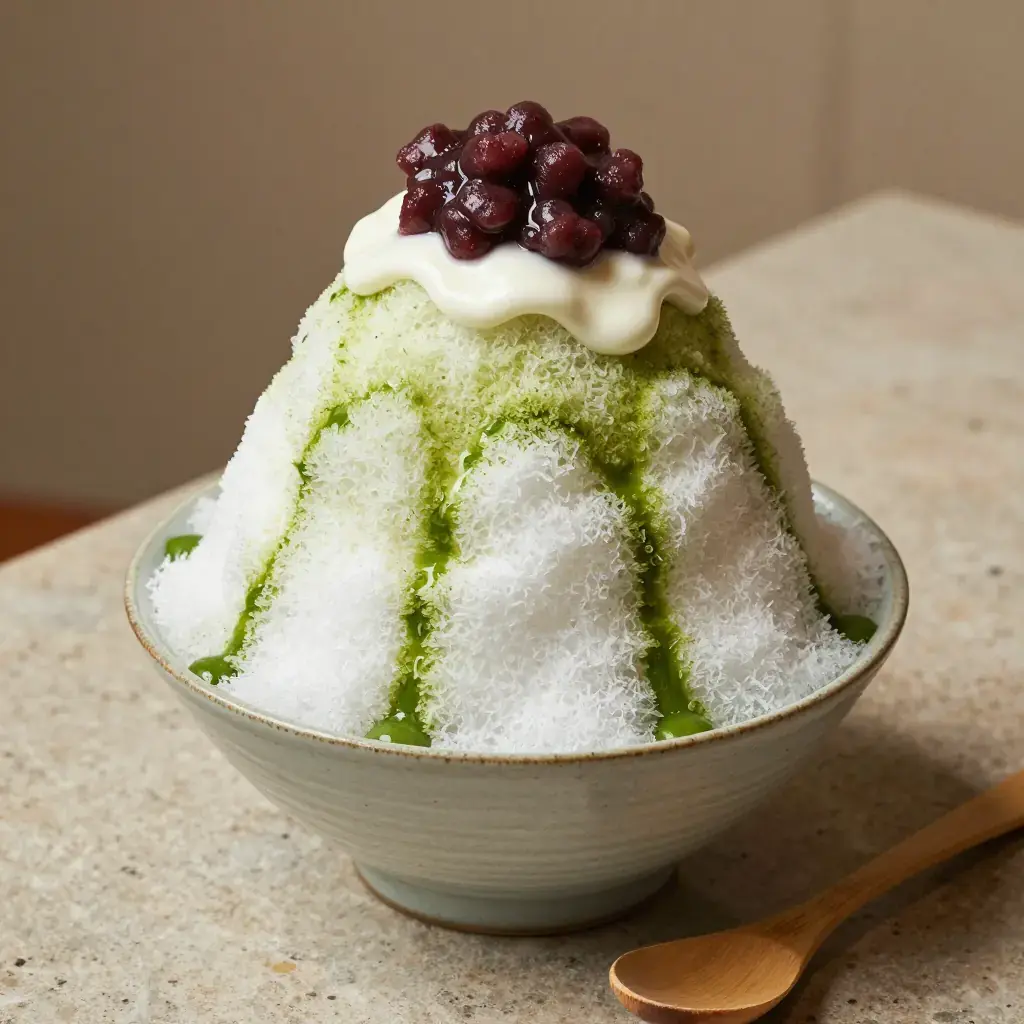
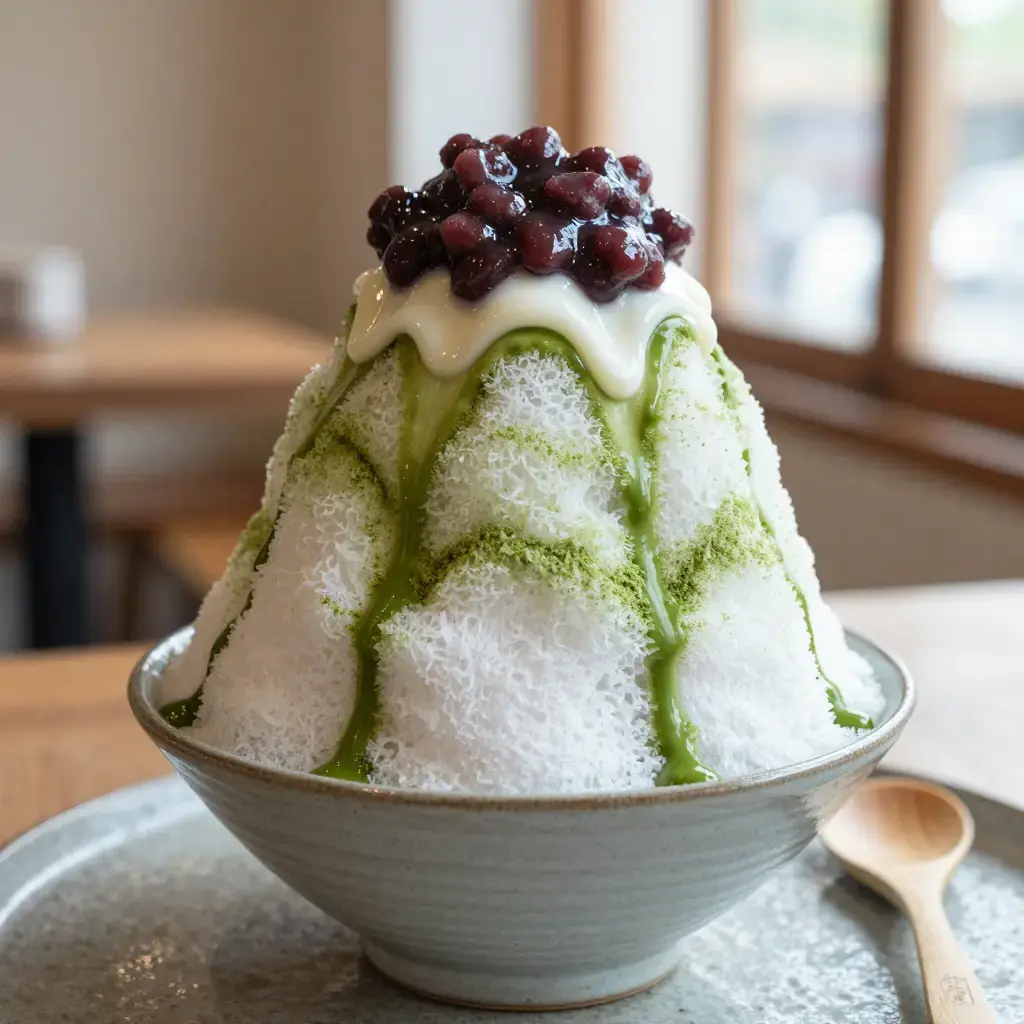
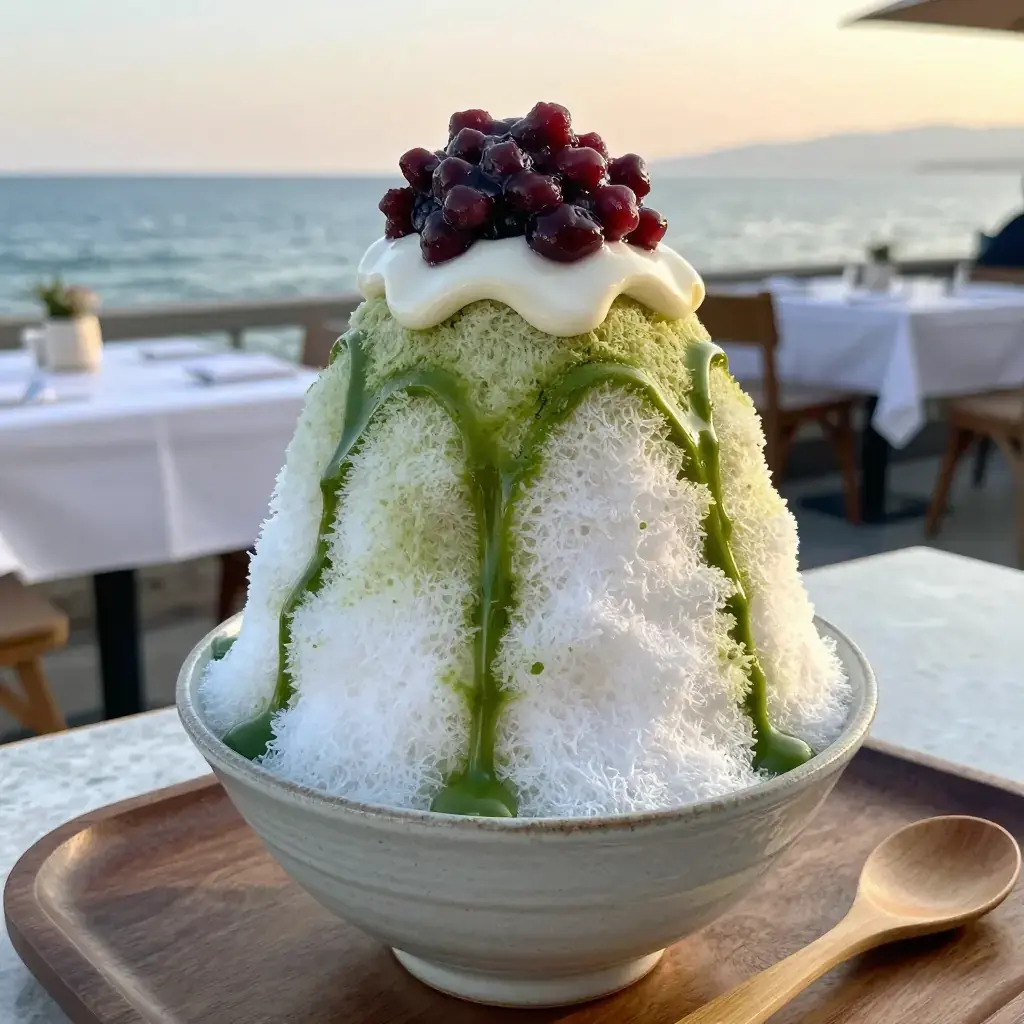
- Mound the shaved ice high into two deep bowls — it should tower above the rim like a snowdrift.
- Working quickly, drizzle the matcha syrup over the ice in concentric circles, letting it soak in. Add a second pour once the first is absorbed.
- Spoon a generous mound of anko on top. Drizzle condensed milk over everything.
- Serve immediately — kakigori waits for no one. The ice begins melting within 3–4 minutes.
Cook's Notes: The quality of the matcha matters enormously; cheap culinary-grade powder produces a harsh, grassy syrup. Ceremonial-grade matcha from Uji or Nishio is ideal. For Kyoto-style kakigori, pour condensed milk inside the ice mound while building it so there is a hidden creamy core that diners discover mid-way through eating. Kakigori should not be confused with Hawaiian shave ice or snow cones — the texture of the ice is categorically different.
All Revisions
generated
# Japanese Matcha Kakigori (Matcha Kakigōri) Kakigori — shaved ice piled into a mountain and drenched in flavored syrups — has been a fixture of Japanese summers for over a thousand years. The earliest written records appear in the Pillow Book of Sei Shōnagon, a court lady who wrote in the year 1000 CE of chipped ice flavored with sweet vine syrup served in a metal cup. Today it is the defining street food of Japanese summer festivals (matsuri), sold from small stalls alongside takoyaki and yakisoba. The matcha version, perfected in Kyoto's tea-house districts, layers ceremonial-grade green tea syrup with sweet red bean paste (anko) and condensed milk to create something that is simultaneously refreshing, bitter, sweet, and deeply Japanese in its restrained complexity. Proper kakigori requires ice shaved to the texture of fresh snow — dense packaged ice cubes do not work; you need a block of very clear ice or a kakigori machine. Serves: 2 ## Ingredients **For the matcha syrup:** - 2 tbsp ceremonial-grade matcha powder - 60 ml (¼ cup) hot water (70°C / 158°F, not boiling) - 80 g (⅓ cup + 1 tbsp) caster sugar - 60 ml (¼ cup) cold water **For the sweet red bean paste (anko) — or use store-bought:** - 200 g (7 oz) dried adzuki beans, soaked overnight - 150 g (¾ cup) caster sugar - Pinch of salt **To assemble:** - 600 g (1 lb 5 oz) very clear ice block (or clear ice cubes packed tightly) - 4 tbsp sweetened condensed milk - Optional: shiratama mochi balls or a scoop of vanilla ice cream in the centre ## Instructions 1. Make the simple syrup: combine sugar and cold water in a small saucepan. Bring to a boil, stirring until dissolved. Cool completely. 2. Make the matcha syrup: whisk matcha powder into the hot (not boiling) water until completely smooth with no lumps — a bamboo chasen (matcha whisk) gives the best result. Combine with the cooled simple syrup. Refrigerate until cold. 3. Make the anko (if making from scratch): drain soaked adzuki beans, cover with fresh cold water, and boil 5 minutes. Drain, add fresh water, and simmer 45–60 minutes until the beans crush easily between your fingers. Drain, return to pot, add sugar and salt. Cook over medium heat, stirring constantly, until the paste thickens and pulls away from the sides. Cool completely. 4. Shave the ice: using a kakigori machine, a box grater held at a steep angle, or a powerful blender set to pulse, reduce the ice block to a light, fluffy texture resembling fresh snow. Do not use a food processor — it produces coarse, wet chips, not snow. 5. Mound the shaved ice high into two deep bowls — it should tower above the rim like a snowdrift. 6. Working quickly, drizzle the matcha syrup over the ice in concentric circles, letting it soak in. Add a second pour once the first is absorbed. 7. Spoon a generous mound of anko on top. Drizzle condensed milk over everything. 8. Serve immediately — kakigori waits for no one. The ice begins melting within 3–4 minutes. **Cook's Notes:** The quality of the matcha matters enormously; cheap culinary-grade powder produces a harsh, grassy syrup. Ceremonial-grade matcha from Uji or Nishio is ideal. For Kyoto-style kakigori, pour condensed milk inside the ice mound while building it so there is a hidden creamy core that diners discover mid-way through eating. Kakigori should not be confused with Hawaiian shave ice or snow cones — the texture of the ice is categorically different.Images
Tags
- beans
- from-input
- frozen-dessert
- historical
- japanese
- snack
- summer
- vegetarian