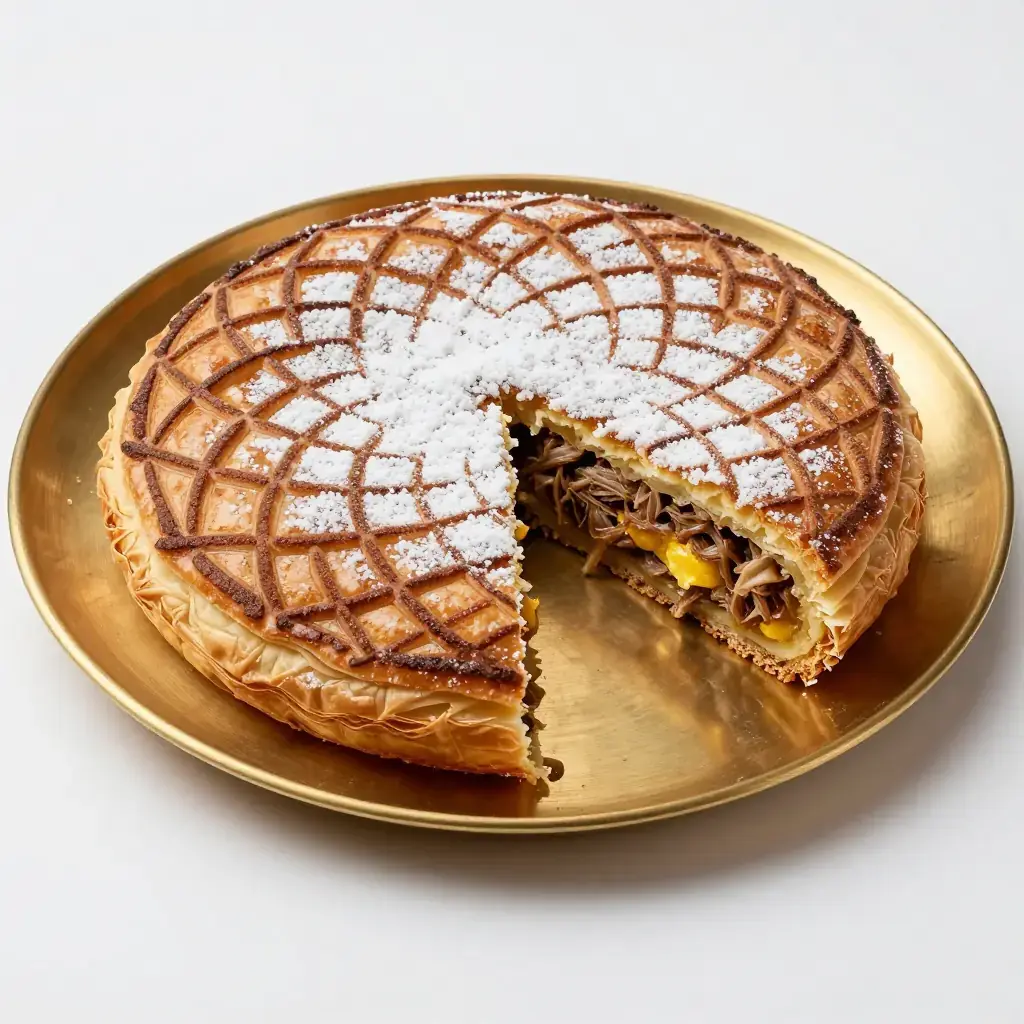
Moroccan Honey-Glazed Lamb Pastilla (Bastilla bil Laḥm)
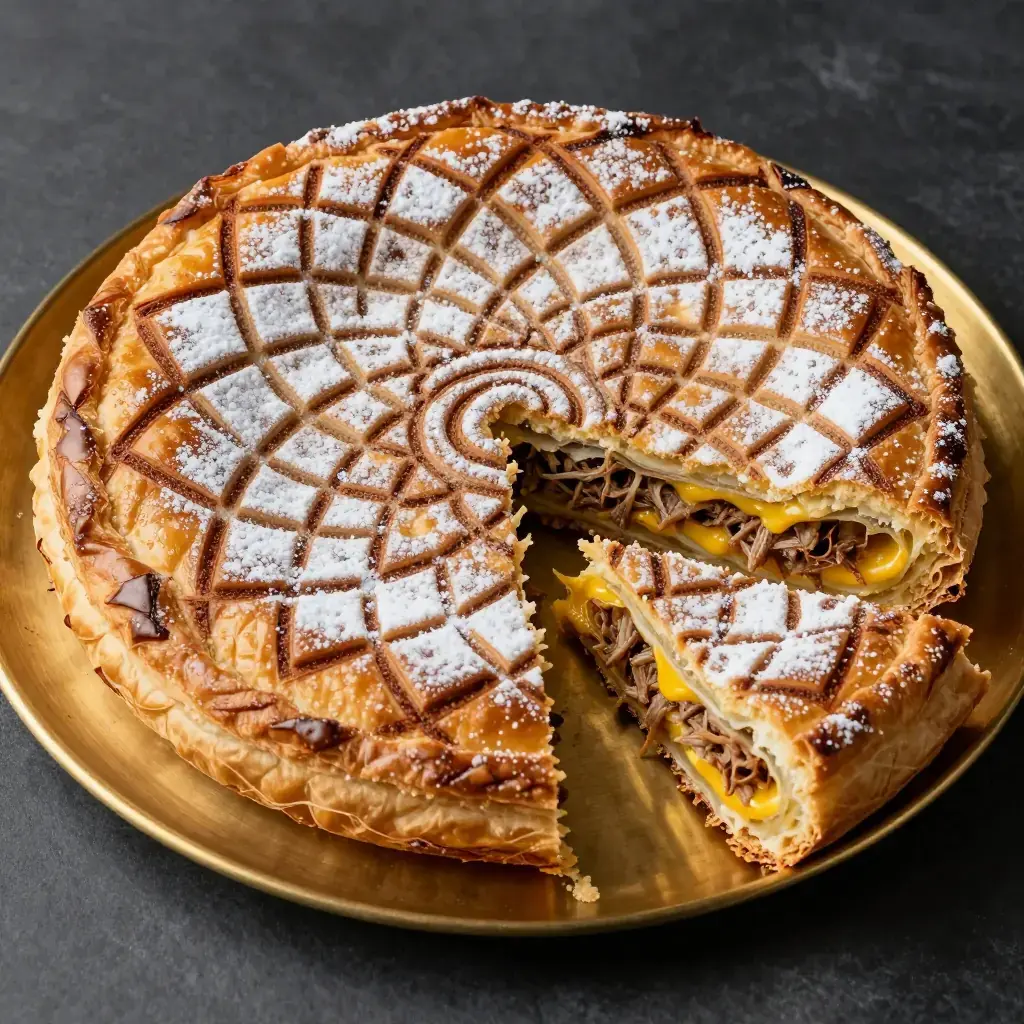
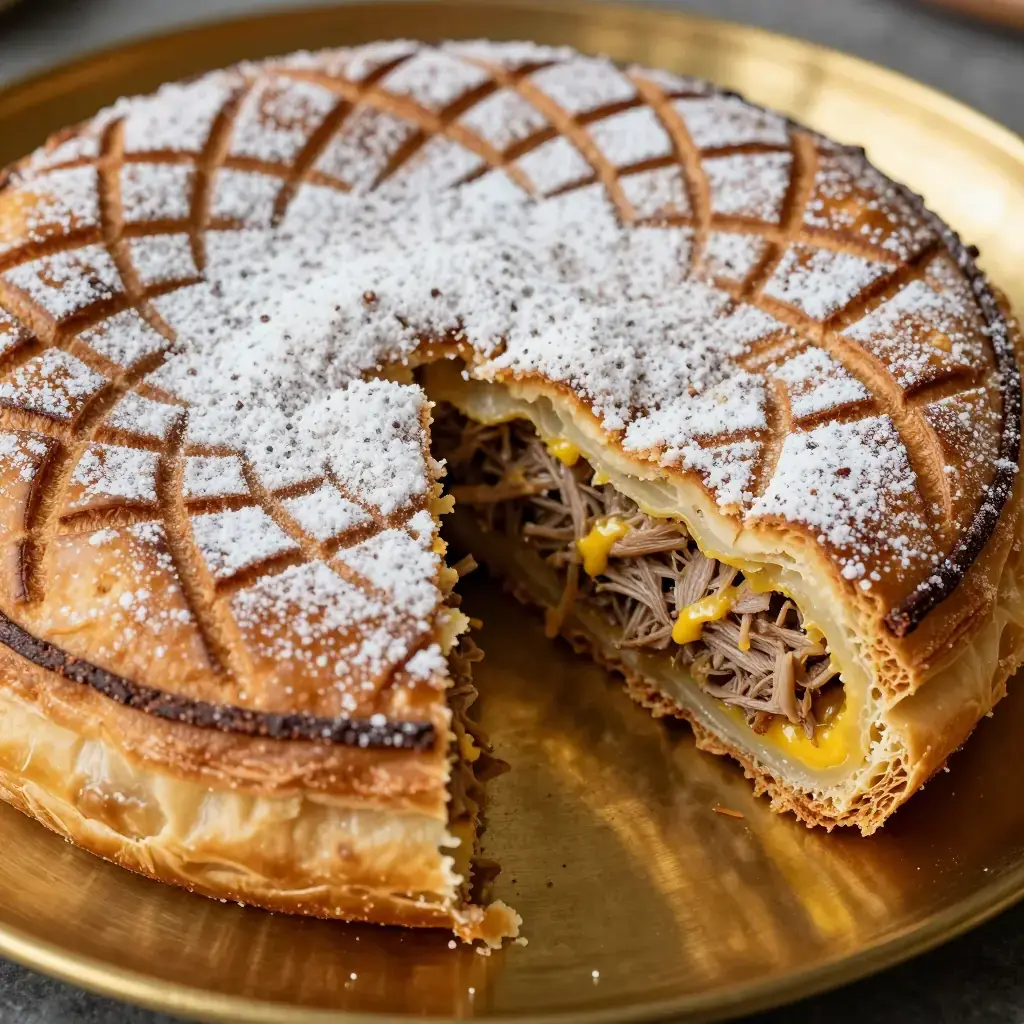
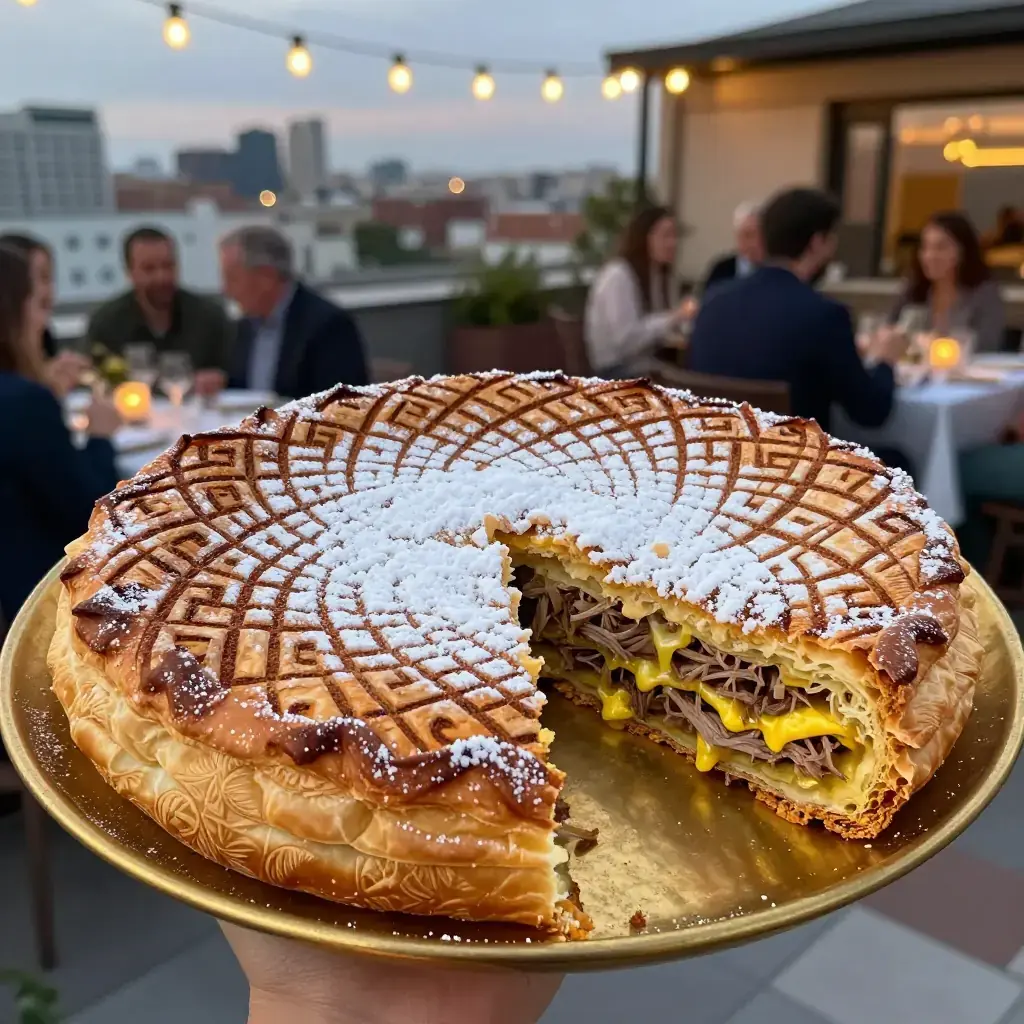
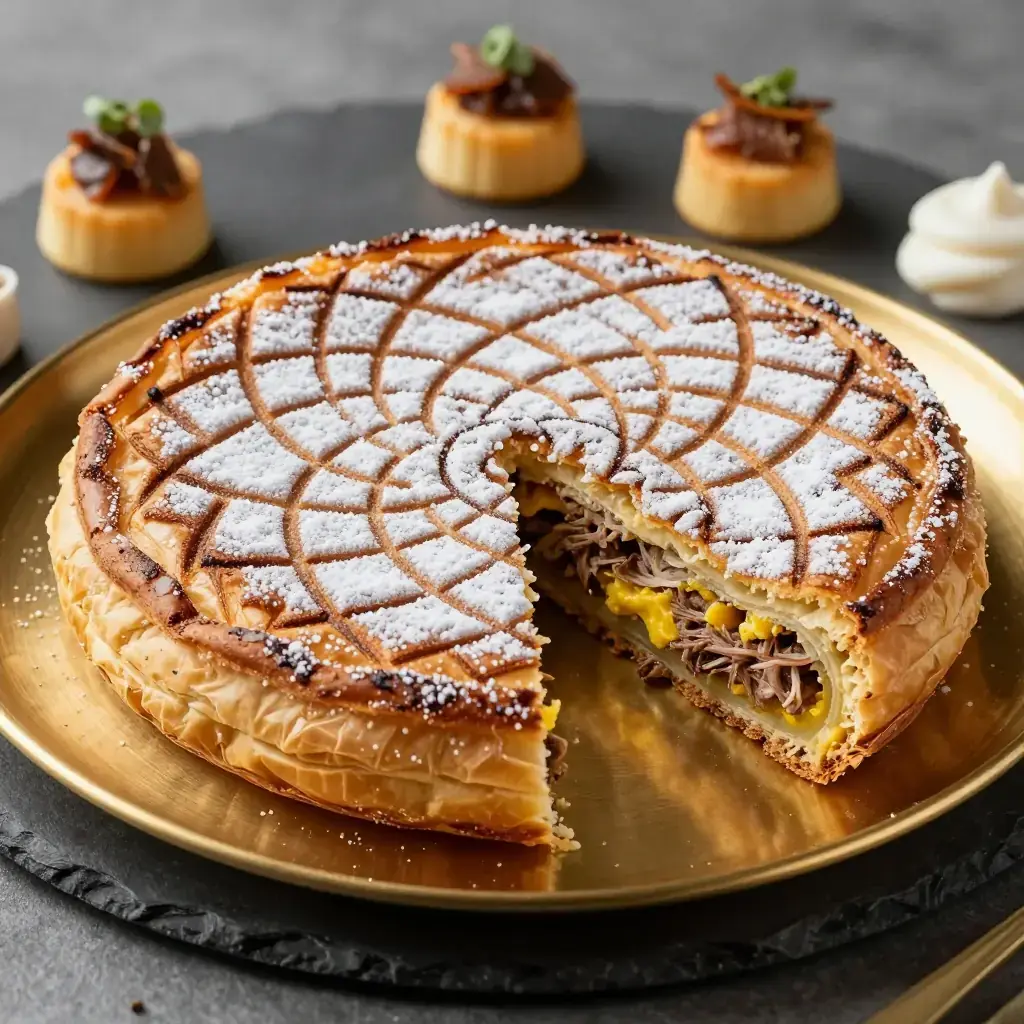
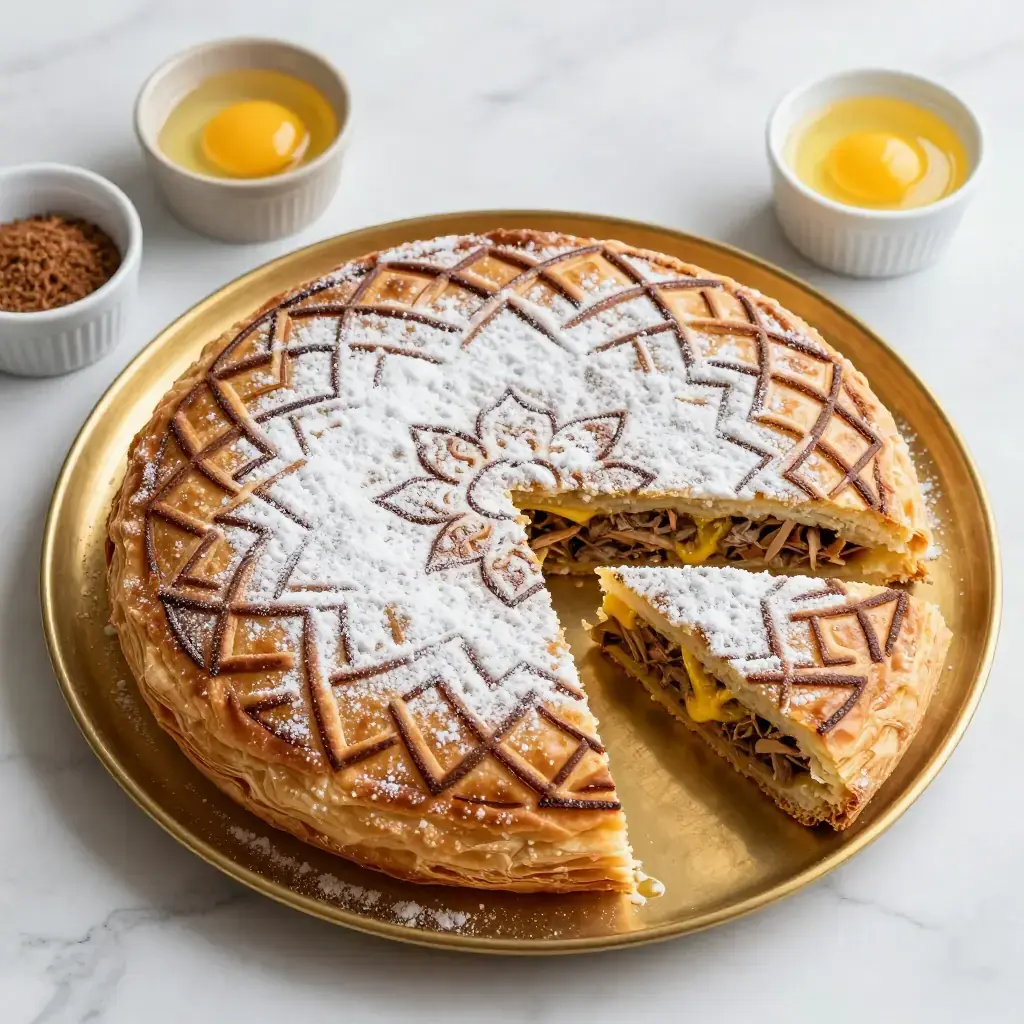
Pastilla — also spelled bastilla or b'stilla — is Morocco's most theatrical dish and one of the great expressions of Moorish culinary philosophy, which delights in the collision of sweet and savory, fragrant and rich. The classical version uses pigeon (or squab); this lamb interpretation from Fez and Meknes replaces it with slow-braised lamb shoulder shredded through a spiced onion reduction, layered with a fried egg-based filling scented with saffron and ginger, encased in gossamer-thin warqa pastry, and sealed before baking until the exterior shatters. The dusting of powdered sugar and cinnamon on the golden lid is not garnish — it is integral to the dish and historically documented to the courts of Andalusian emirs. This is medieval palatial cooking that survived the Reconquista by crossing the Strait of Gibraltar.
Serves: 6
Ingredients
For the lamb filling:
- 600 g (1 lb 5 oz) boneless lamb shoulder, cut into large chunks
- 2 large onions, finely grated
- 3 tbsp olive oil
- 1 tsp ground ginger
- 1 tsp ground cinnamon, plus extra for dusting
- ½ tsp ground turmeric
- ¼ tsp saffron threads, steeped in 2 tbsp warm water
- 1 tsp salt
- Small bunch flat-leaf parsley and coriander, finely chopped
- 3 eggs, lightly beaten
For the almond layer:
- 150 g (5½ oz / 1½ cups) blanched almonds, toasted and roughly ground
- 2 tbsp icing sugar
- 1 tsp ground cinnamon
- 1 tbsp orange blossom water
For the pastry:
- 8–10 sheets warqa or filo (phyllo) pastry
- 80 g (6 tbsp) unsalted butter, melted
For finishing:
- 2 tbsp clear honey, warmed
- Icing sugar and ground cinnamon for dusting
Instructions
- Braise the lamb: heat olive oil in a heavy pot over medium heat. Add grated onion and cook 10 minutes, stirring, until golden and very soft. Add lamb, ginger, cinnamon, turmeric, saffron water, and salt. Cover and cook over low heat 1 hour 30 minutes until lamb is very tender.
- Remove lamb from the pot and shred finely with two forks. Return the pot to medium-high heat and reduce the onion juices until nearly dry, about 10 minutes. Stir in the beaten eggs and chopped herbs, stirring constantly until the eggs set into small curds. Remove from heat and combine with the shredded lamb. Cool completely.
- Mix together ground almonds, icing sugar, cinnamon, and orange blossom water. Set aside.
- Preheat oven to 190°C (375°F). Brush a 28 cm (11 in) round ovenproof dish or springform pan with butter.
- Layer 5–6 sheets of pastry into the dish, brushing each with butter and allowing the edges to overhang by 10 cm (4 in). Spread the almond mixture over the base. Top with the lamb and egg mixture, spreading evenly.
- Fold the overhanging pastry back over the filling. Layer the remaining pastry sheets on top, buttering each, and tuck the edges under to seal.
- Brush the top generously with butter. Bake 25–30 minutes until deeply golden and crisp.
- Remove from oven, drizzle with warm honey, then dust heavily with icing sugar and draw a crosshatch pattern in cinnamon with a small sieve or skewer.
- Serve immediately, cut into wedges at the table.
Cook's Notes: Warqa is thinner and more delicate than filo and available in Moroccan and Middle Eastern grocery stores. Filo is an acceptable substitute but produces a crispier, more brittle crust. The filling can be made a full day ahead and refrigerated — it is actually easier to assemble when cold. Leftovers reheat well in a 160°C (325°F) oven for 15 minutes.
All Revisions
generated
# Moroccan Honey-Glazed Lamb Pastilla (Bastilla bil Laḥm) Pastilla — also spelled bastilla or b'stilla — is Morocco's most theatrical dish and one of the great expressions of Moorish culinary philosophy, which delights in the collision of sweet and savory, fragrant and rich. The classical version uses pigeon (or squab); this lamb interpretation from Fez and Meknes replaces it with slow-braised lamb shoulder shredded through a spiced onion reduction, layered with a fried egg-based filling scented with saffron and ginger, encased in gossamer-thin warqa pastry, and sealed before baking until the exterior shatters. The dusting of powdered sugar and cinnamon on the golden lid is not garnish — it is integral to the dish and historically documented to the courts of Andalusian emirs. This is medieval palatial cooking that survived the Reconquista by crossing the Strait of Gibraltar. Serves: 6 ## Ingredients **For the lamb filling:** - 600 g (1 lb 5 oz) boneless lamb shoulder, cut into large chunks - 2 large onions, finely grated - 3 tbsp olive oil - 1 tsp ground ginger - 1 tsp ground cinnamon, plus extra for dusting - ½ tsp ground turmeric - ¼ tsp saffron threads, steeped in 2 tbsp warm water - 1 tsp salt - Small bunch flat-leaf parsley and coriander, finely chopped - 3 eggs, lightly beaten **For the almond layer:** - 150 g (5½ oz / 1½ cups) blanched almonds, toasted and roughly ground - 2 tbsp icing sugar - 1 tsp ground cinnamon - 1 tbsp orange blossom water **For the pastry:** - 8–10 sheets warqa or filo (phyllo) pastry - 80 g (6 tbsp) unsalted butter, melted **For finishing:** - 2 tbsp clear honey, warmed - Icing sugar and ground cinnamon for dusting ## Instructions 1. Braise the lamb: heat olive oil in a heavy pot over medium heat. Add grated onion and cook 10 minutes, stirring, until golden and very soft. Add lamb, ginger, cinnamon, turmeric, saffron water, and salt. Cover and cook over low heat 1 hour 30 minutes until lamb is very tender. 2. Remove lamb from the pot and shred finely with two forks. Return the pot to medium-high heat and reduce the onion juices until nearly dry, about 10 minutes. Stir in the beaten eggs and chopped herbs, stirring constantly until the eggs set into small curds. Remove from heat and combine with the shredded lamb. Cool completely. 3. Mix together ground almonds, icing sugar, cinnamon, and orange blossom water. Set aside. 4. Preheat oven to 190°C (375°F). Brush a 28 cm (11 in) round ovenproof dish or springform pan with butter. 5. Layer 5–6 sheets of pastry into the dish, brushing each with butter and allowing the edges to overhang by 10 cm (4 in). Spread the almond mixture over the base. Top with the lamb and egg mixture, spreading evenly. 6. Fold the overhanging pastry back over the filling. Layer the remaining pastry sheets on top, buttering each, and tuck the edges under to seal. 7. Brush the top generously with butter. Bake 25–30 minutes until deeply golden and crisp. 8. Remove from oven, drizzle with warm honey, then dust heavily with icing sugar and draw a crosshatch pattern in cinnamon with a small sieve or skewer. 9. Serve immediately, cut into wedges at the table. **Cook's Notes:** Warqa is thinner and more delicate than filo and available in Moroccan and Middle Eastern grocery stores. Filo is an acceptable substitute but produces a crispier, more brittle crust. The filling can be made a full day ahead and refrigerated — it is actually easier to assemble when cold. Leftovers reheat well in a 160°C (325°F) oven for 15 minutes.Images
Tags
- baked
- braised
- dinner-party
- from-input
- historical
- indulgent
- moroccan
- weekend-project