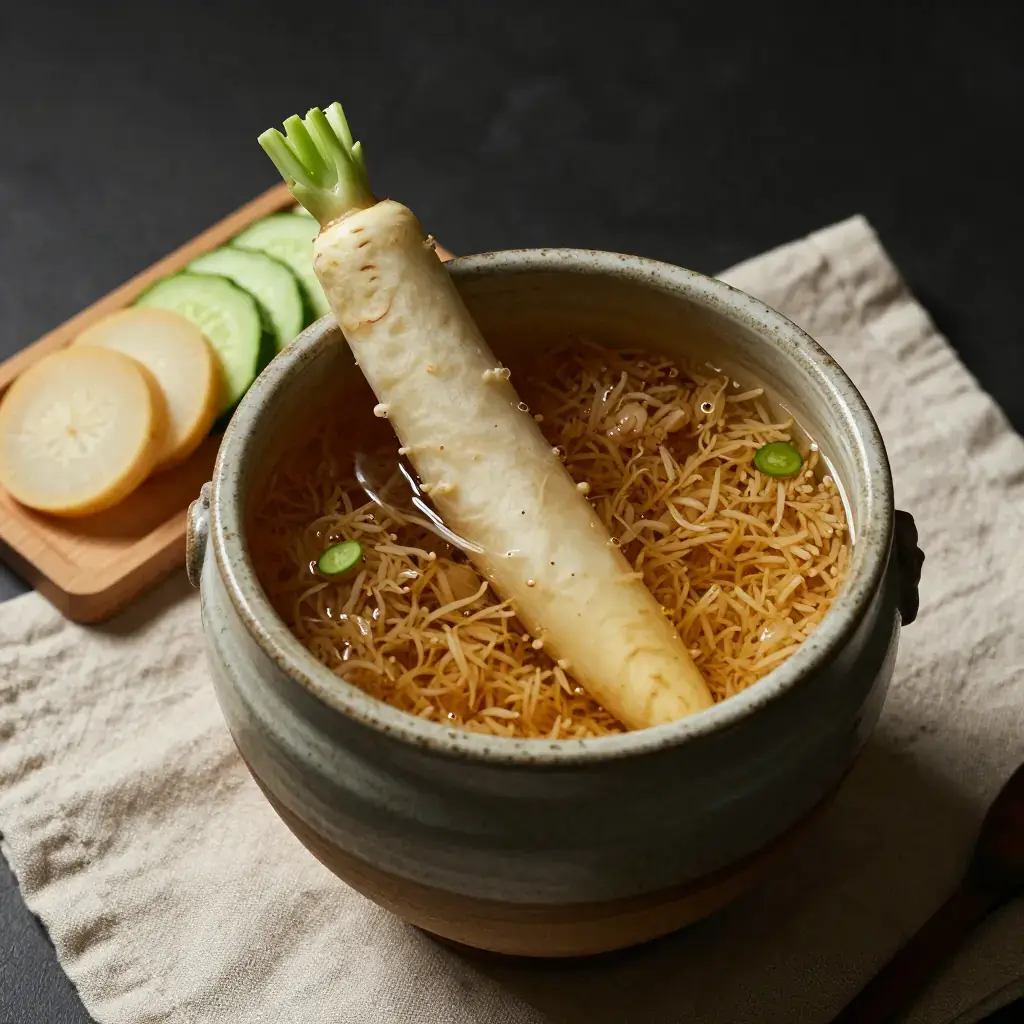
Japanese Nukadoko Pickled Vegetables (Nukazuke)
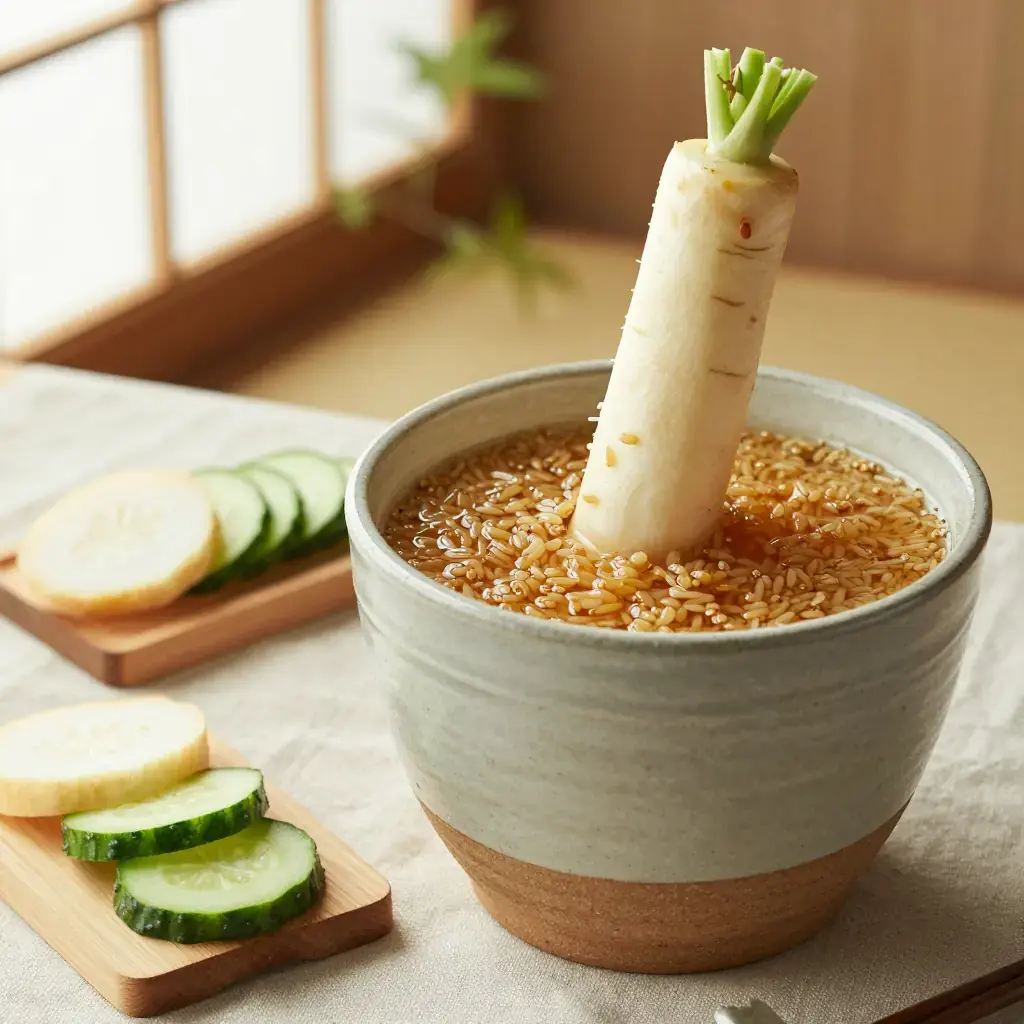
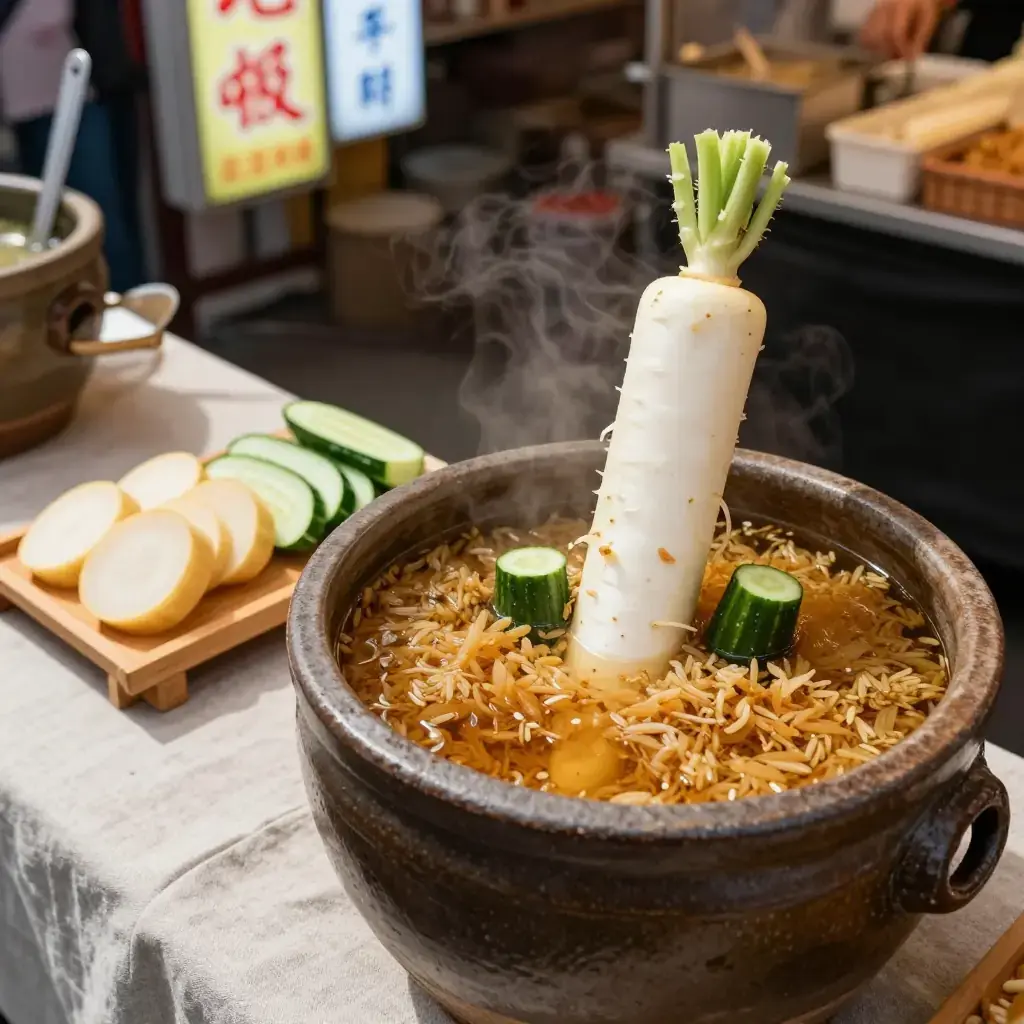
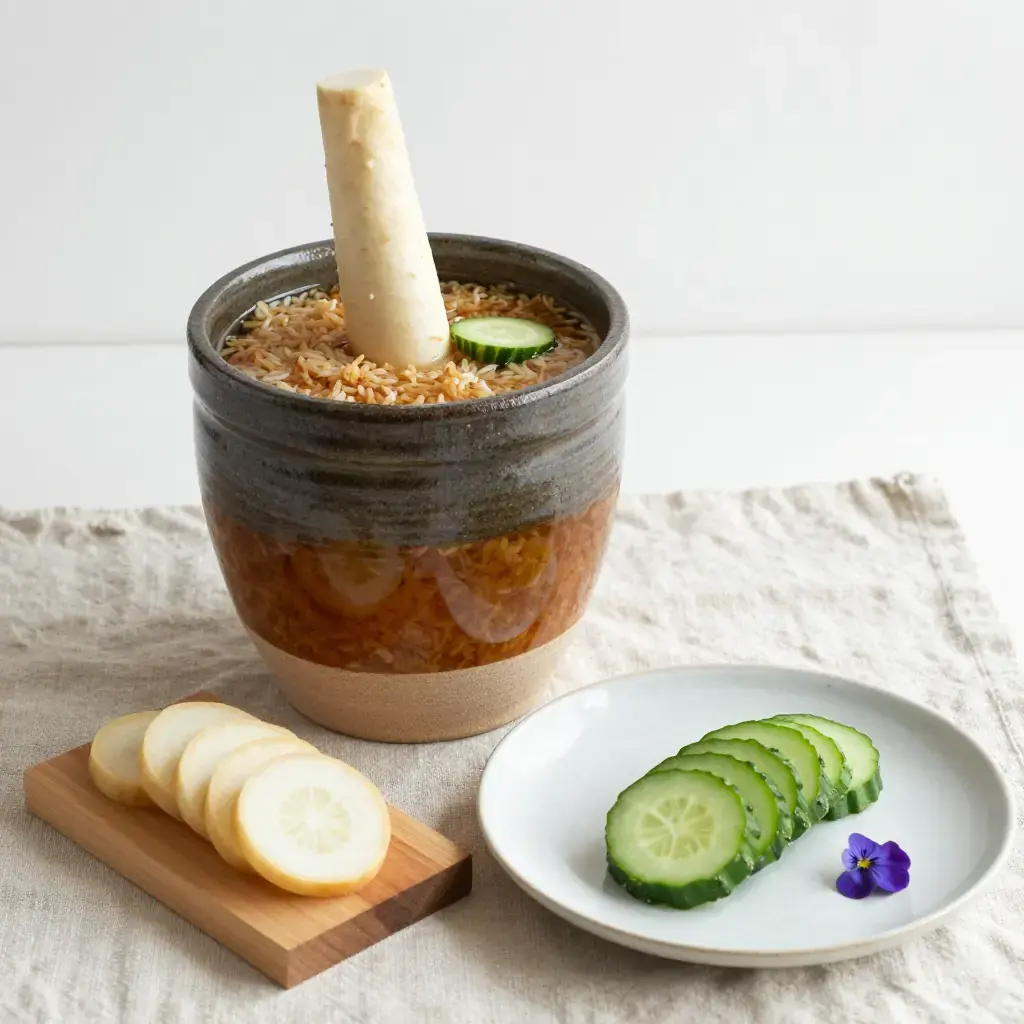
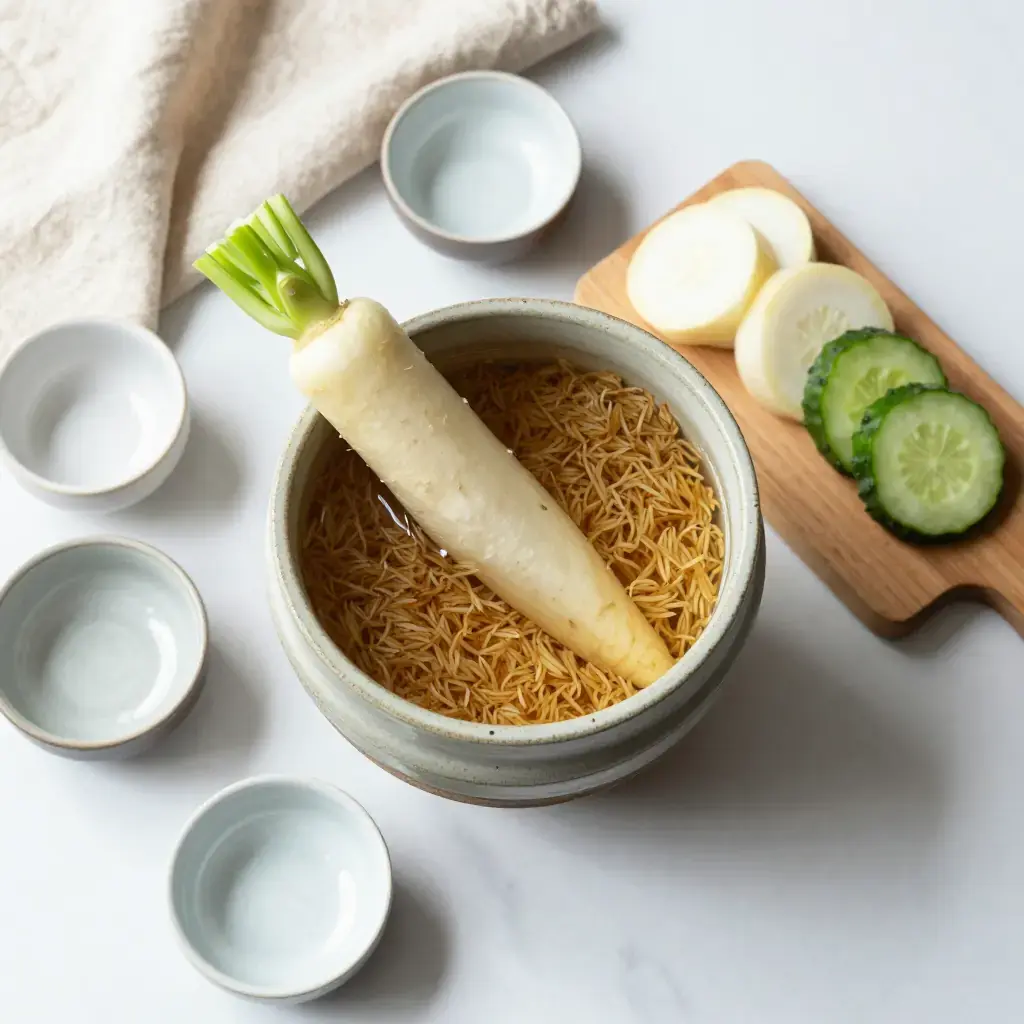
Nukazuke is one of Japan's oldest and most revered fermentation traditions, dating back over 1,300 years. Vegetables are buried in a living bed of rice bran (nukadoko) and left to ferment, producing crunchy, complex pickles loaded with probiotics, B vitamins, and umami. Every nukadoko develops its own unique microbial personality based on the hands that tend it — it is said that masters pass their beds down through generations. This recipe establishes a new bed from scratch, which takes about a week to mature before yielding its first proper pickles.
Serves: 6
Ingredients
For the nukadoko bed:
- 1 kg (2.2 lb) rice bran (nuka), lightly toasted if raw
- 130 g (4.6 oz / about ½ cup) sea salt
- 750 ml (3 cups) water, boiled and cooled
- 1 piece kombu, 10 cm (4 in)
- 2 dried red chillies
- 1 tsp mustard powder
- Optional: a handful of dried shiitake mushroom stems
Vegetables to pickle (rotating selection):
- 4 small Japanese cucumbers
- 2 medium carrots, halved lengthwise
- ½ daikon radish, cut into spears
- 4 hakurei turnips, halved
Instructions
-
Day 1 — Build the bed: Dissolve salt in the cooled boiled water. In a large, non-reactive container (ceramic or food-grade plastic works well), combine rice bran with the salted water. Mix thoroughly until the mixture resembles moist but crumbly soil that holds its shape when squeezed.
-
Bury kombu, dried chillies, mustard powder, and shiitake stems deep in the bed. These add complexity and help suppress unwanted bacteria during the early, vulnerable days.
-
Days 1–7 — Establish the bed: Each day, use your hands to turn the entire bed twice daily (morning and evening), working from the bottom up. This aerates the bed and distributes microbes evenly. Discard any excess liquid that pools. After day 3–4, the bed will smell pleasantly tangy.
-
From day 5 — First pickles: Scrub vegetables thoroughly. Push cucumbers and turnips fully into the bed, ensuring complete coverage. Carrots and daikon take longer: leave cucumbers 8–12 hours, carrots 24 hours, daikon 12–18 hours.
-
To serve: Pull vegetables from the bed, brush off excess bran, rinse lightly, and slice. Nukazuke should taste tangy, salty, and gently funky — not sour like vinegar pickles.
-
Ongoing maintenance: Feed the bed monthly with a handful of fresh rice bran and a pinch of salt. If the surface turns grey, dig it under; white spots are yeast and should also be mixed back in. The bed improves with age.
Cook's Notes: In summer, refrigerate the nukadoko between picklings to slow fermentation. In winter, the bed can rest at room temperature. Never add raw garlic to a shared bed — it overwhelms the flavour. Use freshly washed but still slightly wet hands when tending the bed; your hand bacteria contribute to the bed's character.
All Revisions
generated
# Japanese Nukadoko Pickled Vegetables (Nukazuke) Nukazuke is one of Japan's oldest and most revered fermentation traditions, dating back over 1,300 years. Vegetables are buried in a living bed of rice bran (nukadoko) and left to ferment, producing crunchy, complex pickles loaded with probiotics, B vitamins, and umami. Every nukadoko develops its own unique microbial personality based on the hands that tend it — it is said that masters pass their beds down through generations. This recipe establishes a new bed from scratch, which takes about a week to mature before yielding its first proper pickles. Serves: 6 ## Ingredients **For the nukadoko bed:** - 1 kg (2.2 lb) rice bran (nuka), lightly toasted if raw - 130 g (4.6 oz / about ½ cup) sea salt - 750 ml (3 cups) water, boiled and cooled - 1 piece kombu, 10 cm (4 in) - 2 dried red chillies - 1 tsp mustard powder - Optional: a handful of dried shiitake mushroom stems **Vegetables to pickle (rotating selection):** - 4 small Japanese cucumbers - 2 medium carrots, halved lengthwise - ½ daikon radish, cut into spears - 4 hakurei turnips, halved ## Instructions 1. **Day 1 — Build the bed:** Dissolve salt in the cooled boiled water. In a large, non-reactive container (ceramic or food-grade plastic works well), combine rice bran with the salted water. Mix thoroughly until the mixture resembles moist but crumbly soil that holds its shape when squeezed. 2. Bury kombu, dried chillies, mustard powder, and shiitake stems deep in the bed. These add complexity and help suppress unwanted bacteria during the early, vulnerable days. 3. **Days 1–7 — Establish the bed:** Each day, use your hands to turn the entire bed twice daily (morning and evening), working from the bottom up. This aerates the bed and distributes microbes evenly. Discard any excess liquid that pools. After day 3–4, the bed will smell pleasantly tangy. 4. **From day 5 — First pickles:** Scrub vegetables thoroughly. Push cucumbers and turnips fully into the bed, ensuring complete coverage. Carrots and daikon take longer: leave cucumbers 8–12 hours, carrots 24 hours, daikon 12–18 hours. 5. **To serve:** Pull vegetables from the bed, brush off excess bran, rinse lightly, and slice. Nukazuke should taste tangy, salty, and gently funky — not sour like vinegar pickles. 6. **Ongoing maintenance:** Feed the bed monthly with a handful of fresh rice bran and a pinch of salt. If the surface turns grey, dig it under; white spots are yeast and should also be mixed back in. The bed improves with age. **Cook's Notes:** In summer, refrigerate the nukadoko between picklings to slow fermentation. In winter, the bed can rest at room temperature. Never add raw garlic to a shared bed — it overwhelms the flavour. Use freshly washed but still slightly wet hands when tending the bed; your hand bacteria contribute to the bed's character.Images
Tags
- dairy-free
- fermented
- from-input
- gluten-free
- japanese
- multi-day
- root-vegetables
- vegan
- vegetarian