Feijoada
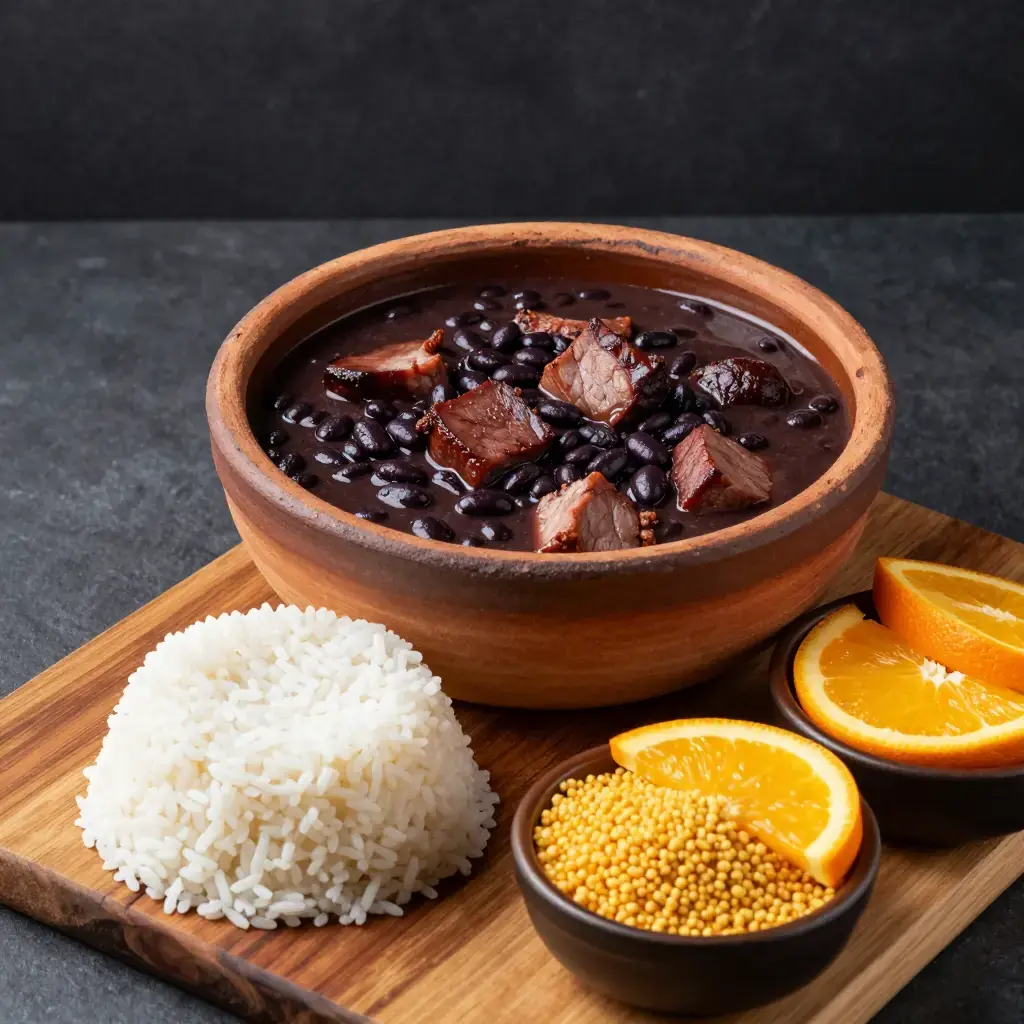
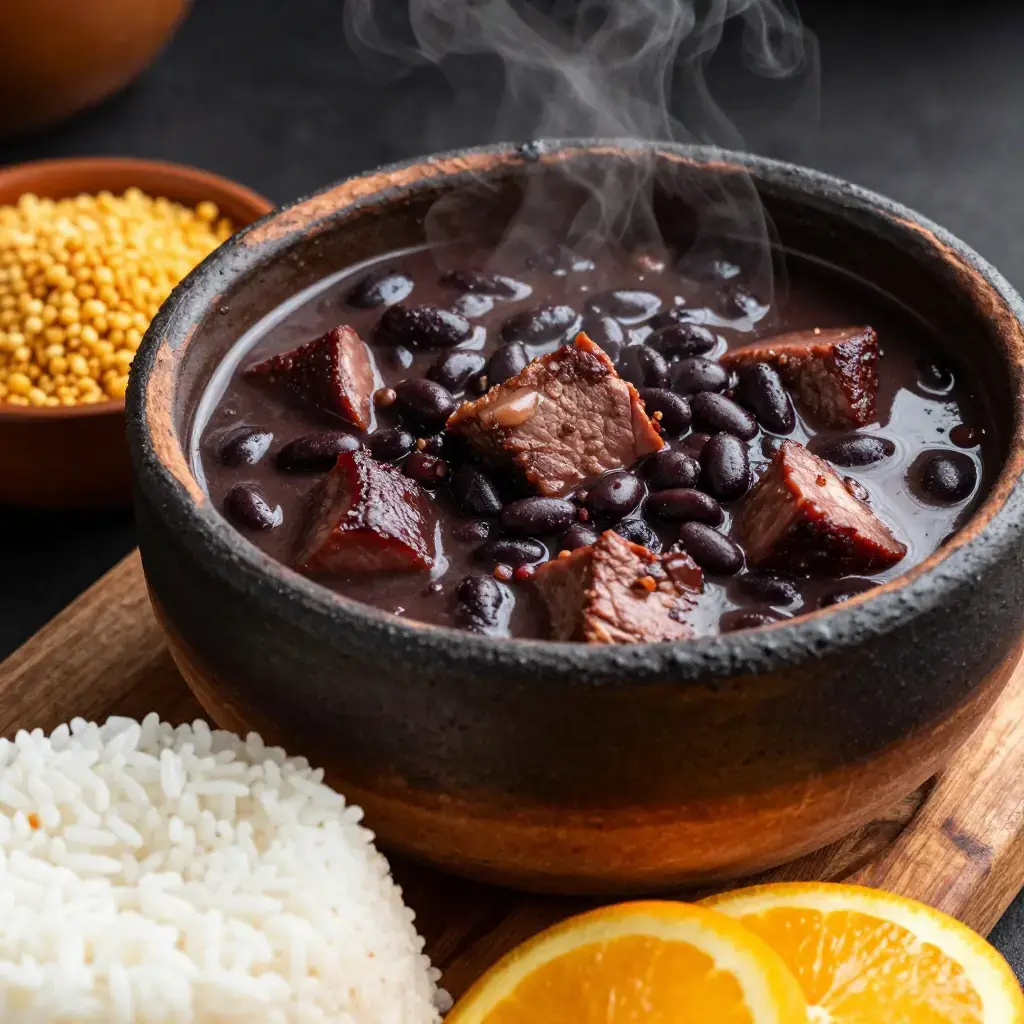
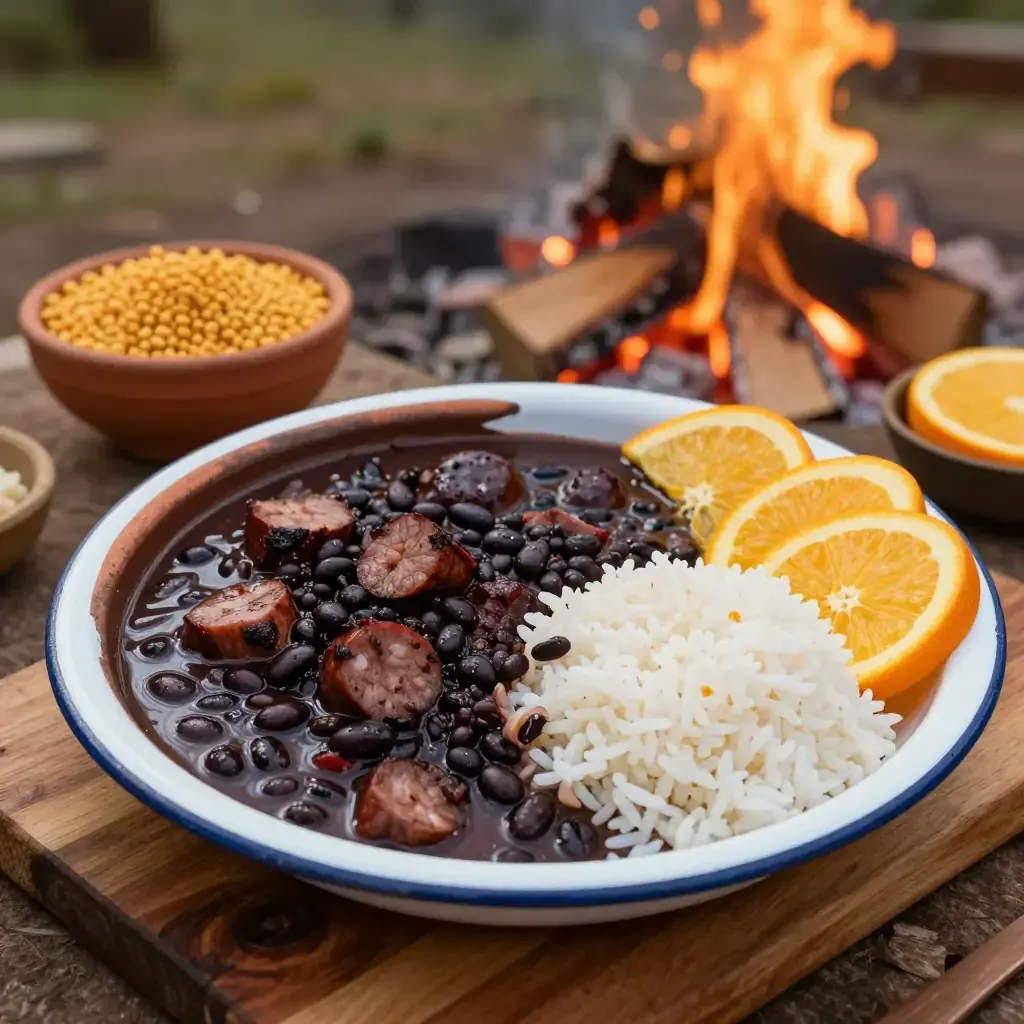
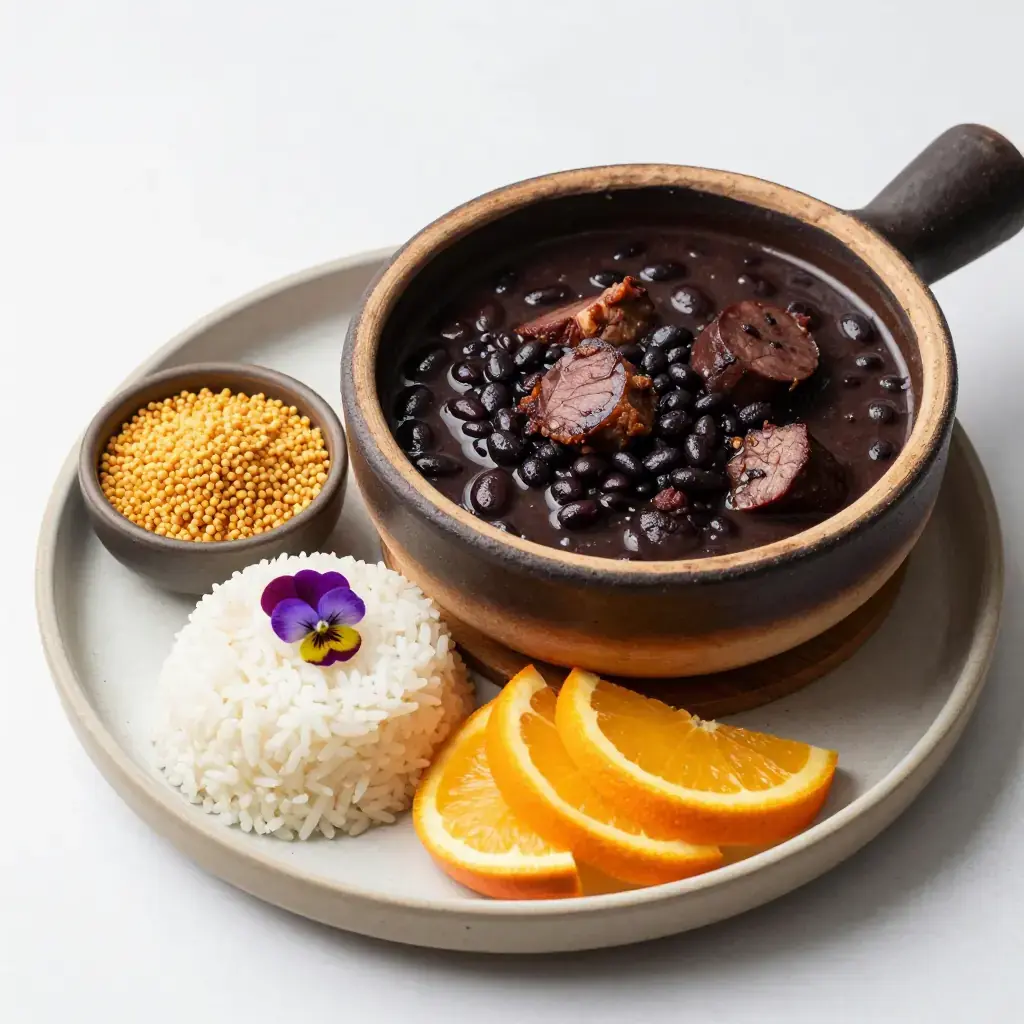
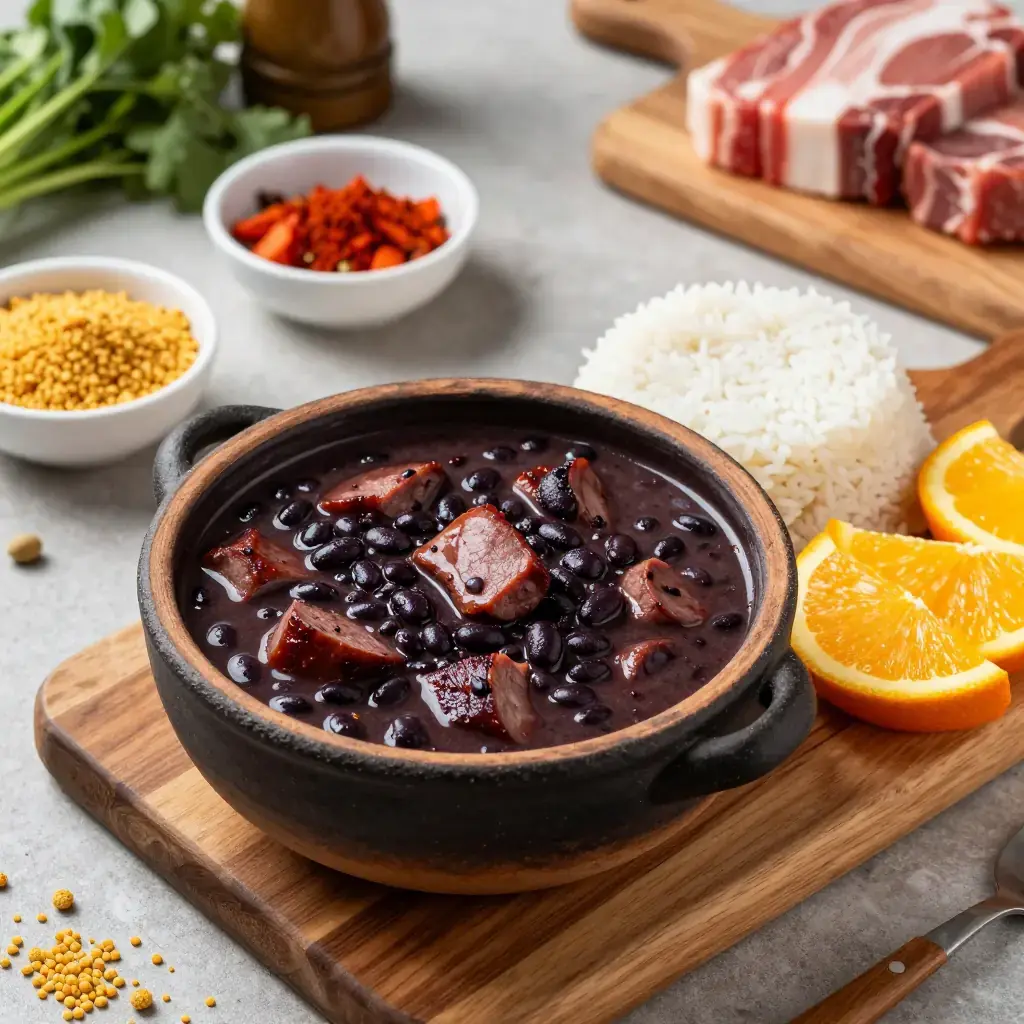
Feijoada is Brazil's most beloved dish and its unofficial national symbol — a slow-braised black bean stew enriched with multiple cuts of pork, from smoky sausage to salted ribs and ear. Its origins trace to the colonial era, when enslaved Africans on sugar plantations transformed discarded pork offcuts into something extraordinary. Today it is the centrepiece of Saturday lunches across the country, eaten over rice with farofa (toasted cassava flour), sliced oranges, and sautéed collard greens, in a meal that can last hours.
Serves: 6
Ingredients
- 500 g (1 lb 2 oz) dried black beans, soaked overnight
- 300 g (10 oz) carne seca (salted dried beef) or salt beef, soaked overnight and cubed
- 200 g (7 oz) smoked pork ribs, cut into pieces
- 200 g (7 oz) linguiça or smoked chorizo, sliced
- 150 g (5 oz) bacon lardons
- 1 large onion, finely diced
- 6 cloves garlic, minced
- 2 bay leaves
- 2 tablespoons vegetable oil
- Salt and black pepper to taste
- Sliced oranges, farofa, and cooked rice to serve
Instructions
- Drain the soaked beans and salted beef. Rinse the beef thoroughly under cold water to remove excess salt.
- In a large, heavy pot, heat the oil over medium-high heat. Brown the bacon lardons for 3–4 minutes, then add the onion and cook until golden, about 6 minutes. Add the garlic and stir for 1 minute until fragrant.
- Add the ribs, carne seca, and sausage. Brown lightly for 5 minutes, turning occasionally.
- Add the drained black beans, bay leaves, and enough cold water to cover everything by 5 cm (2 in). Bring to a boil, skimming any foam from the surface.
- Reduce heat to low, cover partially, and braise for 2 to 2½ hours, stirring every 30 minutes, until the beans are completely tender and the broth is thick and deeply flavoured. Add water as needed to keep everything submerged.
- Taste and adjust seasoning. Remove bay leaves. Ladle over rice and serve with oranges and farofa.
Cook's Notes: Soaking both the beans and the salted meat overnight is essential — beans for even cooking, meat to draw out excess salt. A pressure cooker can reduce the bean cooking time to 40 minutes. Leftovers deepen in flavour overnight and are arguably better the next day.
All Revisions
generated
# Feijoada Feijoada is Brazil's most beloved dish and its unofficial national symbol — a slow-braised black bean stew enriched with multiple cuts of pork, from smoky sausage to salted ribs and ear. Its origins trace to the colonial era, when enslaved Africans on sugar plantations transformed discarded pork offcuts into something extraordinary. Today it is the centrepiece of Saturday lunches across the country, eaten over rice with farofa (toasted cassava flour), sliced oranges, and sautéed collard greens, in a meal that can last hours. Serves: 6 ## Ingredients - 500 g (1 lb 2 oz) dried black beans, soaked overnight - 300 g (10 oz) carne seca (salted dried beef) or salt beef, soaked overnight and cubed - 200 g (7 oz) smoked pork ribs, cut into pieces - 200 g (7 oz) linguiça or smoked chorizo, sliced - 150 g (5 oz) bacon lardons - 1 large onion, finely diced - 6 cloves garlic, minced - 2 bay leaves - 2 tablespoons vegetable oil - Salt and black pepper to taste - Sliced oranges, farofa, and cooked rice to serve ## Instructions 1. Drain the soaked beans and salted beef. Rinse the beef thoroughly under cold water to remove excess salt. 2. In a large, heavy pot, heat the oil over medium-high heat. Brown the bacon lardons for 3–4 minutes, then add the onion and cook until golden, about 6 minutes. Add the garlic and stir for 1 minute until fragrant. 3. Add the ribs, carne seca, and sausage. Brown lightly for 5 minutes, turning occasionally. 4. Add the drained black beans, bay leaves, and enough cold water to cover everything by 5 cm (2 in). Bring to a boil, skimming any foam from the surface. 5. Reduce heat to low, cover partially, and braise for 2 to 2½ hours, stirring every 30 minutes, until the beans are completely tender and the broth is thick and deeply flavoured. Add water as needed to keep everything submerged. 6. Taste and adjust seasoning. Remove bay leaves. Ladle over rice and serve with oranges and farofa. **Cook's Notes:** Soaking both the beans and the salted meat overnight is essential — beans for even cooking, meat to draw out excess salt. A pressure cooker can reduce the bean cooking time to 40 minutes. Leftovers deepen in flavour overnight and are arguably better the next day.Images
Tags
- beans
- braised
- brazilian
- dinner
- from-input
- historical
- indulgent
- one-pot
- weekend-project