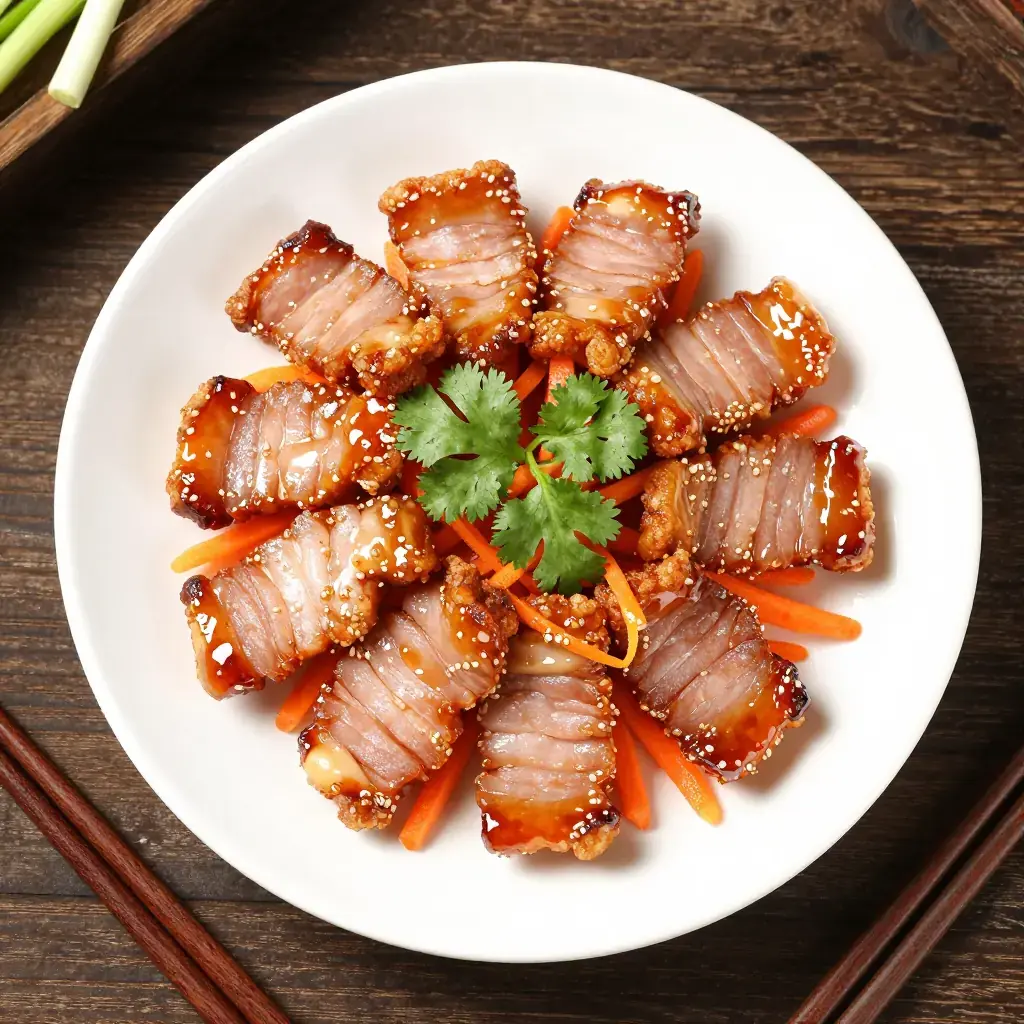
Guo Bao Rou
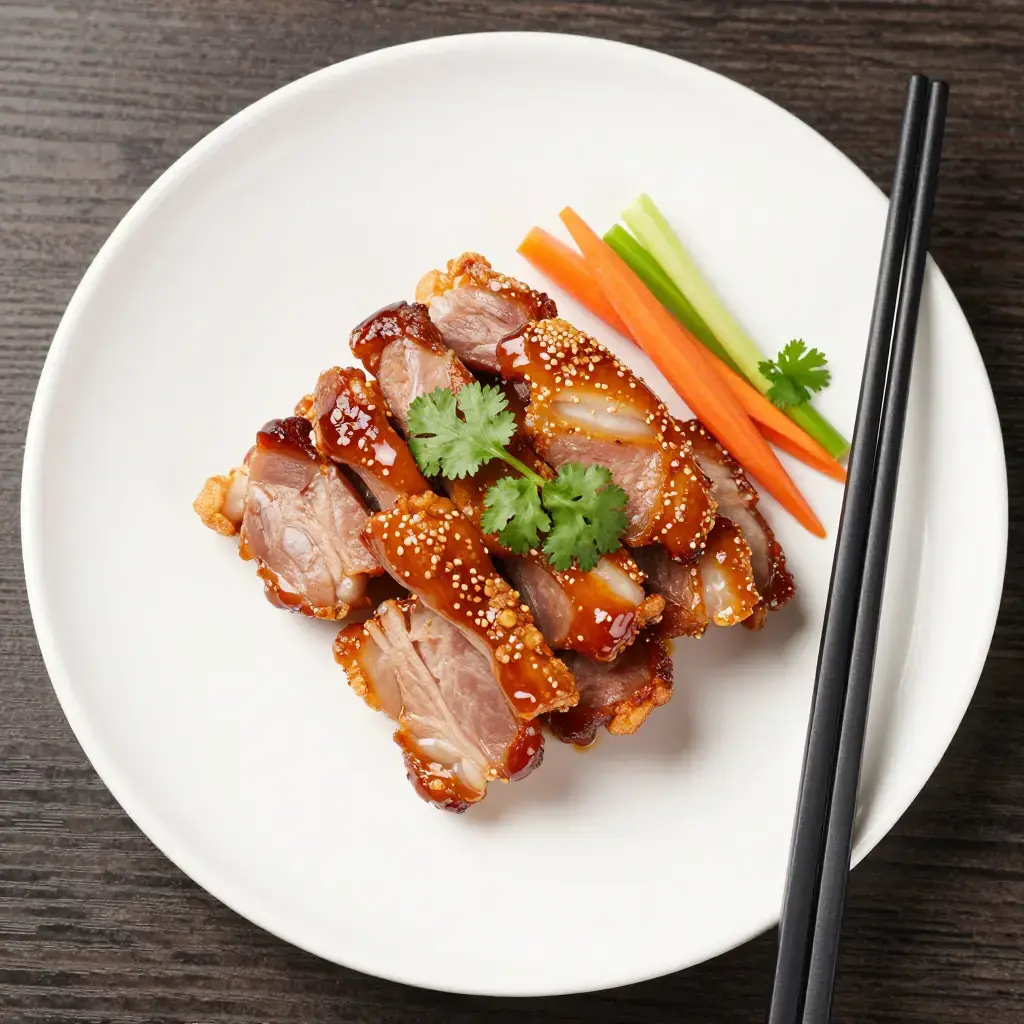
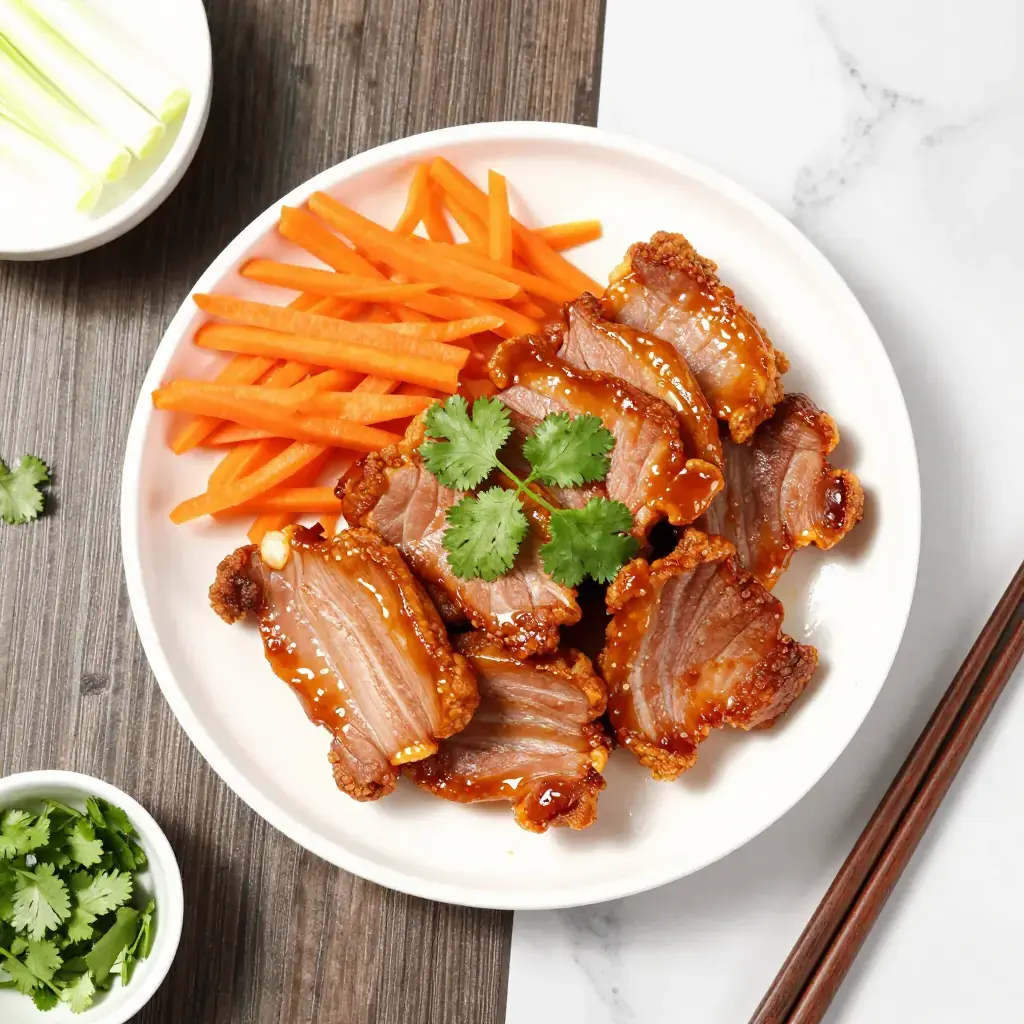
Guo Bao Rou is the pride of Dongbei (Northeast Chinese) cuisine, invented in Harbin in the late Qing dynasty for Russian dignitaries who preferred sweet-sour flavors to spice. Unlike its Shanghainese counterpart, the Dongbei original uses rice vinegar and sugar without tomato, producing a brilliant amber glaze over shatteringly crisp pork.
Serves: 4
Ingredients
Pork
- 500 g (1.1 lb) pork loin, sliced 5 mm (¼ inch) thick against the grain
- 120 g (1 cup) potato starch (not cornstarch)
- Cold water, as needed
- Neutral oil for deep-frying
Sauce
- 60 ml (¼ cup) rice vinegar
- 50 g (3½ tbsp) granulated sugar
- 15 ml (1 tbsp) light soy sauce
- 5 ml (1 tsp) sesame oil
- 3 garlic cloves, minced
- 5 g (1 tsp) fresh ginger, minced
- 1 small carrot, julienned
- 4 spring onion whites, cut into 4 cm (1½ inch) batons
- Small handful fresh coriander (cilantro), to garnish
Instructions
- Mix potato starch with just enough cold water to form a thick paste (like Greek yogurt). Coat pork slices thoroughly and let sit 5 minutes — the thick coat is what creates the signature crust.
- Heat oil to 180 °C (350 °F) in a wok or deep pot. Fry pork slices in batches for 3–4 minutes until pale gold. Drain on a rack.
- Raise oil temperature to 200 °C (390 °F). Fry pork a second time for 90 seconds until deeply golden and crackling. Drain again.
- In a separate wok over high heat, combine vinegar, sugar, soy sauce, and sesame oil. Stir until sugar dissolves and sauce reduces by one-third, about 2 minutes.
- Add garlic, ginger, carrot, and spring onion; toss 30 seconds. Add the fried pork and toss rapidly to coat — work quickly so the crust stays crisp.
- Plate immediately and garnish with fresh coriander.
Cook's Notes: Potato starch is non-negotiable — cornstarch produces a softer, greasier result. The double-fry is likewise essential: the first fry cooks through, the second builds the glassy shell. Serve within 2 minutes of saucing or the crust softens. Some cooks add a thin slice of dried orange peel (陈皮) to the sauce for complexity.
All Revisions
generated
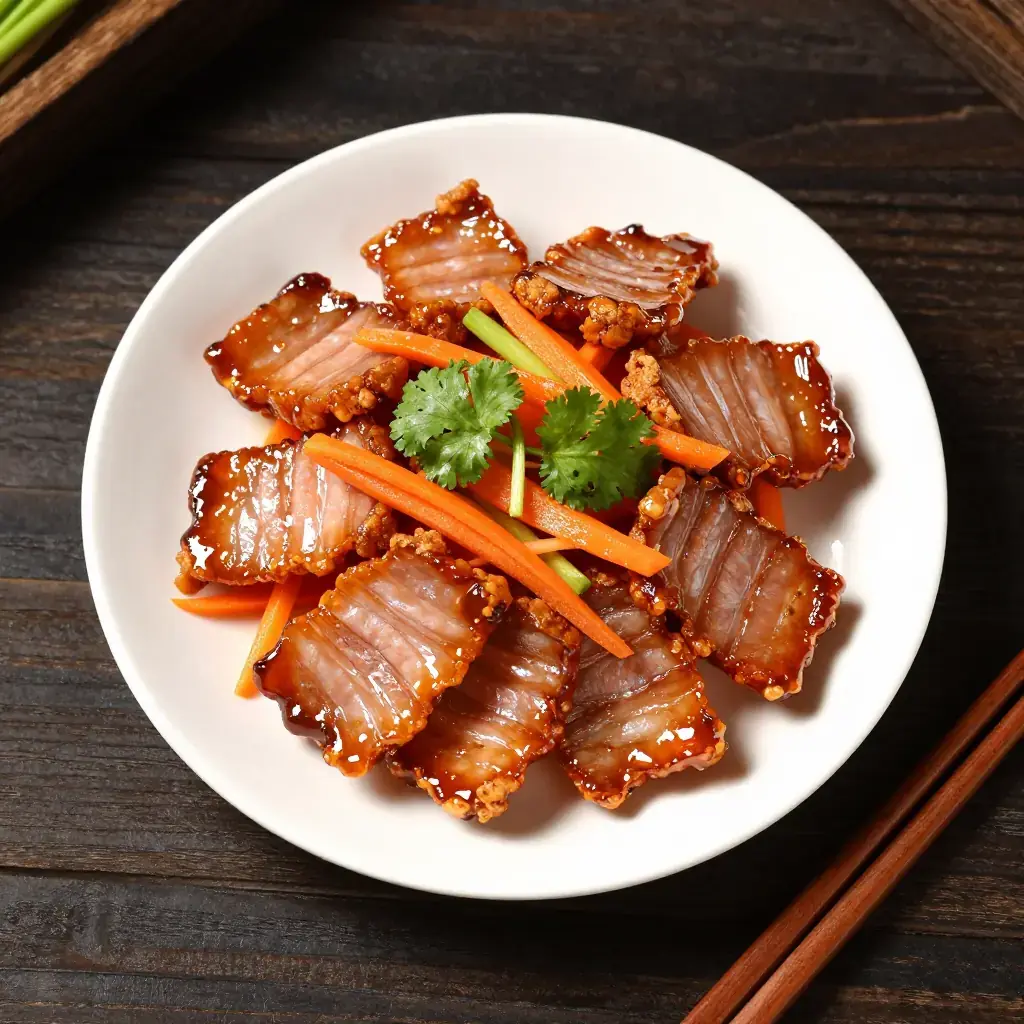
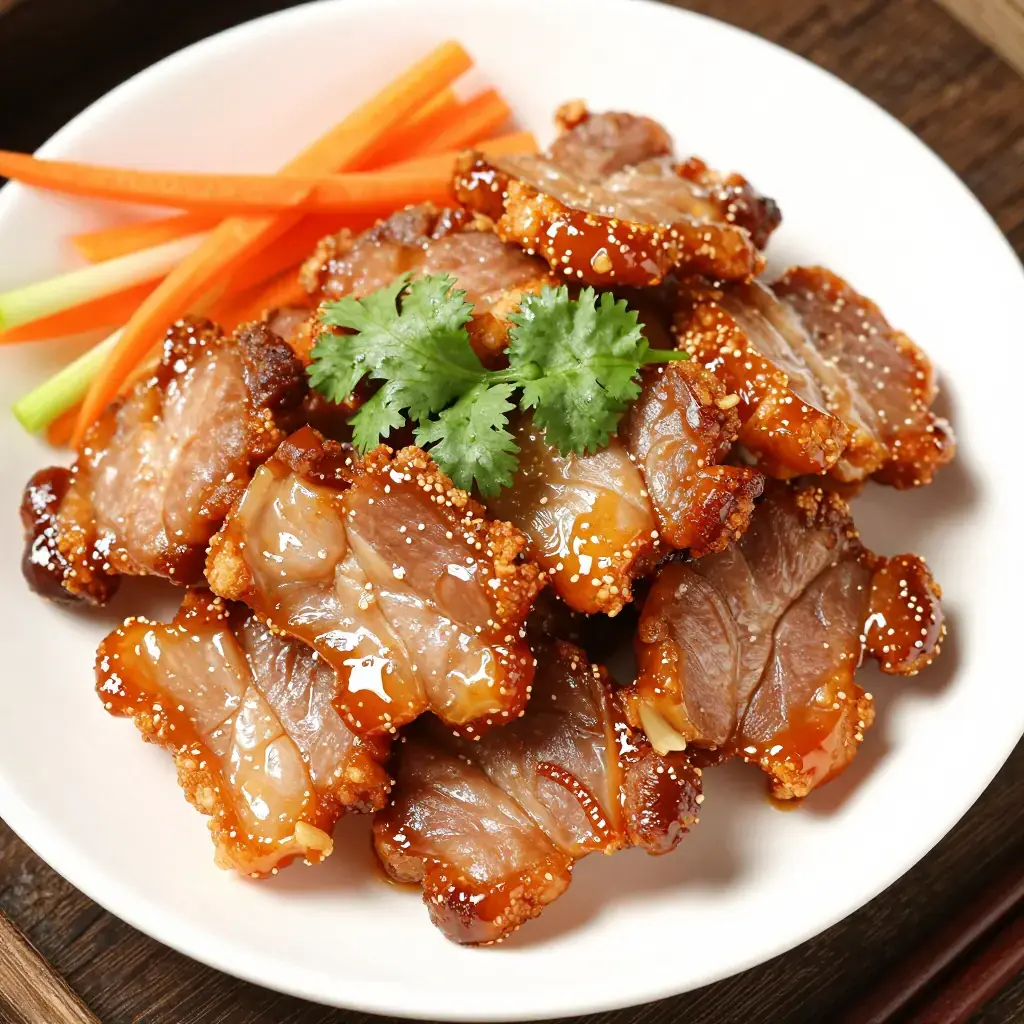
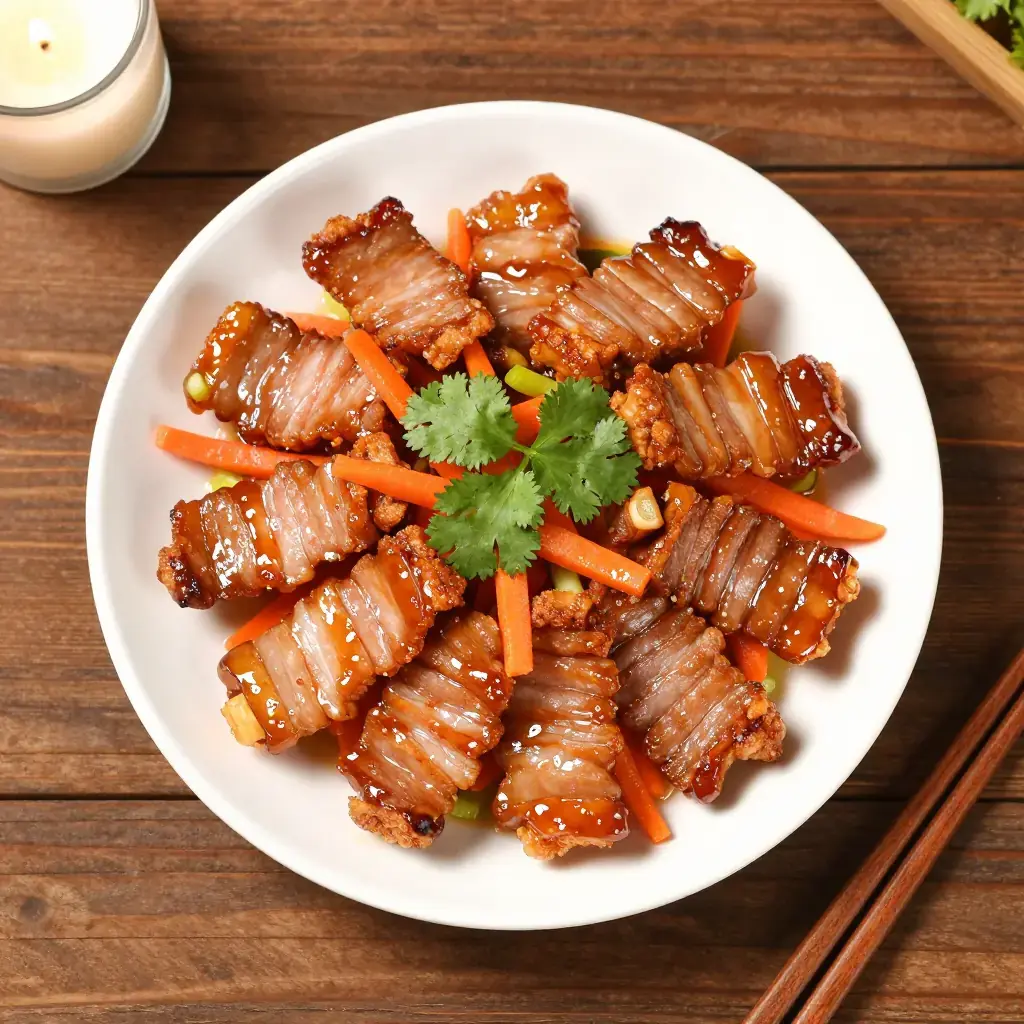
# Guo Bao Rou Guo Bao Rou is the pride of Dongbei (Northeast Chinese) cuisine, invented in Harbin in the late Qing dynasty for Russian dignitaries who preferred sweet-sour flavors to spice. Unlike its Shanghainese counterpart, the Dongbei original uses rice vinegar and sugar without tomato, producing a brilliant amber glaze over shatteringly crisp pork. Serves: 4 ## Ingredients ### Pork - 500 g (1.1 lb) pork loin, sliced 5 mm (¼ inch) thick against the grain - 120 g (1 cup) potato starch (not cornstarch) - Cold water, as needed - Neutral oil for deep-frying ### Sauce - 60 ml (¼ cup) rice vinegar - 50 g (3½ tbsp) granulated sugar - 15 ml (1 tbsp) light soy sauce - 5 ml (1 tsp) sesame oil - 3 garlic cloves, minced - 5 g (1 tsp) fresh ginger, minced - 1 small carrot, julienned - 4 spring onion whites, cut into 4 cm (1½ inch) batons - Small handful fresh coriander (cilantro), to garnish ## Instructions 1. Mix potato starch with just enough cold water to form a thick paste (like Greek yogurt). Coat pork slices thoroughly and let sit 5 minutes — the thick coat is what creates the signature crust. 2. Heat oil to 180 °C (350 °F) in a wok or deep pot. Fry pork slices in batches for 3–4 minutes until pale gold. Drain on a rack. 3. Raise oil temperature to 200 °C (390 °F). Fry pork a second time for 90 seconds until deeply golden and crackling. Drain again. 4. In a separate wok over high heat, combine vinegar, sugar, soy sauce, and sesame oil. Stir until sugar dissolves and sauce reduces by one-third, about 2 minutes. 5. Add garlic, ginger, carrot, and spring onion; toss 30 seconds. Add the fried pork and toss rapidly to coat — work quickly so the crust stays crisp. 6. Plate immediately and garnish with fresh coriander. **Cook's Notes:** Potato starch is non-negotiable — cornstarch produces a softer, greasier result. The double-fry is likewise essential: the first fry cooks through, the second builds the glassy shell. Serve within 2 minutes of saucing or the crust softens. Some cooks add a thin slice of dried orange peel (陈皮) to the sauce for complexity.Images
Tags
- authentic
- deep-fried
- dinner-party
- dongbei
- fresh-herbs
- from-input
- historical
- indulgent