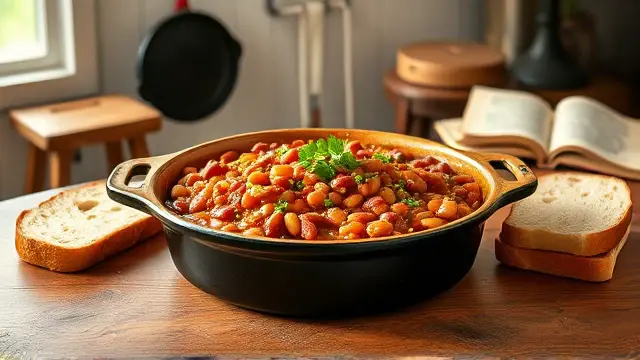
A one-pound bag of dried black beans costs $0.89 at Food Lion. When you cook them, you get about six cups of beans — creamy, dense, with a cooking liquid so rich it tastes like you've been making stock all afternoon. A can of beans gives you about one and three-quarter cups of product after draining, at $0.79 a can. People buy the cans.
I want to make the argument for dried beans, because I think the reputation problem is not about taste or even effort — it's about the word "dried." It sounds deprivation-adjacent, like something you eat when you can't afford anything better. This is exactly backwards. Dried beans are the superior form of the ingredient. They cost less, taste better, and give you more to work with. The math does not care how you feel about the packaging.
What you're actually getting
Six cups of cooked beans from one $0.89 bag. That comes to about fifteen cents per cup of cooked beans. A can gives you roughly one and three-quarter cups for seventy-nine cents — forty-five cents per cup. Dried beans cost one-third as much per serving as canned.
And canned beans come in a liquid that is mostly water, salt, and dissolved starch. Dried beans, when you cook them yourself, give you beans plus a cooking liquid that is genuinely useful. That liquid — pot liquor, bean broth, call it what you want — is starchy and savory and full of whatever you cooked the beans with: the onion, the bay leaf, the garlic. It thins refried beans so they don't turn to paste. It forms the base of a soup that tastes like it's been going since morning. It adds body to chili in a way that plain water never does.
With canned beans, you drain all of that away. You are paying for convenience and getting less of everything else.
What dried beans actually cost you
Time, mostly — and not as much as people think. You soak them overnight, twelve hours in a bowl of cold water on the counter. This requires nothing from you. You're asleep. In the morning you drain them, cover them with fresh water, and simmer for about ninety minutes. The active time is four minutes: drain, cover, turn on the burner, set a timer.
If you forgot to soak the night before, the quick-soak method works: cover the beans with water, bring to a boil, boil two minutes, turn off the heat, let them sit one hour. Not quite as good in texture, but perfectly usable and the whole thing still costs ninety cents.
The argument against dried beans is that opening a can is faster. That is true. It is also true that boiling water is faster than making coffee, and I'm still making coffee.
What you can do with them
A pot of cooked beans is not one dish. It is a category.
As a protein substitute: Beans have about fifteen grams of protein per cup, comparable to two ounces of chicken. Paired with rice — which is what we do regularly — they provide a complete protein. This is not a coincidence. Rice and beans show up in every food culture that has ever fed people reliably on limited budgets because the combination works. It covers the nutritional gap, it fills people up, and it costs under two dollars for three people including Marcus, who eats more than any teenager has a right to.
As a soup base: The pot liquor is the underrated part. When I use the bean cooking liquid in soup — Easy Vegetable Soup with potatoes and carrots and whatever needs using up — the result tastes like something that's been simmering all day. The starch thickens it slightly. The savory depth is already there without having to buy broth. You're not adding flavor from a box. You're using what was already in the pot.
Dried beans also hold their shape in soup in a way that canned beans simply don't. A cooked dried bean stays intact, has some resistance when you bite into it, and doesn't dissolve into the broth after twenty minutes on the stove. If you have ever made chili that turned into an undifferentiated brown paste, that is canned beans doing that to you. Calico beans made from dried beans have actual texture.
As a spread or dip: Refried beans from a can are a brown paste with a texture that suggests something has gone wrong. Refried beans made from dried pintos or dried blacks — mashed partially with a potato masher, so you have some whole beans and some broken ones, cooked in a hot skillet with a little oil — are a completely different product. Chunky. Alive-looking. They taste like the beans themselves, not like salt and stabilizers. My mother eats them straight from the pan with a spoon. She calls it a snack. She is not wrong.
As a side dish: Beans as a side dish is underused outside of specifically Latin and Southern cooking. A bowl of white beans cooked with a garlic clove and some olive oil, salted properly, is a respectable side for almost anything. Better than most vegetable sides because it adds protein, fills people up, and takes no active time once the beans are cooked. I make dirty rice with leftover beans folded in and it becomes a full meal instead of a side.
Why I always have beans in the pantry
Because they keep indefinitely. A bag of dried beans sitting in my cabinet is not money I've spent and forgotten about. It's a meal I can make at any point in the next two years without going back to the store. I keep black beans, pinto beans, and white navy beans at a minimum, often more.
When dinner needs to happen and I have no plan, I have beans. When the protein I was counting on is still frozen solid, I have beans. When Marcus comes home from school and announces that two friends are staying for dinner — which happens with no warning, because he's sixteen — I have beans, and a pot of rice and beans with cheese and whatever salsa is in the fridge feeds five people without drama and without spending anything I wasn't already going to spend.
My mother's mother kept a jar of dried beans on the kitchen shelf. My mother kept a bag in the pantry. I keep several. This is not sentiment. It's just the sensible thing. You keep on hand what feeds people reliably, costs almost nothing, and has exactly zero downside.
A bag of dried beans costs eighty-nine cents. The argument for buying them is just: they are better in every measurable way, and the only thing they cost you is thinking one day ahead. You should probably buy three.