Meringue is one of the simplest preparations in pastry — egg whites, sugar, and air. Three ingredients, and yet it goes wrong constantly. I've taught workshops where half the room produces perfect glossy peaks and the other half gets something resembling wet insulation. The difference is almost always one of these five mistakes.
1. A Dirty Bowl
Fat prevents egg white proteins from unfolding and trapping air. It doesn't take much — a thin film of residual oil from a previous use, a trace of yolk from a careless separation. Glass or metal bowls are best. Plastic is porous and holds onto grease no matter how well you wash it.
Worth the effort: Wipe your bowl and whisk with a cut lemon or a splash of white vinegar before you start. It takes ten seconds and eliminates the most common cause of flat meringue.
2. Adding Sugar Too Early
Sugar interferes with the initial protein bonding that creates foam structure. If you add it before the whites have reached soft peaks, you'll get volume — eventually — but the texture will be dense and the meringue will weep liquid later.
The method that works: beat whites on medium-high until soft peaks form, then add sugar a tablespoon at a time with the mixer running. This sounds fussy, but it lets each addition dissolve into the foam rather than sitting as undissolved crystals. Which brings us to the next problem.
3. Undissolved Sugar
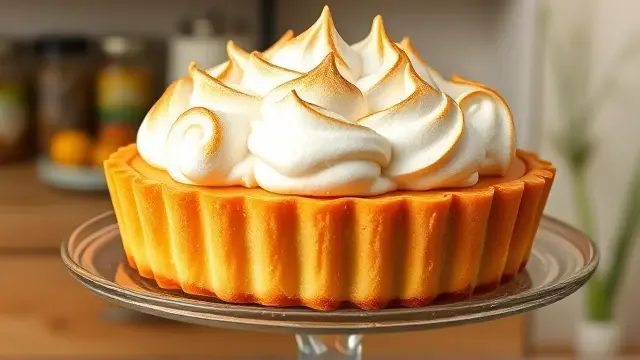
This one is subtle because the meringue can look finished. It holds peaks, it's glossy, and you're ready to move on. But rub a small amount between your fingertips. If it feels grainy, the sugar hasn't fully dissolved, and those crystals will melt during baking and leak out as syrup — the dreaded "weeping" that ruins an otherwise beautiful Lemon Meringue Pie.
Superfine sugar dissolves faster than granulated. If you only have granulated, pulse it in a food processor for thirty seconds. This one substitution prevents more meringue failures than any technique adjustment.
4. Opening the Oven
Baked meringue — whether it's a pavlova shell, meringue cookies, or a pie topping — is structurally fragile while hot. The network of coagulated protein and sugar is rigid but brittle. A sudden temperature drop from opening the oven door causes uneven contraction, which means cracks.
For pavlovas and meringue cookies, I turn the oven off and leave them inside with the door closed until the oven is completely cool. For pie meringue, bake it just long enough to set and brown the peaks, then let it cool gradually at room temperature. Don't refrigerate a meringue-topped pie until it's fully cooled — the condensation will make it weep.
5. No Acid
A small amount of acid — cream of tartar, lemon juice, or white vinegar — stabilizes meringue by lowering the pH of the egg whites. At a lower pH, the proteins are less likely to over-bond and squeeze out water. A quarter teaspoon of cream of tartar per two egg whites is enough. It's not optional; it's structural.
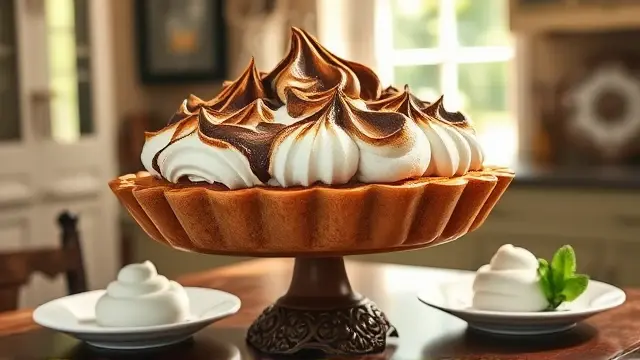
If you're making a Chocolate Meringue Pie, the cocoa already introduces some acidity, but not enough. Add the cream of tartar anyway.
These five things account for probably ninety percent of meringue problems. The remaining ten percent is humidity — meringue absorbs moisture from the air, so a rainy day is genuinely working against you. If you've done everything right and it still weeps, check the weather before you blame your technique.