Three recipes use eggs to thicken and set a liquid into a pudding-like consistency. They look similar and people use them interchangeably, but they're structurally different. The difference is not trivial. Use the wrong one in the wrong application and it's obvious.
Custard
Custard is eggs mixed with milk or cream and heated gently until the yolks coagulate and the mixture thickens. The key word is gently. You're heating to about 160-170°F, not higher. The structure relies entirely on egg protein denaturizing and bonding.
A proper custard is thin but pourable. It coats the back of a spoon. It's rich because of the eggs and cream. It's delicate because it's holding together only through egg coagulation. If you overheat it — boil it, accidentally — the yolks overcook and the proteins over-bond, squeezing out water. The custard curdles. Once curdled, it's broken. You can't fix it.
Custard is served hot or chilled. Cold custard is thicker than hot custard because the coagulated proteins firm up as they cool. A custard that's pourable when hot can be spoonable when chilled.
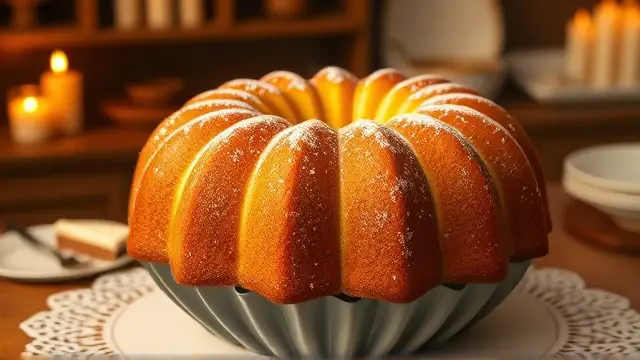
Custard is used as a sauce, a filling, or an accompaniment. You might pour it over Pound Cake, or fold it into whipped cream to make custard mousse, or bake it in a pie shell to make a custard pie. It's versatile because it's light and doesn't add much structure — it's mostly eggs and dairy, gelling through protein coagulation.
The risk with custard is temperature. You need a thermometer. Don't guess. If you go above 180°F, it starts to break. If you let it boil, it's finished.
Curd
Curd is different. It starts like custard — eggs, usually yolks, mixed with a liquid — but the liquid is often tart, and the recipe usually includes fat (butter), and it's cooked longer and to a higher temperature.
Lemon Curd is the classic. Yolks mixed with lemon juice, sugar, and sometimes butter, cooked to about 160°F (same temperature as custard), but the lemon juice provides structure beyond just egg coagulation. The acid denatures the proteins differently than milk does. The result is thicker than custard, with a custardy but more structured texture.
Curd sits somewhere between custard and jam in consistency. It's thick enough to spread on toast, but not as firm as jam. It's smooth when properly made, but with a custard-like richness.
When butter is added to curd, which is traditional in British lemon curd, it adds richness and changes the mouthfeel. The butter makes the curd glossier and more stable. This is why lemon curd made with butter stores longer than one without — the butter acts as a preservative. A custard with butter added would curdle because butter doesn't mix well with milk-based custards. But in curd, where the structure is partly from acid, butter integrates more happily.
Curd is stored in jars and used as a spread, a filling, or a dollop on desserts. A slice of cake with a spoonful of lemon curd on top is one of the better food combinations. It provides brightness and richness simultaneously.
Curd can be made with fruits other than lemon — passion fruit, lime, raspberries — as long as they're sufficiently acidic. The acid is what allows you to cook it longer than you could cook a milk-based custard.
Pastry Cream (Crème Pâtissière)
Pastry cream is custard plus starch. Eggs mixed with milk, heated, but with the addition of cornstarch or flour. The starch thickens the mixture at much lower temperatures than eggs alone, and it stabilizes the structure so it won't break if you accidentally overheat.
Pastry cream is thick and creamy. It holds a shape. When piped into a cream puff, it stays inside. When spread into a cake layer, it creates a distinct texture layer.
The method is different from custard because you're making a slurry. Mix the starch with a little cold milk, then heat the remaining milk. Add the starch slurry to the hot milk, stirring constantly. This prevents lumps. Once the mixture is hot, add it to the beaten yolks (not the other way around, which would cook the yolks immediately). Heat again until it thickens and reaches 160°F.
Pastry cream can be boiled, which is the structural advantage. The starch gelatinizes at 158°F and thickens. The eggs coagulate around the same temperature. Boiling it briefly after adding the yolks actually helps the eggs fully set. A milk-based custard can never boil. Pastry cream can and should boil.
Once made, pastry cream can be cooled and used, or you can make pastry cream mousse by folding in whipped cream. The starch adds stability. The mousse won't collapse. Try to make a mousse with regular custard and you get something fragile that breaks when you handle it.
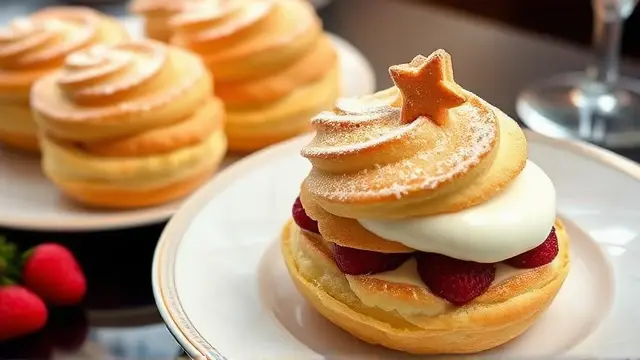
Pastry cream is used in Cream Puff Pastry, in tarts, in cakes, and anywhere you need structure and creaminess. The starch is doing the real work. The eggs are there for richness and slight additional thickening.
How to Know Which One to Use
Use custard when you want something light, rich, and sauce-like. When you need something that pours and integrates. When the structure isn't critical. When you're pairing it with something else that provides support — cake, fruit, whipped cream.
Use curd when you want something spreadable and bright, or when you're using acid as a structural element. When you want tartness. When you need something that stores well. Curd is more stable than custard because of the acid.
Use pastry cream when you need structure and hold. When you're building a dessert with distinct texture layers. When you need something that can be boiled and won't break. When you're filling a pastry or layering a cake.
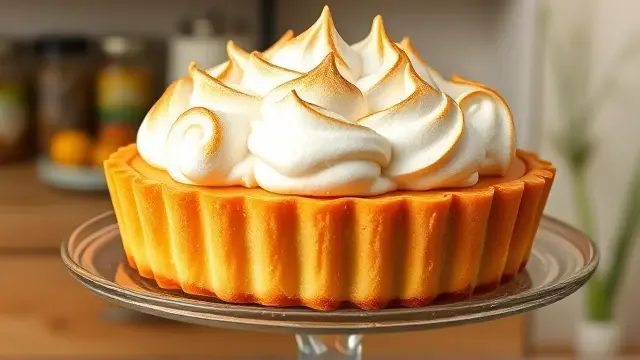
A Lemon Meringue Pie uses custard because it needs to be pourable but set. If you used pastry cream, the pie would be stiff and heavy. If you used curd, it would be too tart.
A custard tart uses pastry cream, not custard, because the filling needs to hold its shape. Custard in a tart crust would be too runny and would require blind baking to a high degree.
A dish served with custard alongside — like a Chocolate Pudding Cake with custard sauce — uses custard because the sauce is meant to integrate with the cake as you eat it.
The Temperature Overlap
All three are cooked to roughly the same temperature — 160°F — but the structural elements are different. Custard relies on egg coagulation. Curd relies on acid plus egg coagulation. Pastry cream relies on starch gelatinization plus egg coagulation. When recipes specify a temperature, they're accounting for the different ingredients.
If you're making pastry cream and the recipe says 160°F, you can boil it if you need to. If it says 160°F for custard, absolutely do not boil it. The acid in curd allows higher temperatures because the acid proteins are already denatured. These aren't arbitrary temperatures. They're specific to what the mixture contains.
The Practical Reality
Home cooks often use the three terms interchangeably, which is why desserts sometimes fail. A recipe calling for pastry cream made with custard will be runny. A recipe calling for custard made with pastry cream will be heavy. A recipe calling for curd made with custard will separate because the acid breaks down the milk solids in the way eggs alone doesn't.
Read the recipe carefully. Understand what structure it needs. Use the right preparation. This is the difference between a good outcome and a frustrating one.