The summer I moved to Raleigh, I volunteered to grill for our block's Fourth of July cookout. I'd been grilling for years at that point — or I thought I had. I bought a twenty-pound bag of Kingsford, lit the whole thing, spread it evenly across the grate like I always did, and loaded up: burgers, hot dogs, bone-in chicken thighs for the family down the street who didn't eat beef.
The burgers and dogs came out fine. The chicken was a disaster. I'd flip a thigh, the fat would drip, the coals would flare, and I'd get that thick black char on the skin while the meat near the bone was still pink. I moved them around trying to find cool spots but there weren't any — I'd made the entire grill surface a blast furnace. I ended up finishing the chicken in my neighbor's oven, which is about as humbling as it gets when you've told everyone you "know your way around a grill."
A guy named Curtis from two doors down watched the whole thing from a lawn chair. When I came back out with the oven-finished chicken on a sheet pan, he walked over and said, "Next time, just put all your coals on one side." That was it. No long explanation. I thought about it for a week before I understood what he meant.
What Curtis Knew
A pile of coals on one side gives you two zones: a hot side for searing and a cool side where the only heat comes from convection with the lid closed. The hot side runs 450°F or above. The cool side sits around 300–350°F — oven temperature, basically.
That one change turns a grill from a one-trick tool into something that can handle nearly anything. I've been grilling with a two-zone setup for twenty years now, and I can count on one hand the number of times I've spread coals evenly since.
The Chicken Thigh Lesson
After Curtis's advice, I tried the thighs again the following weekend. Put them skin-down on the cool side, closed the lid, and left them for about twenty minutes. When I checked, the skin had tightened up and the fat underneath had started rendering out — slowly, without dripping onto coals and flaring. I moved them over to the hot side skin-down for maybe ninety seconds. The skin crisped up immediately, golden and crackling, because the fat was already mostly rendered. No flare-ups. No pink near the bone.
I've cooked chicken thighs the same way ever since. It's not complicated, but you have to be willing to leave them alone on the cool side, and that's harder than it sounds when you've got people standing around waiting.
What I Learned from Meatloaf
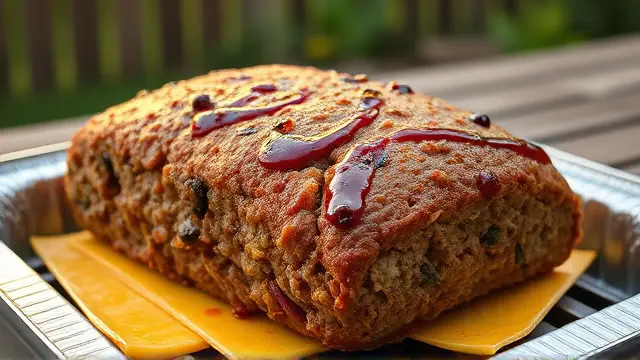
My wife's uncle Tom has this recipe for meatloaf cooked on the grill, and the first time I tried it I did exactly what you'd expect — put it right over the coals. The outside got a beautiful crust in about ten minutes, and the inside was raw ground beef. Classic.
Second attempt: cool side, lid closed, for about forty-five minutes until a thermometer read 155°F in the center. Then I slid it over the coals for the last few minutes to firm up the exterior and get some smoke on it. It was the best meatloaf I've ever had, and Tom told me it was better than his own, which I think was honest because he asked me to make it again at Thanksgiving.
The principle is the same every time. If the food is too thick to cook through before the surface burns, start it on the cool side and finish it on the hot side. Some people call this a reverse sear. I just call it not burning things.
The Time I Accidentally Made a Smoker
About five years ago I was grilling pork chops with a two-zone setup and I'd tossed a couple of hickory chunks onto the coals, just for flavor. My daughter called — car trouble, forty minutes away. I closed all the vents most of the way to keep the coals from burning out, drove to get her, and came back to find the grill holding at about 260°F with thin blue smoke still curling out of the top vent.
The pork chops were way past what I'd intended, but they had this incredible smoke ring and they were still juicy because the low temperature hadn't driven out the moisture. That accident taught me that a two-zone charcoal grill with the vents choked down is basically a smoker.
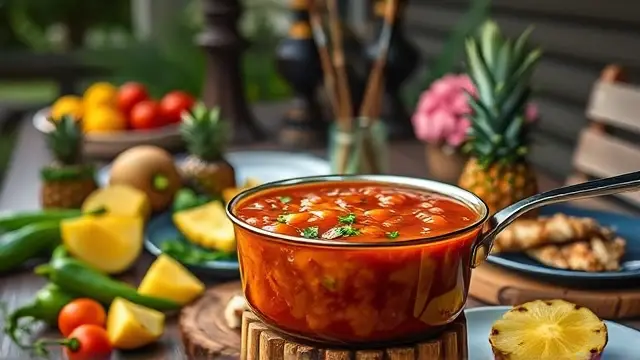
Now I do it on purpose. A pork shoulder goes on the cool side at 250–275°F with a few hardwood chunks on the coals, and five or six hours later it pulls apart. Ribs take about four hours — I'll brush on Judy's spare rib sauce in the last thirty minutes so it sets without burning. It's not the same as a dedicated offset smoker, and anyone who says otherwise hasn't used one, but it's good. It's really good for a kettle grill you already own.
One thing I learned the hard way on the smoke: you want the top vent at least half open so the smoke keeps moving. If it stagnates inside the grill it turns bitter. You can tell by the color — thin and blue-white means clean combustion. Thick and gray means the wood is smoldering, and your food will taste like it.
The Curtis Rule
I ran into Curtis at the hardware store a few years after that Fourth of July. I told him his one sentence of advice had basically changed how I cook outdoors. He said, "Yeah, my daddy told me the same thing when I was twelve. Took me until I was thirty to listen."
The grill doesn't need you to do much. It needs you to set it up right — coals on one side, food on the other, lid closed — and then leave it alone. Most of the time, when something comes off wrong, it's not because the cook wasn't paying attention. It's because they were paying too much attention, flipping and moving and poking and peeking, when the right move was to close the lid and go get a chair.
That's what Curtis was doing, after all. Sitting in a lawn chair. He already knew.